 Ver en contexto
 Enviar
 Compartir
 Detalles

 Descargar
 Similares
 Radiografía
 Presentación de diapositivas
 Estadísticas
'The album ''Circus''' (31)


 Ver más
Reproducción al óleo hecha a mano
Óleo sobre lienzo pintado a mano en el tamaño y marco de su elección, realizado por encargo por nuestros artistas. ( Cambiar a Impresión Cambiar a imagen digital)




P118B $10

P118H $10

P118W $10

P438Z $10

P508JH $12

P508YH $12

P805H $10

P805Z $10

P919BZ $10

P919G $10

P919XJ $10

P959ZH $10

P968JZ $12

W106C $8

W218G $10

W218JH $8

W218Y $10

W307PJ $10

W316G $10

W316PJ $8

W316Y $10

W398PJ $8

W4111J $10

W500HY $15

W500JH $15

W692G $12

W849H $8

W940BG $15

W953PJ $8




Elija entre nuestros tamaños predefinidos que respetan las proporciones originales de la obra.

Puede ingresar sus propias dimensiones para adaptarse a un marco o espacio específico. Si el tamaño seleccionado no coincide con las proporciones de la imagen original, recortaremos la obra o extenderemos la pintura con elementos adicionales pintados a mano. Se le enviará una maqueta digital para su aprobación antes de comenzar la producción.
Tenga en cuenta que la vista previa en pantalla no refleja el recorte o la extensión reales. Solo la maqueta mostrará con precisión la composición final.
Si bien existen tamaños personalizados, recomendamos seleccionar una dimensión de la lista predefinida para preservar las proporciones originales.
Tras realizar el pedido, el equipo de ArtsDot.com enviará un correo electrónico al cliente para solicitar instrucciones y proporcionarle una vista previa del boceto.
Envío a todo el mundo () en 3-4 semanas en lugar de las 5 semanas estándar. (11 septiembre). Sin comprometer la calidad.

Envío exprés gratuito a todo el mundo

Lienzo de lino de alta calidad

Seguro de envío total

Garantía de reembolso de impuestos aduaneros

Garantía de fidelidad cromática exacta

Política de devolución de 100 días (solo por defectos)

Garantía de devolución del 100% del dinero

Descuento por cantidad
 La opción de vidrio solo está disponible en tamaños inferiores a 110 cm.

'The album ''Circus''' (31)
Técnica de reproducción
Dimensiones de la reproducción
-


Precio total final
$ 263
A Celebration of Modernity Embodied in Circle and Form
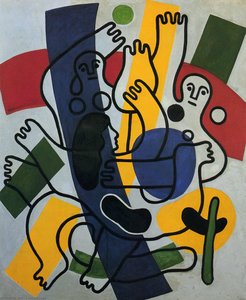
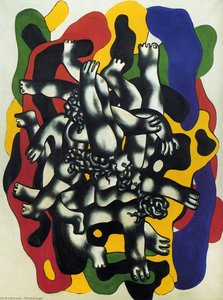
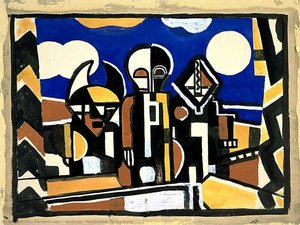
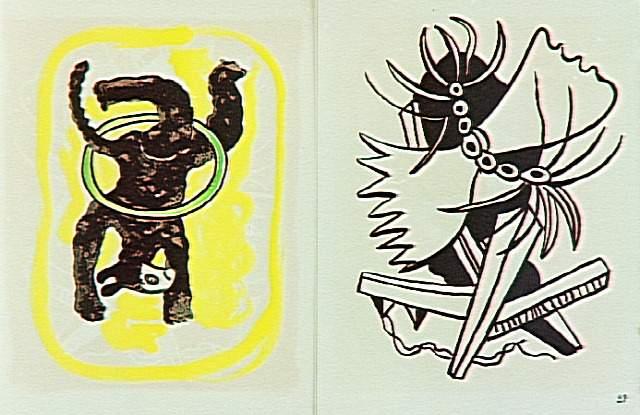
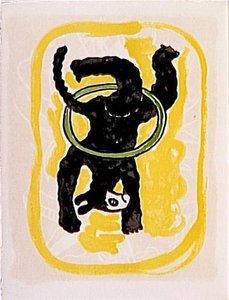
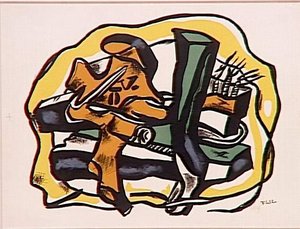
Fernand Léger’s “The Album ‘Circus’” (1950) stands as a striking testament to the artist's singular vision—a fusion of Cubist influences with an embrace of Naïve Art principles that anticipates the burgeoning aesthetic currents of mid-century modernism. Executed in monochrome, this piece transcends mere representation, opting instead for a deliberate simplification of form and color to convey a powerful emotional resonance. The photograph captures two canvases produced simultaneously, offering insight into Léger’s artistic process and conceptual exploration during this pivotal period.- Subject Matter: At first glance, the artwork presents a seemingly straightforward depiction of a circus scene—a monkey perched atop a pedestal holding a ring. However, Léger eschews detailed realism, prioritizing instead an abstracted portrayal that prioritizes geometric shapes and rhythmic repetition.
- Style & Technique: Léger’s approach aligns firmly with Tubism, developed alongside Pablo Picasso in 1907-1912. This technique involves fracturing objects into interlocking planes of color and form—a deliberate departure from traditional perspective—to capture the dynamism and energy of industrial life. The artist employs a bold palette of grayscale tones, emphasizing texture and surface quality to heighten visual impact.
Geometric Harmony: Circles as Symbols of Rhythm and Movement
The composition is dominated by recurring circles – strategically positioned at the top left corner, bottom right corner, and centrally within the canvas—a motif that recurs in both paintings. These circles aren’t merely decorative elements; they serve as visual anchors, reinforcing the artwork's underlying rhythm and conveying a sense of controlled chaos. Léger’s use of circular forms echoes the influence of Constructivism, reflecting his fascination with machine aesthetics and the transformative potential of geometric abstraction. The repetition underscores the artist’s desire to capture not just what is seen but also how it *feels*.Historical Context: Embracing Futurism's Legacy
Léger’s artistic trajectory was profoundly shaped by Futurism, an Italian movement championing speed, technology, and dynamism. Like his fellow Futurists, Léger sought to liberate art from the constraints of academic tradition, embracing bold experimentation and rejecting illusionistic representation. “The Album ‘Circus’” embodies this spirit—a defiant assertion of modernity’s visual language against the prevailing Romantic sensibilities of the time. The artwork anticipates the stylistic developments that would characterize Pop Art in the subsequent decades, demonstrating Léger's enduring relevance as a precursor to influential artistic movements.Emotional Resonance: A Quiet Intensity
Despite its minimalist aesthetic, “The Album ‘Circus’” possesses an undeniable emotional depth. The stark monochrome palette amplifies the artwork’s contemplative mood, inviting viewers to engage with its formal qualities and consider their symbolic implications. Léger's masterful manipulation of texture—evident in the subtly varied surface finishes—creates a tactile experience that complements the visual impact of the geometric forms. Ultimately, the piece communicates a sense of serene contemplation amidst the frenetic pace of industrial progress—a poignant reminder of art’s capacity to distill complex ideas into enduring symbols of beauty and innovation.Obras relacionadas
Biografía del artista
vida temprana y formación
fernand léger, un pintor, escultor y cineasta francés, nació el 4 de febrero de 1881 en Argentán, Orne, Baja Normandía. Su padre criaba ganado, y Léger inicialmente se formó como arquitecto de 1897 a 1899. Luego se mudó a París en 1900, ganándose la vida como dibujante arquitectónico.desarrollo artístico
El trabajo temprano de Léger estuvo influenciado por el impresionismo, como se ve en le jardin de ma mère (mi madre's garden) (1905). Después de asistir a la escuela de artes decorativas y la academia Julian, comenzó a trabajar seriamente como pintor a los 25 años. Su estilo evolucionó hacia una forma personal del cubismo, que los críticos denominaron "tubismo" por su énfasis en las formas cilíndricas.cubismo y el grupo puteaux
En 1910, Léger expuso en el salón de otoño junto a jean metzinger y henri le fauconnier. Se unió al grupo puteaux, también conocido como la sección dorada (la sección de oro), junto con otros artistas como francis picabia y marcel duchamp.guerra y su influencia en el trabajo de léger
Las experiencias de Léger en la Primera Guerra Mundial impactaron significativamente su obra. Durante su tiempo en el frente, produjo dibujos de piezas de artillería, aviones y soldados compañeros. Su pintura soldier with a pipe (1916) refleja este período.obra posterior y legado
La obra posterior de Léger, caracterizada por formas mecánicas y elegantes, lo vinculó a la tradición de la pintura figurativa francesa. Sus paisajes animados de 1921 mostraron figuras y animales en formas armoniosas y aerodinámicas.- ver obras de fernand léger en ArtsDot
- más sobre fernand léger en wikipedia
- descubra el musée national fernand léger (francia) con ArtsDot
- la mujer sentada (100 x 81 cm, tubismo)
- elemento de máquina (cubismo)
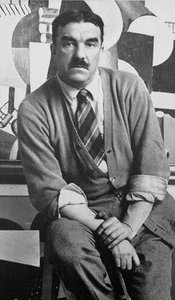
Fernand Léger
1881 - 1955 , Francia
Datos clave
- Artistas Influenciados Por: ['Pop Art']
- Artistas Que Influyeron:
- Cézanne
- Impresionismo
- Fecha De Nacimiento: 4 de febrero de 1881
- Lugar De Nacimiento: Argentan, Francia
- Movimiento Artístico:
- Cubismo
- Tubismo
- Nacionalidad: Francés
- Nombre Completo: Fernand Léger
- Obras Notables:
- La Mujer Sentada
- Elemento de Máquina
- El Gran Desfile
- Paisajes Animados
Artículos relacionados
Expresionismo Abstracto: 10 Obras Maestras que Transformaron el Arte |
Descubre las 10 obras maestras del Expresionismo Abstracto: Pollock, Rothko y más. Explora la historia, técnica y significado de estos lienzos icónicos. Reproducciones de arte exclusivas en .
Arte Industrial: 10 Obras Maestras para un Hogar con Carácter | ArtsDot.com
Descubre 10 obras maestras que capturan la esencia del arte industrial. Explora la historia de Van Gogh, Hopper y Klimt, sus técnicas y paletas. Encuentra lienzos perfectos para un hogar con carácter en ArtsDot.com.

Jean Dominique Antony Metzinger: Pioneering Cubism & the Evolution of Abstract Form
Explore the life & work of Jean Metzinger, a pivotal Cubist painter and theorist. Discover his innovations in proto-Cubism, 'Du Cubisme,' and Crystal Cubism – a journey through modern art's evolution.

Abstracción Geométrica: 10 Obras Maestras que Transformaron el Arte Moderno | ArtsDot
Descubre las 10 obras maestras de la abstracción geométrica que revolucionaron el arte moderno. Explora a Mondrian, Malevich y Kandinsky en ArtsDot.com. Reproducciones de alta calidad para tu hogar.
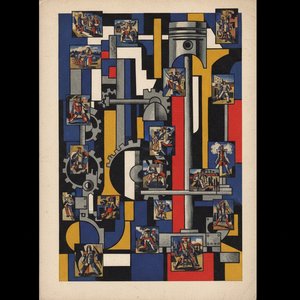
Fernand Léger: Las 25 Obras Maestras del Tubismo y la Vanguardia Francesa | ArtsDot
Descubre las 25 obras maestras de Fernand Léger, pionero del tubismo y la vanguardia francesa. Explora su estética industrial, composiciones geométricas y vibrantes colores. Reproducciones de arte exclusivas en ArtsDot.com.