 Enviar
 Compartir
 Detalles

 Descargar
 Similares
 Presentación de diapositivas
The Sacred Heart of audincourt


 Ver más
Reproducción al óleo hecha a mano
Óleo sobre lienzo pintado a mano en el tamaño y marco de su elección, realizado por encargo por nuestros artistas. ( Comprar impresión Comprar imagen)




































Elija entre nuestros tamaños predefinidos que respetan las proporciones originales de la obra.

Puede ingresar sus propias dimensiones para adaptarse a un marco o espacio específico. Si el tamaño seleccionado no coincide con las proporciones de la imagen original, recortaremos la obra o extenderemos la pintura con elementos adicionales pintados a mano. Se le enviará una maqueta digital para su aprobación antes de comenzar la producción.
Tenga en cuenta que la vista previa en pantalla no refleja el recorte o la extensión reales. Solo la maqueta mostrará con precisión la composición final.
Si bien existen tamaños personalizados, recomendamos seleccionar una dimensión de la lista predefinida para preservar las proporciones originales.
Tras realizar el pedido, el equipo de ArtsDot.com enviará un correo electrónico al cliente para solicitar instrucciones y proporcionarle una vista previa del boceto.
Envío a todo el mundo () en 3-4 semanas en lugar de las 5 semanas estándar. (23 agosto). Sin comprometer la calidad.

Envío exprés gratuito a todo el mundo

Lienzo de lino de alta calidad

Seguro de envío total

Garantía de reembolso de impuestos aduaneros

Garantía de fidelidad cromática exacta

Política de devolución de 60 días (solo por defectos)

Garantía de devolución del 100% del dinero

Descuento por cantidad
 La opción de vidrio solo está disponible en tamaños inferiores a 110 cm.

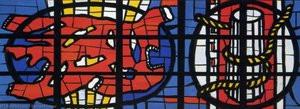
The Sacred Heart of audincourt
Técnica de reproducción
Dimensiones de la reproducción
-


Precio total final
$ 263
Descripción de la obra
A Radiant Vision of Modern Faith
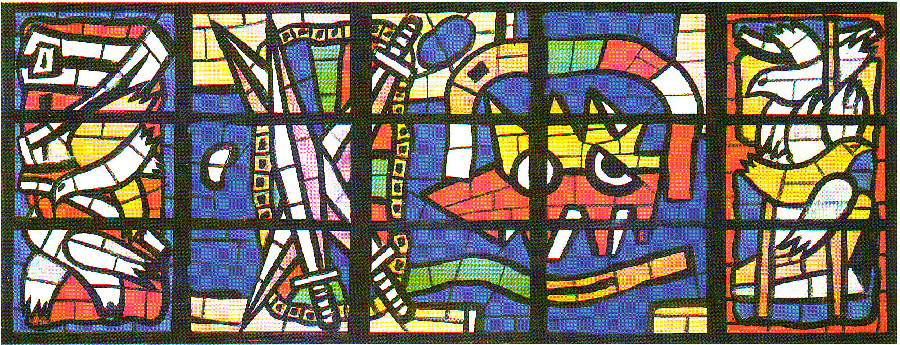
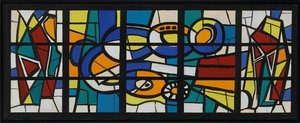
In the quiet, hallowed spaces of Audincourt, France, there exists a window that does not merely permit light to pass through, but rather transforms it into a rhythmic dance of color and geometry. Fernand Léger’s The Sacred Heart of Audincourt, completed around 1950, stands as a monumental achievement in twentieth-century modernism. This is not the traditional, somber stained glass one might expect in a religious setting; instead, it is a vibrant, pulsating tableau that bridges the gap between ancient spiritual iconography and the industrial energy of the machine age. Through his masterful use of bold, interlocking shapes, Léger invites the viewer into a world where the divine is expressed through the clarity of form and the brilliance of primary hues.
The composition itself is a masterclass in Purism, an aesthetic movement that sought to strip away the unnecessary excesses of representation to reveal the essential structural truths of our world. Within the stylized window frame, figures appear engaged in the quiet rhythms of life, yet they are rendered with a striking, almost mechanical precision. The scene is dominated by a dynamic interplay of triangles, rectangles, and trapezoids, creating a sense of movement that feels both grounded and ethereal. For the collector or designer, this piece offers a profound sense of structural balance, making it an extraordinary focal point for spaces that demand both intellectual depth and visual vitality.
The Alchemy of Color and Light
To behold this work is to experience the true power of Tubism—Léger’s signature style characterized by cylindrical forms and robust, simplified volumes. The technique employed in this stained-glass masterpiece involves a meticulous fusion of colored glass fragments, where each shard plays a vital role in the larger chromatic symphony. Deep sapphire blues provide a celestial foundation, while fiery oranges, luminous yellows, and verdant greens dance across the surface, punctuated by the intense heat of ruby reds and scarlet accents. This careful layering of translucent and opaque pigments ensures that as the sun moves across the sky, the artwork undergoes a continuous metamorphosis.
The emotional impact of such a palette is nothing short of transformative. For an interior space, a high-quality reproduction of this work brings an infusion of light and energy, acting as a window into a more structured, vibrant reality. The way the light interacts with the saturated tones creates a luminous depth that can breathe life into any room, offering a sense of optimism and clarity. It is a piece that does not just decorate a wall; it animates the atmosphere, turning a static environment into a living, breathing experience of color.
A Legacy of Industrial Grace
Léger’s journey from the rural landscapes of Normandy to the avant-garde heart of Paris allowed him to develop a unique visual language—one that celebrated the beauty found in the modern, mechanized world. In The Sacred Heart of Audincourt, he successfully synthesized the spiritual essence of the Catholic tradition with the aesthetic of the industrial era. He did not see a conflict between the sacred and the mechanical; rather, he saw both as expressions of order, rhythm, and truth. This profound philosophical depth makes the artwork much more than a decorative object; it is a historical testament to an era that was redefining the boundaries of human perception.
For those seeking to curate a collection of significant modern art, this work represents a rare intersection of history, technique, and emotion. Whether viewed as a triumph of Purist design or a soulful exploration of religious devotion, Léger’s vision remains as potent today as it was in 1950. Owning a reproduction of such a masterpiece allows one to possess a fragment of this revolutionary spirit, bringing the bold, geometric grace of the machine age into the contemporary home.
Obras relacionadas
Biografía del artista
vida temprana y formación
fernand léger, un pintor, escultor y cineasta francés, nació el 4 de febrero de 1881 en Argentán, Orne, Baja Normandía. Su padre criaba ganado, y Léger inicialmente se formó como arquitecto de 1897 a 1899. Luego se mudó a París en 1900, ganándose la vida como dibujante arquitectónico.desarrollo artístico
El trabajo temprano de Léger estuvo influenciado por el impresionismo, como se ve en le jardin de ma mère (mi madre's garden) (1905). Después de asistir a la escuela de artes decorativas y la academia Julian, comenzó a trabajar seriamente como pintor a los 25 años. Su estilo evolucionó hacia una forma personal del cubismo, que los críticos denominaron "tubismo" por su énfasis en las formas cilíndricas.cubismo y el grupo puteaux
En 1910, Léger expuso en el salón de otoño junto a jean metzinger y henri le fauconnier. Se unió al grupo puteaux, también conocido como la sección dorada (la sección de oro), junto con otros artistas como francis picabia y marcel duchamp.guerra y su influencia en el trabajo de léger
Las experiencias de Léger en la Primera Guerra Mundial impactaron significativamente su obra. Durante su tiempo en el frente, produjo dibujos de piezas de artillería, aviones y soldados compañeros. Su pintura soldier with a pipe (1916) refleja este período.obra posterior y legado
La obra posterior de Léger, caracterizada por formas mecánicas y elegantes, lo vinculó a la tradición de la pintura figurativa francesa. Sus paisajes animados de 1921 mostraron figuras y animales en formas armoniosas y aerodinámicas.- ver obras de fernand léger en ArtsDot
- más sobre fernand léger en wikipedia
- descubra el musée national fernand léger (francia) con ArtsDot
- la mujer sentada (100 x 81 cm, tubismo)
- elemento de máquina (cubismo)
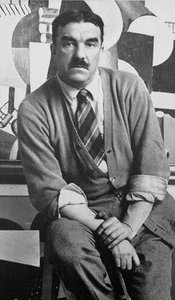
Fernand Léger
1881 - 1955 , Francia
Datos clave
- Artistas Influenciados Por: ['Pop Art']
- Artistas Que Influyeron:
- Cézanne
- Impresionismo
- Fecha De Nacimiento: 4 de febrero de 1881
- Lugar De Nacimiento: Argentan, Francia
- Movimiento Artístico:
- Cubismo
- Tubismo
- Nacionalidad: Francés
- Nombre Completo: Fernand Léger
- Obras Notables:
- La Mujer Sentada
- Elemento de Máquina
- El Gran Desfile
- Paisajes Animados
Artículos relacionados
Fernand Léger: Las 25 Obras Maestras del Tubismo y la Vanguardia Francesa | ArtsDot
Descubre las 25 obras maestras de Fernand Léger, pionero del tubismo y la vanguardia francesa. Explora su estética industrial, composiciones geométricas y vibrantes colores. Reproducciones de arte exclusivas en ArtsDot.com.

Abstracción Geométrica: 10 Obras Maestras que Transformaron el Arte Moderno | ArtsDot
Descubre las 10 obras maestras de la abstracción geométrica que revolucionaron el arte moderno. Explora a Mondrian, Malevich y Kandinsky en ArtsDot.com. Reproducciones de alta calidad para tu hogar.
Beyond Form & Color: Geometric Abstraction's Evolution in 20th/21st Century Art
Explore the evolution of geometric abstraction from Cubism to contemporary art. Discover key artists like Malevich & Mondrian, investment insights, and expert collecting advice at ArtsDot.
Beyond Form & Color: Geometric Abstraction's Enduring Legacy in Art History
Explore the captivating world of geometric abstraction! Discover its origins, key artists like Malevich & Mondrian, and why this movement remains highly valued by art collectors today. Expert insights at ArtsDot.

Kandinsky: Las 25 Obras Maestras del Pionero de la Abstracción | ArtsDot
Descubre las 25 obras maestras de Wassily Kandinsky, pionero del arte abstracto. Explora su expresionismo, composiciones únicas y la historia detrás de cada cuadro. Reproducciones de alta calidad para decorar tu hogar con arte moderno en ArtsDot.com.