 Ver en contexto
 Enviar
 Compartir
 Detalles

 Descargar
 Similares
 Radiografía
 Presentación de diapositivas
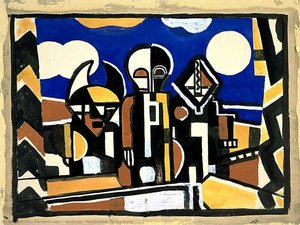
The skies of France

 Ver más
Giclée / Impresión de arte
Impresiones giclée o en lienzo de calidad de museo con producción rápida y opciones de acabado flexibles. ( Comprar pintura hecha a mano Comprar imagen)




P118B $10

P118H $10

P118W $10

P438Z $10

P508JH $12

P508YH $12

P805H $10

P805Z $10

P919BZ $10

P919G $10

P919XJ $10

P959ZH $10

P968JZ $12

W106C $8

W218G $10

W218JH $8

W218Y $10

W307PJ $10

W316G $10

W316PJ $8

W316Y $10

W398PJ $8

W4111J $10

W500HY $15

W500JH $15

W692G $12

W849H $8

W940BG $15

W953PJ $8




Elija entre nuestros tamaños predefinidos que respetan las proporciones originales de la obra.

Puede introducir sus propias dimensiones para adaptarse a un marco o espacio específico. Si el tamaño seleccionado no coincide con las proporciones de la imagen original, recortaremos la obra de arte o extenderemos la imagen con un borde con efecto espejo o de color sólido. Se enviará una maqueta digital para su aprobación antes de que comience la producción.
Tenga en cuenta que la vista previa en pantalla no refleja el recorte o la extensión real. Solo la maqueta mostrará con precisión la composición final.
Aunque existen tamaños personalizados, recomendamos seleccionar una dimensión de la lista predefinida para preservar las proporciones originales.
Envío a todo el mundo () en 2 semanas en lugar de las 4/5 semanas estándar. (7 septiembre)

Envío exprés gratuito a todo el mundo

Lienzo de lino de alta calidad

Seguro de envío total

Garantía de reembolso de impuestos aduaneros

Garantía de fidelidad cromática exacta

Política de devolución de 100 días (solo por defectos)

Garantía de devolución del 100% del dinero

Descuento por cantidad
 La opción de vidrio solo está disponible en tamaños inferiores a 110 cm.

The skies of France
Giclée / Impresión de arte
Dimensiones de la reproducción
-


Precio total final
$ 62
A Symphony in Red and Blue: Exploring Fernand Léger’s “The Skies of France”
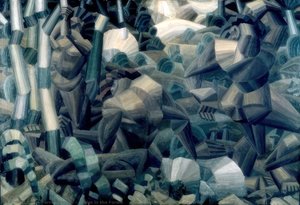
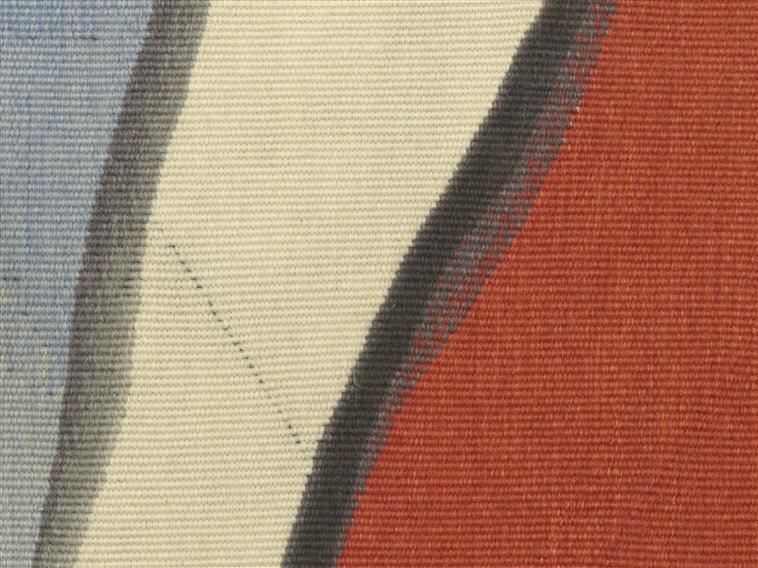
Fernand Léger's "The Skies of France," painted in 1938, isn’t merely a depiction of the heavens; it’s an embodiment of the anxieties and aspirations simmering beneath the surface of Europe during the prelude to World War II. Léger, a staunch supporter of Futurism – a movement that championed speed, dynamism, and industrial progress – sought to translate the frenetic energy of the machine age into a visual idiom that defied traditional artistic conventions. This painting stands as a cornerstone of his oeuvre and exemplifies his singular approach to abstraction.- Style & Technique: Léger’s style is characterized by geometric abstraction, prioritizing simplified forms—rectangles, triangles, circles—over organic contours. He employed a bold palette dominated by crimson red and azure blue, colors deliberately chosen to convey both passion and technological fervor. The technique involved applying paint in thick impasto strokes, creating textured surfaces that mirrored the physicality of industrial production.
- Historical Context: Created during the escalating tensions leading up to the Second World War, “The Skies of France” reflects the pervasive fear of impending conflict and the conviction that humanity was irrevocably transforming under the influence of technological advancement. Léger’s artistic stance aligned with the Futurists' optimistic belief in progress—a belief increasingly challenged by mounting evidence of societal instability.
Decoding Symbolism: The Machine Age Manifested
Beyond its aesthetic qualities, “The Skies of France” is laden with symbolic significance. Léger deliberately rejected representational imagery, opting instead for abstracted shapes that functioned as metaphors for the dominant forces shaping the era. The prominent red stripe represents not just color but also vitality, energy, and perhaps even a hint of danger—mirroring the fiery urgency of wartime mobilization. Conversely, the blue stripe symbolizes stability, order, and the relentless march forward of industrial civilization.- Geometric Forms: Léger’s geometric forms aren't simply decorative; they embody the principles of Futurism – repetition, acceleration, and fragmentation—representing the breakdown of traditional artistic hierarchies and embracing the disruptive power of technological innovation.
Emotional Resonance: Capturing the Spirit of Uncertainty
Despite its seemingly detached aesthetic, “The Skies of France” possesses a palpable emotional resonance. The textured impasto surface conveys a sense of restless movement—a visual echo of the anxieties and uncertainties experienced by Europeans facing imminent war. Léger’s masterful manipulation of color contributes to this emotive impact, creating an atmosphere that is both exhilarating and unsettling. It invites contemplation on humanity's relationship with progress and its vulnerability in the face of overwhelming forces.A Legacy Enduring Inspiration: Reproductions Today
Today, high-quality reproductions of “The Skies of France” continue to captivate collectors and inspire interior designers. They serve as a powerful reminder of Léger’s pioneering vision—a vision that championed abstraction not as an end in itself but as a means of conveying profound truths about the human condition and the transformative power of modernity. Its bold colors, dynamic textures, and symbolic depth ensure its place as a timeless masterpiece within the canon of twentieth-century art.Obras relacionadas
Biografía del artista
vida temprana y formación
fernand léger, un pintor, escultor y cineasta francés, nació el 4 de febrero de 1881 en Argentán, Orne, Baja Normandía. Su padre criaba ganado, y Léger inicialmente se formó como arquitecto de 1897 a 1899. Luego se mudó a París en 1900, ganándose la vida como dibujante arquitectónico.desarrollo artístico
El trabajo temprano de Léger estuvo influenciado por el impresionismo, como se ve en le jardin de ma mère (mi madre's garden) (1905). Después de asistir a la escuela de artes decorativas y la academia Julian, comenzó a trabajar seriamente como pintor a los 25 años. Su estilo evolucionó hacia una forma personal del cubismo, que los críticos denominaron "tubismo" por su énfasis en las formas cilíndricas.cubismo y el grupo puteaux
En 1910, Léger expuso en el salón de otoño junto a jean metzinger y henri le fauconnier. Se unió al grupo puteaux, también conocido como la sección dorada (la sección de oro), junto con otros artistas como francis picabia y marcel duchamp.guerra y su influencia en el trabajo de léger
Las experiencias de Léger en la Primera Guerra Mundial impactaron significativamente su obra. Durante su tiempo en el frente, produjo dibujos de piezas de artillería, aviones y soldados compañeros. Su pintura soldier with a pipe (1916) refleja este período.obra posterior y legado
La obra posterior de Léger, caracterizada por formas mecánicas y elegantes, lo vinculó a la tradición de la pintura figurativa francesa. Sus paisajes animados de 1921 mostraron figuras y animales en formas armoniosas y aerodinámicas.- ver obras de fernand léger en ArtsDot
- más sobre fernand léger en wikipedia
- descubra el musée national fernand léger (francia) con ArtsDot
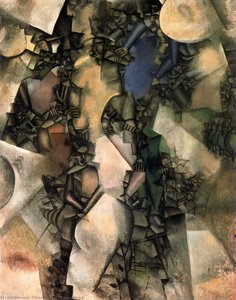
- la mujer sentada (100 x 81 cm, tubismo)
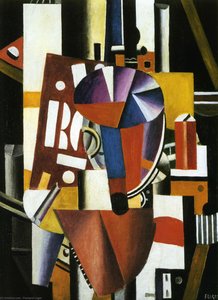
- elemento de máquina (cubismo)
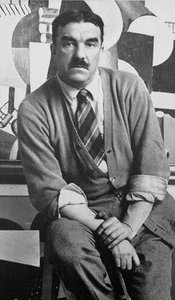
Fernand Léger
1881 - 1955 , Francia
Datos clave
- Artistas Influenciados Por: ['Pop Art']
- Artistas Que Influyeron:
- Cézanne
- Impresionismo
- Fecha De Nacimiento: 4 de febrero de 1881
- Lugar De Nacimiento: Argentan, Francia
- Movimiento Artístico:
- Cubismo
- Tubismo
- Nacionalidad: Francés
- Nombre Completo: Fernand Léger
- Obras Notables:
- La Mujer Sentada
- Elemento de Máquina
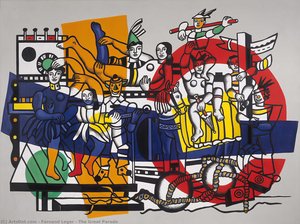
- El Gran Desfile
- Paisajes Animados
Artículos relacionados
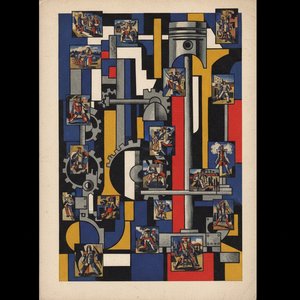
Fernand Léger: Las 25 Obras Maestras del Tubismo y la Vanguardia Francesa | ArtsDot
Descubre las 25 obras maestras de Fernand Léger, pionero del tubismo y la vanguardia francesa. Explora su estética industrial, composiciones geométricas y vibrantes colores. Reproducciones de arte exclusivas en ArtsDot.com.
Arte Industrial: 10 Obras Maestras para un Hogar con Carácter | ArtsDot.com
Descubre 10 obras maestras que capturan la esencia del arte industrial. Explora la historia de Van Gogh, Hopper y Klimt, sus técnicas y paletas. Encuentra lienzos perfectos para un hogar con carácter en ArtsDot.com.

Kandinsky: Las 25 Obras Maestras del Pionero de la Abstracción | ArtsDot
Descubre las 25 obras maestras de Wassily Kandinsky, pionero del arte abstracto. Explora su expresionismo, composiciones únicas y la historia detrás de cada cuadro. Reproducciones de alta calidad para decorar tu hogar con arte moderno en ArtsDot.com.

Abstracción Geométrica: 10 Obras Maestras que Transformaron el Arte Moderno | ArtsDot
Descubre las 10 obras maestras de la abstracción geométrica que revolucionaron el arte moderno. Explora a Mondrian, Malevich y Kandinsky en ArtsDot.com. Reproducciones de alta calidad para tu hogar.

Expresionismo Abstracto: 10 Obras Maestras que Transformaron el Arte |
Descubre las 10 obras maestras del Expresionismo Abstracto: Pollock, Rothko y más. Explora la historia, técnica y significado de estos lienzos icónicos. Reproducciones de arte exclusivas en .