 Vista previa
 Compartir
 Compartir
 Ver detalles

 Descargar
 Ver similares
 Radiografía
 Presentación de diapositivas
untitled


 Leer más
Giclée / Impresión de arte
Impresiones giclée o en lienzo de calidad de museo con producción rápida y opciones de acabado flexibles. ( Encargar reproducción pintada a mano Comprar descarga)




P118B $10

P118H $10

P118W $10

P438Z $10

P508JH $12

P508YH $12

P805H $10

P805Z $10

P919BZ $10

P919G $10

P919XJ $10

P959ZH $10

P968JZ $12

W106C $8

W218G $10

W218JH $8

W218Y $10

W307PJ $10

W316G $10

W316PJ $8

W316Y $10

W398PJ $8

W4111J $10

W500HY $15

W500JH $15

W692G $12

W849H $8

W940BG $15

W953PJ $8




Elija entre nuestros tamaños predefinidos que respetan las proporciones originales de la obra.

Puede introducir sus propias dimensiones para adaptarse a un marco o espacio específico. Si el tamaño seleccionado no coincide con las proporciones de la imagen original, recortaremos la obra de arte o extenderemos la imagen con un borde con efecto espejo o de color sólido. Se enviará una maqueta digital para su aprobación antes de que comience la producción.
Tenga en cuenta que la vista previa en pantalla no refleja el recorte o la extensión real. Solo la maqueta mostrará con precisión la composición final.
Aunque existen tamaños personalizados, recomendamos seleccionar una dimensión de la lista predefinida para preservar las proporciones originales.
Envío a todo el mundo () en 2 semanas en lugar de las 4/5 semanas estándar. (19 agosto)

Envío exprés gratuito a todo el mundo

Lienzo de lino de alta calidad

Seguro de envío completo

Garantía de reembolso de aranceles aduaneros

Garantía de fidelidad cromática exacta

Política de devolución de 60 días (solo por defectos)

Garantía de devolución del 100% del dinero

Oferta por volumen
 La opción de vidrio solo está disponible en tamaños inferiores a 110 cm.

untitled
Giclée / Impresión de arte
Tamaño de la reproducción
-


Precio total
$ 62
Descripción de la pieza
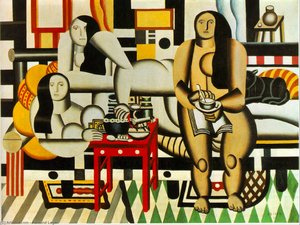
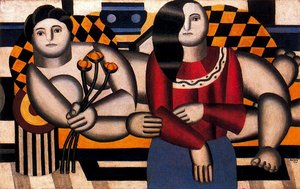
A Quiet Intimacy Amidst Geometric Precision
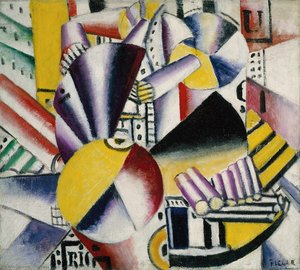
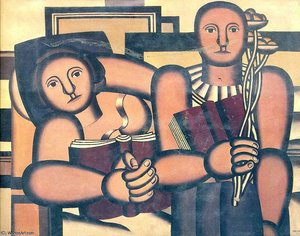
In this evocative Cubist masterpiece, Fernand Léger invites us into a private, contemplative moment that defies the coldness often associated with industrial abstraction. The scene unfolds with a deceptive simplicity, presenting two figures nestled closely within a carefully constructed spatial arrangement. One figure reclines on their side, cradling a book—a poignant gesture that serves as a silent tribute to the intellectual vitality of the era. Beside them, a second companion sits in quiet engagement, creating a sense of shared purpose and profound human connection. Scattered throughout the composition, additional books lie adrift in the space, suggesting an environment of learning, reflection, and the pursuit of knowledge that transcends the physical boundaries of the room.
Léger’s approach to this subject matter is nothing short of revolutionary, utilizing the fractured language of Cubism to redefine how we perceive human presence. Rather than relying on traditional perspective or the soft illusions of realism, the artist dismantles the figures and their surroundings into a rhythmic dance of geometric planes. Through the use of cylinders, cones, and cubes, the composition captures a sense of structural depth that feels both modern and timeless. This stylistic choice does more than just decorate the canvas; it mirrors the shifting perceptions of a world being reshaped by the rapid expansion of urban landscapes and the mechanical pulse of the early 20th century.
The Harmony of Form and the Machine Age
Technically, the painting is a triumph of texture and light. Working with oil on canvas, Léger employed a sophisticated method of layering and blending that lends the work an unexpected luminosity. Each geometric facet is rendered with precise, deliberate brushstrokes, capturing subtle shifts in tone that prevent the abstraction from feeling sterile. There is a palpable warmth radiating from the canvas, a testament to Lépect's unique ability to imbue rigid, mechanical forms with deep emotional resonance. The interplay of light across these fragmented surfaces creates a visual harmony that draws the eye through the composition, finding beauty in the intersection of the organic and the industrial.
To understand this work is to understand the spirit of the Machine Age. As factories rose and cities expanded, Léger sought to integrate the dynamism of modern technology into the very fabric of fine art. This piece stands as a bridge between the human soul and the burgeoning mechanical world, suggesting that even amidst the gears and steel of progress, the fundamental need for intimacy and intellectual connection remains unchanged. For the discerning collector or interior designer, this reproduction offers more than just a striking visual element; it provides a sophisticated focal point that speaks to the enduring strength of the human spirit within an ever-evolving modern landscape.
Obras relacionadas





Biografía del artista
vida temprana y formación
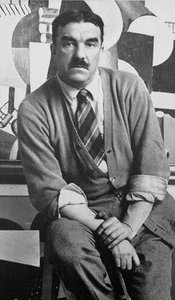
fernand léger, un pintor, escultor y cineasta francés, nació el 4 de febrero de 1881 en Argentán, Orne, Baja Normandía. Su padre criaba ganado, y Léger inicialmente se formó como arquitecto de 1897 a 1899. Luego se mudó a París en 1900, ganándose la vida como dibujante arquitectónico.desarrollo artístico
El trabajo temprano de Léger estuvo influenciado por el impresionismo, como se ve en le jardin de ma mère (mi madre's garden) (1905). Después de asistir a la escuela de artes decorativas y la academia Julian, comenzó a trabajar seriamente como pintor a los 25 años. Su estilo evolucionó hacia una forma personal del cubismo, que los críticos denominaron "tubismo" por su énfasis en las formas cilíndricas.cubismo y el grupo puteaux
En 1910, Léger expuso en el salón de otoño junto a jean metzinger y henri le fauconnier. Se unió al grupo puteaux, también conocido como la sección dorada (la sección de oro), junto con otros artistas como francis picabia y marcel duchamp.guerra y su influencia en el trabajo de léger
Las experiencias de Léger en la Primera Guerra Mundial impactaron significativamente su obra. Durante su tiempo en el frente, produjo dibujos de piezas de artillería, aviones y soldados compañeros. Su pintura soldier with a pipe (1916) refleja este período.obra posterior y legado
La obra posterior de Léger, caracterizada por formas mecánicas y elegantes, lo vinculó a la tradición de la pintura figurativa francesa. Sus paisajes animados de 1921 mostraron figuras y animales en formas armoniosas y aerodinámicas.- ver obras de fernand léger en ArtsDot
- más sobre fernand léger en wikipedia
- descubra el musée national fernand léger (francia) con ArtsDot
- la mujer sentada (100 x 81 cm, tubismo)
- elemento de máquina (cubismo)
Fernand Léger
1881 - 1955 , Francia
Datos clave
- Artistas Influenciados Por: ['Pop Art']
- Artistas Que Influyeron:
- Cézanne
- Impresionismo
- Fecha De Nacimiento: 4 de febrero de 1881
- Lugar De Nacimiento: Argentan, Francia
- Movimiento Artístico:
- Cubismo
- Tubismo
- Nacionalidad: Francés
- Nombre Completo: Fernand Léger
- Obras Notables:
- La Mujer Sentada
- Elemento de Máquina
- El Gran Desfile
- Paisajes Animados
Artículos relacionados
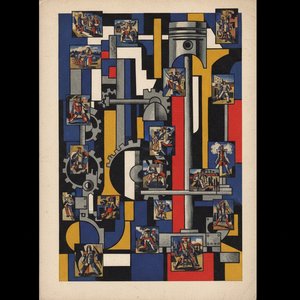
Fernand Léger: Las 25 Obras Maestras del Tubismo y la Vanguardia Francesa | ArtsDot
Descubre las 25 obras maestras de Fernand Léger, pionero del tubismo y la vanguardia francesa. Explora su estética industrial, composiciones geométricas y vibrantes colores. Reproducciones de arte exclusivas en ArtsDot.com.

Abstracción Geométrica: 10 Obras Maestras que Transformaron el Arte Moderno | ArtsDot
Descubre las 10 obras maestras de la abstracción geométrica que revolucionaron el arte moderno. Explora a Mondrian, Malevich y Kandinsky en ArtsDot.com. Reproducciones de alta calidad para tu hogar.
Beyond Form & Color: Geometric Abstraction's Evolution in 20th/21st Century Art
Explore the evolution of geometric abstraction from Cubism to contemporary art. Discover key artists like Malevich & Mondrian, investment insights, and expert collecting advice at ArtsDot.
Beyond Form & Color: Geometric Abstraction's Enduring Legacy in Art History
Explore the captivating world of geometric abstraction! Discover its origins, key artists like Malevich & Mondrian, and why this movement remains highly valued by art collectors today. Expert insights at ArtsDot.
Beyond Form: Exploring Geometric Abstraction's Enduring Legacy in Art History
Explore the captivating world of geometric abstraction! Discover its origins, key artists like Kandinsky & Mondrian, and why this movement remains highly valued by art collectors today. Expert insights at ArtsDot.