 Ver en contexto
 Enviar
 Compartir
 Detalles

 Descargar
 Similares
 Radiografía
 Presentación de diapositivas
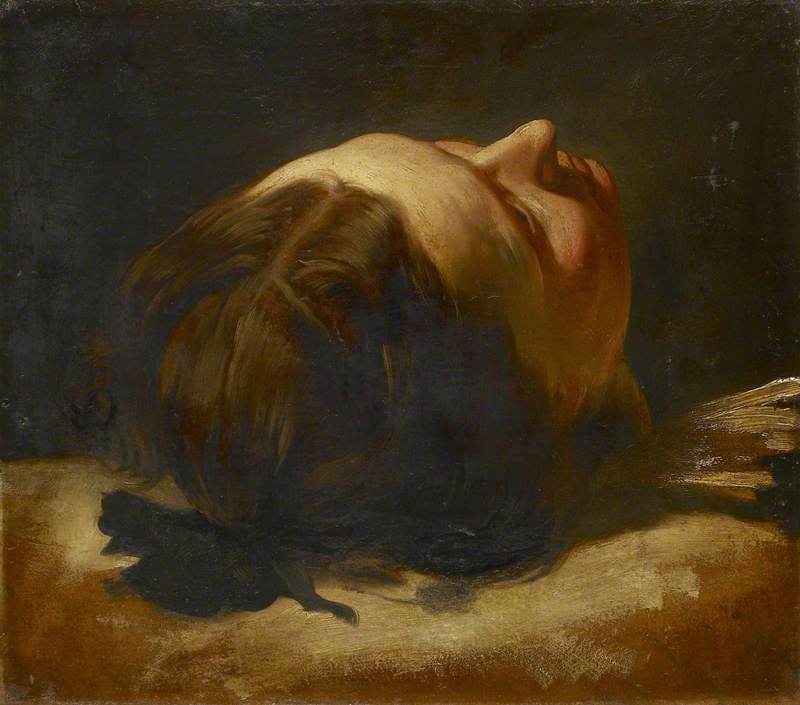
Study for 'The Execution of Mary, Queen of Scots'
 Acrylic On Canvas
- WallArt
- Pre-Raphaelite Romanticism
 1841
1841- 19th Century
 39.0 x 44.0 cm
 El Museo Ashmolean de Arte y Arqueología
 Ver más
Reproducción al óleo hecha a mano
Óleo sobre lienzo pintado a mano en el tamaño y marco de su elección, realizado por encargo por nuestros artistas. ( Comprar impresión Comprar imagen)




P118B $10

P118H $10

P118W $10

P438Z $10

P508JH $12

P508YH $12

P805H $10

P805Z $10

P919BZ $10

P919G $10

P919XJ $10

P959ZH $10

P968JZ $12

W106C $8

W218G $10

W218JH $8

W218Y $10

W307PJ $10

W316G $10

W316PJ $8

W316Y $10

W398PJ $8

W4111J $10

W500HY $15

W500JH $15

W692G $12

W849H $8

W940BG $15

W953PJ $8




Elija entre nuestros tamaños predefinidos que respetan las proporciones originales de la obra.

Puede ingresar sus propias dimensiones para adaptarse a un marco o espacio específico. Si el tamaño seleccionado no coincide con las proporciones de la imagen original, recortaremos la obra o extenderemos la pintura con elementos adicionales pintados a mano. Se le enviará una maqueta digital para su aprobación antes de comenzar la producción.
Tenga en cuenta que la vista previa en pantalla no refleja el recorte o la extensión reales. Solo la maqueta mostrará con precisión la composición final.
Si bien existen tamaños personalizados, recomendamos seleccionar una dimensión de la lista predefinida para preservar las proporciones originales.
Tras realizar el pedido, el equipo de ArtsDot.com enviará un correo electrónico al cliente para solicitar instrucciones y proporcionarle una vista previa del boceto.
Envío a todo el mundo () en 3-4 semanas en lugar de las 5 semanas estándar. (29 agosto). Sin comprometer la calidad.

Envío exprés gratuito a todo el mundo

Lienzo de lino de alta calidad

Seguro de envío total

Garantía de reembolso de impuestos aduaneros

Garantía de fidelidad cromática exacta

Política de devolución de 60 días (solo por defectos)

Garantía de devolución del 100% del dinero

Descuento por cantidad
 La opción de vidrio solo está disponible en tamaños inferiores a 110 cm.

Study for 'The Execution of Mary, Queen of Scots'
Técnica de reproducción
Dimensiones de la reproducción
-


Precio total final
$ 263
A Moment Frozen in Shadow
In the quiet, somber depths of Ford Madox Brown’s Study for 'The Execution of Mary, Queen of Scots', we encounter a profound intimacy that transcends the mere preparation for a historical tragedy. This 1841 work serves as a haunting window into the artist's preparatory process, stripping away the grand, chaotic spectacle of an execution to focus entirely on the human soul. The painting presents a profile view of a figure, their eyes closed in what could be interpreted as a state of prayer, exhaustion, or perhaps a final, peaceful resignation. Against a void of absolute black, the face emerges with startling clarity, inviting the viewer into a private moment of stillness that feels both timeless and deeply personal.
The technique employed here is a masterclass in the subtle interplay of light and texture. Brown utilizes a delicate approach to rendering the skin, where soft highlights dance across the forehead and cheek, revealing the fine, realistic details of wrinkles and the gentle contours of the brow. The dark brown hair, rendered with meticulous care, anchors the composition, providing a rich, earthy contrast to the pale luminosity of the face. This focused use of chiaroscuro—the dramatic tension between light and dark—does more than just define form; it creates an atmosphere of heavy, contemplative silence, making the subject appear as if they are emerging from the very fabric of history itself.
The Pre-Raphaelite Spirit and Historical Resonance
As a pioneer of the Pre-Raphaelite movement, Ford Madox Brown was deeply invested in the pursuit of truth through vivid realism and moral weight. While his larger compositions often tackled complex social and historical narratives, this study reveals the intellectual rigor behind his masterpieces. By isolating a single feature or expression, Brown explores the psychological groundwork required to portray the monumental tragedy of Mary Stuart. There is an inherent symbolism in the closed eyes; they represent a withdrawal from the external world of political strife and violence, turning instead toward an internal, spiritual sanctuary.
For the discerning collector or interior designer, this piece offers a sophisticated focal point that commands attention through subtlety rather than noise. The monochromatic intensity of the background allows the artwork to integrate seamlessly into diverse environments, from a contemporary minimalist gallery setting to a classic, richly textured study. It is a work that does not merely decorate a wall but provides a meditative anchor for a room. Owning a high-quality reproduction of this study means possessing a fragment of Victorian emotional depth—a piece that invites long periods of reflection and serves as a testament to the enduring power of the human countenance in the face of destiny.
Obras relacionadas
Biografía del artista
Primeros años y carrera
Ford Madox Brown, pintor británico, nació el 16 de abril de 1821 en Calais, Francia. Su infancia estuvo marcada por frecuentes mudanzas entre alojamientos en Pas-de-Calais y familiares en Kent, lo que limitó sus oportunidades educativas. Sin embargo, demostró talento artístico desde temprana edad, especialmente al copiar grabados de maestros antiguos.Estilo Artístico y Obras Notables
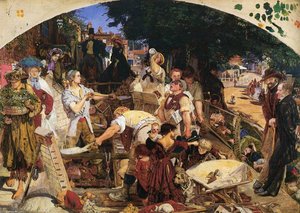
Las pinturas de Brown se caracterizan por sus colores vivos y su realismo, a menudo representando temas históricos y morales. Su obra más destacada es posiblemente Work (1852-1865), una pintura que muestra su estilo distintivamente gráfico y hogarthiano. Los murales de Manchester, una serie de doce obras pintadas para el Ayuntamiento de Manchester, son otro ejemplo notable del arte de Brown. Estos murales representan la historia mancuniana y se consideran algunos de los mejores ejemplos del arte prerrafaelita.- Destacan también sus contribuciones al diseño de vidrieras y muebles para la compañía de artes decorativas de William Morris.
Influencia y Legado
Brown fue un asesor y amigo de los miembros de la Hermandad Prerrafaelita, un grupo que influyó con su estilo artístico. Su trabajo ha sido ampliamente reconocido, y se le considera uno de los pioneros del arte prerrafaelita.- La obra de Thomas Benjamin Kennington, The Pinch of Poverty, muestra la influencia del estilo de Brown en otros artistas.
- El propio trabajo de Brown, como The Last of England, demuestra su capacidad para capturar la esencia de los temas históricos y morales.
Vida Personal y Años Posteriores
Brown se casó dos veces: primero con Elizabeth Bromley en 1841, quien falleció en 1846, y luego con Emily Hill en 1853, quien también murió en 1890. Tuvo cinco hijos, incluyendo a Lucy Madox Brown y Catherine Madox Brown. Su hijo Oliver Madox Brown (1855–1874) mostró grandes dotes como pintor y poeta, pero murió prematuramente. Su nieto fue el famoso novelista Ford Madox Ford.Desarrollo Artístico y Evolución
Brown experimentó una notable evolución en su estilo a lo largo de su carrera. Inicialmente influenciado por las tragedias personales y los problemas sociales de la época, sus primeras obras se caracterizaban por tonos sombríos y colores apagados. Un punto crucial fue su viaje a Roma en 1845-1846, donde conoció a los nazarenos y estudió la pintura italiana, lo que le permitió ampliar su paleta y adoptar un enfoque más realista y vibrante. Su amistad con Dante Gabriel Rossetti y su posterior asociación con William Morris también fueron fundamentales para su desarrollo artístico, llevándolo a explorar nuevas técnicas y temas en el diseño de vidrieras y muebles.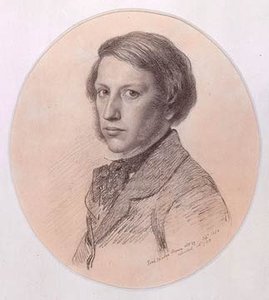
Ford Madox Brown
1821 - 1893 , Francia
Datos clave
- Artistas Que Influyeron:
- Hans Holbein
- Thomas Carlyle
- Fecha De Muerte: 6 de octubre de 1893
- Fecha De Nacimiento: 16 de abril de 1821
- Influencia En Artistas: ['Pre-Rafaelitas']
- Lugar De Nacimiento: Calais, Francia
- Movimiento Artístico: Prerrafaelismo
- Nacionalidad: Británico
- Nombre Completo: Ford Madox Brown
- Obras Notables:
- Work (1852-1865)
- Los murales de Manchester
- El último de Inglaterra
Artículos relacionados
Ford Madox Brown: Pre-Raphaelite Visionary & Victorian Social Commentary
Explore the life & art of Ford Madox Brown, a pivotal Pre-Raphaelite painter renowned for his powerful social commentary and masterpiece 'Work'. Discover his lasting influence on British art history.
Las 10 Obras Maestras Marrones Rosados: Belleza Atemporal para tu Hogar |
Descubre las 10 pinturas marrones rosados más icónicas de la historia del arte. Explora el Renacimiento, Barroco e Impresionismo con obras maestras llenas de calidez y significado. Reproducciones de alta calidad en .
Jacob Henricus Maris: A Master of Dutch Atmospheric Realism & the Intimate Landscape
Explore the captivating world of Jacob Henricus Maris, a leading figure of the Dutch Hague School. Discover his atmospheric landscapes, signature brushstrokes & lasting influence on 19th-century art. Learn more at ArtsDot.

Los 10 Óleos Más Famosos en Tonos Marrones Arenosos | Arte y Decoración
Descubre los 10 óleos más emblemáticos en tonos marrones arenosos. Explora la historia, técnica y belleza de artistas como Rembrandt y Caravaggio. Encuentra reproducciones de arte exclusivas para decorar tu hogar con elegancia en ArtsDot.com
John George Brown: Capturing American Life & Sentiment in 19th-Century Genre Painting
Explore the captivating genre paintings of John George Brown, celebrated for his realistic depictions of 19th-century American life. Discover his legacy & find museum-quality reproductions at ArtsDot.