

 Ver en contexto
 Enviar
 Compartir
 Detalles

 Descargar
 Similares
 Radiografía
 Presentación de diapositivas
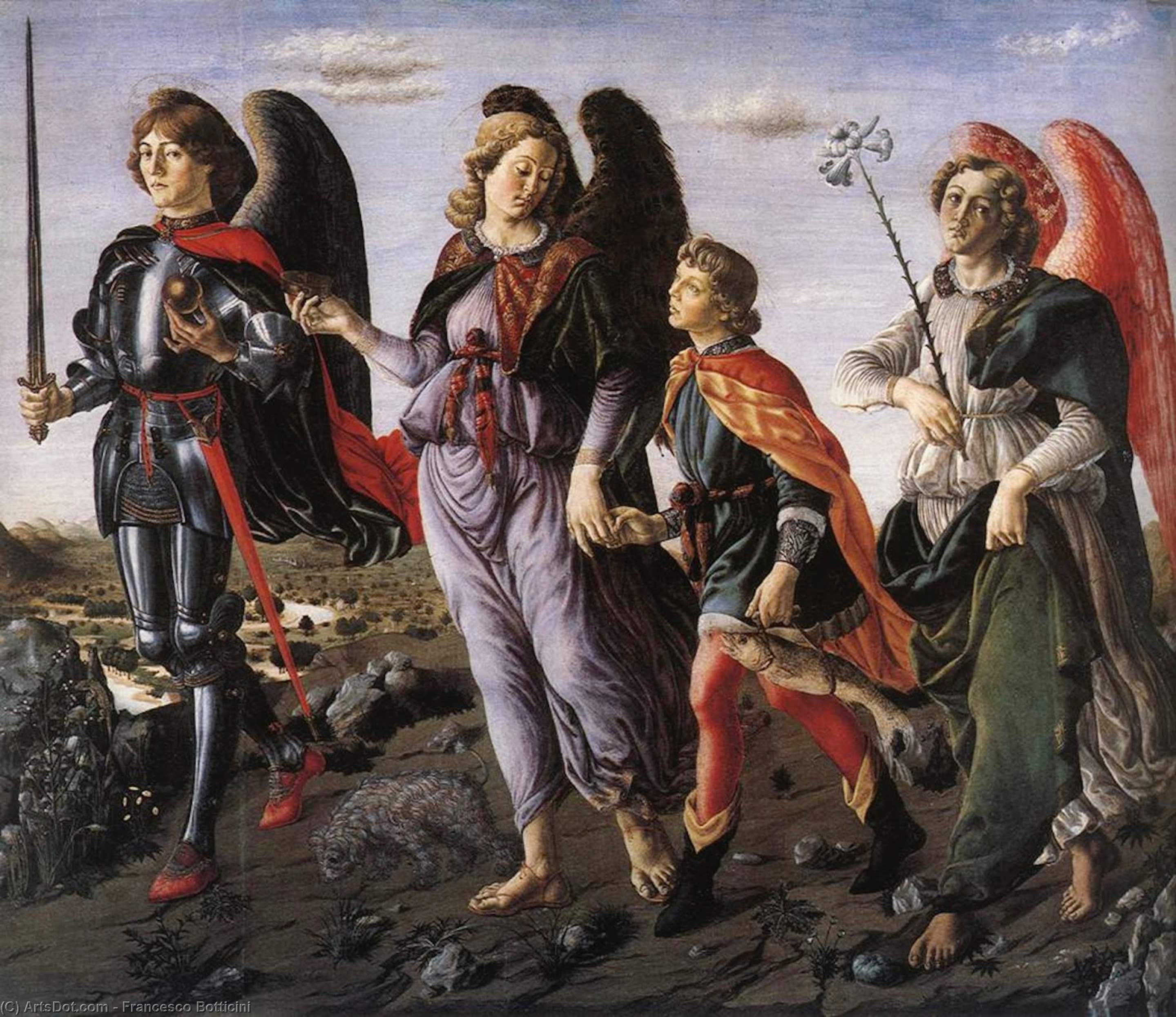
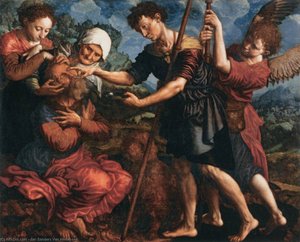
The Three Archangels with Tobias
 Oil On Canvas
- WallArt
- Renaissance
 1470
1470- Renaissance
 135.0 x 154.0 cm
 Galería de los Uffizi
 Ver más
Giclée / Impresión de arte
Impresiones giclée o en lienzo de calidad de museo con producción rápida y opciones de acabado flexibles. ( Comprar pintura hecha a mano Comprar imagen)




P118B $10

P118H $10

P118W $10

P438Z $10

P508JH $12

P508YH $12

P805H $10

P805Z $10

P919BZ $10

P919G $10

P919XJ $10

P959ZH $10

P968JZ $12

W106C $8

W218G $10

W218JH $8

W218Y $10

W307PJ $10

W316G $10

W316PJ $8

W316Y $10

W398PJ $8

W4111J $10

W500HY $15

W500JH $15

W692G $12

W849H $8

W940BG $15

W953PJ $8




Elija entre nuestros tamaños predefinidos que respetan las proporciones originales de la obra.

Puede introducir sus propias dimensiones para adaptarse a un marco o espacio específico. Si el tamaño seleccionado no coincide con las proporciones de la imagen original, recortaremos la obra de arte o extenderemos la imagen con un borde con efecto espejo o de color sólido. Se enviará una maqueta digital para su aprobación antes de que comience la producción.
Tenga en cuenta que la vista previa en pantalla no refleja el recorte o la extensión real. Solo la maqueta mostrará con precisión la composición final.
Aunque existen tamaños personalizados, recomendamos seleccionar una dimensión de la lista predefinida para preservar las proporciones originales.
Envío a todo el mundo () en 2 semanas en lugar de las 4/5 semanas estándar. (27 agosto)

Envío exprés gratuito a todo el mundo

Lienzo de lino de alta calidad

Seguro de envío total

Garantía de reembolso de impuestos aduaneros

Garantía de fidelidad cromática exacta

Política de devolución de 60 días (solo por defectos)

Garantía de devolución del 100% del dinero

Descuento por cantidad
 La opción de vidrio solo está disponible en tamaños inferiores a 110 cm.

The Three Archangels with Tobias
Giclée / Impresión de arte
Dimensiones de la reproducción
-


Precio total final
$ 62
A Renaissance Vision of Divine Grace
In the heart of the Florentine Renaissance, where the boundaries between the earthly and the divine were often blurred by the brushstrokes of masters, Francesco Botticini captured a moment of profound celestial encounter. His masterpiece, The Three Archangels with Young Tobias, painted around 1470, serves as a luminous window into a period defined by spiritual depth and an obsession with idealized beauty. As one gazes upon this oil painting, currently preserved in the Galleria Sabauda of Turin, there is an immediate sense of being transported to a rugged, sun-drenched Tuscan landscape, where the air feels thick with the presence of the sacred. The composition is not merely a depiction of figures; it is a carefully orchestrated narrative of protection, guidance, and innocence.
The painting brings to life the biblical tale of Tobias from the Apocrypha, presenting a celestial hierarchy that commands the viewer's attention. At the forefront, three archangels—Michael, Raphael, and Gabriel—stand with an authority that is both intimidating and comforting. Each figure is imbued with a specific symbolic weight: Michael’s outstretched hand acts as a shield of divine protection, Raphael embodies the steady hand of guidance, and Gabriel holds a delicate lily, a timeless emblem of purity and grace. Amidst these powerful entities sits young Tobias, whose vulnerability and innocence provide a poignant human anchor to the scene. This juxtaposition between the monumental strength of the angels and the fragile humanity of the boy creates a visual tension that speaks to the universal human desire for divine guardianship.
Mastery of Light, Color, and Form
Technically, Botticini demonstrates the pinnacle of 15th-century Florentine skill, drawing inspiration from the structural clarity of Piero della Francesca and the anatomical precision of Andrea Mantegna. The artist employs a rich, sophisticated palette where deep purples, celestial blues, and shimmering golds dance across the canvas, creating an atmosphere of solemnity and splendor. Through the meticulous application of oil paints—utilizing techniques such as glazing and layering—Botticently achieves a sense of profound depth and volume. The drapery of the angels' garments flows with an organic grace, their folds catching soft, diffused light that seems to emanate from within the figures themselves.
The landscape serves as more than just a backdrop; it is a masterclass in atmospheric perspective. As the eye wanders past the central figures toward the distant mountains, the colors soften and fade into paler, hazier tones, creating an illusion of vast, infinite space. This technique draws the viewer deeper into the painting, mirroring the spiritual journey of Tobias himself. For the collector or interior designer, this artwork offers a remarkable sense of movement and tranquility. The smooth, flowing lines and balanced composition make it a commanding centerpiece, capable of anchoring a room with its serene energy and historical weight. To possess a reproduction of such a piece is to invite the quiet, enduring elegance of the Renaissance into a modern space, fostering an environment of contemplation and timeless beauty.
Obras relacionadas


Biografía del artista
Francesco Botticini: A Florentine Master Rediscovered
Francesco di Giovanni Botticini (c. 1446 – January 16, 1498) stands as a testament to the quiet brilliance of early Renaissance painting—a figure whose impact on Florentine art history has only recently been fully appreciated thanks to meticulous scholarship and the painstaking reconstruction of his oeuvre. While overshadowed by contemporaries like Leonardo da Vinci and Michelangelo during his lifetime, Botticini’s output represents a substantial contribution to the artistic landscape of his era, characterized by masterful technique and profound spiritual contemplation.Early Life and Artistic Training
Born in Florence around 1446—precise dates remain elusive—Botticini descended from a family with established artistic traditions. His father, Giovanni di Domenico di Piero, was himself a painter, fostering an environment conducive to artistic pursuits. Crucially, Botticini’s formative years coincided with the ascendancy of Neri di Bicci, arguably Florence's most influential workshop master at the time. Recognizing his talent early on, Bicci apprenticed Botticini in 1459, securing him a position within a vibrant hub of artistic innovation. This association proved invaluable, exposing Botticini to the stylistic precepts and collaborative spirit that defined Bicci’s studio—a crucible for shaping the sensibilities of future masters. Though his tenure was brief, lasting only nine months before he departed Bicci's workshop in 1460, Botticini’s time under Bicci instilled a foundational understanding of fresco painting and humanist artistic ideals. Following his departure from Bicci’s workshop, Botticini embarked on a period of intensive study within the atelier of Andrea del Verrocchio—a legendary sculptor and painter who served as mentor to Leonardo da Vinci among others. This immersion in Verrocchio's workshop provided Botticini with unparalleled exposure to sculptural techniques alongside painting, broadening his artistic horizons and solidifying his mastery of illusionistic perspective. The collaborative atmosphere fostered by Verrocchio undoubtedly influenced Botticini’s stylistic choices, contributing to the distinctive visual language that characterizes his paintings.Botticini’s Artistic Style and Notable Works
Botticini's artistic style is immediately recognizable for its luminous color palette—particularly its use of ultramarine pigment—and its meticulous attention to detail. He excelled in portraying religious subjects with a serene grace and psychological depth, prioritizing emotional resonance over dramatic gesture. His paintings frequently depict scenes from the Gospels and biblical narratives, imbued with symbolic significance and conveying profound spiritual contemplation. Among Botticini’s most celebrated achievements are undoubtedly ‘Assumption of the Virgin,’ housed in Siena Cathedral—a monumental altarpiece showcasing Botticini's unparalleled skill in fresco painting and his masterful manipulation of color and light—and ‘Sacrament Tabernacle,’ a breathtaking depiction of Christ’s ascension, demonstrating Botticini’s mastery of spatial illusionism. Furthermore, he produced iconic works such as 'Saint Sebastian,' 'Saint Cecilia Between Saint Valerian and Saint Tiburtius with a Donor' and 'Santa Mónica entronizada', each reflecting the humanist ideals prevalent in Florentine art during his time.Influences and Artistic Legacy
Botticini’s artistic development was profoundly shaped by the stylistic currents circulating within Florence at the time—drawing inspiration from Giotto di Bondone’s expressive frescoes, which championed emotional realism and psychological insight; from Cosimo Rosselli's monumental frescoes in Siena Cathedral, demonstrating Botticini’s command of color and composition; and from Andrea del Castagno’s innovative use of perspective and symbolism. He absorbed the humanist ethos prevalent in Florentine intellectual circles—emphasizing human dignity and celebrating earthly beauty alongside spiritual contemplation—resulting in a distinctive artistic vision that distinguishes him from his contemporaries. Botticini's legacy extends beyond his individual masterpieces, securing his place as a pivotal figure shaping the artistic trajectory of Florence during its golden age. His meticulous technique—characterized by painstaking detail and masterful illusionistic perspective—established Botticini as one of the foremost painters of his era, influencing subsequent generations of artists and contributing to the enduring fascination with early Renaissance art. Recent scholarship has dramatically expanded our understanding of Botticini’s prolific output—revealing a considerable number of paintings previously attributed to other artists—underscoring Botticini's significance as a “minor master,” whose understated elegance and profound spiritual sensitivity nonetheless resonate powerfully with audiences today.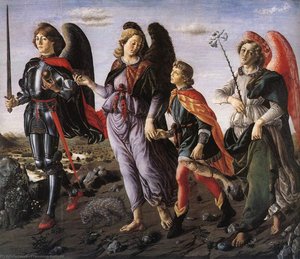
Francesco Botticini
1446 - 1498 , Italia
Datos clave
- Artistic Movement Or Style: Renacimiento Temprano
- Artists Who Influenced This Artist:
- Neri di Bicci
- Andrea del Verrocchio
- Date Of Death: 1498
- Full Name: Francesco di Giovanni Botticini
- Nationality: Italiano
- Notable Artworks: ['Ascensión de María']
- Place Of Birth: Florence, Italia
Artículos relacionados

The Enduring Legacy of Oil on Canvas: Technique, History & Aesthetic Impact
Explore the rich history & techniques of oil painting – from Renaissance masters to Impressionism. Discover pigments, layering methods, and why this timeless medium endures. Expert insights for artists & art enthusiasts.

El Óleo sobre Lienzo: Historia, Técnica y la Persistencia de un Medio Artístico Atemporal
Descubre la historia y técnica del óleo sobre lienzo. Explora reproducciones fieles hechas a mano, personalización artística y consejos de expertos con ArtsDot. ¡Colecciona arte con confianza!

El Legado Duradero del Óleo sobre Lienzo: Técnica, Historia y Práctica Contemporánea
Descubre la historia y técnica del óleo sobre lienzo. Explora reproducciones fieles hechas a mano, personalización artística y consejos de expertos con .
Las 10 Obras Maestras al Óleo que Revolucionaron la Historia del Arte |
Descubre las 10 obras maestras al óleo que transformaron la historia del arte. Explora Van Gogh, Monet, Da Vinci y más. Reproducciones de alta calidad para decorar tu hogar con elegancia. ¡Encuentra tu obra favorita en !

The Enduring Power of Painting: A Historical & Contemporary Exploration of Form and Emotion
Explore the rich history & enduring techniques of oil painting with ArtsDot. Discover masterpieces, learn about art collecting, and find authentic handmade reproductions crafted by skilled artists.


