 Ver en contexto
 Enviar
 Compartir
 Detalles

 Descargar
 Similares
 Radiografía
 Presentación de diapositivas
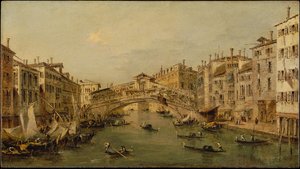
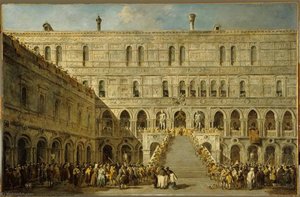
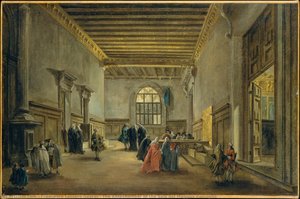
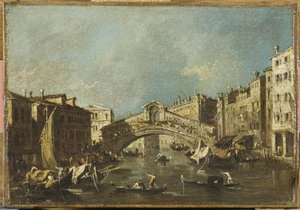
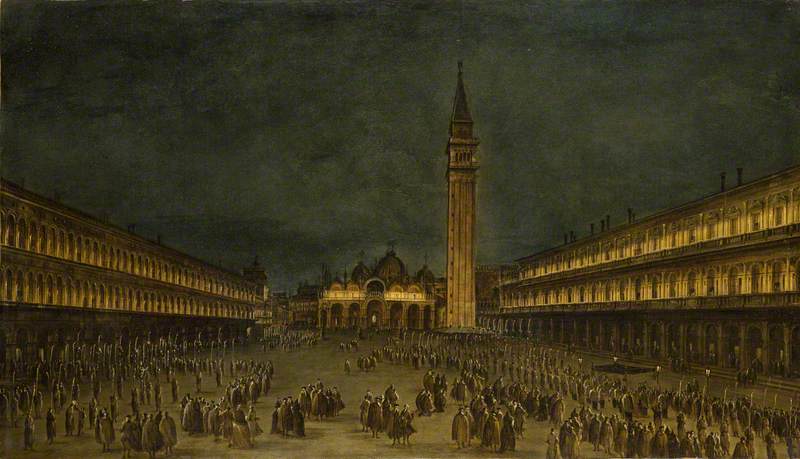
A Night Procession in the Piazza San Marco
 Oil On Canvas
- WallArt
- Impressionistic Venetian Style
 1755
1755- Early Modern
 48.0 x 85.0 cm
 El Museo Ashmolean de Arte y Arqueología
 Ver más
Reproducción al óleo hecha a mano
Óleo sobre lienzo pintado a mano en el tamaño y marco de su elección, realizado por encargo por nuestros artistas. ( Comprar impresión Comprar imagen)




P118B $10

P118H $10

P118W $10

P438Z $10

P508JH $12

P508YH $12

P805H $10

P805Z $10

P919BZ $10

P919G $10

P919XJ $10

P959ZH $10

P968JZ $12

W106C $8

W218G $10

W218JH $8

W218Y $10

W307PJ $10

W316G $10

W316PJ $8

W316Y $10

W398PJ $8

W4111J $10

W500HY $15

W500JH $15

W692G $12

W849H $8

W940BG $15

W953PJ $8




Elija entre nuestros tamaños predefinidos que respetan las proporciones originales de la obra.

Puede ingresar sus propias dimensiones para adaptarse a un marco o espacio específico. Si el tamaño seleccionado no coincide con las proporciones de la imagen original, recortaremos la obra o extenderemos la pintura con elementos adicionales pintados a mano. Se le enviará una maqueta digital para su aprobación antes de comenzar la producción.
Tenga en cuenta que la vista previa en pantalla no refleja el recorte o la extensión reales. Solo la maqueta mostrará con precisión la composición final.
Si bien existen tamaños personalizados, recomendamos seleccionar una dimensión de la lista predefinida para preservar las proporciones originales.
Tras realizar el pedido, el equipo de ArtsDot.com enviará un correo electrónico al cliente para solicitar instrucciones y proporcionarle una vista previa del boceto.
Envío a todo el mundo () en 3-4 semanas en lugar de las 5 semanas estándar. (29 agosto). Sin comprometer la calidad.

Envío exprés gratuito a todo el mundo

Lienzo de lino de alta calidad

Seguro de envío total

Garantía de reembolso de impuestos aduaneros

Garantía de fidelidad cromática exacta

Política de devolución de 60 días (solo por defectos)

Garantía de devolución del 100% del dinero

Descuento por cantidad
 La opción de vidrio solo está disponible en tamaños inferiores a 110 cm.

A Night Procession in the Piazza San Marco
Técnica de reproducción
Dimensiones de la reproducción
-


Precio total final
$ 263
A Window Into Venetian Twilight: Exploring Francesco Guardi’s “Nighttime Procession in Piazza San Marco”
Francesco Lazzaro Guardi's "Nighttime Procession in Piazza San Marco," completed in 1750, isn’t merely a depiction of a Venetian street scene; it’s a distillation of the city’s soul—a poignant testament to its fading glory and an enduring emblem of artistic brilliance. Painted during a period marked by political instability and economic decline following the Seven Years' War, Guardi captured not just what was visible but also what lingered in the air – the quiet melancholy of a city grappling with change, yet stubbornly clinging to its traditions. This masterpiece resides within the Venetian School’s canon, representing a crucial juncture where Baroque grandeur yielded to Impressionistic sensitivity.- Subject Matter: The painting portrays a bustling Piazza San Marco at night during Corpus Christi celebrations. A procession of pilgrims winds its way through the square, illuminated by flickering lanterns and punctuated by the solemn chants of priests. Alongside the devout figures are merchants, citizens, and entertainers, creating a microcosm of Venetian life.
- Style: Guardi’s style defies easy categorization. While rooted in Baroque principles—particularly the use of chiaroscuro—he eschewed rigid formalism, favoring loose brushwork and atmospheric perspective that would foreshadow Impressionism's groundbreaking approach to capturing light and color. This deliberate blurring of lines distinguishes him from his contemporaries and elevates “Nighttime Procession” beyond a simple topographical record.
Technique: Guardi’s Masterful Brushstrokes – A Legacy of Atmospheric Illusion
Guardi's technique is characterized by an astonishing level of detail achieved through remarkably subtle brushstrokes. He employed a layering process—applying thin glazes over thicker underpaintings—to build up tonal gradations that convey the ethereal quality of nighttime illumination. The artist’s masterful manipulation of light and shadow isn’t merely decorative; it's integral to conveying the emotional resonance of the scene. Notice how Guardi captures the diffused glow emanating from the lanterns, casting long shadows across the piazza and imbuing the figures with a sense of movement and immediacy. This technique exemplifies the Venetian School’s commitment to realism tempered by artistic imagination.- Color Palette: The painting utilizes a muted color palette dominated by blues, browns, and ochres—colors that reflect the subdued hues of twilight and contribute to the overall atmosphere of solemn contemplation. However, Guardi skillfully employs highlights of gold and crimson to accentuate key elements within the procession, drawing the viewer’s eye toward the central figures and emphasizing the grandeur of the religious observance.
- Historical Context: Corpus Christi processions were a cornerstone of Venetian Catholic piety during the Baroque era. They served as a powerful expression of faith and civic pride—a reaffirmation of Venice's identity amidst turbulent geopolitical currents. Guardi’s depiction captures not only the visual spectacle but also the spiritual significance of these rituals, offering us a glimpse into the beliefs and values of his time.
Symbolism & Emotional Impact: Beyond Representation – Capturing the Essence of Venetian Spirit
“Nighttime Procession” transcends mere representation; it embodies the spirit of Venice itself—a city striving to preserve its traditions while acknowledging the inexorable march of progress. The procession symbolizes faith, devotion, and communal solidarity—values that underpinned Venetian society for centuries. Furthermore, Guardi’s atmospheric perspective evokes a profound sense of melancholy – a recognition of beauty fading into darkness. The painting invites contemplation on themes of mortality, remembrance, and the enduring power of art to transcend time. It remains an unforgettable image of Venetian twilight, resonating with viewers today as powerfully as it did in 1750.This stunning reproduction captures Guardi’s artistic vision with exceptional fidelity, allowing you to experience the beauty and emotion of Piazza San Marco at night – a timeless masterpiece worthy of any discerning collector or interior designer.
Obras relacionadas

Biografía del artista
Una vida de arte y declive en Venecia
Francesco Lazzaro Guardi, pintor italiano de veduta, noble y miembro de la escuela veneciana, vivió desde el 5 de octubre de 1712 hasta el 1 de enero de 1793. Su vida marcó el fin de una era en el arte veneciano, caracterizada por su mezcla única de realismo e imaginación.Primeros años y colaboraciones
En sus primeros años, Guardi colaboró con su hermano mayor Gian Antonio en la producción de pinturas religiosas. Esta asociación duró hasta la muerte de Gian Antonio en 1760, momento en el que Francesco se centró en la veduta, un estilo de pintura de paisajes que enfatiza el paisaje urbano.- Los primeros trabajos de Francesco Guardi muestran la influencia de Canaletto, pero gradualmente desarrolló un estilo más suelto caracterizado por pinceladas enérgicas y una arquitectura libremente imaginada.
- Su familia, incluyendo a su padre Domenico (nacido en 1678) y sus hermanos Niccolò y Gian Antonio, también fueron pintores, contribuyendo al taller familiar después de la muerte de su padre en 1716.
- Maria Cecilia, hermana de Guardi, se casó con Giovanni Battista Tiepolo, un prominente pintor veneto-europeo de su época.
Obras notables y estilo
Entre sus obras posteriores más importantes se encuentran los Festivales del Doge, una serie de doce lienzos que celebran las ceremonias realizadas en 1763 para la elección del Doge Alvise IV Mocenigo. Su estilo, conocido como pittura di tocco (de toque), se caracteriza por pequeñas pinceladas y pinceladas enérgicas.- Las pinturas de Francesco Guardi evocan el inicio del declive en Venecia, con un enfoque en cielos nublados sobre una ciudad al anochecer.
- Su obra difiere del estilo más lineal y arquitectónicamente preciso de la pintura de Canaletto, a menudo representando Venecia bajo la luz diurna soleada.
- El estilo de Guardi influyó posteriormente a los impresionistas franceses, quienes valoraron sus obras por su mezcla única de realismo e imaginación.
Legado y vida posterior
Francesco Lazzaro Guardi murió en el campo de la madona en Cannaregio (Venecia) en 1793. Su legado como uno de los últimos practicantes de la escuela veneciana clásica perdura, con sus obras que siguen siendo un testimonio de la mezcla única de realismo e imaginación que definió esta era del arte.- Vea más obras de Francesco Lazzaro Guardi en https://ArtsDot.com/@/francesco-lazzaro-guardi
- Explore la escuela veneciana y su influencia en el arte en /es/art/list/
- Descubra más sobre la vida y las obras de Francesco Lazzaro Guardi en https://es.wikipedia.org/wiki/Francesco_Guardia
- 5 de octubre de 1712: Nacimiento de Francesco Lazzaro Guardi
- 1 de enero de 1793: Muerte de Francesco Lazzaro Guardi

Francesco Lazzaro Guardi
1712 - 1793 , Italia
Datos clave
- Artistas Que Influyeron:
- Canaletto
- Gian Antonio Guardi
- Fecha De Fallecimiento: 1 de enero de 1793
- Fecha De Nacimiento: 5 de octubre de 1712
- Influencia En Artistas: ['Impresionismo Francés']
- Lugar De Nacimiento: Venecia, Italia
- Movimiento Artístico: Veduta, Escuela Veneciana
- Nacionalidad: Italiana
- Nombre Completo: Francesco Lazzaro Guardi
- Obras Notables:
- Festas del Doge
- Vistas de Venecia
Artículos relacionados

Jacopo Tintoretto: Las 25 Obras Maestras del Genio Veneciano | Arte y Decoración en ArtsDot
Descubre las 25 obras maestras de Jacopo Tintoretto, el genio veneciano del Renacimiento. Explora su arte dramático, composiciones innovadoras y paleta vibrante. Reproducciones de alta calidad en ArtsDot.com para transformar tu hogar.
La Luz Dorada de la Innovación: Explorando el Renacimiento Veneciano (1430–1580)
Descubra la riqueza y el esplendor del Renacimiento veneciano con ArtsDot. Explore las obras maestras de Tiziano, Giorgione y Tintoretto. Análisis experto, historia detallada e información para coleccionistas.
Pietro Longhi's Venetian Scenes: A Study of Rococo Society & Domestic Life
Explore the captivating world of Pietro Longhi's Venetian scenes! Discover insightful analysis of his Rococo masterpieces & social commentary on 18th-century life. Learn about this 'Venetian Hogarth' and his lasting artistic legacy.
Jacopo Palma il Giovane: A Venetian Master's Poetic Evolution
Explore the captivating world of Jacopo Palma il Giovane, a pivotal Venetian Renaissance master. Discover his unique style, influenced by Titian & Tintoretto, and learn about key works perfect for discerning collectors.
Vittore Carpaccio: Venetian Renaissance Narrative & the Poetics of Detail
Explore the captivating world of Vittore Carpaccio, a master storyteller of the Venetian Renaissance. Discover his intricate details, narrative cycles like 'The Legend of St. Ursula,' and unique artistic style.