

 Ver en contexto
 Enviar
 Compartir
 Detalles

 Descargar
 Similares
 Radiografía
 Presentación de diapositivas
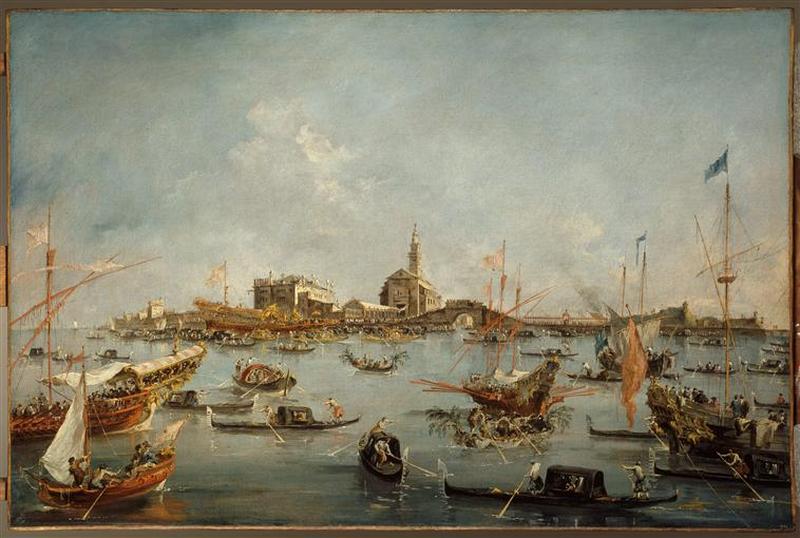
LE DOGE SUR LE BUCENTAURE, A SAN NICCOLO DI LIDO A VENISE LE JOUR DE L'ASCENSION


 Ver más
Adquiera una imagen digital de alta resolución y optimizada, muy superior a la vista previa en línea.
Cada archivo es preparado meticulosamente por nuestros especialistas internos mediante el uso de herramientas avanzadas y un experto retoque manual. Nos aseguramos de que cada imagen posea una claridad excepcional, una precisión cromática impecable y un detalle minucioso.
El archivo final se entrega por correo electrónico en un plazo de 72 horas, optimizado para su uso inmediato en entornos profesionales, editoriales y de impresión. Esta es la misma calidad en la que confían los estudios de diseño, las editoriales y las galerías de primer nivel.
Imagen Digital
Descarga un archivo de alta resolución para exhibición personal, impresión y proyectos creativos. ( Comprar impresión Comprar pintura hecha a mano)
Incluido en cada pedido de imágenes digitales
Entrega digital experta, garantizada.
Al elegir ArtsDot.com, no solo está adquiriendo una imagen; está recibiendo una obra de arte digital mejorada profesionalmente, elaborada con precisión y respaldada por una garantía de satisfacción. Esto es todo lo que incluye su pedido, automáticamente:

Entrega rápida por email
Recibirá su archivo de imagen digital en alta resolución por correo electrónico en un plazo de 72 horas tras realizar su pedido, listo para su uso inmediato.

Archivo digital optimizado por IA
Su obra de arte se optimiza profesionalmente mediante herramientas avanzadas de IA y edición manual, garantizando el máximo detalle, claridad y precisión cromática.

Reenvío gratuito de por vida
¿Has borrado o perdido tu archivo por error? No te preocupes: te lo volveremos a enviar en cualquier momento, sin coste adicional.

Sin gastos de importación, siempre
Disfrute de su obra de arte al instante sin aduanas, aranceles ni gastos de envío; las descargas digitales siempre están libres de impuestos.

Garantía de fidelidad de color
Garantizamos que su imagen digital refleje los colores originales con la mayor fidelidad posible, mediante el uso de herramientas profesionales y gestión del color.

Garantía de satisfacción de 60 días
Si no está satisfecho con su imagen digital, la revisaremos o le reembolsaremos el 100% en un plazo de 60 días, sin preguntas.

100% Garantía de devolución de dinero
¿No está satisfecho? Obtenga un reembolso completo dentro de los 60 días posteriores a la recepción de su archivo digital, sin necesidad de explicaciones.

Descuentos por pedidos grandes
Compra 3 imágenes, ahorra 10% - Compra 5, ahorra 15% - Compra 10+, ahorra 20%. Ideal para proyectos creativos, galerías y agencias.
Descripción del coleccionable
A Venetian Twilight: Francesco Guardi’s “Le Doge sur le Bucentaure”
Francesco Lazzaro Guardi's "Le Doge sur le Bucentaure, A San Niccolò di Lido a Venezia Le Jour de l’Ascension" isn’t merely a depiction of a Venetian scene; it’s a poignant distillation of a city in transition. Painted around 1775-1780, this work captures the fading grandeur of Venice as the Republic succumbed to political and economic decline, yet simultaneously celebrates its enduring spirit through vibrant color and masterful atmospheric perspective. Guardi, a key figure at the tail end of the Venetian School, eschewed the rigid formality of his predecessors, embracing a looser, more impressionistic style that foreshadowed the developments of Impressionism decades later. This painting isn’t just about a festive procession; it's a meditation on Venice itself – its beauty, its decline, and the enduring power of tradition.
A Symphony of Light and Water
The composition immediately draws the eye into a vast expanse of water, dominated by the imposing presence of the Doge’s barge, the *Bucentaure*. Guardi expertly utilizes atmospheric perspective to create an illusion of immense depth. The distant cityscape—towers, buildings, and architectural details characteristic of Venice—appears subtly paler and less defined, receding into a hazy distance that emphasizes the immediacy of the foreground action. The light source, seemingly originating from the left, casts dramatic highlights across the scene, illuminating the boats, figures, and shimmering water surfaces with an almost theatrical intensity. This careful manipulation of light isn’t simply decorative; it contributes significantly to the painting's dynamic energy and sense of movement.
- Color Palette: Dominated by warm tones – golds, yellows, oranges, and browns – reflecting the Venetian sun and the rich fabrics adorning the boats and figures.
- Brushwork: Guardi’s distinctive brushstrokes are visible throughout the painting, adding a sense of spontaneity and immediacy to the scene. The loose application of paint contributes to the overall impressionistic effect.
- Composition: A horizontal format emphasizes the breadth of the lagoon, creating a panoramic view that immerses the viewer in the Venetian atmosphere.
Symbolism and Historical Context
The painting’s subject—the Doge's barge during Ascension Day—holds significant historical and symbolic weight. The *Bucentaure*, a magnificent vessel, represented the power and authority of Venice as a maritime republic. Ascension Day itself was a major religious festival, celebrating Christ’s ascension into heaven, and the procession served as a public display of Venetian piety and civic pride. Guardi subtly incorporates this historical context by depicting not just the grandeur of the event but also the bustling activity surrounding it – the crowds gathered on shore, the numerous boats vying for position, all contributing to a vibrant tableau of Venetian life. The painting can be interpreted as a celebration of Venice’s past glory and its continued connection to tradition amidst an era of change.
Guardi's Legacy: A Bridge to Impressionism
Francesco Guardi’s work stands apart within the Venetian School, not for its adherence to classical conventions but for his innovative use of light, color, and brushwork. His focus on capturing atmospheric effects—the shimmering reflections on water, the hazy distances—anticipates the techniques employed by Impressionist painters like Monet and Renoir. Guardi’s ability to evoke a sense of atmosphere and fleeting moments in time is truly remarkable. Reproductions of “Le Doge sur le Bucentaure” offer a unique opportunity to experience the beauty and melancholy of Venice as it was during this pivotal period, reminding us of the enduring legacy of a city that continues to captivate artists and viewers alike. The painting’s emotional resonance—a blend of celebration, nostalgia, and quiet contemplation—makes it a timeless masterpiece.
Obras relacionadas
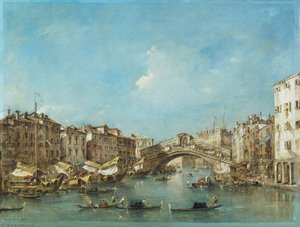
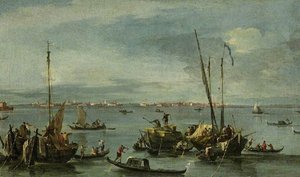
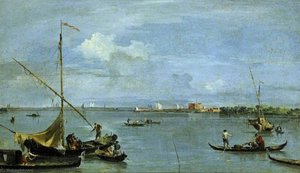
Biografía del artista
Una vida de arte y declive en Venecia
Francesco Lazzaro Guardi, pintor italiano de veduta, noble y miembro de la escuela veneciana, vivió desde el 5 de octubre de 1712 hasta el 1 de enero de 1793. Su vida marcó el fin de una era en el arte veneciano, caracterizada por su mezcla única de realismo e imaginación.Primeros años y colaboraciones
En sus primeros años, Guardi colaboró con su hermano mayor Gian Antonio en la producción de pinturas religiosas. Esta asociación duró hasta la muerte de Gian Antonio en 1760, momento en el que Francesco se centró en la veduta, un estilo de pintura de paisajes que enfatiza el paisaje urbano.- Los primeros trabajos de Francesco Guardi muestran la influencia de Canaletto, pero gradualmente desarrolló un estilo más suelto caracterizado por pinceladas enérgicas y una arquitectura libremente imaginada.
- Su familia, incluyendo a su padre Domenico (nacido en 1678) y sus hermanos Niccolò y Gian Antonio, también fueron pintores, contribuyendo al taller familiar después de la muerte de su padre en 1716.
- Maria Cecilia, hermana de Guardi, se casó con Giovanni Battista Tiepolo, un prominente pintor veneto-europeo de su época.
Obras notables y estilo
Entre sus obras posteriores más importantes se encuentran los Festivales del Doge, una serie de doce lienzos que celebran las ceremonias realizadas en 1763 para la elección del Doge Alvise IV Mocenigo. Su estilo, conocido como pittura di tocco (de toque), se caracteriza por pequeñas pinceladas y pinceladas enérgicas.- Las pinturas de Francesco Guardi evocan el inicio del declive en Venecia, con un enfoque en cielos nublados sobre una ciudad al anochecer.
- Su obra difiere del estilo más lineal y arquitectónicamente preciso de la pintura de Canaletto, a menudo representando Venecia bajo la luz diurna soleada.
- El estilo de Guardi influyó posteriormente a los impresionistas franceses, quienes valoraron sus obras por su mezcla única de realismo e imaginación.
Legado y vida posterior
Francesco Lazzaro Guardi murió en el campo de la madona en Cannaregio (Venecia) en 1793. Su legado como uno de los últimos practicantes de la escuela veneciana clásica perdura, con sus obras que siguen siendo un testimonio de la mezcla única de realismo e imaginación que definió esta era del arte.- Vea más obras de Francesco Lazzaro Guardi en https://ArtsDot.com/@/francesco-lazzaro-guardi
- Explore la escuela veneciana y su influencia en el arte en /es/art/list/
- Descubra más sobre la vida y las obras de Francesco Lazzaro Guardi en https://es.wikipedia.org/wiki/Francesco_Guardia
- 5 de octubre de 1712: Nacimiento de Francesco Lazzaro Guardi
- 1 de enero de 1793: Muerte de Francesco Lazzaro Guardi
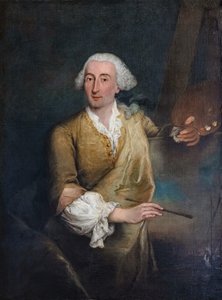
Francesco Lazzaro Guardi
1712 - 1793 , Italia
Breves datos
- Artistas Que Influyeron:
- Canaletto
- Gian Antonio Guardi
- Fecha De Fallecimiento: 1 de enero de 1793
- Fecha De Nacimiento: 5 de octubre de 1712
- Influencia En Artistas: ['Impresionismo Francés']
- Lugar De Nacimiento: Venecia, Italia
- Movimiento Artístico: Veduta, Escuela Veneciana
- Nacionalidad: Italiana
- Nombre Completo: Francesco Lazzaro Guardi
- Obras Notables:
- Festas del Doge
- Vistas de Venecia

