 Ver en contexto
 Enviar
 Compartir
 Detalles

 Descargar
 Similares
 Radiografía
 Presentación de diapositivas
LE PONT DU RIALTO A VENISE


 Ver más
Giclée / Impresión de arte
Impresiones giclée o en lienzo de calidad de museo con producción rápida y opciones de acabado flexibles. ( Comprar pintura hecha a mano Comprar imagen)




P118B $10

P118H $10

P118W $10

P438Z $10

P508JH $12

P508YH $12

P805H $10

P805Z $10

P919BZ $10

P919G $10

P919XJ $10

P959ZH $10

P968JZ $12

W106C $8

W218G $10

W218JH $8

W218Y $10

W307PJ $10

W316G $10

W316PJ $8

W316Y $10

W398PJ $8

W4111J $10

W500HY $15

W500JH $15

W692G $12

W849H $8

W940BG $15

W953PJ $8




Elija entre nuestros tamaños predefinidos que respetan las proporciones originales de la obra.

Puede introducir sus propias dimensiones para adaptarse a un marco o espacio específico. Si el tamaño seleccionado no coincide con las proporciones de la imagen original, recortaremos la obra de arte o extenderemos la imagen con un borde con efecto espejo o de color sólido. Se enviará una maqueta digital para su aprobación antes de que comience la producción.
Tenga en cuenta que la vista previa en pantalla no refleja el recorte o la extensión real. Solo la maqueta mostrará con precisión la composición final.
Aunque existen tamaños personalizados, recomendamos seleccionar una dimensión de la lista predefinida para preservar las proporciones originales.
Envío a todo el mundo () en 2 semanas en lugar de las 4/5 semanas estándar. (26 agosto)

Envío exprés gratuito a todo el mundo

Lienzo de lino de alta calidad

Seguro de envío total

Garantía de reembolso de impuestos aduaneros

Garantía de fidelidad cromática exacta

Política de devolución de 60 días (solo por defectos)

Garantía de devolución del 100% del dinero

Descuento por cantidad
 La opción de vidrio solo está disponible en tamaños inferiores a 110 cm.

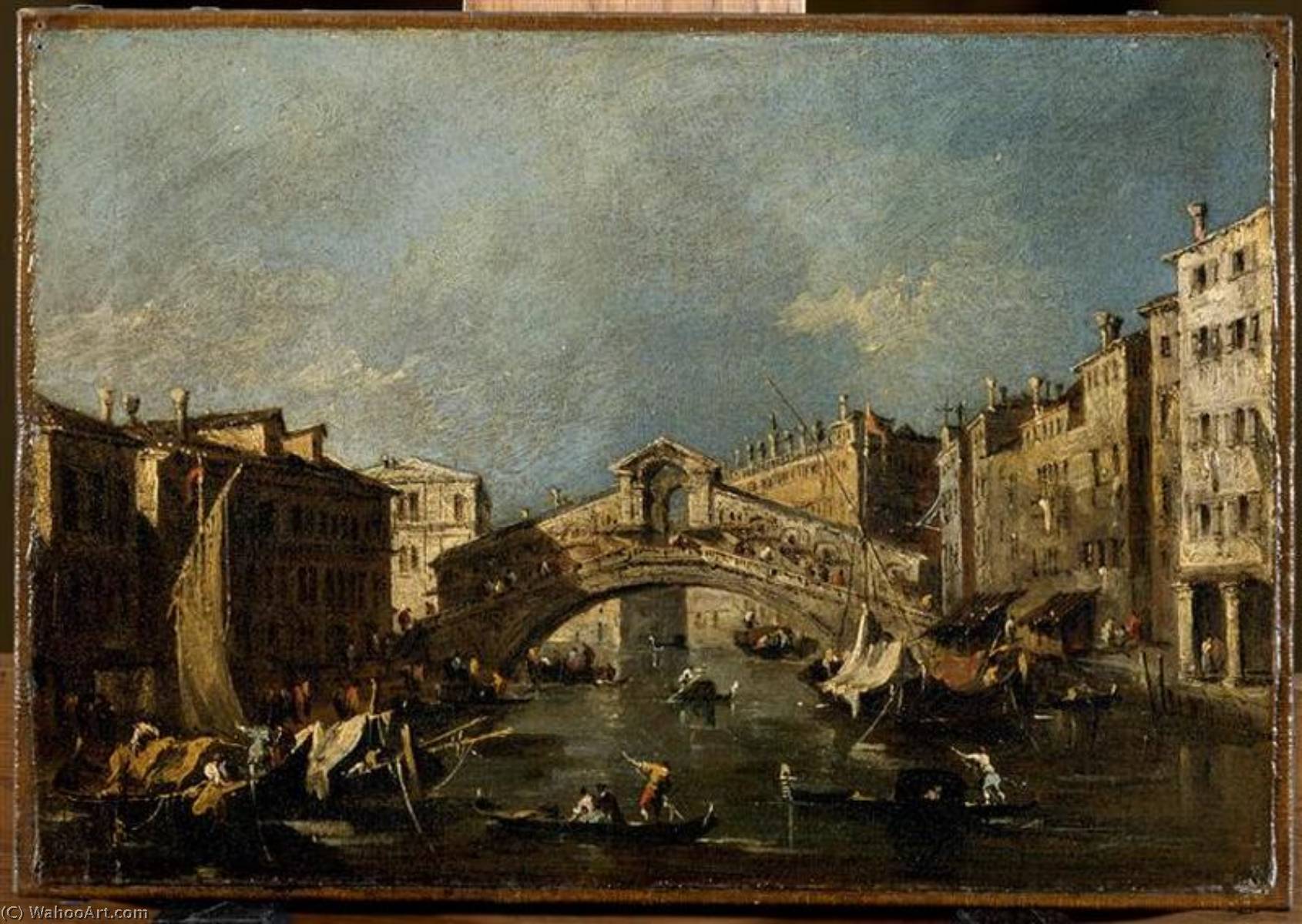
LE PONT DU RIALTO A VENISE
Giclée / Impresión de arte
Dimensiones de la reproducción
-


Precio total final
$ 62
Descripción de la pieza
Francesco Lazzaro Guardi’s Venetian Twilight
The canvas before you—"Le Pont du Rialto à Venise"—isn't merely a depiction of a bridge; it’s a distilled moment in the fading grandeur of Venice, captured with a poignant sensitivity by Francesco Lazzaro Guardi. Born into an artistic lineage steeped in Venetian tradition in 1712, Guardi lived through a period of profound transformation for his beloved city – a slow decline from its once-dominant position as a mercantile powerhouse to a quieter, more melancholic existence. Unlike the meticulously detailed renderings of Canaletto, Guardi wasn’t interested in celebrating Venice's outward splendor; instead, he sought to evoke its atmosphere, its inherent sense of timelessness and subtle sadness. This painting, created around 1760 (though exact dates are elusive), embodies this approach perfectly – a testament to the artist’s ability to capture not just what was seen, but how it *felt* to be in Venice at that particular time.
Guardi's style represents a pivotal moment in Venetian painting. He moved away from the rigid formality of earlier generations, embracing a looser, more painterly technique that foreshadowed the Impressionists who would later champion his work. His brushstrokes are visible, almost dancing across the canvas, creating a sense of immediacy and spontaneity. This deliberate lack of precision wasn’t a flaw; it was a conscious choice to prioritize atmosphere and feeling over photographic accuracy. The muted color palette—ochres, browns, grays, and creams—reflects the weathered stone of the buildings and the murky waters of the canal, lending the scene an aged, almost dreamlike quality. Notice how he uses subtle variations in tone to suggest depth and volume, creating a believable illusion of space without resorting to sharp lines or dramatic contrasts.
A Symphony of Light and Shadow
The lighting in “Le Pont du Rialto à Venise” is remarkably soft and diffused, as if filtered through a perpetual Venetian mist. There’s no harsh sunlight here; instead, Guardi employs a technique known as ‘sfumato,’ borrowing from the Renaissance masters but applying it with his own unique sensibility. Shadows are delicate and subtle, blending seamlessly into the surrounding colors, contributing to the overall hazy atmosphere. This diffused light not only creates a sense of mystery but also evokes a feeling of nostalgia—a longing for a bygone era. The composition itself is carefully balanced, drawing the eye towards the Rialto Bridge while simultaneously immersing it in the bustling activity of the canal.
The arrangement of elements within the painting is masterfully executed. The bridge, slightly off-center, serves as a focal point, anchoring the scene and providing a sense of stability. Buildings line both sides of the canal, receding into the distance according to the principles of linear perspective—though Guardi deliberately softens these lines, creating an atmospheric depth that feels more suggestive than strictly realistic. The inclusion of several gondolas and small boats, populated with figures engaged in various activities, adds a layer of life and movement to the scene, hinting at Venice’s continued role as a vibrant trading hub despite its declining fortunes.
Symbolism and Emotional Resonance
Beyond its technical brilliance, “Le Pont du Rialto à Venise” is rich in symbolic meaning. The bridge itself represents connection—linking the two sides of the city, but also perhaps symbolizing the tenuous link between Venice’s past glory and its uncertain future. The muted colors evoke a sense of melancholy and resignation, reflecting the artist's own awareness of his city’s decline. Yet, there’s also an underlying current of vitality – the bustling activity on the water suggests that Venice remains a place of commerce, culture, and human connection.
Guardi’s work resonates with a profound sense of timelessness. It's not simply a snapshot of a specific moment in Venetian history; it captures something deeper—the spirit of a city grappling with change, beauty intertwined with sadness, and the enduring allure of a place steeped in legend. Reproductions of this artwork offer a window into this captivating world, allowing you to experience the atmospheric depth and emotional resonance that made Guardi one of Venice’s most significant artists.
Technical Details & Reproduction Quality
Originally created as an oil painting on canvas, this reproduction faithfully captures the nuances of Guardi's technique. The visible brushstrokes, layered colors, and subtle gradations of tone are meticulously reproduced to ensure that you receive a faithful representation of the original artwork. ArtsDot’s hand-painted reproductions utilize archival-quality materials and skilled artisans who replicate Guardi’s distinctive style with exceptional attention to detail. The result is a stunning piece of art that will grace your home or office for generations to come, bringing a touch of Venetian twilight into your space.
Obras relacionadas
Biografía del artista
Una vida de arte y declive en Venecia
Francesco Lazzaro Guardi, pintor italiano de veduta, noble y miembro de la escuela veneciana, vivió desde el 5 de octubre de 1712 hasta el 1 de enero de 1793. Su vida marcó el fin de una era en el arte veneciano, caracterizada por su mezcla única de realismo e imaginación.Primeros años y colaboraciones
En sus primeros años, Guardi colaboró con su hermano mayor Gian Antonio en la producción de pinturas religiosas. Esta asociación duró hasta la muerte de Gian Antonio en 1760, momento en el que Francesco se centró en la veduta, un estilo de pintura de paisajes que enfatiza el paisaje urbano.- Los primeros trabajos de Francesco Guardi muestran la influencia de Canaletto, pero gradualmente desarrolló un estilo más suelto caracterizado por pinceladas enérgicas y una arquitectura libremente imaginada.
- Su familia, incluyendo a su padre Domenico (nacido en 1678) y sus hermanos Niccolò y Gian Antonio, también fueron pintores, contribuyendo al taller familiar después de la muerte de su padre en 1716.
- Maria Cecilia, hermana de Guardi, se casó con Giovanni Battista Tiepolo, un prominente pintor veneto-europeo de su época.
Obras notables y estilo
Entre sus obras posteriores más importantes se encuentran los Festivales del Doge, una serie de doce lienzos que celebran las ceremonias realizadas en 1763 para la elección del Doge Alvise IV Mocenigo. Su estilo, conocido como pittura di tocco (de toque), se caracteriza por pequeñas pinceladas y pinceladas enérgicas.- Las pinturas de Francesco Guardi evocan el inicio del declive en Venecia, con un enfoque en cielos nublados sobre una ciudad al anochecer.
- Su obra difiere del estilo más lineal y arquitectónicamente preciso de la pintura de Canaletto, a menudo representando Venecia bajo la luz diurna soleada.
- El estilo de Guardi influyó posteriormente a los impresionistas franceses, quienes valoraron sus obras por su mezcla única de realismo e imaginación.
Legado y vida posterior
Francesco Lazzaro Guardi murió en el campo de la madona en Cannaregio (Venecia) en 1793. Su legado como uno de los últimos practicantes de la escuela veneciana clásica perdura, con sus obras que siguen siendo un testimonio de la mezcla única de realismo e imaginación que definió esta era del arte.- Vea más obras de Francesco Lazzaro Guardi en https://ArtsDot.com/@/francesco-lazzaro-guardi
- Explore la escuela veneciana y su influencia en el arte en /es/art/list/
- Descubra más sobre la vida y las obras de Francesco Lazzaro Guardi en https://es.wikipedia.org/wiki/Francesco_Guardia
- 5 de octubre de 1712: Nacimiento de Francesco Lazzaro Guardi
- 1 de enero de 1793: Muerte de Francesco Lazzaro Guardi
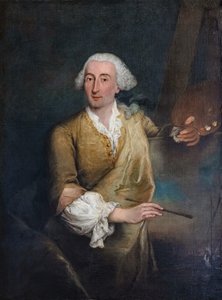
Francesco Lazzaro Guardi
1712 - 1793 , Italia
Datos clave
- Artistas Que Influyeron:
- Canaletto
- Gian Antonio Guardi
- Fecha De Fallecimiento: 1 de enero de 1793
- Fecha De Nacimiento: 5 de octubre de 1712
- Influencia En Artistas: ['Impresionismo Francés']
- Lugar De Nacimiento: Venecia, Italia
- Movimiento Artístico: Veduta, Escuela Veneciana
- Nacionalidad: Italiana
- Nombre Completo: Francesco Lazzaro Guardi
- Obras Notables:
- Festas del Doge
- Vistas de Venecia
Artículos relacionados
Francesco Guardi: Venetian Light, Atmospheric Perspective & the Rococo to Neoclassical Transition
Explore the captivating world of Francesco Guardi, master of Venetian light and atmosphere. Discover his transition from Rococo to Neoclassicism, influence on Impressionism & investment potential with ArtsDot.

John Constable: Las 25 Obras Maestras del Paisaje Inglés | ArtsDot
Descubre las 25 obras maestras de John Constable, el pintor romántico inglés que capturó la belleza del paisaje. Explora su técnica, historia y significado en ArtsDot.com. Reproducciones de arte de alta calidad para tu hogar.
Michelangelo Morlaiter: Venetian Landscapes & the Pursuit of Atmospheric Realism
Explore the captivating landscapes of Michelangelo Morlaiter, a key figure in 18th-century Venetian painting. Discover his mastery of atmospheric perspective and lasting influence on Italian art history. Learn more at ArtsDot.

Paisajes Románticos: 10 Obras Maestras que Definieron un Movimiento Artístico
Descubre los 10 paisajes románticos más influyentes de artistas como Caspar David Friedrich y Turner. Explora la belleza, el simbolismo y las técnicas del movimiento romántico. Reproducciones de arte exclusivas en ArtsDot.com.

Evocations of Place: A Historical Journey Through Landscape Art
Explore the rich history of landscape art with ArtsDot. Discover renowned artists, movements like Impressionism & Romanticism, and expert guidance for collecting timeless pieces. Find your perfect serene escape today!