 Ver en contexto
 Enviar
 Compartir
 Detalles

 Descargar
 Similares
 Radiografía
 Presentación de diapositivas
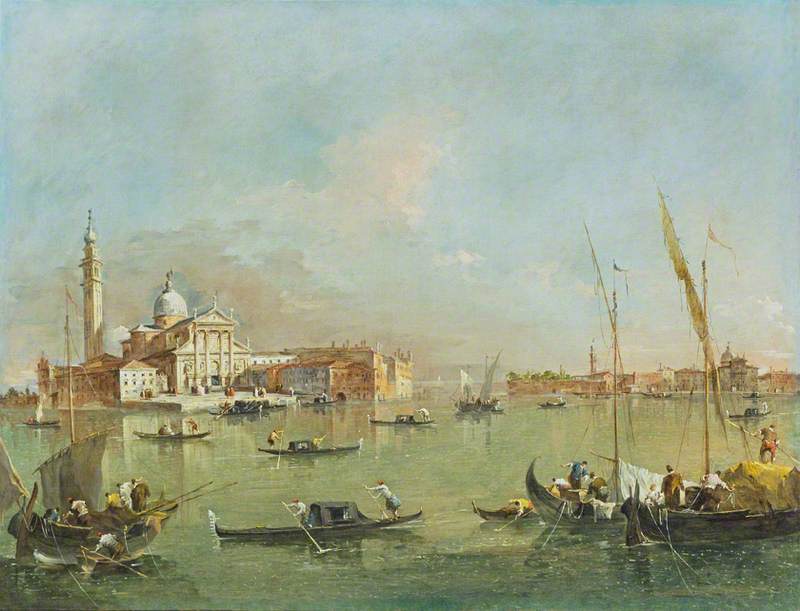
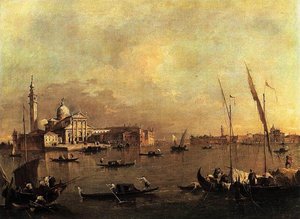
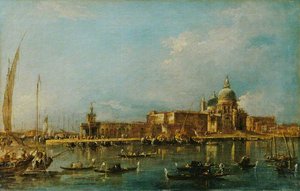
Venice San Giorgio Maggiore with the Giudecca and the Zitelle
 Oil
Oil- WallArt
- Impressionism
 1780
1780 69.0 x 92.0 cm
 The Wallace Collection
 Ver más
Reproducción al óleo hecha a mano
Óleo sobre lienzo pintado a mano en el tamaño y marco de su elección, realizado por encargo por nuestros artistas. ( Comprar impresión Comprar imagen)




P118B $10

P118H $10

P118W $10

P438Z $10

P508JH $12

P508YH $12

P805H $10

P805Z $10

P919BZ $10

P919G $10

P919XJ $10

P959ZH $10

P968JZ $12

W106C $8

W218G $10

W218JH $8

W218Y $10

W307PJ $10

W316G $10

W316PJ $8

W316Y $10

W398PJ $8

W4111J $10

W500HY $15

W500JH $15

W692G $12

W849H $8

W940BG $15

W953PJ $8




Elija entre nuestros tamaños predefinidos que respetan las proporciones originales de la obra.

Puede ingresar sus propias dimensiones para adaptarse a un marco o espacio específico. Si el tamaño seleccionado no coincide con las proporciones de la imagen original, recortaremos la obra o extenderemos la pintura con elementos adicionales pintados a mano. Se le enviará una maqueta digital para su aprobación antes de comenzar la producción.
Tenga en cuenta que la vista previa en pantalla no refleja el recorte o la extensión reales. Solo la maqueta mostrará con precisión la composición final.
Si bien existen tamaños personalizados, recomendamos seleccionar una dimensión de la lista predefinida para preservar las proporciones originales.
Tras realizar el pedido, el equipo de ArtsDot.com enviará un correo electrónico al cliente para solicitar instrucciones y proporcionarle una vista previa del boceto.
Envío a todo el mundo () en 3-4 semanas en lugar de las 5 semanas estándar. (28 agosto). Sin comprometer la calidad.

Envío exprés gratuito a todo el mundo

Lienzo de lino de alta calidad

Seguro de envío total

Garantía de reembolso de impuestos aduaneros

Garantía de fidelidad cromática exacta

Política de devolución de 60 días (solo por defectos)

Garantía de devolución del 100% del dinero

Descuento por cantidad
 La opción de vidrio solo está disponible en tamaños inferiores a 110 cm.

Venice San Giorgio Maggiore with the Giudecca and the Zitelle
Técnica de reproducción
Dimensiones de la reproducción
-


Precio total final
$ 263
Venice San Giorgio Maggiore with the Giudecca and the Zitelle – A Venetian Twilight
Francesco Guardi’s “Venice San Giorgio Maggiore with the Giudecca and the Zitelle” isn't merely a depiction of a cityscape; it’s a distillation of Venice itself at the cusp of its decline, captured in an ethereal haze that speaks volumes about fading grandeur. Painted around 1780, this monumental veduta – Venetian landscape painting – embodies the very spirit of Guardi’s artistic legacy and foreshadows the Impressionist movement's fascination with capturing fleeting moments of atmosphere.The Painter’s Vision: Atmosphere Above Detail
Francesco Lazzaro Guardi (1712-1793) emerged from a family tradition of artistic excellence, inheriting a workshop that produced religious canvases alongside secular works. Unlike his contemporaries who meticulously rendered architectural precision, Guardi prioritized capturing the elusive quality of light and air—the “atmosfera” – above precise topographical accuracy. This approach distinguishes him profoundly from Canaletto and Piranesi, whose detailed renderings aimed for objective representation. Instead, Guardi sought to evoke emotion through subtle gradations of color and brushstrokes, mirroring the melancholic beauty he perceived in his beloved Venice. His technique involved layering thin washes of pigment—often diluted with turpentine—creating a hazy effect that softens contours and imbues the scene with an otherworldly luminescence. This masterful manipulation of light is evident throughout the canvas, particularly around the Giudecca Canal and the Zitelle islands.A Window into Venetian Life
The painting portrays San Giorgio Maggiore island, dominated by its basilica and campanile, alongside the Giudecca lagoon dotted with boats. The scene captures a typical Venetian afternoon – fishermen casting nets, gondolas gliding silently across the water, and figures strolling along the waterfront. Guardi’s meticulous observation of everyday life is balanced by his artistic license; he compresses perspective, blurring distant buildings into hazy silhouettes, thereby emphasizing the immediacy of the moment. This deliberate simplification serves not to diminish the beauty of Venice but rather to elevate it to a realm of idealized contemplation. The inclusion of “The Zitelle,” or the Spinsters’ Church—a charitable institution housing young women without dowry—adds a layer of social commentary reflecting the realities of Venetian society during Guardi's time.Symbolism and Emotional Resonance
Beyond its visual splendor, "Venice San Giorgio Maggiore with the Giudecca" resonates deeply with themes of transience and nostalgia. The hazy atmosphere symbolizes the inevitable decay of Venice’s opulent past, mirroring Guardi’s own life experience as a Venetian artist witnessing his city's decline. Yet, amidst this melancholy, there is also an undeniable sense of serenity—a celebration of beauty found in simplicity and contemplation. Guardi’s brushstrokes convey a palpable feeling of stillness, inviting the viewer to immerse themselves in the tranquil atmosphere of Venice and contemplate its enduring charm. The painting remains a testament to Guardi's ability to transform observation into art – capturing not just what he saw but also how it felt.A Legacy Illuminated
Francesco Guardi’s influence extended far beyond his own lifetime, inspiring Impressionist painters like Monet and Sisley who embraced his atmospheric technique. “Venice San Giorgio Maggiore with the Giudecca” stands as a cornerstone of Venetian landscape painting—a masterpiece that continues to captivate audiences today with its luminous beauty and profound emotional depth. Its enduring appeal lies in Guardi’s unwavering commitment to capturing the essence of Venice at twilight – a timeless portrayal of elegance, melancholy, and artistic genius.Obras relacionadas

Biografía del artista
Una vida de arte y declive en Venecia
Francesco Lazzaro Guardi, pintor italiano de veduta, noble y miembro de la escuela veneciana, vivió desde el 5 de octubre de 1712 hasta el 1 de enero de 1793. Su vida marcó el fin de una era en el arte veneciano, caracterizada por su mezcla única de realismo e imaginación.Primeros años y colaboraciones
En sus primeros años, Guardi colaboró con su hermano mayor Gian Antonio en la producción de pinturas religiosas. Esta asociación duró hasta la muerte de Gian Antonio en 1760, momento en el que Francesco se centró en la veduta, un estilo de pintura de paisajes que enfatiza el paisaje urbano.- Los primeros trabajos de Francesco Guardi muestran la influencia de Canaletto, pero gradualmente desarrolló un estilo más suelto caracterizado por pinceladas enérgicas y una arquitectura libremente imaginada.
- Su familia, incluyendo a su padre Domenico (nacido en 1678) y sus hermanos Niccolò y Gian Antonio, también fueron pintores, contribuyendo al taller familiar después de la muerte de su padre en 1716.
- Maria Cecilia, hermana de Guardi, se casó con Giovanni Battista Tiepolo, un prominente pintor veneto-europeo de su época.
Obras notables y estilo
Entre sus obras posteriores más importantes se encuentran los Festivales del Doge, una serie de doce lienzos que celebran las ceremonias realizadas en 1763 para la elección del Doge Alvise IV Mocenigo. Su estilo, conocido como pittura di tocco (de toque), se caracteriza por pequeñas pinceladas y pinceladas enérgicas.- Las pinturas de Francesco Guardi evocan el inicio del declive en Venecia, con un enfoque en cielos nublados sobre una ciudad al anochecer.
- Su obra difiere del estilo más lineal y arquitectónicamente preciso de la pintura de Canaletto, a menudo representando Venecia bajo la luz diurna soleada.
- El estilo de Guardi influyó posteriormente a los impresionistas franceses, quienes valoraron sus obras por su mezcla única de realismo e imaginación.
Legado y vida posterior
Francesco Lazzaro Guardi murió en el campo de la madona en Cannaregio (Venecia) en 1793. Su legado como uno de los últimos practicantes de la escuela veneciana clásica perdura, con sus obras que siguen siendo un testimonio de la mezcla única de realismo e imaginación que definió esta era del arte.- Vea más obras de Francesco Lazzaro Guardi en https://ArtsDot.com/@/francesco-lazzaro-guardi
- Explore la escuela veneciana y su influencia en el arte en /es/art/list/
- Descubra más sobre la vida y las obras de Francesco Lazzaro Guardi en https://es.wikipedia.org/wiki/Francesco_Guardia
- 5 de octubre de 1712: Nacimiento de Francesco Lazzaro Guardi
- 1 de enero de 1793: Muerte de Francesco Lazzaro Guardi

Francesco Lazzaro Guardi
1712 - 1793 , Italia
Datos clave
- Artistas Que Influyeron:
- Canaletto
- Gian Antonio Guardi
- Fecha De Fallecimiento: 1 de enero de 1793
- Fecha De Nacimiento: 5 de octubre de 1712
- Influencia En Artistas: ['Impresionismo Francés']
- Lugar De Nacimiento: Venecia, Italia
- Movimiento Artístico: Veduta, Escuela Veneciana
- Nacionalidad: Italiana
- Nombre Completo: Francesco Lazzaro Guardi
- Obras Notables:
- Festas del Doge
- Vistas de Venecia
Artículos relacionados

Katsushika Hokusai: Las 25 Obras Maestras del Ukiyo-e que Transformaron el Arte Japonés | ArtsDot
Descubre las 25 obras maestras de Katsushika Hokusai, el genio del ukiyo-e. Explora 'La Gran Ola', paisajes japoneses y su impacto en el arte moderno. Reproducciones de alta calidad para tu hogar en ArtsDot.com.
Francesco Guardi: Venetian Light, Atmospheric Perspective & the Rococo to Neoclassical Transition
Explore the captivating world of Francesco Guardi, master of Venetian light and atmosphere. Discover his transition from Rococo to Neoclassicism, influence on Impressionism & investment potential with ArtsDot.

Paisajes Románticos: 10 Obras Maestras que Definieron un Movimiento Artístico
Descubre los 10 paisajes románticos más influyentes de artistas como Caspar David Friedrich y Turner. Explora la belleza, el simbolismo y las técnicas del movimiento romántico. Reproducciones de arte exclusivas en ArtsDot.com.

Giclée Prints: Archival Quality & Aesthetic Nuances for the Discerning Collector
Explore the world of giclée prints with ArtsDot. Learn about archival quality, aesthetic nuances & investment potential. Expert guidance for discerning art collectors seeking museum-quality reproductions and lasting value.

John Constable: Las 25 Obras Maestras del Paisaje Inglés | ArtsDot
Descubre las 25 obras maestras de John Constable, el pintor romántico inglés que capturó la belleza del paisaje. Explora su técnica, historia y significado en ArtsDot.com. Reproducciones de arte de alta calidad para tu hogar.