 Ver en contexto
 Enviar
 Compartir
 Detalles

 Descargar
 Similares
 Radiografía
 Presentación de diapositivas
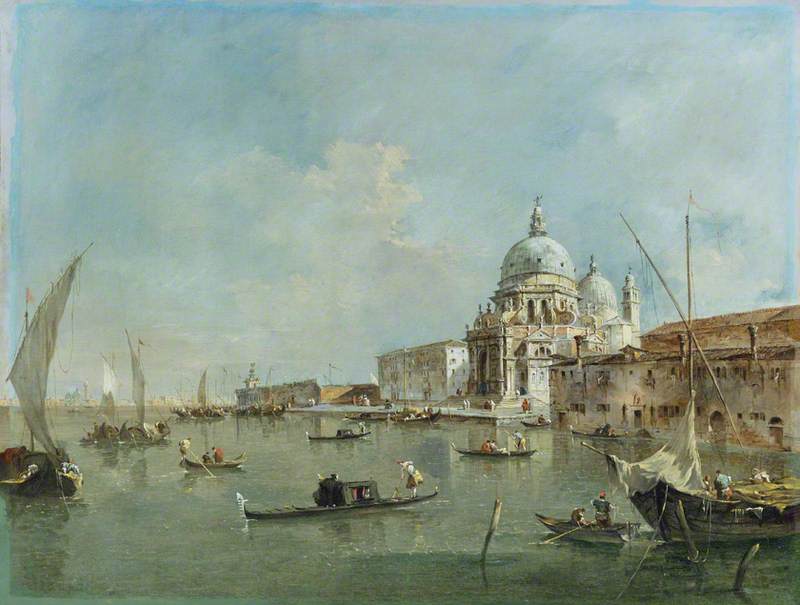
Venice Santa Maria della Salute and the Dogana
 Oil On Canvas
- WallArt
 1780
1780 69.0 x 91.0 cm
 The Wallace Collection
 Ver más
Giclée / Impresión de arte
Impresiones giclée o en lienzo de calidad de museo con producción rápida y opciones de acabado flexibles. ( Comprar pintura hecha a mano Comprar imagen)




P118B $10

P118H $10

P118W $10

P438Z $10

P508JH $12

P508YH $12

P805H $10

P805Z $10

P919BZ $10

P919G $10

P919XJ $10

P959ZH $10

P968JZ $12

W106C $8

W218G $10

W218JH $8

W218Y $10

W307PJ $10

W316G $10

W316PJ $8

W316Y $10

W398PJ $8

W4111J $10

W500HY $15

W500JH $15

W692G $12

W849H $8

W940BG $15

W953PJ $8




Elija entre nuestros tamaños predefinidos que respetan las proporciones originales de la obra.

Puede introducir sus propias dimensiones para adaptarse a un marco o espacio específico. Si el tamaño seleccionado no coincide con las proporciones de la imagen original, recortaremos la obra de arte o extenderemos la imagen con un borde con efecto espejo o de color sólido. Se enviará una maqueta digital para su aprobación antes de que comience la producción.
Tenga en cuenta que la vista previa en pantalla no refleja el recorte o la extensión real. Solo la maqueta mostrará con precisión la composición final.
Aunque existen tamaños personalizados, recomendamos seleccionar una dimensión de la lista predefinida para preservar las proporciones originales.
Envío a todo el mundo () en 2 semanas en lugar de las 4/5 semanas estándar. (3 septiembre)

Envío exprés gratuito a todo el mundo

Lienzo de lino de alta calidad

Seguro de envío total

Garantía de reembolso de impuestos aduaneros

Garantía de fidelidad cromática exacta

Política de devolución de 60 días (solo por defectos)

Garantía de devolución del 100% del dinero

Descuento por cantidad
 La opción de vidrio solo está disponible en tamaños inferiores a 110 cm.

Venice Santa Maria della Salute and the Dogana
Giclée / Impresión de arte
Dimensiones de la reproducción
-


Precio total final
$ 62
A Venetian Twilight: Francesco Guardi’s Masterpiece – Venice Santa Maria della Salute and the Dogana
Francesco Lazzaro Guardi (1712-1793), a Venetian artist whose legacy endures as one of the last champions of the Venetian School, captured the melancholic beauty of his city's decline with unparalleled sensitivity. Born into a family steeped in artistic tradition—his father Domenico established a workshop that fostered collaboration and honed technique—Guardi’s life mirrored the fading grandeur of Venice itself: a once dominant maritime republic grappling with political instability and economic hardship. Yet, amidst this darkening panorama, Guardi illuminated the spirit of his era through canvases imbued with atmospheric perspective and luminous color palettes – notably exemplified by “Venice Santa Maria della Salute and the Dogana,” a monumental view that cemented his place in art history.The Canvas Speaks: Composition and Technique
“Venice Santa Maria della Salute and the Dogana” isn’t merely a depiction of Venice; it's an embodiment of its soul. Guardi meticulously crafted this *veduta*, or cityscape painting, employing linear perspective to create depth and spatial illusion—a hallmark of Venetian art during the Rococo period transitioning into Neoclassicism. The central dome of Santa Maria della Salute dominates the composition, serving as a beacon of faith amidst urban decay. Diagonal lines from the masts of sailboats intersect with horizontal bands representing the tranquil waters of the Grand Canal and Giudecca Canal, guiding the viewer’s eye across the expansive canvas. Guardi's loose brushstrokes—particularly evident in the sky and water—were revolutionary for his time, prioritizing atmospheric effects over precise detail. This technique allowed him to convey the diffused light characteristic of Venetian summers, capturing the ethereal quality that defines the painting's mood. The artist skillfully layered pigments using glazing techniques, enhancing color saturation and creating subtle tonal variations – a testament to his mastery of oil paint.A Symphony of Color and Light
The palette employed by Guardi is deliberately muted—primarily grays, browns, and blues—reflecting the subdued hues of Venetian twilight. However, these tones are punctuated by flashes of warmer colors emanating from building facades and shimmering on the water’s surface, creating a harmonious interplay between light and shadow. The overcast sky lends an air of solemn contemplation, mirroring the spiritual significance of Santa Maria della Salute – originally erected as a votive offering to appease plague outbreaks. Guardi's masterful use of atmospheric perspective—reducing color intensity and detail in distant objects—further reinforces this sense of depth and enhances the painting’s evocative power. The diffused illumination contributes to an overall feeling of tranquility, transporting viewers back to 18th-century Venice.Symbolism Beneath the Surface: Faith and Resilience
Beyond its aesthetic brilliance, “Venice Santa Maria della Salute and the Dogana” resonates with profound symbolic meaning. The church itself represents unwavering faith—a steadfast symbol of resilience against adversity – mirroring Venice’s enduring spirit despite facing formidable challenges. The presence of gondolas gliding along the canals speaks to the city's traditional maritime heritage and its connection to the sea, representing prosperity and vitality. Guardi’s meticulous observation of Venetian life and architecture elevates this painting beyond a simple topographical record; it becomes an emblem of Venice’s enduring beauty and cultural legacy.A Legacy Enduring: Influence on Impressionism
Francesco Guardi's innovative approach to *veduta* painting profoundly influenced the burgeoning Impressionist movement. Artists like Claude Monet and Pierre-Auguste Renoir sought inspiration in Guardi’s atmospheric perspective and luminous color palettes, recognizing his ability to capture fleeting moments of beauty with remarkable immediacy. “Venice Santa Maria della Salute and the Dogana” stands as a cornerstone of Venetian art history—a testament to Guardi's genius and an enduring symbol of Venice’s timeless allure. Its reproduction offers collectors and interior designers alike a captivating glimpse into a bygone era, preserving the spirit of a city that continues to inspire awe and wonder.Obras relacionadas
Biografía del artista
Una vida de arte y declive en Venecia
Francesco Lazzaro Guardi, pintor italiano de veduta, noble y miembro de la escuela veneciana, vivió desde el 5 de octubre de 1712 hasta el 1 de enero de 1793. Su vida marcó el fin de una era en el arte veneciano, caracterizada por su mezcla única de realismo e imaginación.Primeros años y colaboraciones
En sus primeros años, Guardi colaboró con su hermano mayor Gian Antonio en la producción de pinturas religiosas. Esta asociación duró hasta la muerte de Gian Antonio en 1760, momento en el que Francesco se centró en la veduta, un estilo de pintura de paisajes que enfatiza el paisaje urbano.- Los primeros trabajos de Francesco Guardi muestran la influencia de Canaletto, pero gradualmente desarrolló un estilo más suelto caracterizado por pinceladas enérgicas y una arquitectura libremente imaginada.
- Su familia, incluyendo a su padre Domenico (nacido en 1678) y sus hermanos Niccolò y Gian Antonio, también fueron pintores, contribuyendo al taller familiar después de la muerte de su padre en 1716.
- Maria Cecilia, hermana de Guardi, se casó con Giovanni Battista Tiepolo, un prominente pintor veneto-europeo de su época.
Obras notables y estilo
Entre sus obras posteriores más importantes se encuentran los Festivales del Doge, una serie de doce lienzos que celebran las ceremonias realizadas en 1763 para la elección del Doge Alvise IV Mocenigo. Su estilo, conocido como pittura di tocco (de toque), se caracteriza por pequeñas pinceladas y pinceladas enérgicas.- Las pinturas de Francesco Guardi evocan el inicio del declive en Venecia, con un enfoque en cielos nublados sobre una ciudad al anochecer.
- Su obra difiere del estilo más lineal y arquitectónicamente preciso de la pintura de Canaletto, a menudo representando Venecia bajo la luz diurna soleada.
- El estilo de Guardi influyó posteriormente a los impresionistas franceses, quienes valoraron sus obras por su mezcla única de realismo e imaginación.
Legado y vida posterior
Francesco Lazzaro Guardi murió en el campo de la madona en Cannaregio (Venecia) en 1793. Su legado como uno de los últimos practicantes de la escuela veneciana clásica perdura, con sus obras que siguen siendo un testimonio de la mezcla única de realismo e imaginación que definió esta era del arte.- Vea más obras de Francesco Lazzaro Guardi en https://ArtsDot.com/@/francesco-lazzaro-guardi
- Explore la escuela veneciana y su influencia en el arte en /es/art/list/
- Descubra más sobre la vida y las obras de Francesco Lazzaro Guardi en https://es.wikipedia.org/wiki/Francesco_Guardia
- 5 de octubre de 1712: Nacimiento de Francesco Lazzaro Guardi
- 1 de enero de 1793: Muerte de Francesco Lazzaro Guardi

Francesco Lazzaro Guardi
1712 - 1793 , Italia
Datos clave
- Artistas Que Influyeron:
- Canaletto
- Gian Antonio Guardi
- Fecha De Fallecimiento: 1 de enero de 1793
- Fecha De Nacimiento: 5 de octubre de 1712
- Influencia En Artistas: ['Impresionismo Francés']
- Lugar De Nacimiento: Venecia, Italia
- Movimiento Artístico: Veduta, Escuela Veneciana
- Nacionalidad: Italiana
- Nombre Completo: Francesco Lazzaro Guardi
- Obras Notables:
- Festas del Doge
- Vistas de Venecia
Artículos relacionados
Francesco Guardi: Venetian Light, Atmospheric Perspective & the Rococo to Neoclassical Transition
Explore the captivating world of Francesco Guardi, master of Venetian light and atmosphere. Discover his transition from Rococo to Neoclassicism, influence on Impressionism & investment potential with ArtsDot.

Jacopo Tintoretto: Las 25 Obras Maestras del Genio Veneciano | Arte y Decoración en ArtsDot
Descubre las 25 obras maestras de Jacopo Tintoretto, el genio veneciano del Renacimiento. Explora su arte dramático, composiciones innovadoras y paleta vibrante. Reproducciones de alta calidad en ArtsDot.com para transformar tu hogar.
Luca della Robbia: Renaissance Sculpture & the Innovation of Terracotta Glazing
Discover the innovative terracotta glazing techniques of Luca della Robbia, a Renaissance master sculptor. Explore his iconic works, legacy, and collecting tips with ArtsDot.
La Luz Dorada de la Innovación: Explorando el Renacimiento Veneciano (1430–1580)
Descubra la riqueza y el esplendor del Renacimiento veneciano con ArtsDot. Explore las obras maestras de Tiziano, Giorgione y Tintoretto. Análisis experto, historia detallada e información para coleccionistas.
Pietro Longhi's Venetian Scenes: A Study of Rococo Society & Domestic Life
Explore the captivating world of Pietro Longhi's Venetian scenes! Discover insightful analysis of his Rococo masterpieces & social commentary on 18th-century life. Learn about this 'Venetian Hogarth' and his lasting artistic legacy.