 Ver en contexto
 Enviar
 Compartir
 Detalles

 Descargar
 Similares
 Radiografía
 Presentación de diapositivas
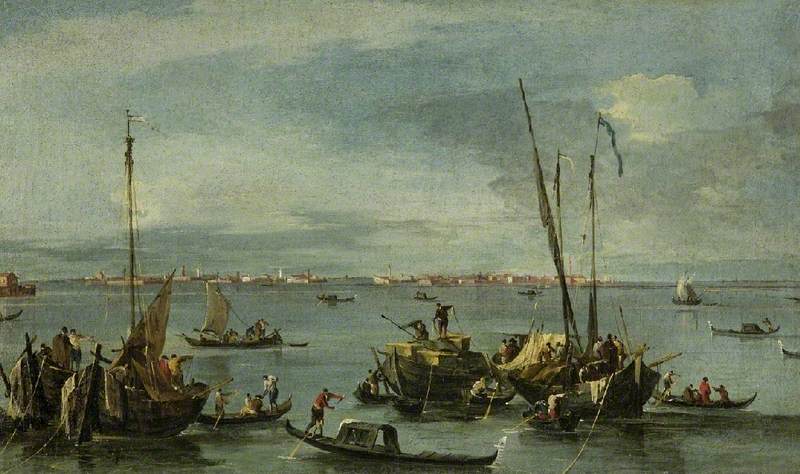
View towards Murano from the Fondamente Nuove, Venice
 Oil On Canvas
- WallArt
- Baroque
 32.0 x 53.0 cm
 Fitzwilliam College
 Ver más
Giclée / Impresión de arte
Impresiones giclée o en lienzo de calidad de museo con producción rápida y opciones de acabado flexibles. ( Comprar pintura hecha a mano Comprar imagen)




P118B $10

P118H $10

P118W $10

P438Z $10

P508JH $12

P508YH $12

P805H $10

P805Z $10

P919BZ $10

P919G $10

P919XJ $10

P959ZH $10

P968JZ $12

W106C $8

W218G $10

W218JH $8

W218Y $10

W307PJ $10

W316G $10

W316PJ $8

W316Y $10

W398PJ $8

W4111J $10

W500HY $15

W500JH $15

W692G $12

W849H $8

W940BG $15

W953PJ $8




Elija entre nuestros tamaños predefinidos que respetan las proporciones originales de la obra.

Puede introducir sus propias dimensiones para adaptarse a un marco o espacio específico. Si el tamaño seleccionado no coincide con las proporciones de la imagen original, recortaremos la obra de arte o extenderemos la imagen con un borde con efecto espejo o de color sólido. Se enviará una maqueta digital para su aprobación antes de que comience la producción.
Tenga en cuenta que la vista previa en pantalla no refleja el recorte o la extensión real. Solo la maqueta mostrará con precisión la composición final.
Aunque existen tamaños personalizados, recomendamos seleccionar una dimensión de la lista predefinida para preservar las proporciones originales.
Envío a todo el mundo () en 2 semanas en lugar de las 4/5 semanas estándar. (29 agosto)

Envío exprés gratuito a todo el mundo

Lienzo de lino de alta calidad

Seguro de envío total

Garantía de reembolso de impuestos aduaneros

Garantía de fidelidad cromática exacta

Política de devolución de 60 días (solo por defectos)

Garantía de devolución del 100% del dinero

Descuento por cantidad
 La opción de vidrio solo está disponible en tamaños inferiores a 110 cm.

View towards Murano from the Fondamente Nuove, Venice
Giclée / Impresión de arte
Dimensiones de la reproducción
-


Precio total final
$ 62
A Twilight Vision: Francesco Guardi and the Soul of Venice
Francesco Lazzaro Guardi's “View towards Murano from the Fondamente Nuove, Venice” isn’t merely a depiction of a canal scene; it’s a poignant distillation of a fading era. Painted in the twilight years of the Venetian Republic—a city grappling with economic decline and political uncertainty—this work captures a profound sense of melancholy and beauty, reflecting the artist's unique perspective on his beloved Venice. Guardi, born in 1712 and passing away in 1793, stands as one of the last guardians of the Venetian School’s classical traditions, yet he subtly diverged from its rigid formality, embracing a looser, more atmospheric style that foreshadowed the Impressionists to come.
The painting unfolds before us like a memory—a hazy recollection of a bustling waterfront. The scene is dominated by the Grand Canal, a ribbon of grey and blue reflecting the overcast sky above. Numerous boats – gondolas, barges laden with goods, and smaller craft – jostle for space within the waterway, their forms rendered with a delicate touch that prioritizes suggestion over precise detail. The Fondamente Nuove, a historic fondamenta (canal-side walkway), stretches along the left side of the composition, offering a glimpse into the everyday life of Venice’s merchants and laborers. The distant silhouette of Murano, famed for its glassmaking industry, hints at the city's economic vitality despite the overall mood of quiet contemplation.
The Language of Touch: Guardi’s Unique Technique
What immediately distinguishes Guardi’s work is his distinctive “pittura di tocco” – a technique characterized by small, broken brushstrokes that create a shimmering, almost tactile surface. Unlike the smoother, more polished style favored by Canaletto, Guardi deliberately avoided sharp outlines and meticulously defined forms. Instead, he employed a loose, expressive approach, allowing the colors to blend and mingle organically. This creates an atmospheric depth and luminosity that is both captivating and subtly unsettling. The artist’s focus isn't on creating a photographic representation of Venice but rather conveying its essence—its mood, its light, and its inherent beauty.
The layering of thin washes of color – predominantly blues, greys, and ochres – contributes significantly to the painting’s ethereal quality. Guardi masterfully utilizes atmospheric perspective, subtly diminishing the details and colors of distant objects to create a sense of depth and recession. The reflections on the water's surface are rendered with remarkable sensitivity, capturing the interplay of light and shadow in a way that is both realistic and poetic. The brushwork itself seems to dance across the canvas, conveying a feeling of movement and spontaneity.
A Chronicle of a City’s Decline
“View towards Murano” isn't simply a picturesque landscape; it’s a subtle commentary on Venice’s declining fortunes. The muted palette and hazy atmosphere evoke a sense of nostalgia—a longing for a bygone era of wealth, power, and artistic grandeur. The scene feels imbued with a quiet sadness, reflecting the city’s slow but inevitable decline as a major maritime power. Yet, within this melancholy there's also a profound appreciation for Venice’s enduring beauty and its unique character.
Symbolically, the painting speaks to the transition between tradition and modernity. Murano, with its burgeoning glass industry, represents the city’s attempts to adapt to changing economic realities. The bustling activity of the canal scene suggests a continued vitality, while the overall mood hints at an underlying sense of loss. Guardi's work serves as a poignant reminder that even in moments of decline, beauty and artistic expression can flourish.
A Legacy of Atmospheric Impressionism
Francesco Guardi’s “View towards Murano from the Fondamente Nuove, Venice” is more than just a beautiful painting; it's a landmark achievement in Venetian art. His innovative technique—characterized by loose brushstrokes, atmospheric perspective, and a subtle use of color—laid the groundwork for later generations of artists, including the Impressionists who would revolutionize the world of painting. Guardi’s ability to capture the essence of Venice – its light, its mood, and its inherent beauty – continues to resonate with viewers today, solidifying his place as one of the most important and enduring figures in Venetian art history.
Obras relacionadas
Biografía del artista
Una vida de arte y declive en Venecia
Francesco Lazzaro Guardi, pintor italiano de veduta, noble y miembro de la escuela veneciana, vivió desde el 5 de octubre de 1712 hasta el 1 de enero de 1793. Su vida marcó el fin de una era en el arte veneciano, caracterizada por su mezcla única de realismo e imaginación.Primeros años y colaboraciones
En sus primeros años, Guardi colaboró con su hermano mayor Gian Antonio en la producción de pinturas religiosas. Esta asociación duró hasta la muerte de Gian Antonio en 1760, momento en el que Francesco se centró en la veduta, un estilo de pintura de paisajes que enfatiza el paisaje urbano.- Los primeros trabajos de Francesco Guardi muestran la influencia de Canaletto, pero gradualmente desarrolló un estilo más suelto caracterizado por pinceladas enérgicas y una arquitectura libremente imaginada.
- Su familia, incluyendo a su padre Domenico (nacido en 1678) y sus hermanos Niccolò y Gian Antonio, también fueron pintores, contribuyendo al taller familiar después de la muerte de su padre en 1716.
- Maria Cecilia, hermana de Guardi, se casó con Giovanni Battista Tiepolo, un prominente pintor veneto-europeo de su época.
Obras notables y estilo
Entre sus obras posteriores más importantes se encuentran los Festivales del Doge, una serie de doce lienzos que celebran las ceremonias realizadas en 1763 para la elección del Doge Alvise IV Mocenigo. Su estilo, conocido como pittura di tocco (de toque), se caracteriza por pequeñas pinceladas y pinceladas enérgicas.- Las pinturas de Francesco Guardi evocan el inicio del declive en Venecia, con un enfoque en cielos nublados sobre una ciudad al anochecer.
- Su obra difiere del estilo más lineal y arquitectónicamente preciso de la pintura de Canaletto, a menudo representando Venecia bajo la luz diurna soleada.
- El estilo de Guardi influyó posteriormente a los impresionistas franceses, quienes valoraron sus obras por su mezcla única de realismo e imaginación.
Legado y vida posterior
Francesco Lazzaro Guardi murió en el campo de la madona en Cannaregio (Venecia) en 1793. Su legado como uno de los últimos practicantes de la escuela veneciana clásica perdura, con sus obras que siguen siendo un testimonio de la mezcla única de realismo e imaginación que definió esta era del arte.- Vea más obras de Francesco Lazzaro Guardi en https://ArtsDot.com/@/francesco-lazzaro-guardi
- Explore la escuela veneciana y su influencia en el arte en /es/art/list/
- Descubra más sobre la vida y las obras de Francesco Lazzaro Guardi en https://es.wikipedia.org/wiki/Francesco_Guardia
- 5 de octubre de 1712: Nacimiento de Francesco Lazzaro Guardi
- 1 de enero de 1793: Muerte de Francesco Lazzaro Guardi

Francesco Lazzaro Guardi
1712 - 1793 , Italia
Datos clave
- Artistas Que Influyeron:
- Canaletto
- Gian Antonio Guardi
- Fecha De Fallecimiento: 1 de enero de 1793
- Fecha De Nacimiento: 5 de octubre de 1712
- Influencia En Artistas: ['Impresionismo Francés']
- Lugar De Nacimiento: Venecia, Italia
- Movimiento Artístico: Veduta, Escuela Veneciana
- Nacionalidad: Italiana
- Nombre Completo: Francesco Lazzaro Guardi
- Obras Notables:
- Festas del Doge
- Vistas de Venecia
Artículos relacionados
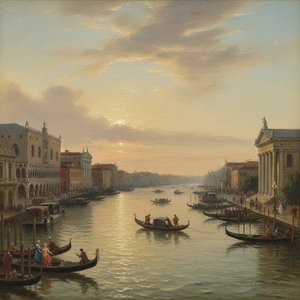
Francesco Guardi: Venetian Light, Atmospheric Perspective & the Rococo to Neoclassical Transition
Explore the captivating world of Francesco Guardi, master of Venetian light and atmosphere. Discover his transition from Rococo to Neoclassicism, influence on Impressionism & investment potential with ArtsDot.

Jacopo Tintoretto: Las 25 Obras Maestras del Genio Veneciano | Arte y Decoración en ArtsDot
Descubre las 25 obras maestras de Jacopo Tintoretto, el genio veneciano del Renacimiento. Explora su arte dramático, composiciones innovadoras y paleta vibrante. Reproducciones de alta calidad en ArtsDot.com para transformar tu hogar.
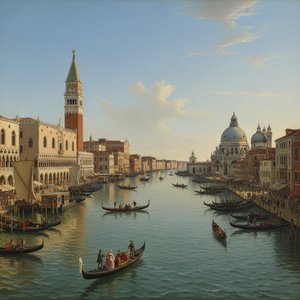
Giovanni Antonio Canal (Canaletto): A Venetian Master of Light, Space & Societal Observation
Explore the life & art of Giovanni Antonio Canal (Canaletto), a Venetian master renowned for his breathtaking cityscapes. Discover his techniques, legacy, and captivating depictions of 18th-century Venice & London.

Drama Barroca: Llevando la Grandeza y la Emoción a los Interiores Contemporáneos
Descubre cómo el drama y la grandeza del arte barroco pueden transformar tus interiores. Guía experta, inspiración y reproducciones de alta calidad en .

The Dramatic Flourish: Exploring the Baroque Movement's Enduring Legacy in Art History
Explore the dramatic world of Baroque art! Discover iconic artists like Caravaggio & Rubens, defining techniques, and its lasting impact on art history. Expert insights for collectors & enthusiasts at ArtsDot.