 Ver en contexto
 Enviar
 Compartir
 Detalles

 Descargar
 Similares
 Radiografía
 Presentación de diapositivas
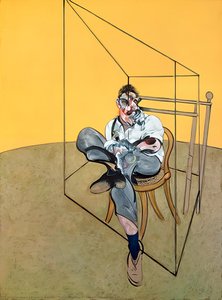
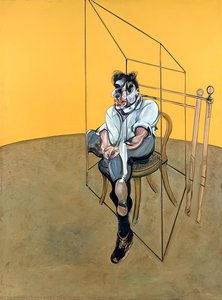
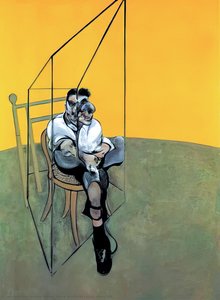
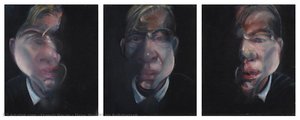
Tres Estudios para Retrato de G.Dyer sobre fondo rosa, cen


 Ver más
Giclée / Impresión de arte
Impresiones giclée o en lienzo de calidad de museo con producción rápida y opciones de acabado flexibles. ( Comprar pintura hecha a mano Comprar imagen)




P118B $10

P118H $10

P118W $10

P438Z $10

P508JH $12

P508YH $12

P805H $10

P805Z $10

P919BZ $10

P919G $10

P919XJ $10

P959ZH $10

P968JZ $12

W106C $8

W218G $10

W218JH $8

W218Y $10

W307PJ $10

W316G $10

W316PJ $8

W316Y $10

W398PJ $8

W4111J $10

W500HY $15

W500JH $15

W692G $12

W849H $8

W940BG $15

W953PJ $8




Elija entre nuestros tamaños predefinidos que respetan las proporciones originales de la obra.

Puede introducir sus propias dimensiones para adaptarse a un marco o espacio específico. Si el tamaño seleccionado no coincide con las proporciones de la imagen original, recortaremos la obra de arte o extenderemos la imagen con un borde con efecto espejo o de color sólido. Se enviará una maqueta digital para su aprobación antes de que comience la producción.
Tenga en cuenta que la vista previa en pantalla no refleja el recorte o la extensión real. Solo la maqueta mostrará con precisión la composición final.
Aunque existen tamaños personalizados, recomendamos seleccionar una dimensión de la lista predefinida para preservar las proporciones originales.
Envío a todo el mundo () en 2 semanas en lugar de las 4/5 semanas estándar. (26 agosto)

Envío exprés gratuito a todo el mundo

Lienzo de lino de alta calidad

Seguro de envío total

Garantía de reembolso de impuestos aduaneros

Garantía de fidelidad cromática exacta

Política de devolución de 60 días (solo por defectos)

Garantía de devolución del 100% del dinero

Descuento por cantidad
 La opción de vidrio solo está disponible en tamaños inferiores a 110 cm.

Tres Estudios para Retrato de G.Dyer sobre fondo rosa, cen
Giclée / Impresión de arte
Dimensiones de la reproducción
-


Precio total final
$ 62
Descripción de la pieza
A Shattered Visage: Decoding Francis Bacon’s Portraiture
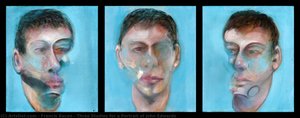
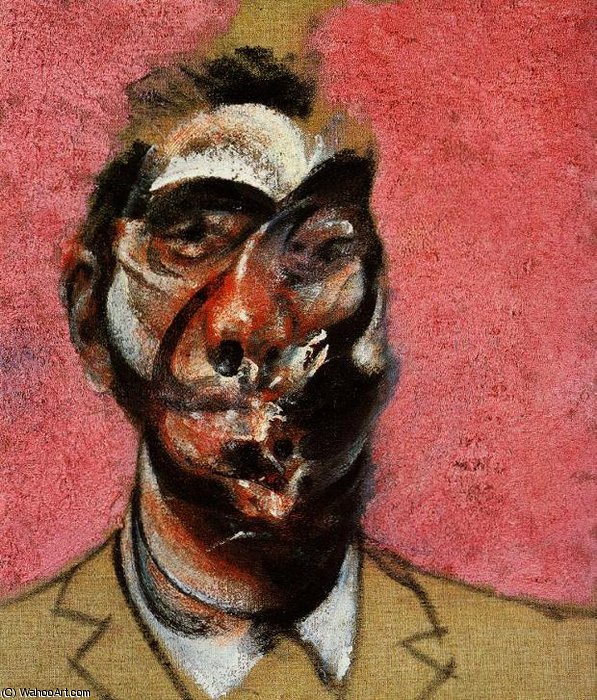
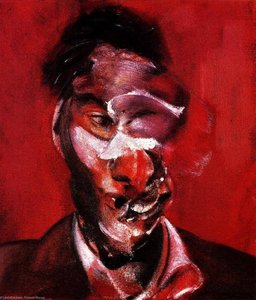
Francis Bacon's "Three Studies for Portr. of G.Dyer on pink ground, cen" stands as a haunting testament to his singular approach to portraiture—a deliberate rejection of likeness in favor of an exploration of the fractured human condition. Created sometime between 1951-1954 during a period marked by profound artistic experimentation and personal introspection, this painting transcends mere representation, delving into the psychological complexities inherent within its subject matter. It’s not simply *of* George Dyer; it feels like a dissection *through* him, revealing raw emotion and existential angst—a characteristic hallmark of Bacon's oeuvre.Style & Technique: Cubism Meets Existential Dread
Bacon masterfully blends the fragmented forms championed by Cubism with the visceral intensity of Expressionism. The figure is deconstructed into geometric planes – rectangles and triangles dominate – creating a sense of instability and psychological turmoil. This isn’t about capturing precise detail; it's about conveying an *inner* state—a preoccupation that would define Bacon’s artistic vision throughout his career. Oil paint is applied with visible, often impasto brushstrokes, adding texture and emphasizing the physicality of both Dyer’s body and the act of painting itself. The dramatic lighting – stark highlights and deep shadows – further accentuates these fractured planes, lending a sculptural quality to the image despite its two-dimensionality. This deliberate manipulation of light and form underscores Bacon's desire to confront viewers with uncomfortable truths about human experience.The Power of Pink: Color & Composition
The aggressively vibrant pink background is perhaps one of the most striking elements of “Three Studies…” It’s not merely decorative; it’s deliberately unsettling—a calculated provocation designed to heighten the sense of unease and claustrophobia. This jarring color choice serves as an emotional amplifier, mirroring Dyer's vulnerability and intensifying the overall mood of the piece. The contrast between the pink and the muted tones of Dyer’s clothing and face draws immediate attention to the subject’s fragility. Compositionally, the fragmented form is centrally located, yet feels isolated—a visual metaphor for alienation and loneliness. The artist's intention was to disrupt conventional notions of beauty and representation, prioritizing emotional impact over aesthetic perfection.Symbolism & Interpretation: A Broken Psyche
Bacon’s work is rich in symbolic resonance. The fractured face isn’t simply a stylistic choice; it represents a broken identity—a shattered psyche grappling with internal conflict. Dyer’s distorted features suggest a loss of control, a descent into chaos—themes that resonate powerfully within the broader context of post-war anxieties and uncertainties.- The cage-like spaces often found in Bacon's work symbolize the constraints imposed upon human existence, mirroring Dyer’s confinement both physically and emotionally.
- The overall sense of distortion reflects the psychological turmoil experienced by individuals confronting trauma and loss—a core preoccupation of Bacon’s artistic explorations.
- The raw honesty of the painting challenges viewers to confront uncomfortable truths about mortality and vulnerability.
Historical Context & Bacon’s Legacy
Francis Bacon emerged as a pivotal figure in post-war art, rejecting traditional conventions and embracing instead a visceral portrayal of human emotion. Influenced by artists like Picasso and Velázquez, he developed a unique visual language that continues to captivate audiences today. He is considered one of the most important figurative painters of the 20th century—a visionary whose uncompromising aesthetic pushed boundaries and redefined artistic expression. This particular series, featuring George Dyer, exemplifies Bacon’s commitment to confronting viewers with unsettling images that provoke contemplation and inspire emotional engagement. Its enduring power lies in its ability to capture the essence of human experience—the beauty and terror inherent within our shared vulnerability.Photo Description: --Overall Impression-- The artwork presents a fragmented and distorted self-portrait of a man. The style is heavily influenced by Cubism and Expressionism, characterized by fractured planes, overlapping forms, and an emphasis on emotional expression over realistic representation. Compositionally, the figure is broken down into geometric shapes, creating a sense of instability and psychological turmoil. The background is a vibrant, almost aggressively pink color that contrasts sharply with the muted tones of the man’s clothing and face. Lines are angular and jagged, contributing to the disjointed feel. Shapes are predominantly rectangular and triangular, further emphasizing the fractured nature of the image. Texture appears rough and layered, suggesting an impasto technique. Lighting is dramatic, with strong highlights and shadows that accentuate the planes and create a sense of depth despite the lack of traditional perspective. The subject matter is clearly a self-portrait, but it’s presented in a way that suggests inner conflict or psychological distress.
Size: Unknown
Date: Unknown
Obras relacionadas
Biografía del artista
**vida temprana y carrera**
francis bacon, un pintor figurativo irlandés nacido en Gran Bretaña, nació el 28 de octubre de 1909 en Dublín, Irlanda. Su vida temprana estuvo marcada por una serie de traslados debido a la búsqueda de su familia de un clima adecuado para la salud de su madre. Esta infancia itinerante influiría más tarde en el enfoque artístico de Bacon.**estilo artístico y temas**
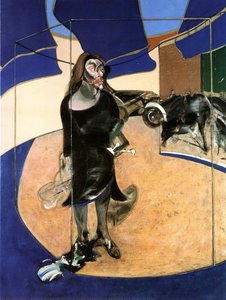
Bacon es conocido por sus imágenes audaces, emocionalmente cargadas y a menudo grotescas. Sus figuras abstractas suelen estar aisladas en espacios geométricos y similares a jaulas, contra fondos planos e indiferentes. Este estilo único ha sido tanto elogiado como criticado por los críticos de arte.- retrato de isabel rawsthorne de pie en la calle Soho, una obra seminal que muestra la capacidad de Bacon para capturar la esencia de sus sujetos en un entorno aparentemente abstracto.
- número vii de ocho estudios para un retrato, ejemplificando la exploración del artista sobre la forma humana a través de una serie de estudios.
**influencias y legado**
La obra de Bacon ha sido influenciada por diversas fuentes, incluyendo los autorretratos de margarita helena vieira da silva y el expresionismo abstracto de piet mondrian. Su legado continúa inspirando a nuevas generaciones de artistas, con su estilo audaz e innegable siendo un pilar fundamental del arte moderno.**exposiciones notables y colecciones**
- la sociedad del museo de arte fino (Reino Unido, que ha exhibido las obras de Bacon junto con otras artistas británicas destacadas. - la galería nacional (Noruega, presentando una colección exhaustiva del arte europeo, incluyendo obras de Bacon. **obras clave y colecciones:** - francis bacon: retrato de isabel rawsthorne de pie en la calle Soho - francis bacon: número vii de ocho estudios para un retrato **museos y galerías de arte:** - la sociedad del museo de arte fino (Reino Unido - la galería nacional (Noruega**conclusión**
La vida turbulenta y el enfoque innovador de Francis Bacon en la pintura figurativa han dejado una marca indeleble en el mundo del arte. Su legado, caracterizado por imágenes audaces y emocionalmente cargadas, continúa influyendo a los artistas contemporáneos e intrigando al público. **lecturas recomendadas:** - biografía de francis bacon - wikipedia: francis bacon (artista)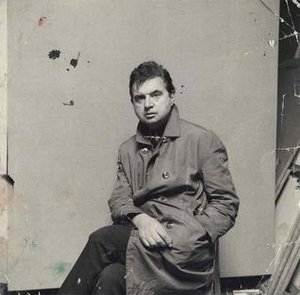
Francis Bacon
1909 - 1992 , irlanda
Datos clave
- Artistas Que Influyeron:
- Pablo Picasso
- Egon Schiele
- Diego Velázquez
- Fecha De Muerte: 28 de abril de 1992
- Fecha De Nacimiento: 28 de octubre de 1909
- Influencia En Artistas:
- Adrian Ghenie
- Robert Priseman
- Lugar De Nacimiento: Dublín, Irlanda
- Movimiento Artístico: Expresionismo, Figurativo
- Nacionalidad: Irlandés-Británico
- Nombre Completo: Francis Bacon
- Obras Notables:
- Tres estudios para una crucifixión
- Retrato de Isabel Rawsthorne
- Estudio tras Velázquez
- Autorretrato, espejo
Artículos relacionados
Francis Bacon: Las 25 Obras Maestras del Expresionismo y su Impacto en el Arte Moderno
Explora las 25 obras maestras de Francis Bacon, el expresionismo visceral y la angustia humana. Descubre retratos icónicos, trípticos impactantes y su legado en el arte moderno. Reproducciones de museo en ArtsDot.com.
Los 10 Cuadros Más Famosos en Tonos Rosa Pastel: Arte y Decoración
Descubre los 10 cuadros más icónicos en tonos rosa pastel. Explora la historia de Monet, Renoir y otros maestros del impresionismo y el arte moderno. Encuentra reproducciones de alta calidad para decorar tu hogar con .
The Existential Anguish of Francis Bacon: Trauma, Form & the Post-War Condition
Explore the profound existential anguish of Francis Bacon's art. Discover how trauma shaped his iconic paintings & lasting influence on modern expressionism. A guide for discerning collectors.
Expresionismo Pictórico: 10 Obras Maestras que Definieron un Movimiento Revolucionario | ArtsDot
Descubre las 10 obras maestras del expresionismo que revolucionaron el arte moderno. Explora la historia de Munch, Kirchner, Kandinsky y más. Reproducciones de alta calidad para decorar tu hogar con emoción y estilo en ArtsDot.com.
Reflecting the Self: A History of Portraiture & Psychological Insight
Explore the fascinating history of self-portraiture from Renaissance masters like Dürer & Rembrandt to modern interpretations. Discover the psychological insights and artistic techniques behind these iconic works. Expert analysis for art enthusiasts.