

 Ver en contexto
 Enviar
 Compartir
 Detalles

 Descargar
 Similares
 Radiografía
 Presentación de diapositivas
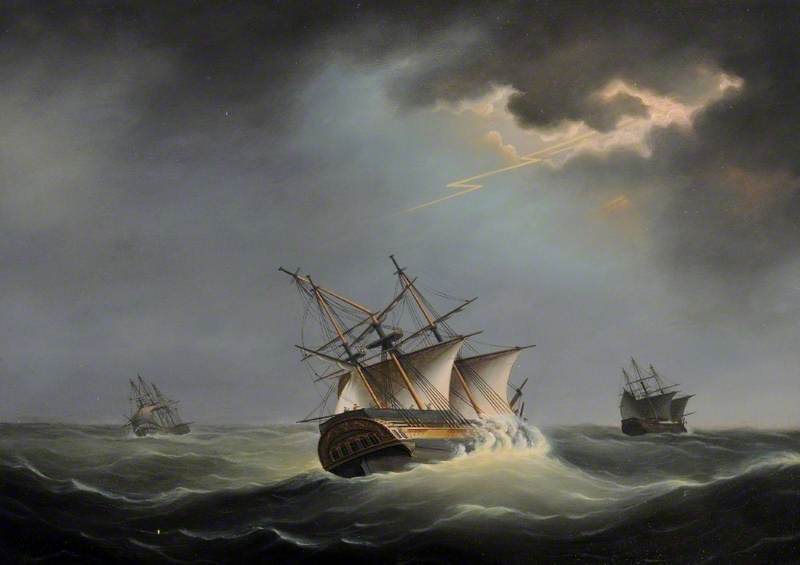
The Loss of a Merchantman (panel 1 of 3)
 Romanticism
 1831
1831 33.0 x 46.0 cm
 Galería de Arte Ferens
 Ver más
Giclée / Impresión de arte
Impresiones giclée o en lienzo de calidad de museo con producción rápida y opciones de acabado flexibles. ( Comprar pintura hecha a mano Comprar imagen)




































Elija entre nuestros tamaños predefinidos que respetan las proporciones originales de la obra.

Puede introducir sus propias dimensiones para adaptarse a un marco o espacio específico. Si el tamaño seleccionado no coincide con las proporciones de la imagen original, recortaremos la obra de arte o extenderemos la imagen con un borde con efecto espejo o de color sólido. Se enviará una maqueta digital para su aprobación antes de que comience la producción.
Tenga en cuenta que la vista previa en pantalla no refleja el recorte o la extensión real. Solo la maqueta mostrará con precisión la composición final.
Aunque existen tamaños personalizados, recomendamos seleccionar una dimensión de la lista predefinida para preservar las proporciones originales.
Envío a todo el mundo () en 2 semanas en lugar de las 4/5 semanas estándar. (29 agosto)

Envío exprés gratuito a todo el mundo

Lienzo de lino de alta calidad

Seguro de envío total

Garantía de reembolso de impuestos aduaneros

Garantía de fidelidad cromática exacta

Política de devolución de 60 días (solo por defectos)

Garantía de devolución del 100% del dinero

Descuento por cantidad
 La opción de vidrio solo está disponible en tamaños inferiores a 110 cm.

The Loss of a Merchantman (panel 1 of 3)
Giclée / Impresión de arte
Dimensiones de la reproducción
-


Precio total final
$ 62
Obras relacionadas
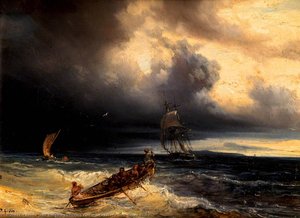
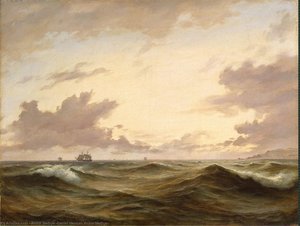
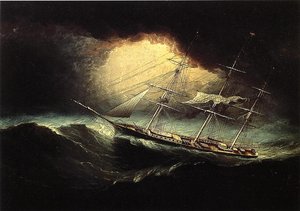
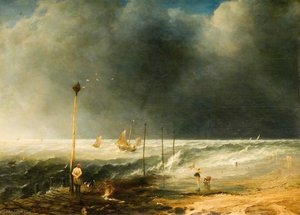
Biografía del artista
The Mariner's Vision: The Life and Legacy of Francis Hustwick
In the annals of British maritime art, few names evoke the salt-sprayed drama and industrial pulse of the nineteenth century quite like Francis Hustwick. Born in the rugged port city of Hull, Yorkshire, around 1831, Hustwick’s early life was inextricably linked to the rhythmic ebb and flow of the North Sea. While many artists of his era sought refuge in the pastoral tranquility of idealized landscapes, Hustwick found his muse in the churning, unpredictable waters of the Atlantic trade routes. His formative years were spent amidst the cacophony of Liverpool’s bustling docks, a period that instilled in him a profound, almost visceral understanding of the maritime world—from the intricate geometry of ship rigging to the heavy, atmospheric weight of a gathering storm.
Hustwick’s artistic development was characterized by a unique synthesis of meticulous realism and Romantic intensity. He did not merely paint ships; he captured their very essence, treating each vessel with the reverence of a portraitist. His deep familiarity with shipbuilding techniques allowed him to render sails, masts, and hulls with an anatomical precision that would command the respect of seasoned mariners. Yet, this technical mastery was never dry or purely documentary. Instead, he employed a dark, brooding palette dominated by deep blues, earthy browns, and slate greys, using expressive brushstrokes to convey the immense power and inherent vulnerability of man-made structures against the infinite sea.
Mastery of the Elements and Narrative Depth
The true brilliance of Hustwick’s work lies in his ability to weave narrative tension into the fabric of his maritime scenes. He was a master of the "sublime," an aesthetic concept that finds beauty in the terrifying scale of nature. This is perhaps most poignently realized in his celebrated 'Loss of a Merchantman' series. In these haunting canvases, Hustwick moves beyond simple ship portraits to explore the profound human tragedy inherent in maritime disaster. These works, which draw inspiration from historical events such as the wreck of the SS Great Britain, capture the raw horror and despair of those caught in the grip of the ocean’s fury. By incorporating elements of biblical allegory and utilizing backgrounds inspired by the engravings of George Chambers, he elevated his subjects from mere news-worthy tragedies to timeless meditations on human frailty.
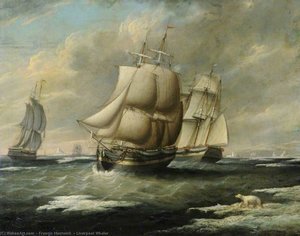
His technical repertoire was equally diverse, as seen in works like 'Liverpool Whaler' (1834). In this piece, one can observe his skill in managing light and movement; the large sailboat, with its sails fully unfurled, dominates the composition, creating a sense of immense scale and kinetic energy. The interplay of multiple vessels within the frame provides a sense of depth that draws the viewer into the heart of the maritime activity. Whether depicting the calm, sun-dappled waters or the chaotic splintering of wood against rock, Hustwick’s brushwork remained a testament to his dedication as a craftsman of the highest order.
Historical Significance and Enduring Impression
Though often overshadowed by more commercially celebrated contemporaries of the Victorian era, Francis Hustwick holds a significant place in the history of British marine painting. His work serves as a vital visual record of the Industrial Revolution's impact on global trade and the maritime culture of Liverpool and Hull. He captured a specific moment in time when the world was becoming increasingly interconnected through sea power, yet remained deeply subject to the whims of nature.
Today, the legacy of Hustwick continues to resonate through his ability to evoke emotion through atmosphere. His paintings are not merely historical artifacts; they are emotional experiences that invite the viewer to feel the spray of the salt and the tension of the gale. Through his mastery of light, shadow, and texture, Hustwick ensured that the triumphs and tragedies of the sea would remain etched in the collective memory of art history, reminding us of the enduring, turbulent relationship between humanity and the great oceans.
Datos clave
- Artistic Movement Or Style: Romantic Maritime Art
- Artists Or Movements Influenced By This Artist: ['Dutch Golden Age']
- Artists Who Influenced This Artist: ['George Chambers']
- Date Of Death: June 26, 1867
- Full Name: Francis Hustwick
- Nationality: English
- Notable Artworks:
- The Loss of a Merchantman (panel 1 of 3)
- (#267) Francis Hustwick
- Place Of Birth: Hull, England
Artículos relacionados
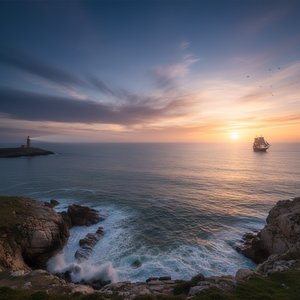
The Allure of the Horizon: A Comprehensive Exploration of Seascape Art Through History & Emotion
Explore the captivating world of seascape art! Discover its history, key artists & movements – from Dutch Masters to Impressionism. Expert insights for collectors and enthusiasts at ArtsDot.
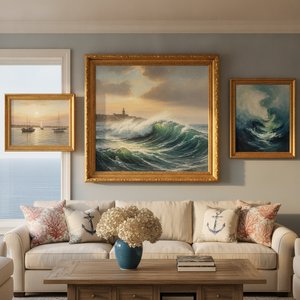
Bring the Ocean Home: Captivating Maritime Paintings to Transform Your Space with Timeless Elegance
Transform your home with breathtaking maritime oil paintings. From serene seascapes to dramatic nautical scenes, discover hand-painted reproductions that bring the ocean's soul to your space. Expertly crafted for collectors seeking timeless elegance and coastal tranquility.
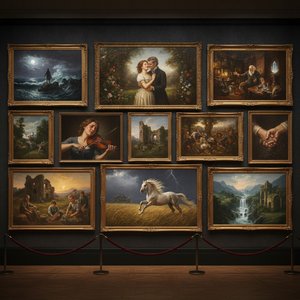
Romantic Realism's Finest: 10 Masterpieces for Your Home | ArtsDot
Explore 10 defining masterpieces of Romantic Realism! Discover Courbet, Millet & Daumier's powerful paintings—capturing emotion and social realities. Find museum-quality reproductions for your home at ArtsDot.com.

The Enduring Legacy of Oil on Canvas: Technique, History & Aesthetic Impact
Explore the rich history & techniques of oil painting – from Renaissance masters to Impressionism. Discover pigments, layering methods, and why this timeless medium endures. Expert insights for artists & art enthusiasts.

El Óleo sobre Lienzo: Historia, Técnica y la Persistencia de un Medio Artístico Atemporal
Descubre la historia y técnica del óleo sobre lienzo. Explora reproducciones fieles hechas a mano, personalización artística y consejos de expertos con ArtsDot. ¡Colecciona arte con confianza!

