

 Ver en contexto
 Enviar
 Compartir
 Detalles

 Descargar
 Similares
 Radiografía
 Presentación de diapositivas
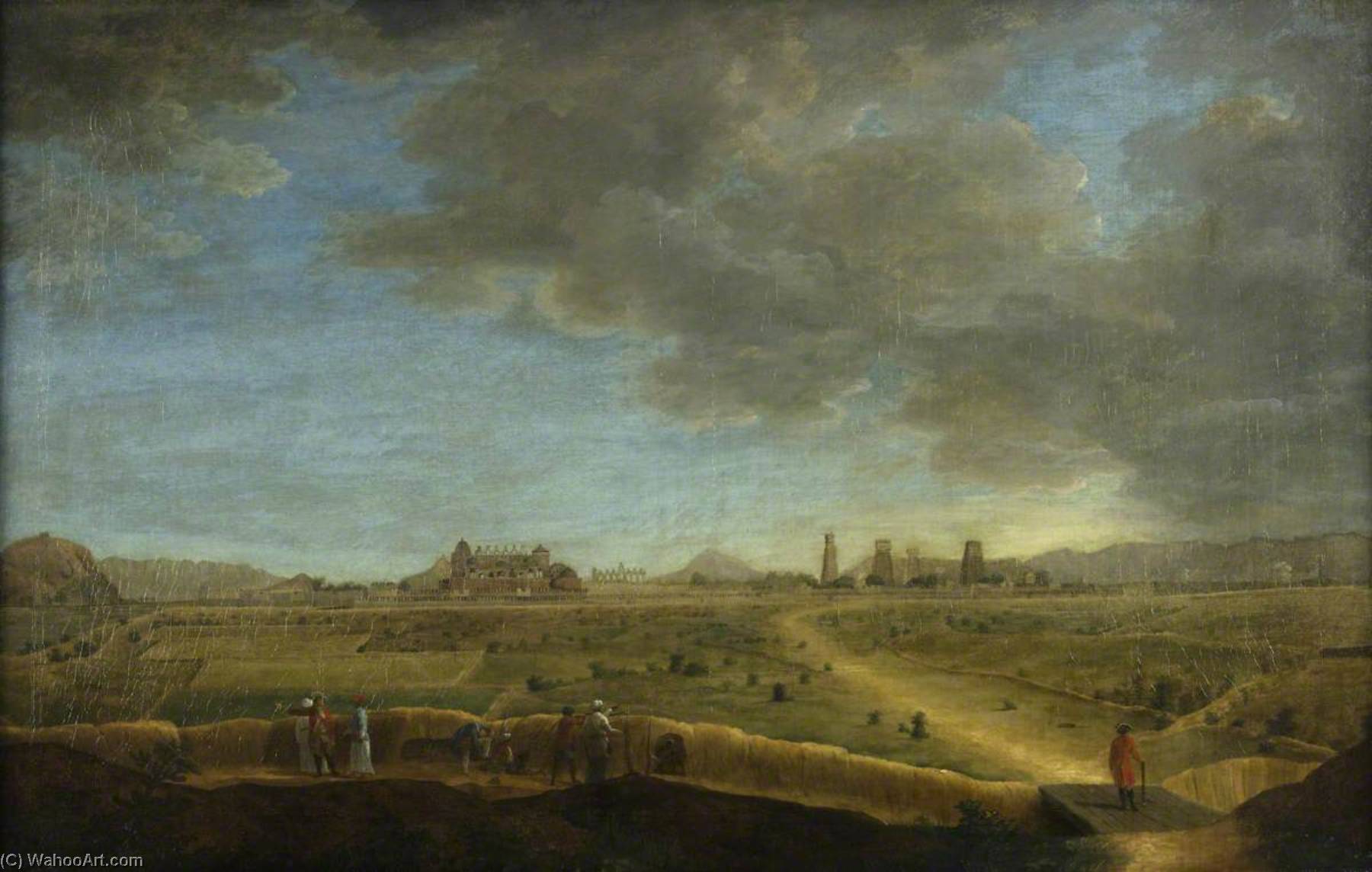
View of Madurai, Madras
 1773
1773 79.0 x 127.0 cm
 Biblioteca Británica
 Ver más
Reproducción al óleo hecha a mano
Óleo sobre lienzo pintado a mano en el tamaño y marco de su elección, realizado por encargo por nuestros artistas. ( Comprar impresión Comprar imagen)




































Elija entre nuestros tamaños predefinidos que respetan las proporciones originales de la obra.

Puede ingresar sus propias dimensiones para adaptarse a un marco o espacio específico. Si el tamaño seleccionado no coincide con las proporciones de la imagen original, recortaremos la obra o extenderemos la pintura con elementos adicionales pintados a mano. Se le enviará una maqueta digital para su aprobación antes de comenzar la producción.
Tenga en cuenta que la vista previa en pantalla no refleja el recorte o la extensión reales. Solo la maqueta mostrará con precisión la composición final.
Si bien existen tamaños personalizados, recomendamos seleccionar una dimensión de la lista predefinida para preservar las proporciones originales.
Tras realizar el pedido, el equipo de ArtsDot.com enviará un correo electrónico al cliente para solicitar instrucciones y proporcionarle una vista previa del boceto.
Envío a todo el mundo () en 3-4 semanas en lugar de las 5 semanas estándar. (23 agosto). Sin comprometer la calidad.

Envío exprés gratuito a todo el mundo

Lienzo de lino de alta calidad

Seguro de envío total

Garantía de reembolso de impuestos aduaneros

Garantía de fidelidad cromática exacta

Política de devolución de 60 días (solo por defectos)

Garantía de devolución del 100% del dinero

Descuento por cantidad
 La opción de vidrio solo está disponible en tamaños inferiores a 110 cm.

View of Madurai, Madras
Técnica de reproducción
Dimensiones de la reproducción
-


Precio total final
$ 263
Obras relacionadas










Biografía del artista
The Serene Landscapes of Francis Swain Ward
Francis Swain Ward, a name perhaps less heralded than some of his contemporaries, nevertheless holds a significant place in the history of American landscape painting during the late 18th and early 19th centuries. Born in London in 1734, Ward’s artistic journey began not with formal training but through a life steeped in military service and a deep connection to the natural world. His formative years were spent in the British Army, an experience that profoundly shaped his perspective – instilling discipline, observation skills, and a profound appreciation for the subtle beauty of the English countryside. It was during this period, amidst campaigns and strategic deployments, that Ward’s artistic sensibilities began to blossom, fueled by a desire to capture the fleeting moments of light and atmosphere he encountered on the march. Ward's relocation to America in 1769 marked a pivotal shift in his life and career. He quickly established himself as an artist and engraver in Philadelphia, a burgeoning center for artistic activity during that era. His early works were largely influenced by the British landscape tradition, particularly the detailed renderings of Claude Gillbert and Thomas Girtler. However, Ward soon began to develop a distinctly American style, characterized by a softer palette, looser brushwork, and an emphasis on capturing the mood and atmosphere of the New England countryside. He wasn’t simply replicating what he saw; he was translating his emotional response to the landscape onto canvas. His subjects were predominantly rural scenes – rolling hills, meandering rivers, quiet farms, and glimpses of woodland – all rendered with a remarkable sensitivity to light and color.Technique and Style
Ward’s technical skill lay in his masterful use of watercolor. He was particularly adept at capturing the ephemeral qualities of light, employing delicate washes and subtle gradations to create an illusion of depth and atmosphere. Unlike some of his contemporaries who favored a more precise and detailed approach, Ward embraced a looser, more expressive style. His brushstrokes were often visible, contributing to the sense of spontaneity and immediacy in his paintings. He frequently worked *en plein air*, directly from nature, allowing him to capture the nuances of light and shadow with unparalleled accuracy. His compositions are generally balanced and harmonious, reflecting a deep understanding of perspective and spatial relationships. The influence of John Constable is subtly present in Ward’s ability to convey atmospheric effects through color and brushwork.Key Works and Recognition
Among Ward's most celebrated works are his depictions of the Brandywine River Valley, particularly scenes around Wilmington, Delaware. These paintings capture the region’s pastoral beauty with a quiet dignity and understated charm. “View of the Brandywine” (circa 1790) is often cited as one of his finest achievements, showcasing his mastery of light and color and his ability to evoke a sense of tranquility and serenity. Other notable works include scenes of farms in Massachusetts and New Hampshire, each imbued with a distinct regional character. While Ward enjoyed considerable success during his lifetime, he never achieved the widespread fame or recognition afforded to some of his more prominent contemporaries. He was a member of the Society of Artists in Philadelphia and served as Secretary from 1771 to 1772.Legacy and Historical Significance
Francis Swain Ward’s contribution to American landscape painting is often overlooked, yet it's significant nonetheless. He represents a crucial bridge between the British landscape tradition and the emerging American school of art. His work embodies the Romantic sensibility – an appreciation for nature, a focus on emotion, and a rejection of rigid academic conventions. Ward’s paintings offer a valuable glimpse into the visual culture of early America, capturing the beauty and tranquility of the rural landscape during a period of rapid transformation. He demonstrated that American landscapes could be rendered with both technical skill and emotional depth, laying the groundwork for future generations of landscape artists. His legacy resides not in grand monuments or public acclaim, but in the quiet beauty of his paintings – serene reminders of a bygone era and a testament to the enduring power of nature.Further Resources
- ArtsDot.com: https://ArtsDot.com/en/@/Francis%20Swain%20Ward?srsltid=AfmBOort7HntI7Mh7Tt_rbX4gwWs18Eh8PcZLhLNbx8dClHusvXAmmzg
- Royal Academy of Arts: https://www.royalacademy.org.uk/art-artists/name/francis-swain-ward
francis swain ward
1734 - 1805
Datos clave
- Artistic Movement Or Style: Watercolorist
- Artists Or Movements Influenced By This Artist: ['Romanticism']
- Artists Who Influenced This Artist:
- Turner
- Constable
- Date Of Birth: 1734
- Date Of Death: 1805
- Full Name: Francis Swain Ward
- Nationality: British
- Notable Artworks:
- River Scene
- Landscape with Trees
- Coastal View
- Place Of Birth: London, England

