 Ver en contexto
 Enviar
 Compartir
 Detalles

 Descargar
 Similares
 Radiografía
 Presentación de diapositivas
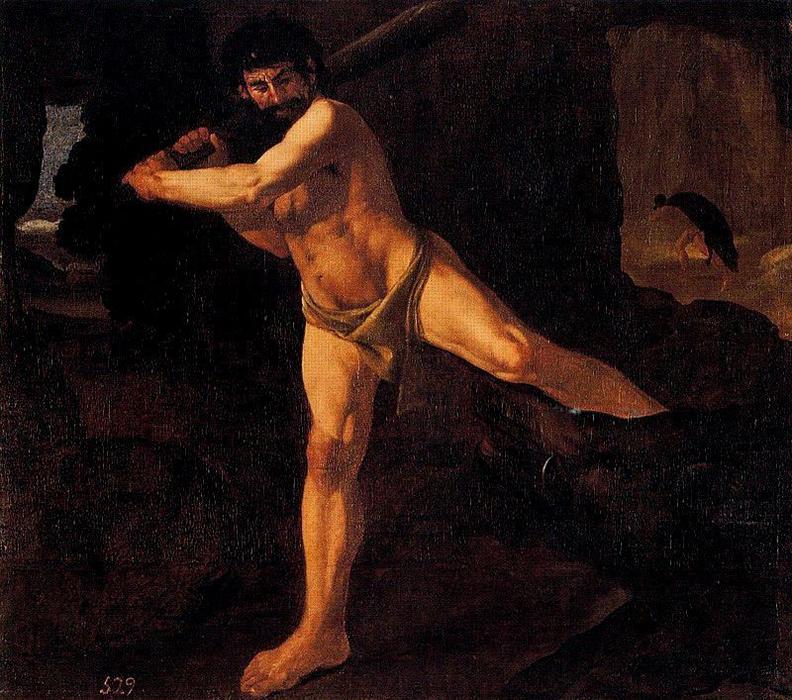
Lucha de Hércules con el jabalí de Erimanto

 Ver más
Reproducción al óleo hecha a mano
Óleo sobre lienzo pintado a mano en el tamaño y marco de su elección, realizado por encargo por nuestros artistas. ( Comprar impresión Comprar imagen)




P118B $10

P118H $10

P118W $10

P438Z $10

P508JH $12

P508YH $12

P805H $10

P805Z $10

P919BZ $10

P919G $10

P919XJ $10

P959ZH $10

P968JZ $12

W106C $8

W218G $10

W218JH $8

W218Y $10

W307PJ $10

W316G $10

W316PJ $8

W316Y $10

W398PJ $8

W4111J $10

W500HY $15

W500JH $15

W692G $12

W849H $8

W940BG $15

W953PJ $8




Elija entre nuestros tamaños predefinidos que respetan las proporciones originales de la obra.

Puede ingresar sus propias dimensiones para adaptarse a un marco o espacio específico. Si el tamaño seleccionado no coincide con las proporciones de la imagen original, recortaremos la obra o extenderemos la pintura con elementos adicionales pintados a mano. Se le enviará una maqueta digital para su aprobación antes de comenzar la producción.
Tenga en cuenta que la vista previa en pantalla no refleja el recorte o la extensión reales. Solo la maqueta mostrará con precisión la composición final.
Si bien existen tamaños personalizados, recomendamos seleccionar una dimensión de la lista predefinida para preservar las proporciones originales.
Tras realizar el pedido, el equipo de ArtsDot.com enviará un correo electrónico al cliente para solicitar instrucciones y proporcionarle una vista previa del boceto.
Envío a todo el mundo () en 3-4 semanas en lugar de las 5 semanas estándar. (22 agosto). Sin comprometer la calidad.

Envío exprés gratuito a todo el mundo

Lienzo de lino de alta calidad

Seguro de envío total

Garantía de reembolso de impuestos aduaneros

Garantía de fidelidad cromática exacta

Política de devolución de 60 días (solo por defectos)

Garantía de devolución del 100% del dinero

Descuento por cantidad
 La opción de vidrio solo está disponible en tamaños inferiores a 110 cm.

Lucha de Hércules con el jabalí de Erimanto
Técnica de reproducción
Dimensiones de la reproducción
-


Precio total final
$ 263
Descripción de la obra
Francisco de Zurbarán’s Dramatic Confrontation: Hercules and the Boar of Erimanto
Francisco de Zurbarán's “Lucha de Hércules con el jabalí de Erimanto” (The Battle of Hercules with the Boar of Erimanto) is not merely a depiction of myth; it’s a profound exploration of struggle, faith, and the relentless pursuit of virtue. Painted in stark black and white – a signature technique for the artist – the scene unfolds with an almost brutal immediacy, drawing the viewer directly into the heart of the conflict. The composition, while seemingly straightforward, is meticulously constructed to convey a sense of intense drama and spiritual weight, reflecting the core tenets of Baroque art and Zurbarán’s distinctive style.
The central figure, Hercules himself, dominates the canvas. He stands powerfully on one leg, his stance conveying both immense strength and a palpable vulnerability. The loincloth, rendered with astonishing realism – a hallmark of Zurbarán's meticulous attention to detail – emphasizes his exposed physicality, reminding us of his mortal nature even in this heroic struggle. The bat he wields isn’t simply a weapon; it’s an extension of his will, a symbol of his determination to overcome the formidable boar of Erimanto. The boar, rendered with equally impressive anatomical accuracy and ferocious energy, embodies primal chaos and untamed instinct – a direct challenge to Hercules's ordered world.
The Baroque Influence: Light, Shadow, and Emotional Intensity
Zurbarán’s work is deeply rooted in the principles of the Spanish Baroque. Like Caravaggio before him, he masterfully employed *chiaroscuro*, a dramatic contrast between light and shadow, to heighten the emotional impact of the scene. The strong directional lighting focuses intensely on Hercules and the boar, while the surrounding areas remain shrouded in darkness, creating a sense of claustrophobia and emphasizing the intensity of the struggle. This technique wasn’t merely aesthetic; it served to underscore the spiritual battle being waged – the conflict between divine virtue and earthly temptation.
Furthermore, Zurbarán's use of white drapery—a signature element in his work—adds a layer of symbolic meaning. The stark whiteness represents purity, holiness, and the unwavering faith that fuels Hercules’s actions. These flowing garments, rendered with an almost ethereal quality, contrast sharply with the rough texture of the boar’s hide and the muscular form of the hero, further amplifying the thematic tension.
Contextualizing the Image: Religious Devotion in Extremadura
To understand Zurbarán's artistic vision fully, it’s crucial to consider his origins. Born in Fuente de Cantos, Extremadura, a region steeped in religious fervor and characterized by its austere landscapes, Zurbarán’s early life profoundly shaped his artistic sensibility. The region’s devout atmosphere, coupled with the influence of artists like Juan Sánchez Cotán, instilled within him a preference for simplicity, solemnity, and a deep engagement with spiritual themes – qualities that are powerfully evident in “Lucha de Hércules con el jabalí de Erimanto.” The painting can be viewed as an allegory for the Christian soul’s struggle against sin, mirroring the challenges faced by early monastic figures.
Symbolism and Emotional Resonance
Beyond the literal depiction of the mythic battle, the image resonates with profound symbolic meaning. Hercules represents strength, courage, and self-discipline – virtues essential for overcoming earthly obstacles and achieving spiritual enlightenment. The boar of Erimanto symbolizes temptation, chaos, and the forces that threaten to derail one’s path towards righteousness. The two birds subtly placed within the composition—one near the top right corner, another at the bottom left—could represent divine guidance or perhaps the fleeting nature of earthly distractions. Ultimately, “Lucha de Hércules con el jabalí de Erimanto” is a timeless meditation on the enduring struggle between good and evil, a testament to Zurbarán’s extraordinary ability to capture both the physical and spiritual dimensions of human experience.
Obras relacionadas
Biografía del artista
vida temprana y formación
francisco de zurbarán, un destacado pintor español, nació en 1598 en Extremadura, España. Su viaje artístico comenzó bajo la guía de alejandro de la mina, pero fue su tiempo con alonso de najera quien verdaderamente moldeó su estilo barroco.carrera artística y obras notables
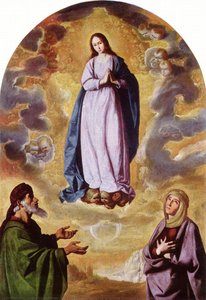
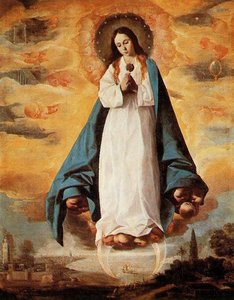
La obra de Zurbarán se caracteriza por el uso dramático de la luz y la sombra, una técnica conocida como tenebrismo. Esto puede verse en el sudario de Santa Verónica, un cuadro que muestra su maestría sobre el medio. *- La Inmaculada Concepción (c. 1635), un ejemplo primario del trabajo temprano de Zurbarán, se encuentra ahora en el Museo de Bellas Artes, Bilbao.
- El Águila Divina (c. 1640), un poderoso símbolo de devoción religiosa, forma parte de la colección del Metropolitan Museum of Art.
- El tema apócrifo de la aparición de la Virgen a San Juan, otra pieza notable, demuestra su capacidad para equilibrar la luz y la oscuridad.
legado e influencia
La influencia de Zurbarán en el barroco español es innegable. Su uso del claroscuro ha inspirado a generaciones de artistas. El círculo de Francisco de Zurbarán, un grupo de artistas influenciado por su obra, continuó ampliando los límites del tenebrismo. * puntos clave: * Activo en Sevilla, España, desde 1614. * Conocido por la iluminación dramática y la intensa profundidad emocional. * Influyó en numerosos pintores barrocos españoles.conclusión
El legado de Francisco Zurbarán es un testimonio del poder perdurable del arte barroco. Su innovador uso de la luz y la sombra ha dejado una marca indeleble en el mundo del arte, inspirando a innumerables artistas y consolidando su lugar en la historia. * lectura adicional: * [https://ArtsDot.com/@/francisco-zurbaran](https://ArtsDot.com/@/francisco-zurbaran) - explore más obras de Zurbarán en ArtsDot. * [https://wikipedia.org/wiki/francisco_de_zurbarán](https://wikipedia.org/wiki/francisco_de_zurbarán) - profundice en la vida y las influencias del artista.
Francisco de Zurbarán
1598 - 1664 , España
Datos clave
- Artistas Que Influyeron:
- Alejandro de la Mina
- Alonso de Najera
- Juan Sánchez Cotán
- Estilo Artístico: Barroco
- Fecha De Muerte: 1664
- Fecha De Nacimiento: 1598
- Influencia En Artistas: Círculo de Zurbarán
- Lugar De Nacimiento: Fuente de Cantos, España
- Nacionalidad: Española
- Nombre Completo: Francisco de Zurbarán
- Obras Notables:
- Inmaculada Concepción
- Agnus Dei
- Sudario de Santa Verónica
Artículos relacionados
The Golden Age Reforged: Dramatic Realism & Religious Zeal in Spanish Baroque Art
Explore the dramatic world of Spanish Baroque art! Discover masters like Zurbarán & the powerful influence of religious zeal on painting techniques – a guide for collectors and enthusiasts.

The Dramatic Flourish: Exploring the Baroque Movement's Enduring Legacy in Art History
Explore the dramatic world of Baroque art! Discover iconic artists like Caravaggio & Rubens, defining techniques, and its lasting impact on art history. Expert insights for collectors & enthusiasts at ArtsDot.
Francisco de Zurbarán: Mysticism, Realism & the Golden Age of Spanish Painting
Explore the captivating world of Francisco de Zurbarán, a master of Spanish Baroque painting. Discover his dramatic tenebrism, religious masterpieces like 'La Porciúncula,' and lasting influence on art history.
Theatricality & Triumph: Baroque Drama in Painting & Sculpture
Explore the dramatic world of Baroque art! Discover its history, defining characteristics, & lasting influence on painting & sculpture. Expert insights into Caravaggio, Zurbarán, and Bernini – plus high-quality reproductions at ArtsDot.
The Dramatic Flourish: Exploring Themes of Power, Faith & Emotion in Baroque Artworks
Explore the dramatic world of Baroque art! Discover masters like Zurbarán & the powerful influence of religious zeal on painting techniques. Expert insights for collectors and enthusiasts.