 Ver en contexto
 Enviar
 Compartir
 Detalles

 Descargar
 Similares
 Radiografía
 Presentación de diapositivas
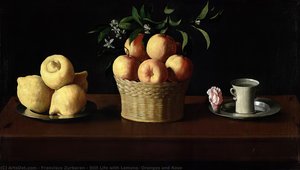
Naturaleza muerta

 Ver más
Reproducción al óleo hecha a mano
Óleo sobre lienzo pintado a mano en el tamaño y marco de su elección, realizado por encargo por nuestros artistas. ( Comprar impresión Comprar imagen)




P118B $10

P118H $10

P118W $10

P438Z $10

P508JH $12

P508YH $12

P805H $10

P805Z $10

P919BZ $10

P919G $10

P919XJ $10

P959ZH $10

P968JZ $12

W106C $8

W218G $10

W218JH $8

W218Y $10

W307PJ $10

W316G $10

W316PJ $8

W316Y $10

W398PJ $8

W4111J $10

W500HY $15

W500JH $15

W692G $12

W849H $8

W940BG $15

W953PJ $8




Elija entre nuestros tamaños predefinidos que respetan las proporciones originales de la obra.

Puede ingresar sus propias dimensiones para adaptarse a un marco o espacio específico. Si el tamaño seleccionado no coincide con las proporciones de la imagen original, recortaremos la obra o extenderemos la pintura con elementos adicionales pintados a mano. Se le enviará una maqueta digital para su aprobación antes de comenzar la producción.
Tenga en cuenta que la vista previa en pantalla no refleja el recorte o la extensión reales. Solo la maqueta mostrará con precisión la composición final.
Si bien existen tamaños personalizados, recomendamos seleccionar una dimensión de la lista predefinida para preservar las proporciones originales.
Tras realizar el pedido, el equipo de ArtsDot.com enviará un correo electrónico al cliente para solicitar instrucciones y proporcionarle una vista previa del boceto.
Envío a todo el mundo () en 3-4 semanas en lugar de las 5 semanas estándar. (23 agosto). Sin comprometer la calidad.

Envío exprés gratuito a todo el mundo

Lienzo de lino de alta calidad

Seguro de envío total

Garantía de reembolso de impuestos aduaneros

Garantía de fidelidad cromática exacta

Política de devolución de 60 días (solo por defectos)

Garantía de devolución del 100% del dinero

Descuento por cantidad
 La opción de vidrio solo está disponible en tamaños inferiores a 110 cm.

Naturaleza muerta
Técnica de reproducción
Dimensiones de la reproducción
-


Precio total final
$ 263
Descripción de la obra
The Essence of Spanish Baroque: An Exploration of Zurbarán’s *Naturaleza Muerta*
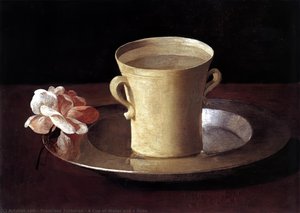
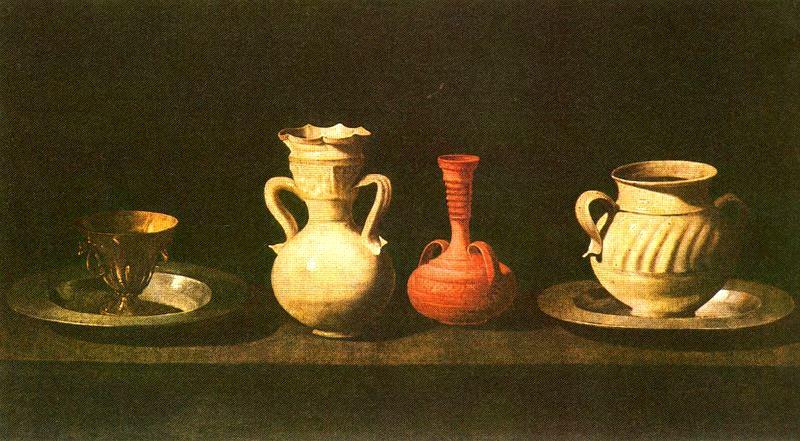
Francisco de Zurbarán's Naturaleza Muerta, a seemingly simple arrangement of vases, cups, and a bowl, is in reality a profound meditation on light, form, and the spirit. Painted circa 1633, this work transcends mere representation; it’s a distillation of the artist’s deeply rooted religious sensibility, reflecting the austerity and spiritual intensity characteristic of his oeuvre. Born in Extremadura, Spain, Zurbarán was profoundly shaped by the region's stark landscapes and fervent devotion – qualities that informed his distinctive style, often described as “Spanish Caravaggio” due to his masterful use of tenebrism, a dramatic contrast between light and shadow.
The painting immediately draws the eye with its almost unnerving stillness. There’s no sense of movement or activity, only an intense focus on the objects themselves. This deliberate lack of dynamism is not simply decorative; it serves to heighten the emotional impact, creating a space of quiet contemplation. The composition is meticulously balanced, each element carefully positioned to contribute to the overall harmony and solemnity. The arrangement feels almost staged, as if capturing a fleeting moment of grace within a sacred space.
Technique and the Language of Light
Zurbarán’s technical skill is evident in every detail. He employs a remarkably realistic approach, rendering the textures of the ceramic with astonishing precision – the cool smoothness of the porcelain, the rough surface of the earthenware, the subtle sheen of the metal. However, it's his manipulation of light that truly elevates the work. The stark illumination, originating from an unseen source to the left, sculpts each object, revealing its form and creating a powerful sense of depth. Notice how the shadows are not merely absences of light but active participants in the composition, adding weight and drama.
The artist’s use of *sfumato*, a technique borrowed from Italian Renaissance painting, subtly softens the edges of the objects, lending them an ethereal quality. This blending of tones creates a sense of atmosphere, as if the scene is bathed in a perpetual twilight. Furthermore, Zurbarán's mastery of white drapery – a signature element of his style – is particularly striking here. The folds and creases of the cloth are rendered with such clarity that they appear almost sculptural, adding to the overall sense of realism.
Symbolism and Spiritual Resonance
While seemingly a straightforward still life, Naturaleza Muerta carries significant symbolic weight. The objects themselves – vases, cups, and a bowl – are not merely decorative; they represent earthly possessions, subject to the ravages of time and decay. Their pristine condition, however, suggests an attempt to transcend this ephemeral nature, hinting at a deeper spiritual meaning. The arrangement can be interpreted as a meditation on mortality and the pursuit of eternal life.
Considering Zurbarán’s background in religious painting, particularly his commissions for monasteries, it's reasonable to interpret the scene as an allegory for faith and devotion. The objects might symbolize the virtues of temperance, charity, and humility – qualities essential to a spiritual life. The starkness of the composition mirrors the austerity of monastic life, while the careful arrangement reflects the order and discipline valued within religious communities.
A Legacy of Dramatic Realism
Naturaleza Muerta stands as a testament to Zurbarán’s unique artistic vision. It's a work that demands close attention, rewarding viewers with its subtle complexities and profound emotional resonance. Reproductions of this masterpiece capture the drama of light and shadow, allowing us to appreciate the artist’s extraordinary skill and his ability to imbue inanimate objects with spiritual significance. Whether displayed in a grand salon or a more intimate setting, this painting continues to captivate and inspire, offering a glimpse into the heart of Spanish Baroque art.
Obras relacionadas
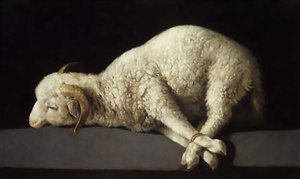
Biografía del artista
vida temprana y formación
francisco de zurbarán, un destacado pintor español, nació en 1598 en Extremadura, España. Su viaje artístico comenzó bajo la guía de alejandro de la mina, pero fue su tiempo con alonso de najera quien verdaderamente moldeó su estilo barroco.carrera artística y obras notables
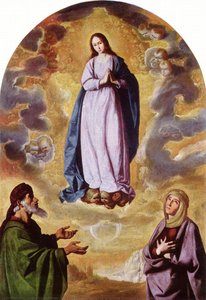
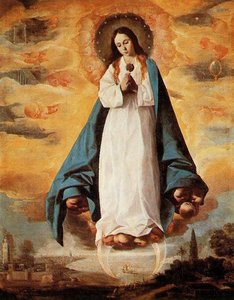
La obra de Zurbarán se caracteriza por el uso dramático de la luz y la sombra, una técnica conocida como tenebrismo. Esto puede verse en el sudario de Santa Verónica, un cuadro que muestra su maestría sobre el medio. *- La Inmaculada Concepción (c. 1635), un ejemplo primario del trabajo temprano de Zurbarán, se encuentra ahora en el Museo de Bellas Artes, Bilbao.
- El Águila Divina (c. 1640), un poderoso símbolo de devoción religiosa, forma parte de la colección del Metropolitan Museum of Art.
- El tema apócrifo de la aparición de la Virgen a San Juan, otra pieza notable, demuestra su capacidad para equilibrar la luz y la oscuridad.
legado e influencia
La influencia de Zurbarán en el barroco español es innegable. Su uso del claroscuro ha inspirado a generaciones de artistas. El círculo de Francisco de Zurbarán, un grupo de artistas influenciado por su obra, continuó ampliando los límites del tenebrismo. * puntos clave: * Activo en Sevilla, España, desde 1614. * Conocido por la iluminación dramática y la intensa profundidad emocional. * Influyó en numerosos pintores barrocos españoles.conclusión
El legado de Francisco Zurbarán es un testimonio del poder perdurable del arte barroco. Su innovador uso de la luz y la sombra ha dejado una marca indeleble en el mundo del arte, inspirando a innumerables artistas y consolidando su lugar en la historia. * lectura adicional: * [https://ArtsDot.com/@/francisco-zurbaran](https://ArtsDot.com/@/francisco-zurbaran) - explore más obras de Zurbarán en ArtsDot. * [https://wikipedia.org/wiki/francisco_de_zurbarán](https://wikipedia.org/wiki/francisco_de_zurbarán) - profundice en la vida y las influencias del artista.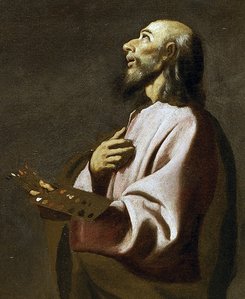
Francisco de Zurbarán
1598 - 1664 , España
Datos clave
- Artistas Que Influyeron:
- Alejandro de la Mina
- Alonso de Najera
- Juan Sánchez Cotán
- Estilo Artístico: Barroco
- Fecha De Muerte: 1664
- Fecha De Nacimiento: 1598
- Influencia En Artistas: Círculo de Zurbarán
- Lugar De Nacimiento: Fuente de Cantos, España
- Nacionalidad: Española
- Nombre Completo: Francisco de Zurbarán
- Obras Notables:
- Inmaculada Concepción
- Agnus Dei
- Sudario de Santa Verónica
Artículos relacionados
The Golden Age Reforged: Dramatic Realism & Religious Zeal in Spanish Baroque Art
Explore the dramatic world of Spanish Baroque art! Discover masters like Zurbarán & the powerful influence of religious zeal on painting techniques – a guide for collectors and enthusiasts.

The Dramatic Flourish: Exploring the Baroque Movement's Enduring Legacy in Art History
Explore the dramatic world of Baroque art! Discover iconic artists like Caravaggio & Rubens, defining techniques, and its lasting impact on art history. Expert insights for collectors & enthusiasts at ArtsDot.
Francisco de Zurbarán: Mysticism, Realism & the Golden Age of Spanish Painting
Explore the captivating world of Francisco de Zurbarán, a master of Spanish Baroque painting. Discover his dramatic tenebrism, religious masterpieces like 'La Porciúncula,' and lasting influence on art history.
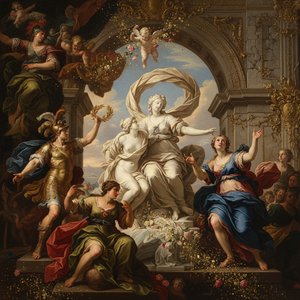
Theatricality & Triumph: Baroque Drama in Painting & Sculpture
Explore the dramatic world of Baroque art! Discover its history, defining characteristics, & lasting influence on painting & sculpture. Expert insights into Caravaggio, Zurbarán, and Bernini – plus high-quality reproductions at ArtsDot.

Barroco Sublime: 10 Obras Maestras que Definieron una Época |
Descubre las 10 obras maestras del Barroco que marcaron una época. Caravaggio, Bernini y Velázquez cobran vida en . Reproducciones de arte de calidad museo para decorar tu hogar con elegancia. ¡Explora la colección online!