

 Ver en contexto
 Enviar
 Compartir
 Detalles

 Descargar
 Similares
 Radiografía
 Presentación de diapositivas
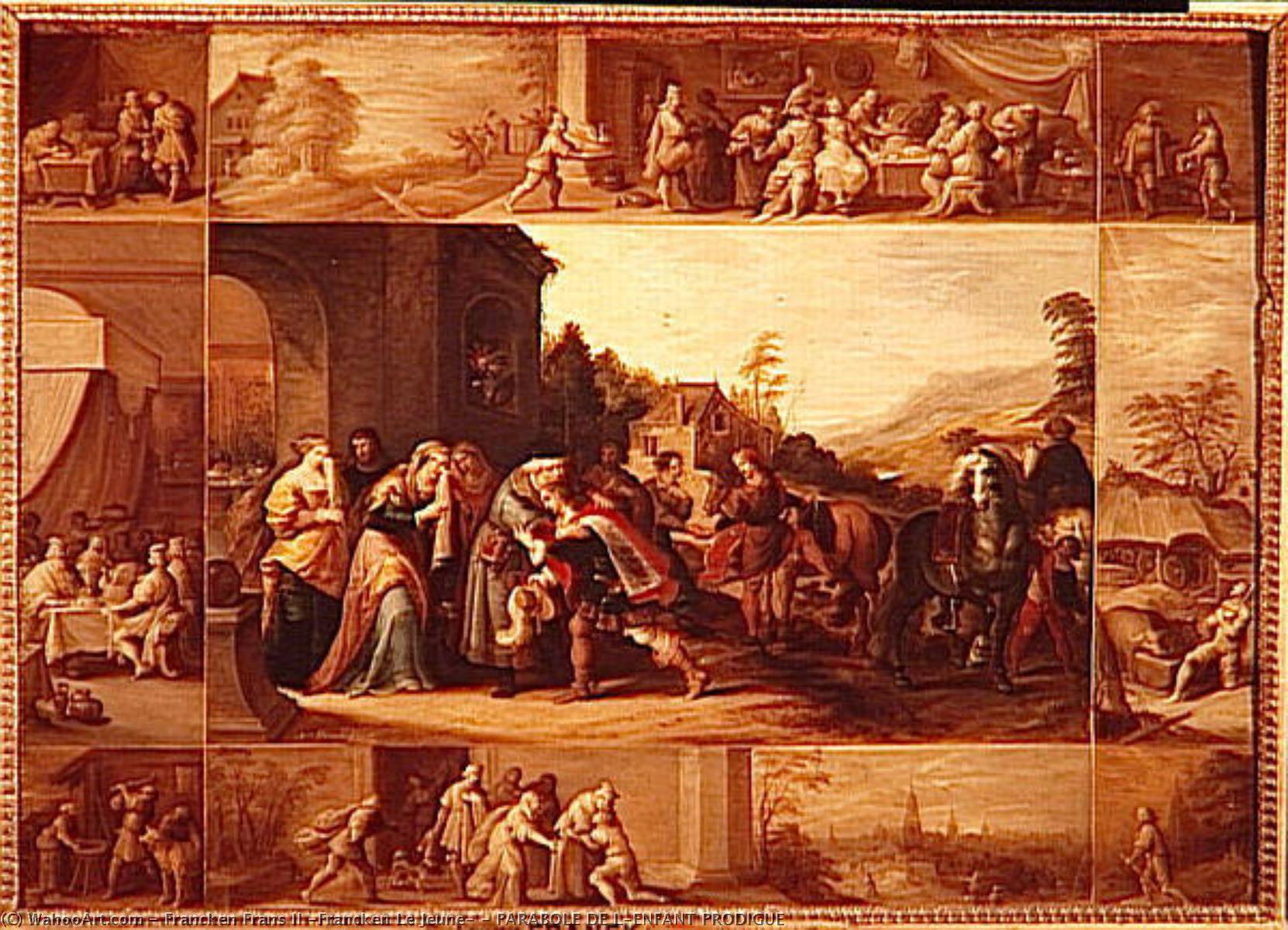
PARABOLE DE L'ENFANT PRODIGUE

 Ver más
Adquiera una imagen digital de alta resolución y optimizada, muy superior a la vista previa en línea.
Cada archivo es preparado meticulosamente por nuestros especialistas internos mediante el uso de herramientas avanzadas y un experto retoque manual. Nos aseguramos de que cada imagen posea una claridad excepcional, una precisión cromática impecable y un detalle minucioso.
El archivo final se entrega por correo electrónico en un plazo de 72 horas, optimizado para su uso inmediato en entornos profesionales, editoriales y de impresión. Esta es la misma calidad en la que confían los estudios de diseño, las editoriales y las galerías de primer nivel.
Imagen Digital
Descarga un archivo de alta resolución para exhibición personal, impresión y proyectos creativos. ( Comprar impresión Comprar pintura hecha a mano)
Incluido en cada pedido de imágenes digitales
Entrega digital experta, garantizada.
Al elegir ArtsDot.com, no solo está adquiriendo una imagen; está recibiendo una obra de arte digital mejorada profesionalmente, elaborada con precisión y respaldada por una garantía de satisfacción. Esto es todo lo que incluye su pedido, automáticamente:

Entrega rápida por email
Recibirá su archivo de imagen digital en alta resolución por correo electrónico en un plazo de 72 horas tras realizar su pedido, listo para su uso inmediato.

Archivo digital optimizado por IA
Su obra de arte se optimiza profesionalmente mediante herramientas avanzadas de IA y edición manual, garantizando el máximo detalle, claridad y precisión cromática.

Reenvío gratuito de por vida
¿Has borrado o perdido tu archivo por error? No te preocupes: te lo volveremos a enviar en cualquier momento, sin coste adicional.

Sin gastos de importación, siempre
Disfrute de su obra de arte al instante sin aduanas, aranceles ni gastos de envío; las descargas digitales siempre están libres de impuestos.

Garantía de fidelidad de color
Garantizamos que su imagen digital refleje los colores originales con la mayor fidelidad posible, mediante el uso de herramientas profesionales y gestión del color.

Garantía de satisfacción de 60 días
Si no está satisfecho con su imagen digital, la revisaremos o le reembolsaremos el 100% en un plazo de 60 días, sin preguntas.

100% Garantía de devolución de dinero
¿No está satisfecho? Obtenga un reembolso completo dentro de los 60 días posteriores a la recepción de su archivo digital, sin necesidad de explicaciones.

Descuentos por pedidos grandes
Compra 3 imágenes, ahorra 10% - Compra 5, ahorra 15% - Compra 10+, ahorra 20%. Ideal para proyectos creativos, galerías y agencias.
Obras relacionadas


Biografía del artista
A Master of the Miniature: The Life and Legacy of Frans Francken the Younger
In the vibrant, bustling heart of seventeenth-century Antwerp, a period defined by profound cultural shifts and artistic metamorphosis, there emerged a painter whose delicate touch could capture the vastness of human morality within the smallest of frames. Frans Francken the Younger, born in 1581, was not merely a participant in the Flemish Golden Age; he was a pivotal bridge between the elegant, often artificial grace of Mannerism and the dramatic, emotive power of the Baroque. Born into a lineage of celebrated creators, his very identity was woven from the threads of tradition established by his father, Frans Francken I. This familial foundation provided him with more than just technical training; it offered him entry into a prestigious workshop culture that would become one of the most prolific engines of artistic production in Northern Europe.
Francken’s early years were steeped in the rigorous discipline of the Antwerp Guild of Saint Luke, where he honed his ability to render intricate details with breathtaking precision. His training likely extended beyond the borders of Flanders, as evidence suggests an apprenticeship or period of study under his uncle in Paris, a journey that undoubtedly broadened his stylistic horizons. By 1605, he had achieved the status of master, and by 1615, he was elected Dean of the Guild, a testament to his standing among his peers. His early works reflect the lingering influence of Mannerist masters like Parmigianino and Giulio Romano, characterized by elongated, graceful figures and complex, almost theatrical compositions. Yet, as his career progressed, one can observe a fascinating evolution in his technique—moving from a thick, textured impasto toward more refined, translucent glazes that allowed for a luminous, ethereal quality in his depictions of light and shadow.
The Cabinet of Wonders: Innovation and Subject Matter
While many of his contemporaries sought grandeur through massive altarpieces, Francken found his greatest triumph in the intimate realm of cabinet paintings. These small-scale, exquisitely crafted works were designed for the private collections of connoisseurs, intended to be studied closely, almost like jewels. He possessed a singular talent for creating "imaginary art galleries"—meticulous depictions of kunstkamers or collectors' cabinets—where precious objects, sculptures, and paintings are arranged in a dense, fascinating tapestry of human curiosity. This fascination with the collection of wonders did more than just showcase his skill; it actively influenced the trajectory of Flemish art, leaving an indelible mark on the works of legends such as Peter Paul Rubens and Jan Brueghel the Elder.
Beyond the architectural splendor of these galleries, Francken’s imagination wandered into the whimsical and the moralizing. He was a master of diverse narratives, ranging from the deeply religious to the playfully allegorical. His oeuvre includes:
- Biblical Narratives: Movingly rendered scenes such as The Visitation, which demonstrate his ability to infuse sacred history with human emotion and meticulous detail.
- Allegorical Moralism: Complex paintings that utilized symbolism to explore virtue and vice, often employing the clever motif of "monkeys' kitchens"—scenes where primates mimic human follies to provide a satirical critique of society.
- Historical and Mythological Themes: Grand tales of antiquity reimagined within intimate, highly detailed settings.
A Prolific Legacy and Artistic Influence
The true scale of Francken’s impact lies in the sheer productivity of his studio. He was a central figure in a collaborative ecosystem, often working alongside landscape specialists like Abel Grimmer or architecture experts to create multifaceted masterpieces where every element—from the sweeping sky to the smallest human gesture—was executed by a master hand. This collaborative spirit allowed his workshop to produce an enormous volume of work, ranging from original compositions to highly skilled replicas that populated the homes of the European elite. His ability to adapt his style, transitioning from the structured elegance of his youth to a more fluid, genre-focused approach in his later years, mirrors the broader movement of European art toward a more naturalistic and emotionally accessible Baroque aesthetic.
When Frans Francken the Younger passed away in 1642, he left behind a legacy that transcended simple portraiture or religious iconography. He had taught the world how to look closely—how to find the infinite within the minute. Through his mastery of small-scale storytelling and his ability to blend the intellectual complexity of Mannerism with the visceral energy of the Baroque, he ensured that the spirit of Antwerp’s artistic brilliance would endure for generations to come.
francken frans ii (francken le jeune)
1581 - 1642
Breves datos
- Artistic Movement Or Style: Baroque & Mannerism
- Artists Or Movements Influenced By This Artist: ['Peter Paul Rubens']
- Artists Who Influenced This Artist:
- Pieter Bruegel the Elder
- Albrecht Dürer
- Date Of Birth: 1581
- Full Name: Frans Francken II
- Nationality: Flemish
- Notable Artworks:
- The Visitation
- Saint Jerome in His Study
- Place Of Birth: Antwerp

