 Enviar
 Compartir
 Detalles

 Descargar
 Similares
 Presentación de diapositivas
The Age of Bronze (L
 Bronze
- Sculpture
- Neoclassicism
 181.0 x 54.0 cm
 Legion of Honor
 Ver más
Giclée / Impresión de arte
Impresiones giclée o en lienzo de calidad de museo con producción rápida y opciones de acabado flexibles. ( Comprar pintura hecha a mano Comprar imagen)




































Elija entre nuestros tamaños predefinidos que respetan las proporciones originales de la obra.

Puede introducir sus propias dimensiones para adaptarse a un marco o espacio específico. Si el tamaño seleccionado no coincide con las proporciones de la imagen original, recortaremos la obra de arte o extenderemos la imagen con un borde con efecto espejo o de color sólido. Se enviará una maqueta digital para su aprobación antes de que comience la producción.
Tenga en cuenta que la vista previa en pantalla no refleja el recorte o la extensión real. Solo la maqueta mostrará con precisión la composición final.
Aunque existen tamaños personalizados, recomendamos seleccionar una dimensión de la lista predefinida para preservar las proporciones originales.
Envío a todo el mundo () en 2 semanas en lugar de las 4/5 semanas estándar. (22 agosto)

Envío exprés gratuito a todo el mundo

Lienzo de lino de alta calidad

Seguro de envío total

Garantía de reembolso de impuestos aduaneros

Garantía de fidelidad cromática exacta

Política de devolución de 60 días (solo por defectos)

Garantía de devolución del 100% del dinero

Descuento por cantidad
 La opción de vidrio solo está disponible en tamaños inferiores a 110 cm.

The Age of Bronze (L
Giclée / Impresión de arte
Dimensiones de la reproducción
-


Precio total final
$ 62
Descripción de la pieza
The Weight of Bronze: Rodin’s “The Age of Bronze”
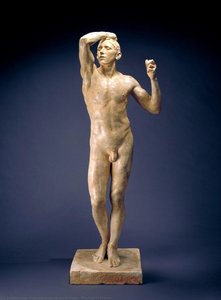
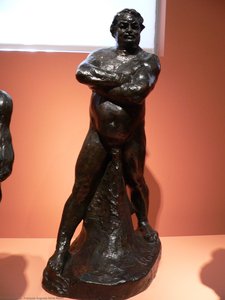
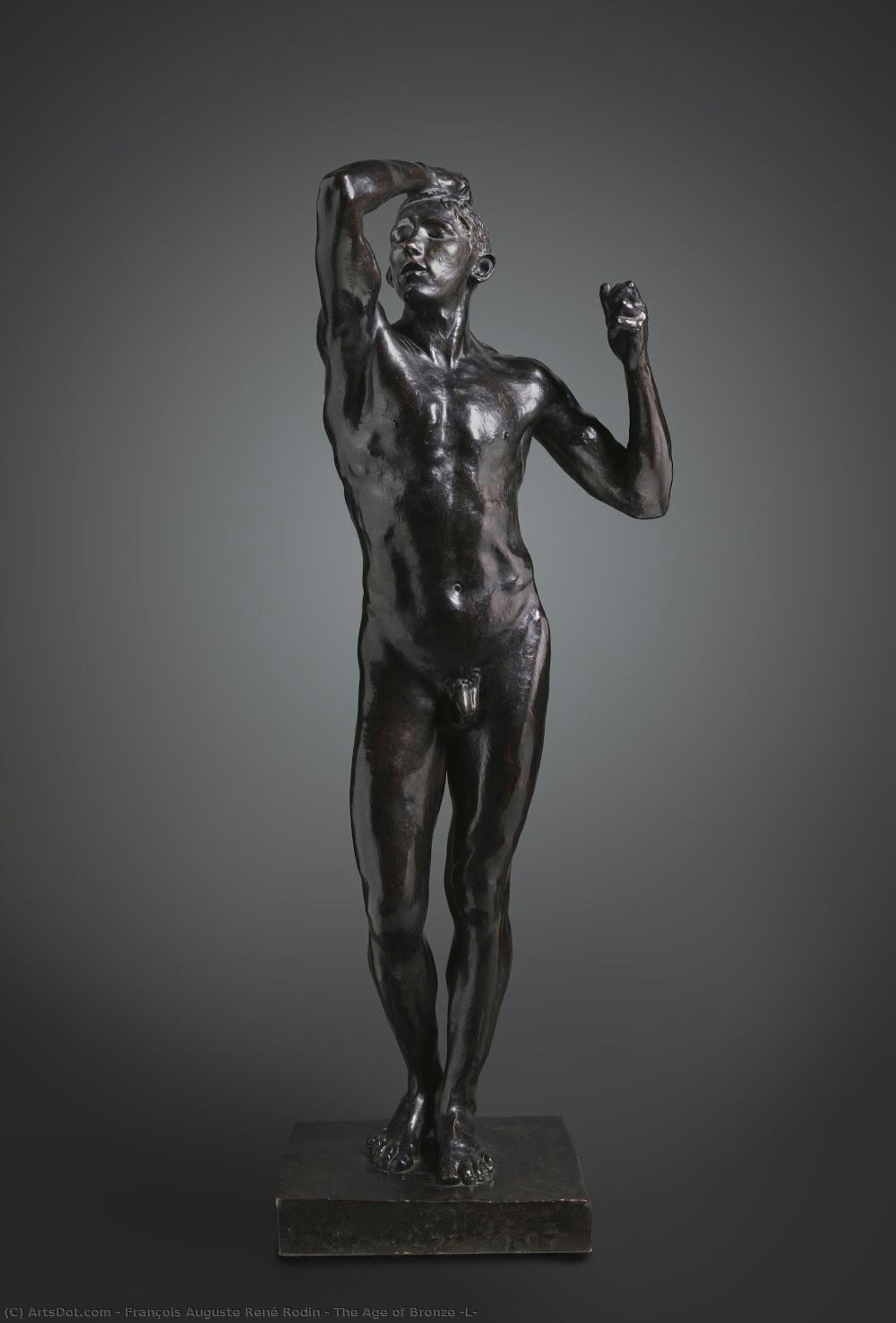
François Auguste René Rodin's "The Age of Bronze" isn’t merely a sculpture; it’s a visceral embodiment of awakening, a silent drama etched in the cool, enduring surface of bronze. Completed in 1876 and initially presented as “The Conquered Man,” this monumental work immediately captivated – and scandalized – its audience with its startlingly realistic depiction of a nude male figure caught in a moment of profound transition. More than just an anatomical study, it’s a meditation on the human condition, grappling with themes of vulnerability, nascent strength, and the unsettling beauty of transformation.
The genesis of this powerful piece lies within Rodin's early apprenticeship as a stonemason, a period where he honed his technical skills while simultaneously developing an intensely personal approach to form. This experience instilled in him a profound understanding of material – its texture, weight, and capacity for capturing the nuances of human emotion. The choice of bronze itself is crucial; it lends the sculpture an inherent gravitas, mirroring the subject’s weighty presence and suggesting an enduring quality that transcends time.
A Study in Naturalism and Ambiguity
What immediately draws the eye is Rodin's masterful rendering of musculature. The figure isn’t idealized; it possesses a raw, almost brutal honesty. Every vein, every ripple of muscle, is meticulously sculpted, conveying both vulnerability and latent power. Yet, the sculpture deliberately resists easy interpretation. Initially presented as “The Conquered Man,” Rodin later shifted the title to "The Age of Bronze," recognizing that the figure’s ambiguous posture – a partially raised arm, a gaze directed inward – invited multiple readings. Is he rising from defeat? Emerging into a new era? Or perhaps simply contemplating his own mortality?
This deliberate ambiguity was revolutionary for its time. Contemporary critics, shocked by the sculpture's realism and perceived lack of traditional heroic symbolism, accused Rodin of using a life cast – a practice considered deeply unethical at the time. Rodin vehemently defended his process, insisting on the rigorous study of anatomy and profile observation as the foundation of his work. The scandal, however, served to elevate Rodin’s reputation, establishing him as a bold innovator willing to challenge artistic conventions.
Technique and Material – A Masterclass in Bronze Casting
The creation of “The Age of Bronze” exemplifies Rodin's mastery of the lost-wax casting technique. This intricate process involved creating a wax model, encasing it in plaster, melting out the wax to create a mold, and then pouring molten bronze into the cavity. The resulting surface is remarkably smooth and polished, reflecting light with an almost luminous quality. The subtle variations in tone – darker areas suggesting shadow and depth, lighter areas highlighting contours – are achieved through careful manipulation of the patina, a protective layer applied after casting. Rodin’s signature reddish-brown patina, often referred to as “crushed grape,” adds warmth and richness to the bronze, further enhancing its dramatic effect.
The sculpture's substantial size—measuring 180.5 cm in height—contributes significantly to its impact. It commands attention, inviting viewers to step closer and contemplate its complexities. The scale emphasizes the figure’s physicality and reinforces the sense of a monumental event unfolding within a single, frozen moment.
Symbolism and Emotional Resonance
Beyond its technical brilliance, “The Age of Bronze” resonates deeply with universal themes of transformation, resilience, and the search for meaning. The figure's posture suggests a struggle – a battle fought and perhaps won – but also an acceptance of whatever lies ahead. There’s a palpable sense of vulnerability, yet simultaneously, a quiet dignity. It speaks to the inherent contradictions within the human experience: our capacity for both destruction and creation, despair and hope.
Rodin's work continues to captivate audiences today because it taps into these fundamental emotions with remarkable power. “The Age of Bronze” is not simply a sculpture; it’s an invitation to contemplate our own journeys of transformation and the enduring beauty found within the face of adversity – a timeless testament to the artist’s profound understanding of the human spirit.
Obras relacionadas
Biografía del artista
Primeros años y formación
François Auguste René Rodin, escultor francés, nació el 12 de noviembre de 1840 en París, Francia. Es ampliamente considerado como el precursor de la escultura moderna. A pesar de su educación tradicional, su enfoque artístico fue innovador y poco convencional. Su vida temprana estuvo marcada por un fuerte deseo de crear, lo que lo llevó a asistir a la Petite École, una escuela especializada en arte y matemáticas.Carrera artística
La carrera artística de Rodin se caracteriza por su habilidad única para modelar superficies complejas y turbulentas en arcilla. Muchas de sus esculturas más notables fueron inicialmente criticadas durante su vida debido a su desviación de las tradiciones figurativas tradicionales. Sin embargo, la persistencia y la dedicación de Rodin a su oficio finalmente llevaron a su reconocimiento como el escultor francés preeminente de su tiempo.- El Pensador (1880-1882), una de las esculturas más famosas de Rodin, es un ejemplo primordial de su enfoque artístico innovador.
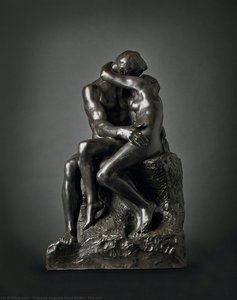
- El Beso (1886-1898), otra escultura icónica, muestra la capacidad de Rodin para capturar la esencia de la emoción humana.
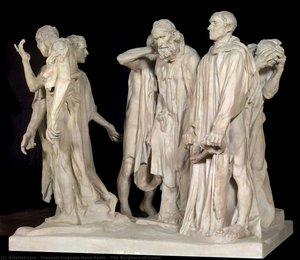
- Los Burgueses de Calais (1884-1895), una escultura poderosa y conmovedora, conmemora el sufrimiento y el sacrificio de seis ciudadanos de Calais durante la Guerra de los Cien Años.
Evolución y Influencias
Rodin experimentó con diversas técnicas y materiales a lo largo de su carrera, alejándose gradualmente de las convenciones académicas. Su trabajo estuvo influenciado por el arte antiguo, especialmente la escultura griega y romana, pero también se inspiró en el arte medieval y el Renacimiento. La influencia del impresionismo también es evidente en su enfoque en la textura y la luz. Rodin buscaba capturar no solo la forma física de sus sujetos, sino también su estado emocional interno.Legado e Importancia Histórica
La influencia de Rodin en la escultura moderna es innegable. Su enfoque poco convencional del arte ha inspirado a generaciones de artistas, consolidando su lugar en la historia del arte. Rompió con las tradiciones escultóricas anteriores al enfatizar la expresión emocional y la textura sobre la precisión anatómica. Su trabajo abrió el camino para nuevas formas de escultura que se centraban en la forma y la emoción más que en la representación realista. Rodin es recordado como un pionero que transformó la escultura y allanó el camino para los artistas modernos.Museos y Colecciones
Las obras de Rodin se pueden encontrar hoy en varios museos de todo el mundo, incluyendo:- Musée Rodin, París - dedicado a exhibir las esculturas, dibujos y otras obras de Rodin.
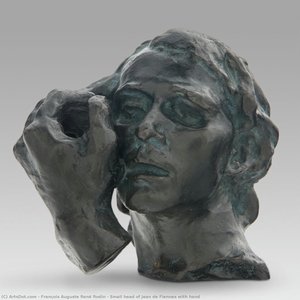
- ArtsDot.com - presenta una vasta colección de pinturas y esculturas de Rodin, incluyendo la pequeña cabeza de Jean de Fiennes con mano.
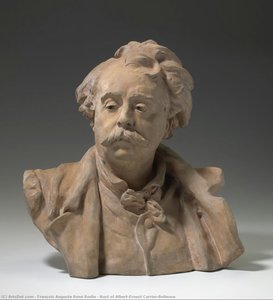
- Cantor Arts Center en la Universidad de Stanford, California - alberga varias obras de Rodin, incluyendo busto de Albert-Ernest Carrier-Belleuse.
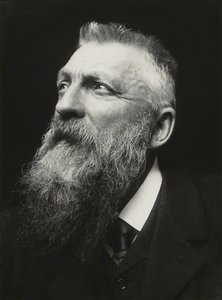
Auguste Rodin
1840 - 1917 , Francia
Datos clave
- Estilo Artístico: Escultura moderna
- Fecha De Muerte: 7 de noviembre de 1917
- Fecha De Nacimiento: 12 de noviembre de 1840
- Lugar De Nacimiento: París, Francia
- Nacionalidad: Francesa
- Nombre Completo: François Auguste René Rodin
- Obras Notables:
- El pensador
- El beso
- Los burgueses de Calais
Artículos relacionados

Las 10 Obras Maestras de Bronce que Revolucionaron la Historia del Arte | ArtsDot
Descubre las 10 esculturas de bronce más influyentes de la historia del arte. Explora obras maestras de Rodin, Degas y otros genios. Encuentra reproducciones de arte de calidad museo en ArtsDot.com.

Esculturas de Bronce Legendarias: 10 Obras Maestras que Transformaron el Arte | ArtsDot
Descubre las 10 esculturas de bronce más legendarias que revolucionaron el arte. Explora la historia de Rodin, Degas y otros maestros del bronce. Encuentra reproducciones de alta calidad e inspiración para tu hogar en ArtsDot.com.

The Enduring Legacy of Bronze: A Historical & Artistic Exploration for the Collector
Explore the rich history & enduring appeal of bronze sculpture with expert insights for collectors at ArtsDot. Learn about casting techniques, iconic artists, collecting tips & contemporary interpretations.
The Enduring Legacy of Bronze: History, Technique & Artistic Expression for the Collector
Explore the rich history & enduring appeal of bronze sculpture with expert insights for collectors at ArtsDot. Learn about casting techniques, iconic artists, and collecting tips.
The Enduring Legacy of Bronze Sculpture: A Collector's Guide to Form & Cultural Significance
Explore the rich history & enduring appeal of bronze sculpture with expert insights for collectors at ArtsDot. Learn about casting techniques, iconic artists, and collecting tips to build a discerning art collection.