 Ver en contexto
 Enviar
 Compartir
 Detalles

 Descargar
 Similares
 Radiografía
 Presentación de diapositivas
 Stats
StatsPortrait of Francis I, King of France
 Oil On Canvas
- WallArt
- Renaissance
 1540
1540- Renaissance
 27.0 x 22.0 cm
 Galería de los Uffizi
 Ver más
Reproducción al óleo hecha a mano
Óleo sobre lienzo pintado a mano en el tamaño y marco de su elección, realizado por encargo por nuestros artistas. ( Switch to Print Switch to Digital Image)




P118B $10

P118H $10

P118W $10

P438Z $10

P508JH $12

P508YH $12

P805H $10

P805Z $10

P919BZ $10

P919G $10

P919XJ $10

P959ZH $10

P968JZ $12

W106C $8

W218G $10

W218JH $8

W218Y $10

W307PJ $10

W316G $10

W316PJ $8

W316Y $10

W398PJ $8

W4111J $10

W500HY $15

W500JH $15

W692G $12

W849H $8

W940BG $15

W953PJ $8




Elija entre nuestros tamaños predefinidos que respetan las proporciones originales de la obra.

Puede ingresar sus propias dimensiones para adaptarse a un marco o espacio específico. Si el tamaño seleccionado no coincide con las proporciones de la imagen original, recortaremos la obra o extenderemos la pintura con elementos adicionales pintados a mano. Se le enviará una maqueta digital para su aprobación antes de comenzar la producción.
Tenga en cuenta que la vista previa en pantalla no refleja el recorte o la extensión reales. Solo la maqueta mostrará con precisión la composición final.
Si bien existen tamaños personalizados, recomendamos seleccionar una dimensión de la lista predefinida para preservar las proporciones originales.
Tras realizar el pedido, el equipo de ArtsDot.com enviará un correo electrónico al cliente para solicitar instrucciones y proporcionarle una vista previa del boceto.
Envío a todo el mundo () en 3-4 semanas en lugar de las 5 semanas estándar. (7 septiembre). Sin comprometer la calidad.

Envío exprés gratuito a todo el mundo

Lienzo de lino de alta calidad

Seguro de envío total

Garantía de reembolso de impuestos aduaneros

Garantía de fidelidad cromática exacta

Política de devolución de 100 días (solo por defectos)

Garantía de devolución del 100% del dinero

Descuento por cantidad
 La opción de vidrio solo está disponible en tamaños inferiores a 110 cm.

Portrait of Francis I, King of France
Técnica de reproducción
Dimensiones de la reproducción
-


Precio total final
$ 263
A Vision of Royal Majesty
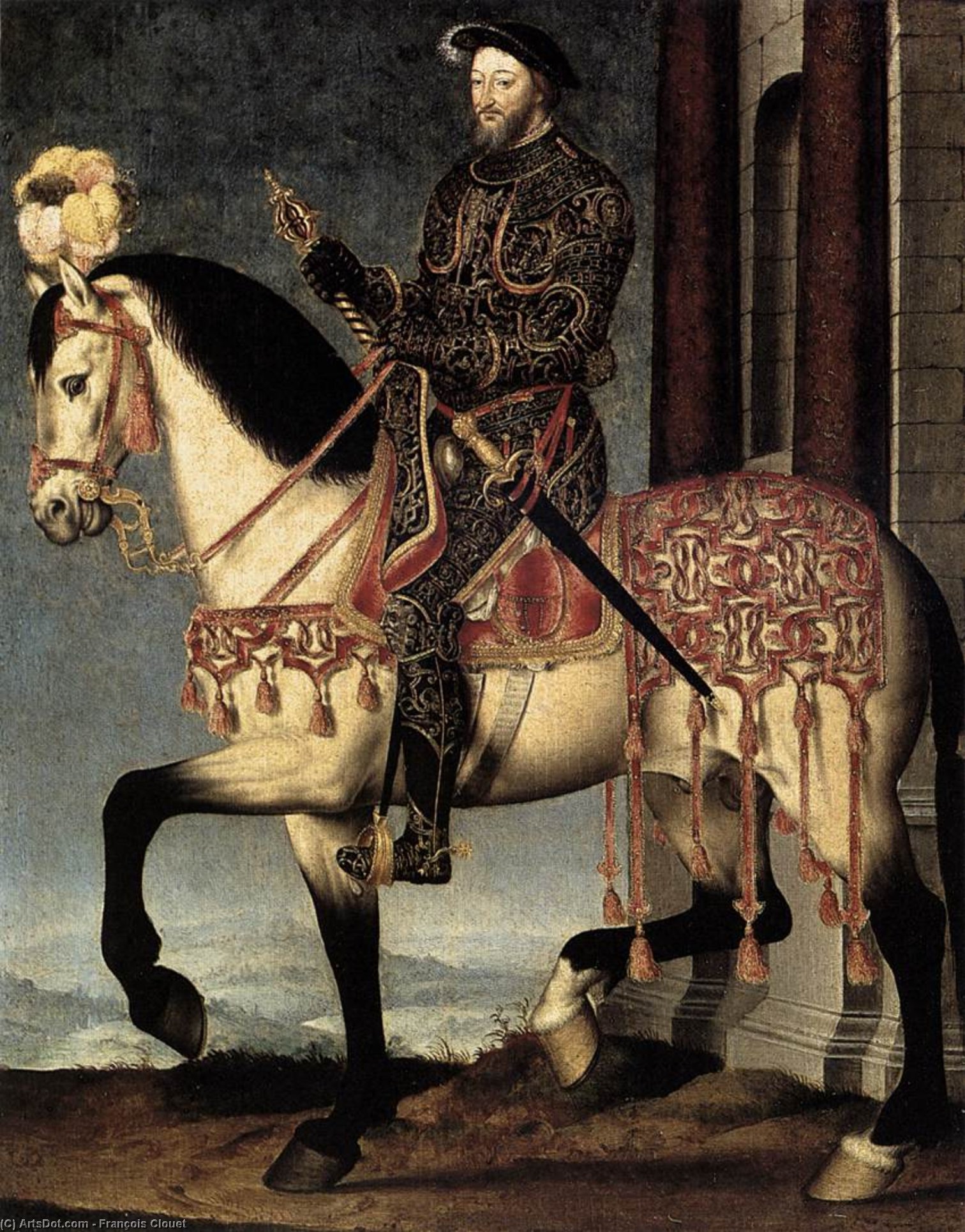
In the grand tapestry of the French Renaissance, few images command the eye with such immediate and breathtaking authority as François Clouet’s Portrait of Francis I, King of France. Painted in 1540, this monumental work is far more than a mere likeness of a monarch; it is a profound visual manifesto of power, ambition, and the burgeoning spirit of an era. As the viewer encounters this masterpiece, they are not simply looking at a man, but at the very embodiment of the Valois court's splendor. Clouet captures the King atop his horse with a sense of kinetic energy and poised stillness, creating a composition that feels both monumental and intimately alive. For the discerning collector or interior designer, this piece offers an unparalleled sense of historical weight and aristocratic elegance, making it a transformative centerpiece for any sophisticated space.
The painting portrays Francis I seated atop a horse, positioned within an arched window that frames a richly decorated interior space, instantly establishing a commanding presence. The composition follows a classic pyramidal structure, with the figure dominating the central space while the horse serves as a stable, powerful base. Through the use of directional lighting originating from above and slightly to the left, Clouet casts shadows that emphasize form and volume, imbuing the scene with a sculptural quality. This careful arrangement of shapes—the geometric precision of the armor and the fluid, organic curves of the horse’s head—creates a balanced harmony that draws the eye deep into the heart of the royal portrait.
Renaissance Refinement and Flemish Naturalism
The brilliance of Clouet’s technique lies in his masterful ability to bridge two distinct artistic worlds: the meticulous, tactile naturalism of the Flemish tradition and the burgeoning grace of the Italian Renaissance. Drawing inspiration from masters like Jan van Eyck, Clouet prioritized anatomical accuracy and subtle shading, yet he tempered this realism with an idealized aesthetic reminiscent of Leonardo da Vinci’s sfumato technique. By employing oil paint on canvas and layering translucent glazes, the artist achieved a luminous effect that seems to radiate from within the subject itself.
Every brushstroke serves to enhance the visual richness of the composition. Clouet skillfully utilized scumbling to imbue textures into the heavy drapery and metallic surfaces, allowing the viewer to almost feel the weight of the fabrics and the cold hardness of the armor. Lines delineate the musculature of both the King and his steed with surgical precision, reinforcing the solidity and grandeur of the scene. This technical mastery reflects the humanist preoccupation of the age—the belief that understanding the intricate details of the physical form was a way to grasp the divine order of the universe.
Symbolism and the Legacy of Power
Beyond its aesthetic splendor, the portrait is steeped in the symbolic language of the 16th century. The horse, a symbol of strength, vitality, and loyalty, serves as an extension of the King's own indomitable will. Meanwhile, the armor signifies not just military prowess, but the divine right and established authority of the Valois dynasty. Clouet does not merely document a ruler; he constructs an icon. The setting, an arched window looking into a grand hall, suggests a bridge between the private majesty of the monarch and his public duty to the realm.
To possess a reproduction of this work is to invite a piece of history into one's environment. It is an invitation to contemplate an era of profound cultural transformation, where art, politics, and humanism converged. Whether placed in a formal gallery or as a focal point in a contemporary study, the Portrait of Francis I continues to resonate, offering a timeless connection to the elegance, strength, and enduring legacy of the French Renaissance.
Obras relacionadas
![Vida De San Francisco - [01] - Estigmación De San Francisco — Giotto Di Bondone, Renacimientotemprano](/media/artworks/images-thumb/fd/6a/fd6ae2a8f5e88e0ace6b86a21d020ded.jpg)
![Leyenda De San Francisco - [21] - Aparición A Fra Agostino Y Al Obispo Guido De Arezzo — Giotto Di Bondone, Protorrenacimiento](/media/artworks/images-thumb/8a/06/8a0632ef03ba49f12919faa78718a88b.jpg)
![La Leyenda De San Francisco - [11] - San Francisco Ante El Sultán (el Juicio Por Fuego) — Giotto Di Bondone, Early Renaissance](/media/artworks/images-thumb/0d/32/0d328acfb6c90f7ef32707586e86044b.jpg)
![Leyenda De San Francisco – [24] – Canonización De San Francisco — Giotto Di Bondone, Gothic](/media/artworks/images-thumb/81/9b/819b5f0656848eb5cb3fcd40fd5756aa.jpg)
![Vida De San Francisco - [04] - Muerte Y Ascensión De San Francisco — Giotto Di Bondone, Renacimiento Italiano](/media/artworks/images-thumb/08/8b/088b102b13c1a379233690905590f156.jpg)
Biografía del artista
François Clouet: Una Vida Dedicada al Retrato
- Nacido: Tours, Francia (c. 1510)
- Fallecido: 1572
François Clouet fue una figura clave en el arte del Renacimiento francés, reconocido como un miniaturista y pintor celebrado por sus detallados retratos de la familia real francesa. Nacido alrededor de 1510 en Tours, heredó un legado de su padre, Jean Clouet, también un destacado pintor de la corte. El viaje artístico de François refleja una mezcla de influencias flamencas y sensibilidades italianizantes, contribuyendo significativamente a la evolución del retrato en Francia.
Vida Temprana y Formación Artística
La vida temprana de François Clouet sigue siendo algo oscura, pero es evidente que siguió de cerca los pasos de su padre. Un documento clave fechado en diciembre de 1541 revela que François heredó la propiedad de su padre y continuó su práctica artística bajo el familiar apodo de 'Janet', un sobrenombre compartido por ambos padres e hijos, lo que a veces causaba confusión con respecto a la atribución de las obras.
- Legado Familiar: Jean Clouet, su padre, era originario del sur de los Países Bajos y trajo consigo las tradiciones naturalistas flamencas a la corte francesa.
- Aprendizaje: François recibió su formación inicial bajo la tutela de su padre, absorbiendo técnicas y enfoques estilísticos que moldearían su propio desarrollo artístico.
- Primeras Influencias: La conexión familiar con Leonardo da Vinci a través de la estancia de Jean Clouet en Amboise expuso a François a los ideales del Renacimiento italiano y las innovaciones artísticas.
Obras Principales y Estilo Artístico
El oeuvre de François Clouet se caracteriza por una meticulosa atención al detalle, un dibujo preciso y un refinado sentido de la elegancia. Sus retratos capturan no solo los rasgos físicos de sus sujetos, sino también sus personalidades y su estatus social con notable precisión.
- Retratos de Francisco I: Varias obras notables representan a Francisco I, incluyendo aquellas que se encuentran en la Galería Uffizi y el Museo del Louvre. Estas representaciones ejemplifican la capacidad de Clouet para transmitir la autoridad real y la sofisticación.
- Catalina de Médici: Probablemente pintó retratos de Catalina de Médici en Versalles, contribuyendo a un registro visual de la corte francesa durante su influyente reinado.
- María, Reina de Escocia: Un dibujo a lápiz de María, Reina de Escocia, conservado en la Bibliothèque nationale, se erige como una de sus obras más notables, mostrando su habilidad para capturar rasgos delicados y transmitir profundidad emocional.
- Otros Retratos Notables: Su cuerpo de trabajo incluye retratos de Isabel de Austria (Louvre), Margarita de Francia (Chantilly) y Carlos IX (Château de Chantilly).
El estilo de Clouet se caracteriza por:
- Detalle Elaborado: Una meticulosa atención al detalle en la ropa, las joyas y los rasgos faciales.
- Dibujo Preciso: Representación anatómica precisa y hábil uso de la línea para definir la forma.
- Completitud Exquisita: Retratos que transmiten una sensación de totalidad y personalidad.
Significado Histórico y Legado
Las contribuciones de François Clouet al arte del Renacimiento francés son significativas por varias razones. Ayudó a establecer el retrato como un género prominente en Francia, elevando el estatus del artista y proporcionando valiosos registros visuales de la corte real.
- Transición de la Edad Media al Renacimiento: Clouet cerró la brecha entre los estilos artísticos medievales tradicionales y los ideales emergentes del Renacimiento, incorporando principios naturalistas y humanistas en su trabajo.
- Pintor de Corte Extraordinario: Como pintor de corte para varios monarcas franceses (Francisco I, Enrique II, Francisco II, Carlos IX), documentó las vidas y apariencias de figuras clave en la historia francesa.
- Influencia en Artistas Posteriores: Su estilo meticuloso y su atención al detalle influyeron en generaciones posteriores de retratistas franceses.
François Clouet falleció el 22 de diciembre de 1572, poco después de la Matanza del Día de San Bartolomé. Su testamento proporciona información sobre su vida personal y su situación financiera, lo que consolida aún más su lugar como una figura significativa tanto en la historia del arte como en la sociedad francesa.
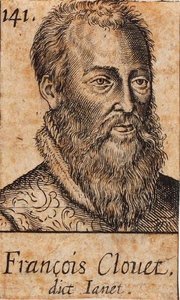
François Clouet
1510 - 1572 , Francia
Datos clave
- Artistas Que Influyeron: ['Leonardo da Vinci']
- Fecha De Fallecimiento: 1572
- Fecha De Nacimiento: c. 1510
- Lugar De Nacimiento: Tours, Francia
- Movimiento Artístico: Renacimiento francés
- Nacionalidad: Francés
- Nombre Completo: François Clouet
- Obras Notables:
- Retrato de Francisco I (Uffizi)
- Retrato de María Estuardo
- Isabel de Austria
- Marguerite de Francia
- Carlos IX (Chantilly)
Artículos relacionados
John Francis Sartorius II: Equestrian Elegance & the Rise of British Portraiture
Explore the captivating world of Francis Sartorius II (1734-1804), a leading British painter renowned for his exquisite equestrian portraits and hunting scenes. Discover his life, techniques & enduring legacy.
Francis Cotes: Elegance, Portraiture & the Rise of a Georgian Aesthetic
Explore the elegant world of Francis Cotes, pioneer of English pastel painting & celebrated Georgian portraitist. Discover his captivating portraits, artistic techniques, and lasting influence on 18th-century art.

Charles Bird King: Capturing Native American Dignity Through Portraiture & Cultural Exchange
Explore the captivating portraits of Charles Bird King, renowned for his depictions of Native American leaders. Discover the historical context, artistic techniques, and collecting value of these significant 19th-century artworks.
François Boucher: Rococo Master of Myth, Sensuality, and the French Court
Explore the captivating world of François Boucher, master of Rococo painting! Discover his iconic works, aristocratic patronage, and lasting influence on French art history. Learn more at ArtsDot.
Francis Bacon: Las 25 Obras Maestras del Expresionismo y su Impacto en el Arte Moderno
Explora las 25 obras maestras de Francis Bacon, el expresionismo visceral y la angustia humana. Descubre retratos icónicos, trípticos impactantes y su legado en el arte moderno. Reproducciones de museo en ArtsDot.com.