

 Ver en contexto
 Enviar
 Compartir
 Detalles

 Descargar
 Similares
 Radiografía
 Presentación de diapositivas
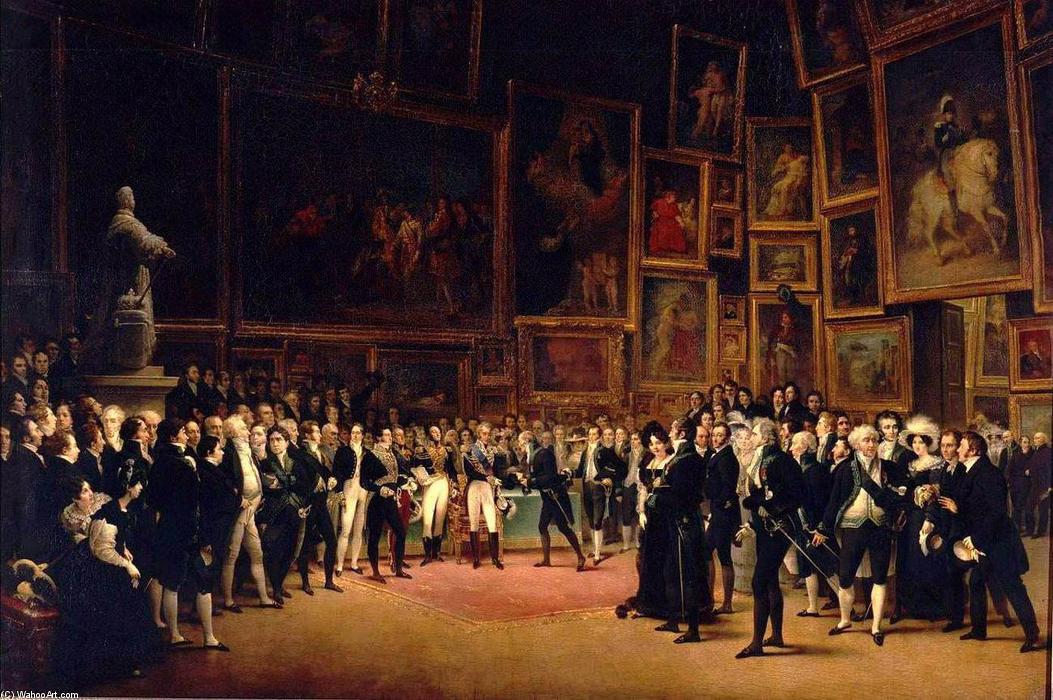
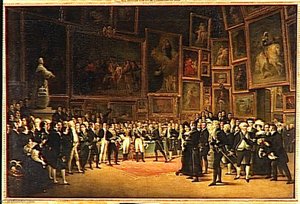
Charles V Distributing Awards to the Artists at the Close of the Salon of 1824
 Acrylic On Canvas
- WallArt
- Romantic History Painting
 1827
1827 173.0 x 256.0 cm
 Museo del Louvre
 Ver más
Giclée / Impresión de arte
Impresiones giclée o en lienzo de calidad de museo con producción rápida y opciones de acabado flexibles. ( Comprar pintura hecha a mano Comprar imagen)




P118B $10

P118H $10

P118W $10

P438Z $10

P508JH $12

P508YH $12

P805H $10

P805Z $10

P919BZ $10

P919G $10

P919XJ $10

P959ZH $10

P968JZ $12

W106C $8

W218G $10

W218JH $8

W218Y $10

W307PJ $10

W316G $10

W316PJ $8

W316Y $10

W398PJ $8

W4111J $10

W500HY $15

W500JH $15

W692G $12

W849H $8

W940BG $15

W953PJ $8




Elija entre nuestros tamaños predefinidos que respetan las proporciones originales de la obra.

Puede introducir sus propias dimensiones para adaptarse a un marco o espacio específico. Si el tamaño seleccionado no coincide con las proporciones de la imagen original, recortaremos la obra de arte o extenderemos la imagen con un borde con efecto espejo o de color sólido. Se enviará una maqueta digital para su aprobación antes de que comience la producción.
Tenga en cuenta que la vista previa en pantalla no refleja el recorte o la extensión real. Solo la maqueta mostrará con precisión la composición final.
Aunque existen tamaños personalizados, recomendamos seleccionar una dimensión de la lista predefinida para preservar las proporciones originales.
Envío a todo el mundo () en 2 semanas en lugar de las 4/5 semanas estándar. (23 agosto)

Envío exprés gratuito a todo el mundo

Lienzo de lino de alta calidad

Seguro de envío total

Garantía de reembolso de impuestos aduaneros

Garantía de fidelidad cromática exacta

Política de devolución de 60 días (solo por defectos)

Garantía de devolución del 100% del dinero

Descuento por cantidad
 La opción de vidrio solo está disponible en tamaños inferiores a 110 cm.

Charles V Distributing Awards to the Artists at the Close of the Salon of 1824
Giclée / Impresión de arte
Dimensiones de la reproducción
-


Precio total final
$ 62
Descripción de la pieza
A Royal Tableau: Charles V Distributing Awards at the Salon of 1824
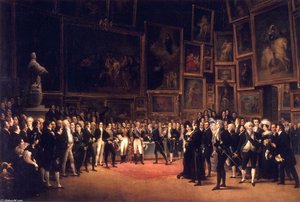
François Joseph Heim’s “Charles V Distributing Awards to the Artists at the Close of the Salon of 1824” is more than just a historical portrait; it's a meticulously crafted tableau vivant, a frozen moment brimming with courtly grandeur and subtle social commentary. Painted in 1827, this monumental canvas transports us to the opulent heart of post-revolutionary France, capturing the complex dynamics between monarchy, artistic patronage, and the burgeoning Romantic movement. The scene unfolds within a richly appointed chamber – details like the elaborate tapestries, the heavy velvet drapery, and the gleaming chandeliers all speak to the wealth and power of the Bourbon Restoration under King Charles X. Yet, beneath this veneer of regal splendor lies a carefully orchestrated narrative of recognition, obligation, and perhaps, a touch of veiled critique.The Scene Unfolds: Composition and Figures
At the center of the composition stands Charles X himself, depicted in the uniform of the National Guard – a deliberate choice that underscores his role as both sovereign and military leader. He’s not portrayed as a benevolent benefactor, however; rather, he's presented as an active participant in the distribution of honors, his hand outstretched to bestow medals upon the assembled artists. The arrangement is remarkably complex, a carefully constructed pyramid of figures. To his right, Ambroise-Polycarpe de La Rochefoucauld, the King’s official representative, extends his own hand, symbolizing the formal transfer of recognition. The artist, François Joseph Heim, masterfully captures the diverse expressions and postures of the assembled group – from the expectant gazes of the painters to the slightly awkward poses of the courtiers. Note the inclusion of Louis Nicolas Philippe Auguste de Forbin, the director of the Louvre, a key figure in managing the Salon’s operations and ensuring the King's satisfaction. The composition isn’t merely observational; it’s designed to convey a specific hierarchy and relationship between power and artistic merit.A Romantic Masterpiece: Technique and Style
Heim’s style is firmly rooted in the academic traditions of the 18th century, yet infused with the dramatic intensity characteristic of the Romantic era. His brushwork is remarkably detailed, particularly evident in the rendering of fabrics, textures, and the intricate folds of the clothing. The use of chiaroscuro – the interplay of light and shadow – creates a sense of depth and drama, drawing the viewer’s eye to key figures within the scene. The color palette is rich and warm, dominated by deep reds, golds, and browns, reflecting the opulence of the royal court. However, Heim subtly employs cooler tones in the background, creating a visual separation between the foreground action and the more distant figures. This technique enhances the sense of space and contributes to the overall feeling of grandeur. The painting’s scale – measuring 173 x 256 cm – further emphasizes its monumental quality, immersing the viewer within the scene.Symbolism and Context: Beyond a Royal Ceremony
The “Charles V Distributing Awards” is not simply a record of a formal event; it's laden with symbolic meaning. The act of awarding medals represents recognition for artistic achievement, but also highlights the King’s role as a patron of the arts – a crucial function in maintaining social stability and legitimizing his rule after the tumultuous years of the Revolution. The presence of numerous artists underscores the importance of art to the monarchy, while their varied expressions hint at the complex relationship between artist and court. The inclusion of figures like La Rochefoucauld and de Forbin suggests the administrative machinery that facilitated this patronage system. Furthermore, the painting can be interpreted as a subtle commentary on the limitations of artistic freedom within a restrictive political environment. While celebrating artistic talent, it also subtly acknowledges the constraints imposed by royal authority.A Legacy of Grandeur: Reproduction and Display
Today, “Charles V Distributing Awards to the Artists at the Close of the Salon of 1824” resides in the Louvre Museum, a testament to its enduring artistic merit. Reproductions offer an accessible way to experience the painting’s grandeur and complexity. When selecting a reproduction, consider the quality of the print – archival inks and high-resolution paper are essential for capturing the nuances of Heim's masterful brushwork. This artwork would be a stunning addition to any grand salon or study, evoking the atmosphere of 19th-century French courtly life while serving as a reminder of the enduring power of art and patronage.Obras relacionadas

Biografía del artista
La grandeza de un visionario romántico
François Joseph Heim se erige como una figura monumental en el tapiz de la historia del arte francés, encarnando el fervor dramático de la era romántica mientras permanecía firmemente anclado en la rigurosa disciplina de la tradición académica. Nacido en 1787 en Belfort, dentro de la región de Alsacia-Lorena, los primeros años de Heim estuvieron marcados por las fronteras cambiantes y las influencias napoleónicas de su patria. Su viaje artístico comenzó con una profunda fascinación por el disegno, una pasión cultivada durante sus estudios formativos en la École Centrale de Strassburg. Fue allí donde demostró por primera vez un talento excepcional que eventualmente lo conduciría al corazón del mundo artístico parisino, estableciendo una base de precisión técnica que definiría toda su obra.
La trayectoria de la carrera de Heim se vio alterada irrevocablemente por su encuentro con el legendario Horace Vernet. Esta relación fue mucho más que un simple conocimiento; fue un aprendizaje artístico crucial que forjó vínculos profundos y ambiciones estilísticas compartidas. Juntos, navegaron por el competitivo paisaje del neoclasicismo francés y el floreciente romanticismo. Bajo la sutil guía de Vernet, Heim aprendió a dominar el arte de la pintura narrativa, descubriendo cómo infundir composiciones de gran escala con una emoción palpable, profundidad atmosférica y un detalle meticuloso. Este periodo de mentoría fue esencial para prepararlo ante el intenso escrutinio de los Salones de París, donde su capacidad para combinar la estructura clásica con una narración dramática pronto le otorgaría renombre internacional.
Triunfo en el Salón y maestría de la historia
El ascenso de Heim dentro de la prestigiosa jerarquía artística francesa fue nada menos que meteórico. El Segundo Salón de 1807 sirvió como su gran presentación ante el público, donde obtuvo el primer premio por su impresionante obra, La llegada de Jacob a Mesopotamia. Este lienzo monumental, encargado por el influyente Vivant Denon, mostró la capacidad de Heim para manejar complejas narrativas bíblicas con un sentido de escala épica y gravedad espiritual. Al representar a Moisés guiando a los israelitas a través del desierto, Heim conectó con la fascinación de la época por los grandes temas históricos y religiosos, estableciéndose como un cronista primordial del pasado.
Su éxito no fue un evento singular, sino un periodo sostenido de excelencia. La medalla de oro que le fue otorgada en el Salón de 1812 consolidó aún más su reputación, reconociendo su capacidad única para transmitir verdades espirituales profundas a través de una técnica magistral. Sus obras a menudo presentaban:
- Narrativa dramática: Un enfoque en momentos cruciales de las crónicas bíblicas e históricas que capturaron la imaginación del público del siglo XIX.
- Precisión técnica: Un compromiso inquebrantable con los estándares académicos de anatomía, luz y textura.
- Resonancia emocional: El uso de la atmósfera y la composición para evocar sentimientos de asombro, tragedia o triunfo.
Legado y trascendencia histórica
A medida que su carrera progresaba, Heim se convirtió en una pieza fundamental del establecimiento artístico francés, conocido por su habilidad para satisfacer tanto las exigencias intelectuales de los críticos como los deseos estéticos de los coleccionistas. Sus representaciones de figuras religiosas, como su célebre obra San Juan, demostraron una capacidad de intimidad que contrastaba bellamente con sus composiciones históricas más grandes y turbulentas, como La matanza de los judíos. Esta versatilidad le permitió navegar los gustos cambiantes de un siglo atrapado entre los ecos desvanecientes del Neoclasicismo y la marea creciente del Romanticismo.
En última instancia, la importancia de François Joseph Heim reside en su papel como puente entre eras. No se limitó a seguir las tendencias; sintetizó la integridad estructural de los antiguos maestros con la intensidad emocional de sus contemporáneos. A través de sus grandiosas pinturas de Salón y sus evocadores retratos, ayudó a definir el lenguaje visual de la Francia del siglo XIX, dejando tras de sí un legado de obras que continúan imponiendo respeto por su brillantez técnica y su profunda capacidad para transportar al espectador al corazón mismo de la historia.
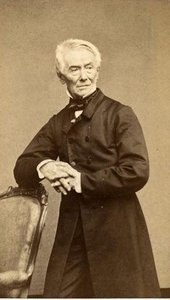
François Joseph Heim
1787 - 1865 , Francia
Datos clave
- Artistic Movement Or Style: Académico
- Artists Who Influenced This Artist: ['Horace Vernet']
- Date Of Birth: 1787 Belfort Francia
- Date Of Death: 1865
- Full Name: François Joseph Heim
- Nationality: Francés
- Notable Artworks:
- La Robe Ensanglante de José
- El Asedio de Jerusalén por los romanos
- Place Of Birth: Belfort Francia
Artículos relacionados
Secrets Beneath the Surface: How X-Rays Reveal the True Story of Masterpiece Paintings
Explore the hidden history of fine art through X-ray imaging. Discover how radiography reveals pentimento, secret layers, and the chemical alchemy of Old Master paintings, uncovering the untold stories beneath the surface of the world's most beloved masterpieces.
Charles-André van Loo: A Study in Rococo Portraiture & the French Court's Artistic Dynamics
Explore the elegant world of Charles-André van Loo, a master of Rococo portraiture at the French court. Discover his life, techniques, and enduring influence on 18th-century art. Hand-painted reproductions available.

Charles Fraser: A Life Immersed in Light and Landscape – Exploring the Scottish Colourist's Vision
Discover the captivating world of Charles Fraser (1782-1860), a leading American artist renowned for his serene landscapes and detailed portraits of Southern life. Explore his legacy & find museum-quality reproductions at ArtsDot.
Charles Haslewood Shannon: A Study in Aestheticism, Symbolism & Fin-de-Siècle Portraiture
Explore the captivating portraits of Charles Haslewood Shannon, a leading figure of Aestheticism & Symbolism. Discover his classic style, influences, and lasting legacy in British art. View artworks & learn more.
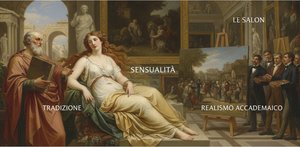
Alexandre Cabanel: Sensuality, Tradition & the Salon's Embrace of Academic Realism
Explore the captivating world of Alexandre Cabanel, master of French Academic painting. Discover his iconic works, Salon success & lasting influence on art history. High-quality reproductions available at ArtsDot.

