

 Ver en contexto
 Enviar
 Compartir
 Detalles

 Descargar
 Similares
 Radiografía
 Presentación de diapositivas
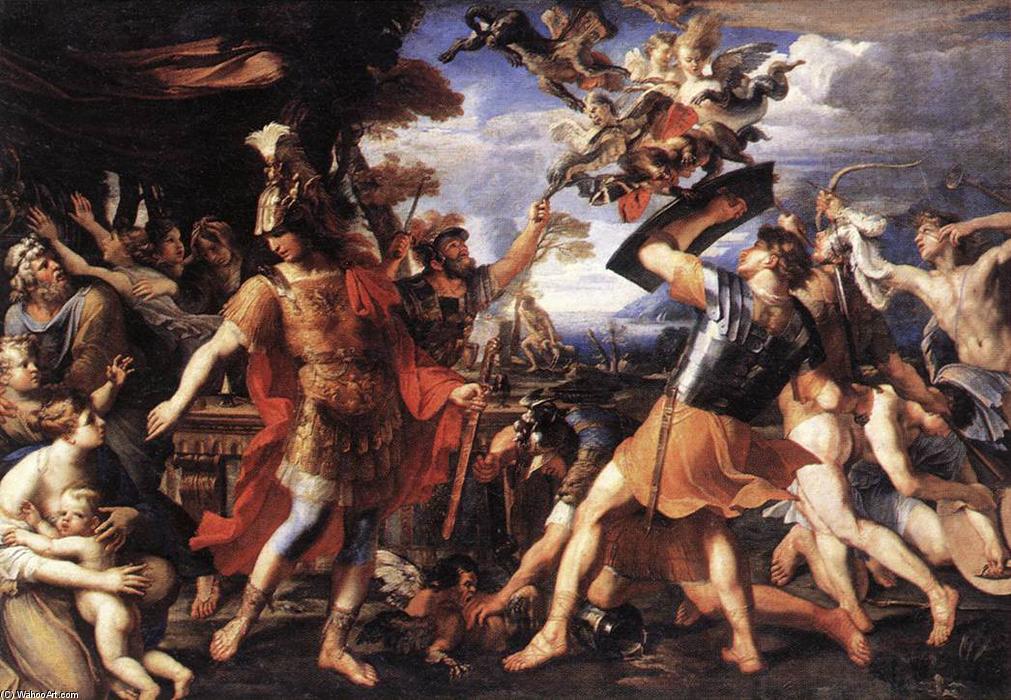
Aeneas and his Companions Fighting the Harpies
 1646
1646 155.0 x 218.0 cm
 Museo del Louvre
 Ver más
Adquiera una imagen digital de alta resolución y optimizada, muy superior a la vista previa en línea.
Cada archivo es preparado meticulosamente por nuestros especialistas internos mediante el uso de herramientas avanzadas y un experto retoque manual. Nos aseguramos de que cada imagen posea una claridad excepcional, una precisión cromática impecable y un detalle minucioso.
El archivo final se entrega por correo electrónico en un plazo de 72 horas, optimizado para su uso inmediato en entornos profesionales, editoriales y de impresión. Esta es la misma calidad en la que confían los estudios de diseño, las editoriales y las galerías de primer nivel.
Imagen Digital
Descarga un archivo de alta resolución para exhibición personal, impresión y proyectos creativos. ( Comprar impresión Comprar pintura hecha a mano)
Incluido en cada pedido de imágenes digitales
Entrega digital experta, garantizada.
Al elegir ArtsDot.com, no solo está adquiriendo una imagen; está recibiendo una obra de arte digital mejorada profesionalmente, elaborada con precisión y respaldada por una garantía de satisfacción. Esto es todo lo que incluye su pedido, automáticamente:

Entrega rápida por email
Recibirá su archivo de imagen digital en alta resolución por correo electrónico en un plazo de 72 horas tras realizar su pedido, listo para su uso inmediato.

Archivo digital optimizado por IA
Su obra de arte se optimiza profesionalmente mediante herramientas avanzadas de IA y edición manual, garantizando el máximo detalle, claridad y precisión cromática.

Reenvío gratuito de por vida
¿Has borrado o perdido tu archivo por error? No te preocupes: te lo volveremos a enviar en cualquier momento, sin coste adicional.

Sin gastos de importación, siempre
Disfrute de su obra de arte al instante sin aduanas, aranceles ni gastos de envío; las descargas digitales siempre están libres de impuestos.

Garantía de fidelidad de color
Garantizamos que su imagen digital refleje los colores originales con la mayor fidelidad posible, mediante el uso de herramientas profesionales y gestión del color.

Garantía de satisfacción de 60 días
Si no está satisfecho con su imagen digital, la revisaremos o le reembolsaremos el 100% en un plazo de 60 días, sin preguntas.

100% Garantía de devolución de dinero
¿No está satisfecho? Obtenga un reembolso completo dentro de los 60 días posteriores a la recepción de su archivo digital, sin necesidad de explicaciones.

Descuentos por pedidos grandes
Compra 3 imágenes, ahorra 10% - Compra 5, ahorra 15% - Compra 10+, ahorra 20%. Ideal para proyectos creativos, galerías y agencias.
Obras relacionadas








Biografía del artista
François Perrier: The Architect of Roman Baroque in France
François Perrier (1594 – 1649) stands as a pivotal figure in the artistic landscape of seventeenth-century France, credited with introducing the grandeur and dynamism of the Roman Baroque into Parisian ateliers. More than just a painter, he was a meticulous draftsman and printmaker whose legacy extends far beyond his canvases—primarily through his groundbreaking collections of prints after antique sculptures that profoundly impacted European art production for decades to come. This article delves into Perrier’s life, artistic endeavors, influences, and enduring significance within the broader context of Baroque aesthetics.Early Life and Artistic Formation
Born in Pontarlier, France, François Perrier's formative years coincided with a period of significant intellectual ferment fueled by humanist scholarship and rediscovery of classical antiquity. His training initially centered around Fontainebleau, where he absorbed the stylistic precepts championed by Francesco Francia and Jean Fouquet—artists who epitomized the prevailing Mannerist tendencies prevalent at the time. This exposure instilled in him a deep appreciation for meticulous detail and expressive handling of pigment, qualities that would characterize his subsequent artistic output. Notably, Perrier’s father was a Huguenot minister, shaping his worldview and fostering an environment conducive to intellectual curiosity. He demonstrated exceptional talent from a young age, mastering drawing techniques and honing his observational skills—preparing him for the challenges of pursuing a career in art.Rome: Embracing Academic Baroque
Between 1620 and 1625, Perrier embarked on a transformative journey to Rome—a pilgrimage for aspiring artists seeking inspiration from the epicenter of artistic innovation. There, he encountered Giovanni Lanfranco, a leading proponent of academic baroque classicism, whose influence profoundly shaped Perrier’s stylistic sensibilities. Lanfranco's emphasis on idealized forms and harmonious compositions served as a crucial catalyst in shaping Perrier’s approach to painting—particularly evident in his monumental frescoes adorning the dome of Saint Andrew’s Basilica. This immersive experience solidified Perrier’s commitment to mastering the techniques of illusionistic painting, mirroring the ambitious grandeur of Roman Baroque architecture. He diligently studied the works of Michelangelo and Raphael, absorbing their mastery of perspective and anatomical accuracy—skills that would become indispensable tools in his artistic arsenal.The Dome of Saint Andrew's and Artistic Collaboration
Perrier’s involvement in the decoration of Saint Andrew’s Basilica represents a landmark achievement in architectural history and exemplifies his artistic prowess. Collaborating closely with Giovanni Lanfranco and Alessandro Galli Bibiena, he spearheaded the creation of one of Rome’s earliest examples of Baroque ceiling fresco—a breathtaking spectacle of color, perspective, and sculptural illusionism. This project showcased Perrier's ability to synthesize classical ideals with innovative visual strategies, establishing him as a visionary artist at the forefront of his time. Furthermore, his partnership with Charles Le Brun fostered an environment for artistic experimentation and cemented Le Brun’s position as a prominent figure in the burgeoning Parisian Baroque scene. The basilica’s dome became a testament to Perrier's dedication to elevating art beyond mere representation—aiming instead to evoke awe and inspire contemplation within viewers.Prints After Antique Sculptures: A Legacy of Classical Inspiration
Perhaps Perrier's most enduring contribution to art history lies in his two monumental printmaking projects—Segmenta nobilium signorum et statuarum quae temporis dentem invidium evasere (Paris, 1638) and Icones et segmenta...quae Romae adhuc extant (Paris, 1645). These meticulously crafted engravings after antique sculptures constituted a veritable visual encyclopedia for European artists—providing models of idealized beauty and anatomical precision that served as invaluable references across disciplines. Perrier’s prints weren't merely reproductions; they were interpretations imbued with stylistic refinements characteristic of the Baroque aesthetic—demonstrating his mastery of engraving technique and his profound understanding of classical art principles. He employed innovative printing methods, utilizing mezzotint and etching to achieve unparalleled tonal range and textural detail—a feat that astonished contemporaries and elevated printmaking to new heights of artistic sophistication. These collections profoundly influenced generations of painters, sculptors, and architects, shaping the visual vocabulary of European baroque art for decades to come.Later Years and Artistic Influence
Returning to Paris in 1630, Perrier established himself within Simon Vouet’s influential circle—a bastion of academic Baroque style. He continued to refine his artistic vision, mentoring Charles Le Brun and fostering a new generation of painters committed to upholding classical ideals while embracing the expressive dynamism of baroque aesthetics. His work on the Galerie de l'amour in Hôtel Lambert alongside Eustache le Sueur exemplifies this stylistic convergence—demonstrating Perrier’s ability to synthesize humanist scholarship with innovative artistic techniques. Finally, he played a crucial role in founding the Académie Royale de peinture et de sculpture in 1648—a cornerstone of French artistic education and institutional reform that ensured the continuation of baroque traditions into the eighteenth century. François Perrier's legacy endures as an architect of Baroque art in France, securing his place among the most influential painters of his era.
François Perrier
1594 - 1649 , Francia
Breves datos
- Artistic Movement Or Style: Barroco Romano
- Artists Or Movements Influenced By This Artist: ['Simon Vouet']
- Artists Who Influenced This Artist: ['Giovanni Lanfranco']
- Date Of Birth: 1594 Pontarlier Francia
- Date Of Death: 1649
- Full Name: François Perrier
- Nationality: Francés
- Notable Artworks:
- Segmenta Nobilium Signorum et Statuarum quae temporis dentem invidium evasere
- La Sacrificio di Ifigenia
- Place Of Birth: Pontarlier Francia

