

 Enviar
 Compartir
 Detalles

 Descargar
 Similares
 Presentación de diapositivas
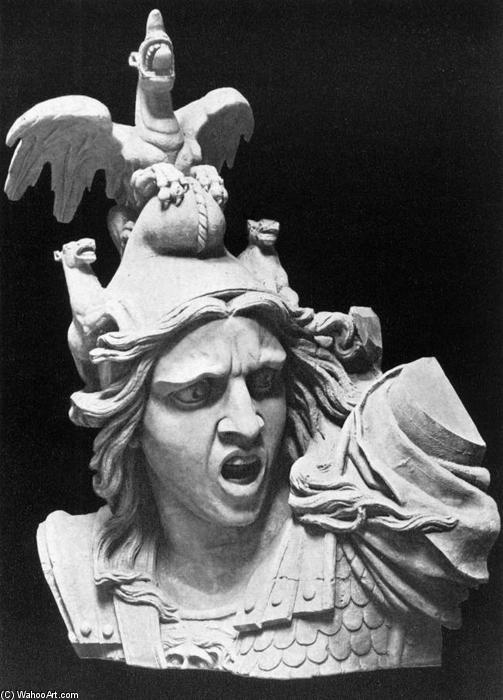
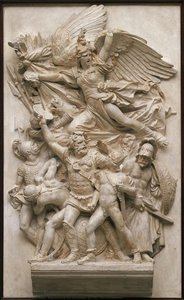
March of the Volunteers of 1792 (detail)


 Ver más
Reproducción al óleo hecha a mano
Óleo sobre lienzo pintado a mano en el tamaño y marco de su elección, realizado por encargo por nuestros artistas. ( Comprar impresión Comprar imagen)




































Elija entre nuestros tamaños predefinidos que respetan las proporciones originales de la obra.

Puede ingresar sus propias dimensiones para adaptarse a un marco o espacio específico. Si el tamaño seleccionado no coincide con las proporciones de la imagen original, recortaremos la obra o extenderemos la pintura con elementos adicionales pintados a mano. Se le enviará una maqueta digital para su aprobación antes de comenzar la producción.
Tenga en cuenta que la vista previa en pantalla no refleja el recorte o la extensión reales. Solo la maqueta mostrará con precisión la composición final.
Si bien existen tamaños personalizados, recomendamos seleccionar una dimensión de la lista predefinida para preservar las proporciones originales.
Tras realizar el pedido, el equipo de ArtsDot.com enviará un correo electrónico al cliente para solicitar instrucciones y proporcionarle una vista previa del boceto.
Envío a todo el mundo () en 3-4 semanas en lugar de las 5 semanas estándar. (6 septiembre). Sin comprometer la calidad.

Envío exprés gratuito a todo el mundo

Lienzo de lino de alta calidad

Seguro de envío total

Garantía de reembolso de impuestos aduaneros

Garantía de fidelidad cromática exacta

Política de devolución de 100 días (solo por defectos)

Garantía de devolución del 100% del dinero

Descuento por cantidad
 La opción de vidrio solo está disponible en tamaños inferiores a 110 cm.

March of the Volunteers of 1792 (detail)
Técnica de reproducción
Dimensiones de la reproducción
-


Precio total final
$ 263
A Cry for Liberty: Deciphering François Rude’s “March of the Volunteers of 1792”
François Rude's "March of the Volunteers of 1792 (detail)" isn’t merely a sculpture; it’s a visceral embodiment of revolutionary fervor, a frozen moment of defiant hope carved from stone. Completed in 1835-36 for the monumental Arc de Triomphe at the Étoile in Paris, this plaster relief—a preparatory model for the colossal work that graces the arch today—captures the raw energy and passionate commitment of France’s citizen army during the tumultuous years of the Revolution. More than a historical record, it's a potent allegory of liberty itself, radiating an intensity that continues to resonate centuries later.
Rude, born in Dijon in 1784, was deeply immersed in the artistic and political currents of his time. His early training under François Devosges instilled a grounding in classical forms, while his subsequent apprenticeship with Pierre Cartellier exposed him to the burgeoning Romantic movement. His relocation to Brussels following the Napoleonic Wars provided fertile ground for experimentation, culminating in a style that masterfully blended Neoclassical precision with the dramatic emotionalism characteristic of Romantic sculpture. This synthesis is powerfully evident in “March of the Volunteers,” where idealized figures are imbued with an almost palpable sense of urgency and determination.
The Anatomy of Emotion: Form, Technique, and Composition
The sculpture’s power lies not just in its subject matter but also in Rude's masterful manipulation of form and technique. Carved from plaster, the relief depicts a diverse group of men – young and old, armed with muskets and sabers – surging forward with unwavering resolve. Rude employs a dynamic pyramidal composition, drawing the viewer’s eye towards the central figure, a woman embodying Liberty herself. Her winged torso, reminiscent of classical goddesses, elevates her above the throng, symbolizing freedom's guiding force. Note the meticulous detail in the rendering of musculature and drapery, reflecting Rude’s deep understanding of anatomy and his commitment to realistic representation. The use of *chiaroscuro* – a dramatic contrast between light and shadow – further enhances the sculpture’s three-dimensionality, creating a sense of depth and movement.
The figures are not static; they appear caught in a perpetual state of forward motion. Rude achieves this through carefully sculpted gestures—raised arms, clenched fists, determined expressions—that convey both strength and vulnerability. The use of strong diagonal lines directs the viewer’s gaze across the composition, reinforcing the sense of momentum and urgency. The inclusion of details like the Phrygian cap worn by some of the figures – a symbol of liberation from slavery in ancient Rome – adds layers of symbolic meaning to the work.
Symbolism and Historical Context: A Revolution Frozen in Stone
“March of the Volunteers of 1792” is inextricably linked to the pivotal events of the French Revolution. It commemorates the Battle of Valmy, a crucial victory for the French army against Prussian forces in 1792 – a moment that effectively halted Napoleon’s invasion and secured France's independence. The sculpture celebrates not just military prowess but also the spirit of civic engagement and patriotic duty that fueled the revolution. The choice of Liberty as the central figure is deliberate, aligning with the revolutionary ideals of equality, fraternity, and liberty.
Interestingly, the work was commissioned during a period of political instability in France, following the restoration of the Bourbon monarchy. The Arc de Triomphe itself became a canvas for competing ideologies – the sculpture on the east face (depicting Napoleon’s triumph) stood in stark contrast to Rude's depiction of revolutionary fervor. This juxtaposition highlights the complex and often contradictory nature of French history during this era.
A Legacy of Inspiration: From Relief to Reproduction
“March of the Volunteers of 1792” has become one of the most recognizable sculptures in the world, largely due to its prominent placement on the Arc de Triomphe. However, the plaster relief itself remains a powerful testament to Rude’s artistic vision and his ability to capture the spirit of an era. Today, high-quality reproductions offer art lovers and interior designers alike the opportunity to experience this iconic work firsthand, bringing its message of liberty and revolution into homes and spaces around the globe.
Obras relacionadas
Biografía del artista
Vida Temprana y Formación
- François Rude nació en Dijon, Francia, el 4 de enero de 1784, hijo de un hojalatero/cerrajero.
- Su vida temprana involucró ayudar en el oficio de su padre antes de demostrar talento artístico.
- Asistió a la École de Dessin de François Devosges en Dijon, mostrando sus habilidades emergentes.
- Bajo el patrocinio de Louis Frémiet, comenzó a estudiar con Pierre Cartellier en París en el estudio de Edme Gaulle en 1805.
- En 1809, su trabajo comenzó a ganar reconocimiento, obteniendo varios premios.
- Ganó el Prix de Rome en 1812 pero no pudo viajar debido a las condiciones políticas.
Período en Bruselas y Matrimonio
- En 1815, Rude dejó París hacia Roma pero terminó en Bruselas con los Frémiet debido a circunstancias políticas.
- Se casó con Sophie Frémiet, una pintora consumada, formando una formidable asociación artística.
- Mientras estaba en Bruselas, ejecutó su primer busto de Louis David, obteniendo un aviso significativo.
Regreso a París y Obras Principales
- Rude y su esposa regresaron a París en 1827, donde permanecieron hasta su muerte.
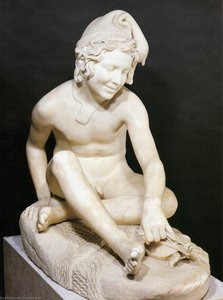
- Sus obras notables incluyen la estatua de un Pescador Neapolitano Jugando con una Tortuga (1831-33), expuesta en el Louvre.
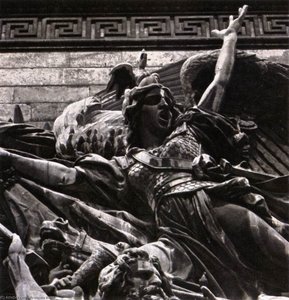
- Fue comisionado para el Arco del Triunfo, creando la icónica escultura "La Marsellesa" (Salida de los Voluntarios de 1792) completada en 1836. Esta es posiblemente su obra más famosa y significativa.
- Otras esculturas importantes incluyen:
- Busto de Jacques-Louis David
- Estatua de Mauricio, Conde de Sajonia
- Cabeza de Cristo (fundición de yeso)
- Busto de James de Montry
- Hacia el final de su carrera, Dijon comisionó una escultura de mármol que representa a Hebe, la diosa griega de la juventud. Rude creó el modelo en 1852 pero murió antes de que se completara; su sobrino lo terminó.
Estilo e Influencias
- El estilo de Rude unió Neoclasicismo y Romanticismo.
- Si bien inicialmente influenciado por los principios neoclásicos, adoptó cada vez más un estilo dinámico y emocional.
- Su trabajo a menudo expresaba temas patrióticos, reflejando el clima político de su época.
- Fue influenciado por escultores anteriores como Pierre Cartellier y Edme Gaulle.
- El patrocinio de Louis Frémiet jugó un papel crucial en su desarrollo temprano.
Vida Posterior y Legado
- François Rude murió el 3 de noviembre de 1855, en París.
- Es recordado por sus esculturas poderosas y expresivas, particularmente "La Marsellesa", que sigue siendo un símbolo de la identidad nacional francesa.
- Su trabajo representa una transición de la formalidad rígida del Neoclasicismo al estilo más emotivo y dramático del Romanticismo.
- Numerosos bustos y fundiciones de sus obras se encuentran en museos como el Musée Rude, el Musée des Beaux-Arts de Dijon y el Louvre.
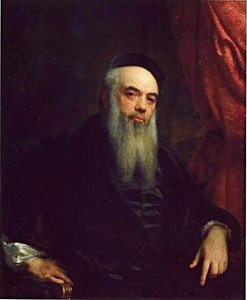
François Rude
1784 - 1855 , Francia
Datos clave
- Artistas Que Influyeron:
- Pierre Cartellier
- Edme Gaulle
- Fecha De Fallecimiento: 3 de noviembre de 1855
- Fecha De Nacimiento: 4 de enero de 1784
- Lugar De Nacimiento: Dijon, Francia
- Movimiento Artístico: Neoclasicismo y Romanticismo
- Nacionalidad: Francés
- Nombre Completo: François Rude
- Obras Notables:
- La Marsellesa
- Neoyornés pescador
- Busto de Jacques-Louis David
Artículos relacionados

Esculturas de Bronce Legendarias: 10 Obras Maestras que Transformaron el Arte | ArtsDot
Descubre las 10 esculturas de bronce más legendarias que revolucionaron el arte. Explora la historia de Rodin, Degas y otros maestros del bronce. Encuentra reproducciones de alta calidad e inspiración para tu hogar en ArtsDot.com.

The Enduring Form: Exploring Themes & Techniques in Sculpture Across Historical Periods
Explore the rich history of sculpture from ancient masterpieces to contemporary innovations. Discover key techniques, influential artists & investment potential for discerning art collectors.

Las 10 Obras Maestras de Bronce que Revolucionaron la Historia del Arte | ArtsDot
Descubre las 10 esculturas de bronce más influyentes de la historia del arte. Explora obras maestras de Rodin, Degas y otros genios. Encuentra reproducciones de arte de calidad museo en ArtsDot.com.
The Enduring Form: Sculpture Across History, Technique & Emotional Resonance
Explore the rich history of sculpture with ArtsDot. Discover key techniques, influential artists & investment potential for discerning collectors. Expert insights into valuing and collecting timeless masterpieces.
Antonio Canova: Neoclassical Sculpture & the Pursuit of Emotional Perfection
Explore the life & art of Antonio Canova, the greatest Neoclassical sculptor. Discover his masterpieces, innovative techniques, and lasting influence on fine art collecting. Expert insights for discerning investors.