 Ver en contexto
 Enviar
 Compartir
 Detalles

 Descargar
 Similares
 Radiografía
 Presentación de diapositivas
 Estadísticas
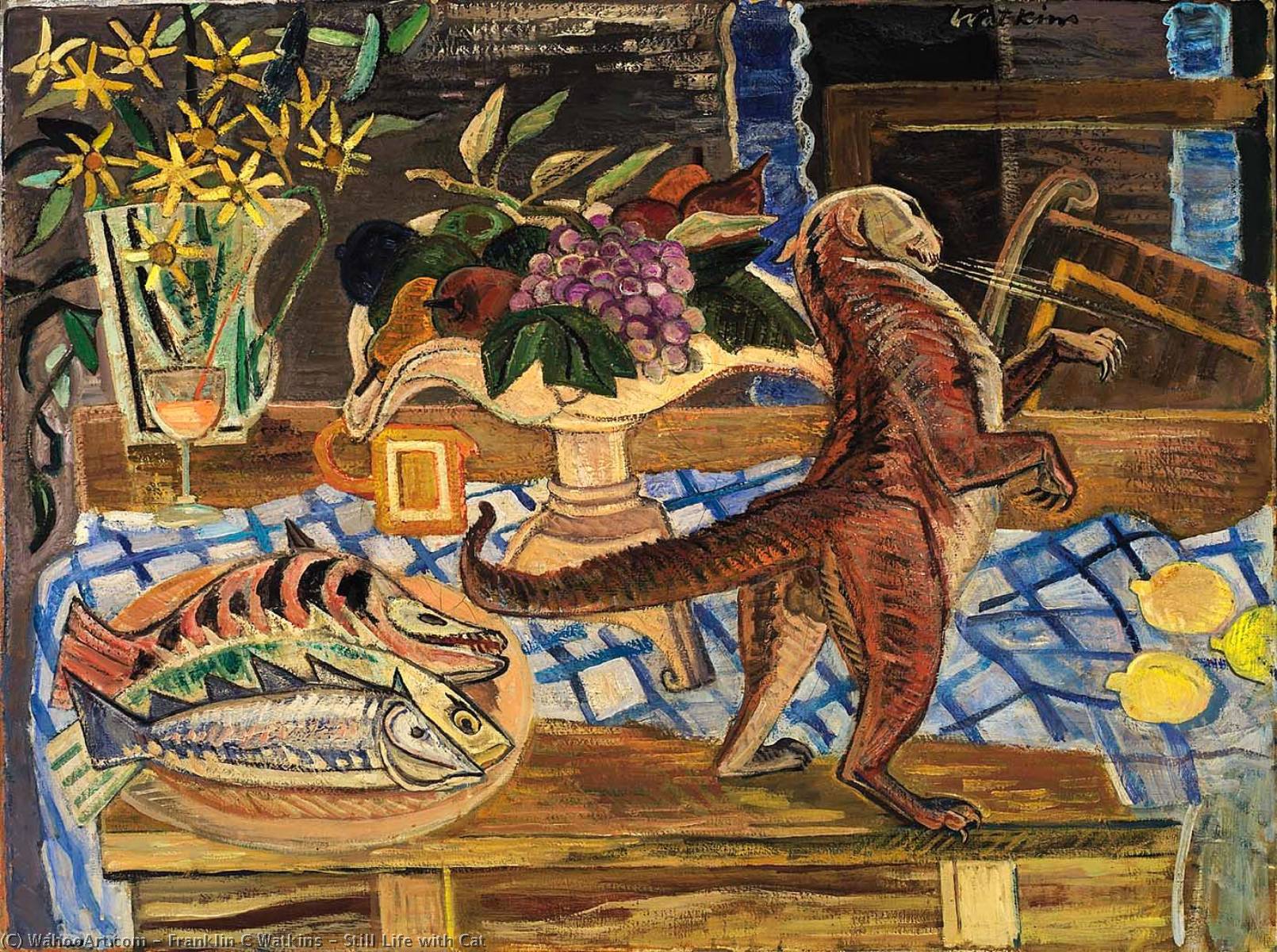
Still Life with Cat
 Expressionism
 1961
1961 77.0 x 102.0 cm
 Ver más
Adquiera una imagen digital de alta resolución y optimizada, muy superior a la vista previa en línea.
Cada archivo es preparado meticulosamente por nuestros especialistas internos mediante el uso de herramientas avanzadas y un experto retoque manual. Nos aseguramos de que cada imagen posea una claridad excepcional, una precisión cromática impecable y un detalle minucioso.
El archivo final se entrega por correo electrónico en un plazo de 72 horas, optimizado para su uso inmediato en entornos profesionales, editoriales y de impresión. Esta es la misma calidad en la que confían los estudios de diseño, las editoriales y las galerías de primer nivel.
Imagen Digital
Descarga un archivo de alta resolución para exhibición personal, impresión y proyectos creativos. ( Cambiar a Impresión Comprar pintura hecha a mano)
Incluido en cada pedido de imágenes digitales
Entrega digital experta, garantizada.
Al elegir ArtsDot.com, no solo está adquiriendo una imagen; está recibiendo una obra de arte digital mejorada profesionalmente, elaborada con precisión y respaldada por una garantía de satisfacción. Esto es todo lo que incluye su pedido, automáticamente:

Entrega rápida por email
Recibirá su archivo de imagen digital en alta resolución por correo electrónico en un plazo de 72 horas tras realizar su pedido, listo para su uso inmediato.

Archivo digital optimizado por IA
Su obra de arte se optimiza profesionalmente mediante herramientas avanzadas de IA y edición manual, garantizando el máximo detalle, claridad y precisión cromática.

Reenvío gratuito de por vida
¿Has borrado o perdido tu archivo por error? No te preocupes: te lo volveremos a enviar en cualquier momento, sin coste adicional.

Sin gastos de importación, siempre
Disfrute de su obra de arte al instante sin aduanas, aranceles ni gastos de envío; las descargas digitales siempre están libres de impuestos.

Garantía de fidelidad de color
Garantizamos que su imagen digital refleje los colores originales con la mayor fidelidad posible, mediante el uso de herramientas profesionales y gestión del color.

Garantía de satisfacción de 100 días
Si no está satisfecho con su imagen digital, la revisaremos o le reembolsaremos el 100% en un plazo de 100 días, sin preguntas.

100% Garantía de devolución de dinero
¿No está satisfecho? Obtenga un reembolso completo dentro de los 100 días posteriores a la recepción de su archivo digital, sin preguntas.

Descuentos por pedidos grandes
Compra 3 imágenes, ahorra 10% - Compra 5, ahorra 15% - Compra 10+, ahorra 20%. Ideal para proyectos creativos, galerías y agencias.
Composition and Symbolism
The painting features a cat sitting on top of a table, surrounded by various objects such as a vase filled with flowers, a bowl, and a fish. The cat appears to be playing the violin, adding a touch of whimsy to the scene. The table is adorned with a potted plant on its left side, adding to the overall ambiance of the still life. The Smithsonian American Art Museum has an excellent collection of still life paintings, including works by Nicolaes Gillis and Georg Flegel.Artistic Style and Technique
Franklin C Watkins' artistic style is characterized by his use of bold colors and precise brushstrokes. The painting's composition is well-balanced, with a clear emphasis on the cat as the central subject. The artist's technique is evident in the way he has captured the textures and shapes of the various objects in the scene. For example, the Still Life with Stag Beetle by Georg Flegel showcases the artist's attention to detail and use of symbolism. Key Features:- The painting features a unique combination of objects, including a cat, flowers, and a fish.
- The artist's use of color and composition creates a sense of balance and harmony.
- The painting is a great example of still life art, with a focus on the everyday objects that surround us.
For a similar artwork, you can also visit the Wallraf-Richartz-Museum or explore the collection of still life paintings on ArtsDot.com.
Obras relacionadas








Biografía del artista
A Legacy Etched in Stone: The Architectural Vision of Franklin C. Watkins
Franklin C. Watkins stands as a pivotal, yet often unsung, figure in the architectural landscape of the American West. His name isn’t immediately recognizable to many outside specialist circles, but his influence is profoundly visible – etched into the brick and mortar of over 240 schools, libraries, and public buildings that define towns and cities across Utah, Idaho, Wyoming, Nevada, and beyond. Born in a time of rapid expansion and community building, Watkins dedicated his career to crafting structures that weren’t merely functional spaces but embodiments of civic pride and educational aspiration. He wasn't an architect who sought grand monuments to personal glory; instead, he focused on the practical needs of burgeoning communities, leaving behind a remarkable portfolio of buildings that speak volumes about the spirit of the Intermountain West during the late 19th and early 20th centuries.Early Life and Formative Influences
Details surrounding Watkins’s earliest life remain somewhat scarce, a testament to his unassuming nature and dedication to his work rather than self-promotion. What is known is that he established his architectural practice in Salt Lake City, Utah, around the turn of the 20th century. This location proved crucial to his development as an architect. The region was experiencing significant growth fueled by railroad expansion, mining booms, and agricultural settlements. The demand for public buildings – schools to educate a growing population, libraries to foster intellectual pursuits, and commercial structures to support economic activity – was immense. Watkins quickly recognized this need and positioned himself to become a leading provider of these essential services. His early work demonstrates a clear understanding of prevailing architectural styles of the time, particularly those influenced by Victorian eclecticism and the emerging Prairie School movement. However, he wasn’t simply a mimic; he adapted these styles to suit the unique climate, materials, and cultural context of the Intermountain West.The Carnegie Library Boom & Watkins's Signature Style
Watkins truly distinguished himself through his prolific work designing Carnegie libraries. Andrew Carnegie’s philanthropic efforts provided funding for over 1,600 libraries across the United States, and Franklin C. Watkins secured a significant number of commissions to design these institutions throughout the West. This partnership allowed him to refine his architectural vision and develop a signature style characterized by practicality, durability, and understated elegance. His Carnegie libraries weren’t imposing structures; they were welcoming community hubs designed to encourage learning and civic engagement. He frequently employed red brick construction – readily available and well-suited to the region's climate – and incorporated large windows to maximize natural light. A hallmark of his designs was a symmetrical façade, often adorned with simple yet refined detailing such as decorative brickwork, cornices, and prominent entrances that emphasized the library’s role as a public institution. Beyond Carnegie libraries, Watkins designed numerous schoolhouses, courthouses, commercial buildings, and even residences, consistently applying these principles of functional design and regional sensitivity.A Commitment to Intermountain Design
Watkins's architectural philosophy was deeply rooted in a commitment to the specific needs and characteristics of the Intermountain West. He understood that buildings designed for eastern cities wouldn’t necessarily translate well to this rugged landscape. He prioritized materials that were locally sourced, construction techniques that were appropriate for the climate, and designs that reflected the cultural values of the communities he served. This pragmatic approach extended beyond mere aesthetics; Watkins was known for his meticulous attention to detail, ensuring that his buildings were structurally sound, energy-efficient, and adaptable to changing needs. He often incorporated features such as wide eaves to protect against harsh sunlight and snow loads, and strategically placed windows to maximize ventilation.- Schoolhouse Designs: Watkins designed hundreds of schoolhouses, each tailored to the specific size and needs of the local community.
- Courthouse Architecture: His courthouses were often built in a classical revival style, symbolizing justice and civic authority.
- Commercial Buildings: Watkins’s commercial structures blended functionality with aesthetic appeal, contributing to the economic vitality of western towns.