 Ver en contexto
 Enviar
 Compartir
 Detalles

 Descargar
 Similares
 Radiografía
 Presentación de diapositivas
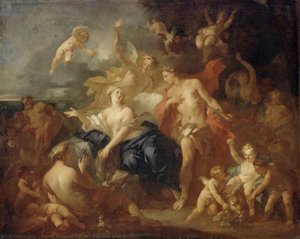
Allegory on the Fate of Art
 Oil On Canvas
- WallArt
- Rococo Art
 1770
1770- 19th Century
 105.0 x 72.0 cm
 Academia de Artes Visuales de Viena
 Ver más
Reproducción al óleo hecha a mano
Óleo sobre lienzo pintado a mano en el tamaño y marco de su elección, realizado por encargo por nuestros artistas. ( Comprar impresión Comprar imagen)




P118B $10

P118H $10

P118W $10

P438Z $10

P508JH $12

P508YH $12

P805H $10

P805Z $10

P919BZ $10

P919G $10

P919XJ $10

P959ZH $10

P968JZ $12

W106C $8

W218G $10

W218JH $8

W218Y $10

W307PJ $10

W316G $10

W316PJ $8

W316Y $10

W398PJ $8

W4111J $10

W500HY $15

W500JH $15

W692G $12

W849H $8

W940BG $15

W953PJ $8




Elija entre nuestros tamaños predefinidos que respetan las proporciones originales de la obra.

Puede ingresar sus propias dimensiones para adaptarse a un marco o espacio específico. Si el tamaño seleccionado no coincide con las proporciones de la imagen original, recortaremos la obra o extenderemos la pintura con elementos adicionales pintados a mano. Se le enviará una maqueta digital para su aprobación antes de comenzar la producción.
Tenga en cuenta que la vista previa en pantalla no refleja el recorte o la extensión reales. Solo la maqueta mostrará con precisión la composición final.
Si bien existen tamaños personalizados, recomendamos seleccionar una dimensión de la lista predefinida para preservar las proporciones originales.
Tras realizar el pedido, el equipo de ArtsDot.com enviará un correo electrónico al cliente para solicitar instrucciones y proporcionarle una vista previa del boceto.
Envío a todo el mundo () en 3-4 semanas en lugar de las 5 semanas estándar. (1 septiembre). Sin comprometer la calidad.

Envío exprés gratuito a todo el mundo

Lienzo de lino de alta calidad

Seguro de envío total

Garantía de reembolso de impuestos aduaneros

Garantía de fidelidad cromática exacta

Política de devolución de 60 días (solo por defectos)

Garantía de devolución del 100% del dinero

Descuento por cantidad
 La opción de vidrio solo está disponible en tamaños inferiores a 110 cm.

Allegory on the Fate of Art
Técnica de reproducción
Dimensiones de la reproducción
-


Precio total final
$ 263
The Agony of Creation: Unveiling Franz Anton Maulbertsch’s *Allegory on the Fate of Art*
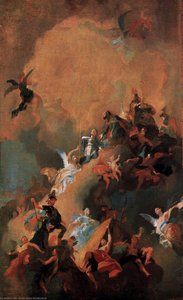
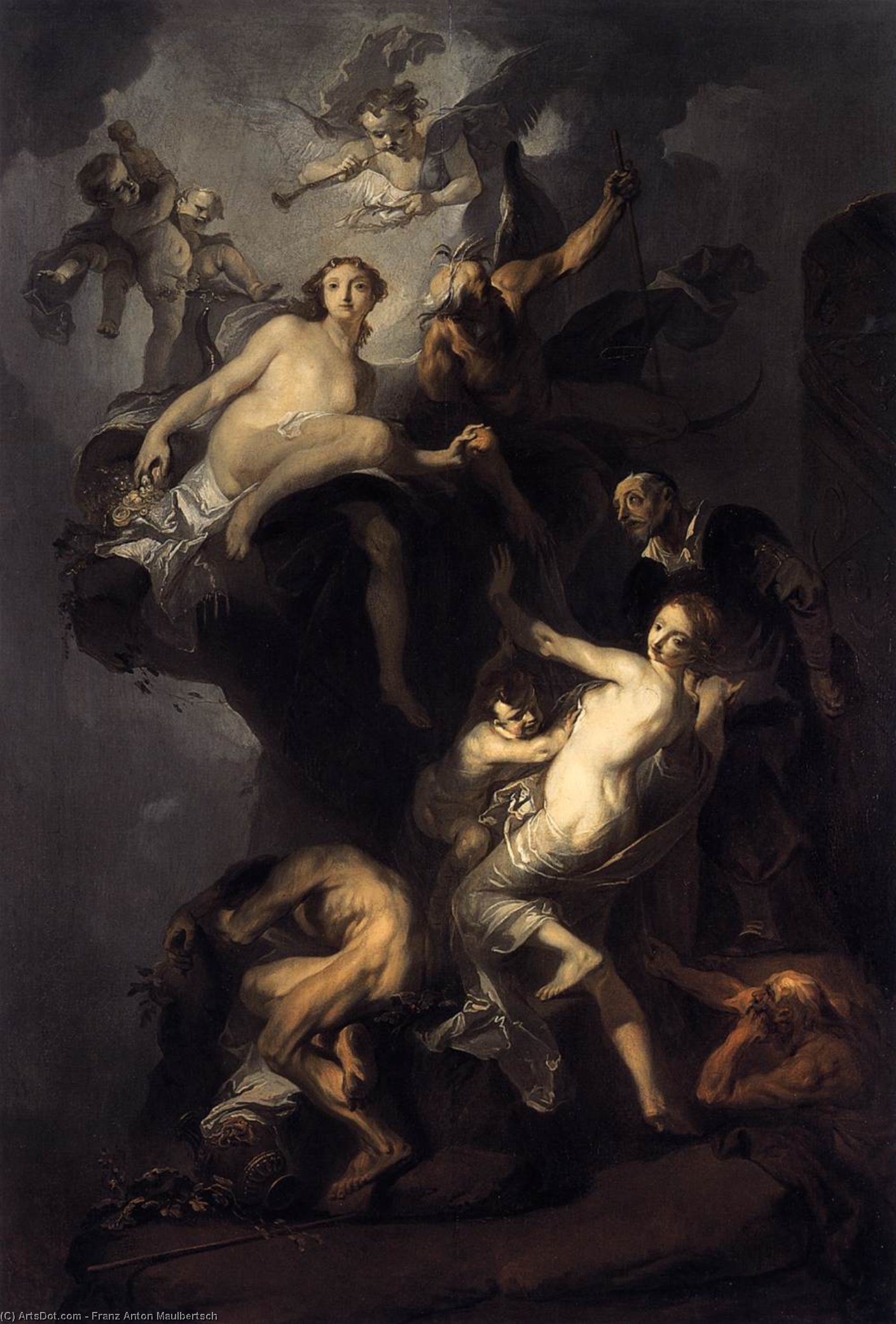
Franz Anton Maulbertsch's 1770 painting, *Allegory on the Fate of Art*, is not merely a depiction of a scene; it’s an intensely felt meditation on the precariousness of artistic endeavor. Executed in oil on canvas and measuring 105 x 72 cm, this work immediately arrests the viewer with its dramatic chiaroscuro – a masterful manipulation of light and shadow that plunges the composition into a palpable sense of unease and profound contemplation. The painting’s dark palette, dominated by deep browns and blacks, serves to heighten the emotional impact, contrasting sharply with the luminous skin of the central figure, a nude woman caught in what appears to be an agonizing state. This immediate visual tension – light against darkness, beauty against suffering – is characteristic of Maulbertsch's style and speaks directly to the painting’s core theme: the vulnerability of artistic expression.
- Rococo Drama: Rooted firmly in the Rococo period, *Allegory on the Fate of Art* transcends the typical frivolousness often associated with the style. While retaining the elegance and decorative flourishes of the era, Maulbertsch imbues his work with a deeply serious and almost operatic quality.
- Technical Brilliance: The artist’s command of technique is evident in every brushstroke. The meticulous rendering of textures – from the flowing drapery to the delicate musculature of the figures – demonstrates a profound understanding of anatomy and material properties.
- A Symphony of Contrasts: Maulbertsch expertly employs chiaroscuro not just for dramatic effect, but also to guide the viewer’s eye through the complex composition, drawing attention to the central figure while simultaneously creating a sense of depth and movement within the scene.
Decoding the Symbolism: Figures in Flux
The painting's power lies not just in its technical execution but also in its rich symbolism. The nude woman at the heart of the composition is often interpreted as representing Art itself – beautiful, vulnerable, and susceptible to forces beyond her control. Surrounding her are a cast of figures engaged in a dynamic interplay: angels or cherubs reaching out with both offering hands and grasping claws; mythological beings seemingly attempting to either uplift or drag her down. This chaotic arrangement suggests the multifaceted nature of artistic influence – the patronage of powerful individuals, the critical judgment of audiences, and the ever-present threat of oblivion.
- The Angels & Demons: The presence of both benevolent and malevolent figures underscores the dual nature of inspiration and criticism. Are they guiding forces or destructive influences?
- Mythological Echoes: The inclusion of mythological elements – a clear nod to classical allegories – adds layers of meaning, suggesting that art has always been intertwined with timeless themes of creation, destruction, and redemption.
- A Dialogue with the Viewer: Maulbertsch deliberately leaves the interpretation open-ended, inviting viewers to contemplate their own relationship with art and its role in society.
Historical Context & Artistic Legacy
Created in 1770, *Allegory on the Fate of Art* reflects a period of significant artistic transition. Maulbertsch was working at the cusp of the late Baroque and Rococo styles, inheriting the dramatic intensity of the former while embracing the elegance and decorative sensibilities of the latter. His work is considered a key example of Viennese Rococo painting, showcasing his unique ability to blend emotional depth with refined aesthetic qualities. Maulbertsch’s influence extended beyond Vienna; his works were exhibited throughout Central Europe, contributing to the spread of the Rococo style.
Franz Anton Maulbertsch (1724-1796): A master of allegory and chiaroscuro, Maulbertsch's career spanned several decades, during which he produced a remarkable body of work characterized by its dramatic intensity, technical virtuosity, and profound philosophical underpinnings. His legacy continues to inspire artists and art lovers alike, solidifying his place as one of the most important figures in the history of Rococo painting.A Hand-Painted Reproduction: Capturing the Essence
ArtsDot.com is proud to offer a meticulously crafted hand-painted reproduction of *Allegory on the Fate of Art*. Our team of skilled artists, drawing upon Maulbertsch’s original techniques and artistic vision, painstakingly recreate every detail of this iconic masterpiece. Each reproduction is created using archival quality materials, ensuring that it will retain its beauty and vibrancy for generations to come. This isn't simply a print; it's an authentic work of art, imbued with the same emotional power and technical brilliance as the original.
Obras relacionadas


Biografía del artista
Franz Anton Maulbertsch: Vida y Legado
Infancia Temprana y Educación
Franz Anton Maulbertsch nació en Langenargen, Alemania, en 1724. Demostró talento artístico desde una edad temprana, lo que le llevó a buscar formación formal en la Academia de Viena. Esta educación fundamental fue crucial para moldear su estilo y carrera futuros.
Influencias y Desarrollo Artístico
El desarrollo artístico de Maulbertsch se vio significativamente influenciado por varias figuras clave. Estudió bajo Paul Troger, un destacado pintor barroco austriaco, y absorbió el dramatismo característico de esa época. Además, recibió inspiración de maestros venecianos como Giovanni Battista Pittoni y Piazzetta, cuya utilización de la luz y el color impactaron profundamente en su obra. También examinó meticulosamente los frescos de Sebastiano Ricci en el Palacio de Schönbrunn en Viena. Un momento decisivo fue conocer a Giambattista Tiepolo mientras estaba activo en Würzburgo alrededor de 1750; este encuentro amplió los horizontes artísticos de Maulbertsch.
Estilo Artístico y Obras Principales
Maulbertsch se convirtió en uno de los exponentes más renombrados del pintoresco rococó en la región de habla alemana. Su estilo se caracteriza por colores vibrantes, composiciones dinámicas y un sentido teatral. Destacó como fresco pintor, recibiendo numerosas comisiones para obras religiosas y seculares.
- Comisiones Eclesiásticas: Maulbertsch decoró iglesias en Bicske, Kalocsa, la Michaelerkirche y Piaristenkirche Maria Treu de Viena, Porta Coeli en Moravia, el Palacio del Arzobispo de Kroměříž y la Villa de Halbturn.
- Pinturas Notables: También creó pinturas como “Júpiter y Antiope”, “San Pablo Baptiza a un Eunuco”, “Un Barbero Cirujano en el Trabajo” y “Serenata Pastoral”.
Logros y Reconocimientos
La habilidad de Maulbertsch como fresco pintor condujo a un amplio reconocimiento y numerosas comisiones prestigiosas. Su capacidad para crear obras visualmente impresionantes y emocionalmente atractivas consolidó su reputación como uno de los principales pintores de su tiempo. Logró combinar el drama barroco con la elegancia y la ligereza del rococó, creando una voz artística única.
Significado Histórico
Franz Anton Maulbertsch desempeñó un papel vital en la conexión entre el barroco tardío y el período clásico temprano. Su obra refleja los cambiantes gustos del siglo XVIII mientras mantiene una fuerte conexión con las técnicas tradicionales. Ayudó a establecer un estilo rococó austríaco distintivo, influyendo en generaciones posteriores de artistas. Sus frescos siguen siendo ejemplos importantes de arte religioso y pintura decorativa de esa época.
Vida Tardía y Muerte
Maulbertsch continuó trabajando diligentemente a lo largo de su carrera, manteniendo un alto nivel de calidad artística hasta su muerte en Viena en 1796. Su legado continúa siendo celebrado a través de la preservación y el estudio de sus notables obras de arte.
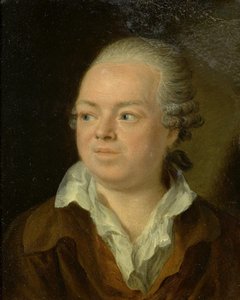
Franz Anton Maulbertsch
1724 - 1796 , Alemania
Datos clave
- Artistic Movement Or Style: Rococó, Barroco
- Artists Who Influenced This Artist:
- Paul Troger
- Giovanni Battista Pittoni
- Piazzetta
- Giambattista Tiepolo
- Date Of Birth: 1724
- Date Of Death: 1796
- Full Name: Franz Anton Maulbertsch
- Nationality: Alemania/Austria
- Notable Artworks:
- Júpiter y Antiope
- San Pablo Baptiza a un Eunuco
- Un Barbero Cirujano en el Trabajo
- Serenata Pastoral
- Place Of Birth: Langenargen, Alemania
Artículos relacionados

Giclée Prints: Archival Quality & Aesthetic Nuances for the Discerning Collector
Explore the world of giclée prints with ArtsDot. Learn about archival quality, aesthetic nuances & investment potential. Expert guidance for discerning art collectors seeking museum-quality reproductions and lasting value.

Rococó: 10 Obras Maestras que Definieron una Época | Arte y Decoración en
Descubre las 10 obras maestras del Rococó que marcaron una época. Explora la elegancia de Fragonard, Boucher y Watteau en . Reproducciones de arte de calidad museo para decorar tu hogar con estilo.
Armonizando Hues y Historias: Una Guía Integral para Combinar Reproducciones de Arte con Estilos de Diseño Interior
Guía experta para combinar reproducciones de arte con su estilo. Encuentre la obra perfecta y transforme su hogar con ArtsDot. Calidad, asesoramiento personalizado y envío a todo el mundo.
Paul Klee: Las 25 Obras Maestras que Definen un Genio del Arte Moderno | ArtsDot
Descubre las 25 obras maestras de Paul Klee, el genio del arte moderno. Explora su expresionismo único, composiciones abstractas y vibrantes paletas de colores. Reproducciones de alta calidad y decoración con arte en ArtsDot.com.

Echoes of Time: Exploring the Enduring Appeal & Historical Context of Vintage Art Prints
Explore the captivating world of vintage art prints! Discover their history, collecting tips & enduring appeal. Expert insights on chromolithography and building a legacy collection with ArtsDot.