

 Ver en contexto
 Enviar
 Compartir
 Detalles

 Descargar
 Similares
 Radiografía
 Presentación de diapositivas
 Stats
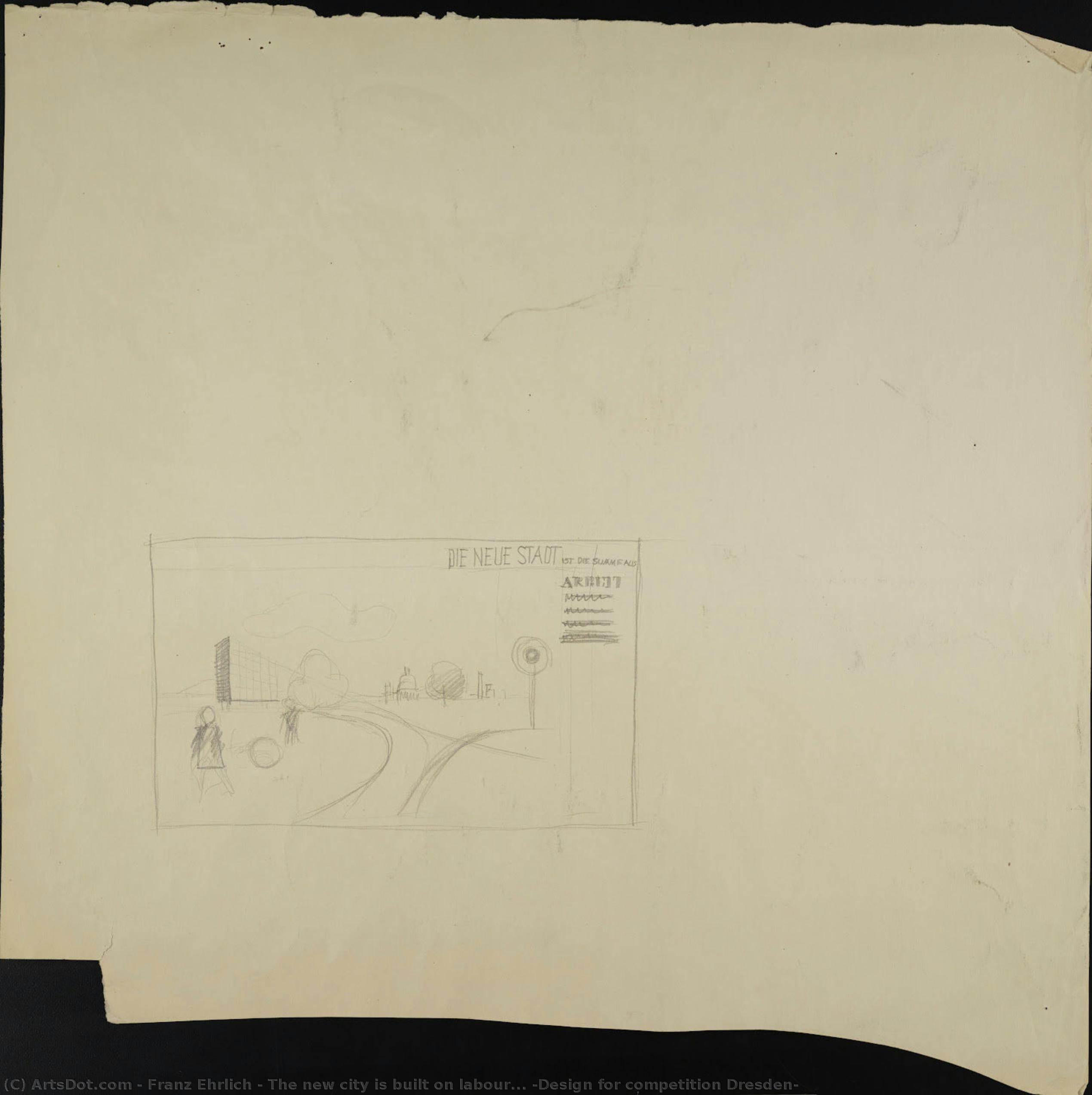
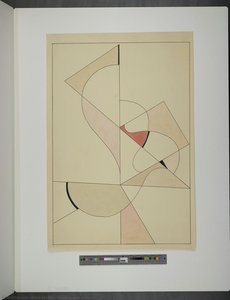
StatsThe new city is built on labour... (Design for competition Dresden)
 Acrylic
- WallArt
- German Expressionism
 1952
1952- Modern
 46.0 x 47.0 cm
 Bauhaus Dessau Foundation
 Ver más
Adquiera una imagen digital de alta resolución y optimizada, muy superior a la vista previa en línea.
Cada archivo es preparado meticulosamente por nuestros especialistas internos mediante el uso de herramientas avanzadas y un experto retoque manual. Nos aseguramos de que cada imagen posea una claridad excepcional, una precisión cromática impecable y un detalle minucioso.
El archivo final se entrega por correo electrónico en un plazo de 72 horas, optimizado para su uso inmediato en entornos profesionales, editoriales y de impresión. Esta es la misma calidad en la que confían los estudios de diseño, las editoriales y las galerías de primer nivel.
Imagen Digital
Descarga un archivo de alta resolución para exhibición personal, impresión y proyectos creativos. ( Switch to Print Comprar pintura hecha a mano)
Incluido en cada pedido de imágenes digitales
Entrega digital experta, garantizada.
Al elegir ArtsDot.com, no solo está adquiriendo una imagen; está recibiendo una obra de arte digital mejorada profesionalmente, elaborada con precisión y respaldada por una garantía de satisfacción. Esto es todo lo que incluye su pedido, automáticamente:

Entrega rápida por email
Recibirá su archivo de imagen digital en alta resolución por correo electrónico en un plazo de 72 horas tras realizar su pedido, listo para su uso inmediato.

Archivo digital optimizado por IA
Su obra de arte se optimiza profesionalmente mediante herramientas avanzadas de IA y edición manual, garantizando el máximo detalle, claridad y precisión cromática.

Reenvío gratuito de por vida
¿Has borrado o perdido tu archivo por error? No te preocupes: te lo volveremos a enviar en cualquier momento, sin coste adicional.

Sin gastos de importación, siempre
Disfrute de su obra de arte al instante sin aduanas, aranceles ni gastos de envío; las descargas digitales siempre están libres de impuestos.

Garantía de fidelidad de color
Garantizamos que su imagen digital refleje los colores originales con la mayor fidelidad posible, mediante el uso de herramientas profesionales y gestión del color.

Garantía de satisfacción de 100 días
Si no está satisfecho con su imagen digital, la revisaremos o le reembolsaremos el 100% en un plazo de 100 días, sin preguntas.

100% Garantía de devolución de dinero
¿No está satisfecho? Obtenga un reembolso completo dentro de los 100 días posteriores a la recepción de su archivo digital, sin preguntas.

Descuentos por pedidos grandes
Compra 3 imágenes, ahorra 10% - Compra 5, ahorra 15% - Compra 10+, ahorra 20%. Ideal para proyectos creativos, galerías y agencias.
A Vision Forged in Labor: Franz Ehrlich’s “The New City is Built on Labour…”
Franz Ehrlich's 1952 sketch, "The New City is Built on Labour...", isn’t merely a design proposal for a competition in Dresden; it’s a poignant testament to post-war reconstruction and the enduring spirit of a city striving to rebuild itself. Captured with a restrained graphite palette against aged paper, the image possesses an immediate intimacy – as if we've stumbled upon a forgotten blueprint, imbued with the hopes and anxieties of a nation grappling with its past. The drawing depicts a meticulously planned urban landscape, dominated by a central train station flanked by buildings rising towards a clear sky, all anchored by a network of roads and pathways. A prominent locomotive suggests progress and connectivity, while figures – rendered subtly within the composition – hint at the human effort underpinning this ambitious vision.
Ehrlich’s work is deeply rooted in the Bauhaus movement, yet transcends its formal tenets. The influence of geometric precision is evident in the simplified forms of the buildings, reminiscent of Walter Gropius' designs. However, there’s a distinct emotionality present, a sense of melancholy and quiet determination that speaks to the challenges faced by Germany following World War II. The muted tones – primarily shades of grey, accented with hints of brown and ochre – evoke the somber atmosphere of a city scarred by conflict, while simultaneously conveying a profound respect for the materials and the process of construction.
A Master’s Hand: Technique and Materials
Examining the drawing closely reveals Ehrlich's masterful technique. He employs a sophisticated range of hatching and cross-hatching to build up tonal values and create a remarkable sense of depth and texture. The varying line weights – from delicate, almost imperceptible strokes defining fine details to bolder lines delineating larger forms – contribute significantly to the image’s dynamism. The paper itself bears witness to the artist's hand; subtle creases and discoloration suggest years spent in careful consideration and execution. It’s a tangible connection to the creative process, reminding us that art is not simply about finished products but also about the journey of creation.
The choice of graphite as the medium is particularly significant. Graphite offers a remarkable degree of control, allowing Ehrlich to capture both the sharp edges of architectural forms and the softer nuances of human figures. Its ability to create subtle gradations of tone lends itself perfectly to conveying mood and atmosphere – essential elements in this evocative composition. The drawing’s scale—46 x 47 cm— invites close scrutiny, encouraging viewers to appreciate the intricate details and the artist's deliberate choices.
Historical Context: Reconstruction and Remembrance
To fully understand “The New City is Built on Labour…”, it’s crucial to consider its historical context. Created in 1952, shortly after World War II, the drawing reflects Dresden’s arduous process of rebuilding. The city had been almost entirely destroyed by Allied bombing raids, leaving behind a devastated landscape and a shattered population. Ehrlich's design wasn’t just about creating a new urban space; it was about symbolizing hope and renewal – a deliberate act of defiance against the destruction that had ravaged his homeland.
The title itself is profoundly symbolic, underscoring the central role of labor in this reconstruction effort. It speaks to the countless hours spent by workers rebuilding homes, infrastructure, and lives. Furthermore, the inclusion of a train station highlights Dresden’s reconnection with the wider world – a vital step towards economic recovery and cultural exchange. The drawing serves as a powerful reminder of the resilience of the human spirit in the face of adversity.
A Legacy of Vision: Symbolism and Emotional Resonance
Beyond its technical merits, “The New City is Built on Labour…” resonates deeply with viewers due to its inherent symbolism. The train station represents progress and connection, while the figures within the composition embody the collective effort required for rebuilding. The overall mood is one of quiet determination – a sense that despite the devastation, Dresden was determined to forge a new future.
Ehrlich’s work transcends mere architectural design; it's a visual meditation on memory, loss, and hope. It invites us to contemplate the challenges faced by communities rebuilding after conflict and to appreciate the enduring power of human creativity in shaping our world. Reproductions of this compelling sketch offer a valuable window into a pivotal moment in German history, allowing us to connect with the past while celebrating the spirit of innovation and resilience that continues to define Dresden today.
Obras relacionadas
Biografía del artista
Early Life and Education
Franz Ehrlich, a name synonymous with both architectural innovation and poignant historical experience, was born in 1907 in Reuth, Germany – a small town nestled within the landscape of Bavaria. From his earliest years, a deep-seated passion for the arts ignited within him, a spark that propelled him towards formal training. He wasn’t simply drawn to aesthetics; there seemed to be an innate understanding of form and structure, a desire to translate visual concepts into tangible realities. This inclination led him to enroll at the prestigious Bauhaus in Dessau, a crucible of modern art and design, from 1927 to 1930. The Bauhaus wasn’t merely a school; it was a revolutionary movement, a laboratory for experimentation where traditional artistic boundaries were relentlessly challenged. Here, under the tutelage of masters like Walter Gropius, László Moholy-Nagy, Paul Klee, and Joost Schmidt, Ehrlich honed his skills in architecture, graphic design, and sculpture, absorbing the principles of functionalism, geometric abstraction, and a profound belief in art’s ability to serve humanity. The Bauhaus experience fundamentally shaped his artistic perspective, instilling within him a commitment to both beauty and social responsibility – values that would profoundly influence his subsequent work.Artistic Career and Communist Affiliation
Ehrlich's artistic journey was inextricably linked to the turbulent political climate of Weimar Germany. His affiliation with the communist party proved to be a defining moment, one that dramatically altered the course of his life and career. In 1935, he faced arrest and imprisonment by the rising Nazi regime, an event that forced him into hiding and ultimately led to a period of profound hardship and displacement. Despite these immense challenges, Ehrlich refused to abandon his artistic pursuits. He continued to create, driven by a deep sense of conviction and a desire to express his beliefs through his art. This resilience in the face of adversity is perhaps one of the most remarkable aspects of his biography. His work during this period reflects a heightened awareness of social injustice and political oppression – themes that would continue to resonate throughout his career. The experience of persecution instilled within him a profound empathy for those marginalized by society, informing his design choices and artistic vision.Notable Works
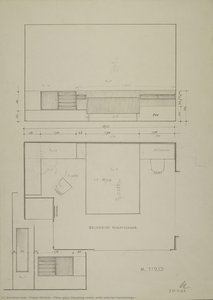
Ehrlich’s oeuvre is characterized by a remarkable blend of architectural innovation, graphic design expertise, and sculptural experimentation. Several projects stand out as particularly significant contributions to the world of art and design. “800 YRS. FRAMEWORK WALL 3” (Leipzig Trade Fair), for example, showcases his ability to integrate form and function in a striking display rack, demonstrating a mastery of spatial relationships and material manipulation. His execution plan for Professor Dr. Baumann’s house exemplifies his meticulous attention to detail and his understanding of architectural principles. Perhaps most intriguing is “1933” – a photo-sculptural advertising project that brilliantly combined photography with sculpture, creating a unique visual language that captured the spirit of the era. These projects, along with others such as the design for the entrance gate inscription at Auschwitz (“Jedem das Seine”), reveal a complex and deeply thoughtful artist grappling with profound social and political issues.Museums and Collections
Ehrlich’s artistic legacy is preserved in several key institutions around the world. The ArtsDot.com website offers an extensive collection of his works, providing a valuable resource for researchers and art enthusiasts alike. Furthermore, the Bauhaus Dessau Foundation (Dessau-Roßlau, Germany) serves as a vital repository of his architectural drawings, models, and other archival materials, offering invaluable insights into his creative process. The foundation’s commitment to preserving and interpreting the Bauhaus legacy ensures that Ehrlich's contributions to modern design continue to be recognized and celebrated. His work is also featured in various exhibitions and collections internationally, solidifying his place as a significant figure in 20th-century art and architecture.Legacy and Impact
Franz Ehrlich’s life story is more than just the chronicle of an artist; it's a poignant reflection of Germany’s tumultuous history during the first half of the 20th century. His experiences – from his formative years at the Bauhaus to his imprisonment under the Nazi regime and his subsequent work in East Germany – offer a powerful lens through which to examine the intersection of art, politics, and social justice. He wasn't simply an architect or designer; he was a witness to history, a participant in resistance movements, and a creator whose work bore testament to both the beauty and the brutality of his time. His legacy endures not only through his architectural designs and graphic works but also as a symbol of resilience, creativity, and unwavering commitment to human dignity.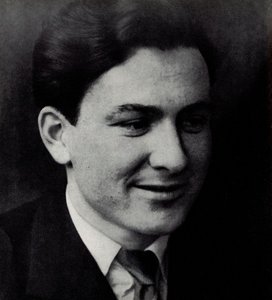
Franz Ehrlich
1907 - 1984 , Alemania
Breves datos
- Artistic Movement Or Style: Bauhaus, Expresionismo
- Artists Or Movements Influenced By This Artist:
- El Bauhaus
- La Liga Comunista Joven
- Artists Who Influenced This Artist:
- Walter Gropius
- László Moholy-Nagy
- Klee
- Joost Schmidt
- Date Of Birth: 1907
- Full Name: Franz Ehrlich
- Nationality: Germano
- Notable Artworks:
- 800 YRS. FRAMEWORK WALL 3
- Untitled (HKB I o II)
- Painting con Violín
- Place Of Birth: Reuth, Alemania