 Vista previa
 Compartir
 Compartir
 Ver detalles

 Descargar
 Ver similares
 Radiografía
 Presentación de diapositivas
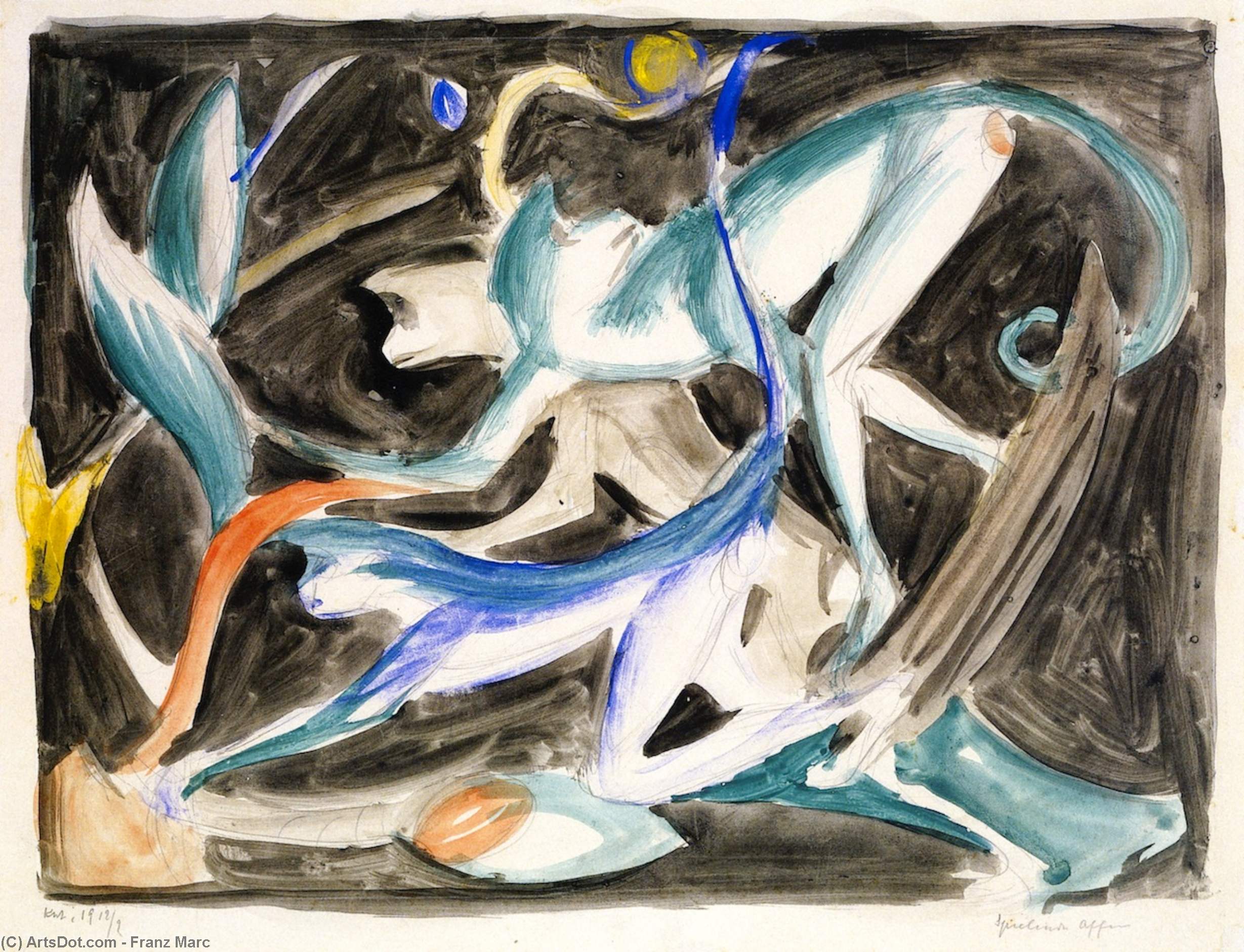
Playing Monkeys


 Leer más
Giclée / Impresión de arte
Impresiones giclée o en lienzo de calidad de museo con producción rápida y opciones de acabado flexibles. ( Encargar reproducción pintada a mano Comprar descarga)




P118B $10

P118H $10

P118W $10

P438Z $10

P508JH $12

P508YH $12

P805H $10

P805Z $10

P919BZ $10

P919G $10

P919XJ $10

P959ZH $10

P968JZ $12

W106C $8

W218G $10

W218JH $8

W218Y $10

W307PJ $10

W316G $10

W316PJ $8

W316Y $10

W398PJ $8

W4111J $10

W500HY $15

W500JH $15

W692G $12

W849H $8

W940BG $15

W953PJ $8




Elija entre nuestros tamaños predefinidos que respetan las proporciones originales de la obra.

Puede introducir sus propias dimensiones para adaptarse a un marco o espacio específico. Si el tamaño seleccionado no coincide con las proporciones de la imagen original, recortaremos la obra de arte o extenderemos la imagen con un borde con efecto espejo o de color sólido. Se enviará una maqueta digital para su aprobación antes de que comience la producción.
Tenga en cuenta que la vista previa en pantalla no refleja el recorte o la extensión real. Solo la maqueta mostrará con precisión la composición final.
Aunque existen tamaños personalizados, recomendamos seleccionar una dimensión de la lista predefinida para preservar las proporciones originales.
Envío a todo el mundo () en 2 semanas en lugar de las 4/5 semanas estándar. (20 agosto)

Envío exprés gratuito a todo el mundo

Lienzo de lino de alta calidad

Seguro de envío completo

Garantía de reembolso de aranceles aduaneros

Garantía de fidelidad cromática exacta

Política de devolución de 60 días (solo por defectos)

Garantía de devolución del 100% del dinero

Oferta por volumen
 La opción de vidrio solo está disponible en tamaños inferiores a 110 cm.

Playing Monkeys
Giclée / Impresión de arte
Tamaño de la reproducción
-


Precio total
$ 62
Descripción de la pieza
A Symphony of Movement and Spirit
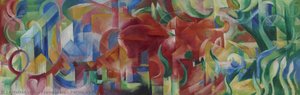
In the delicate dance of watercolor, Franz Marc’s 1912 masterpiece, "Playing Monkeys," emerges as a profound testament to the raw, emotive power of German Expressionism. This is not merely a depiction of primates in motion; it is an evocative window into a soul seeking the divine through the natural world. At a time when the art world was shifting away from the rigid constraints of realism, Marc embraced a language of subjective experience, using the fluid medium of watercolor to capture the fleeting essence of life itself. The painting invites the viewer into a rhythmic, almost primal landscape where the boundaries between the physical and the spiritual begin to blur.
The composition is a masterclass in dynamic energy. Through a bold simplification of form, Marc directs our gaze across a scene populated by monkeys engaged in a spirited interaction—some perched in quiet contemplation, others caught in mid-leap or wrestling with playful intensity. A solitary bird, positioned near the upper periphery, adds a layer of ethereal lightness to the composition, acting as a silent witness to the terrestrial drama below. The movement is not chaotic but choreographed, a rhythmic pulse that resonates with the viewer’s own heartbeat, making it an ideal centerpiece for those who appreciate art that breathes with life and vitality.
The Language of Color and Technique
To behold "Playing Monkeys" is to witness the transformative potential of the wet-on-wet technique. Marc skillfully manipulated damp pigments to create soft, bleeding edges and diffused washes that lend the work an otherworldly, dreamlike quality. The palette is a sophisticated dialogue between tranquility and tension; muted blues and deep greens dominate the canvas, establishing a serene atmosphere that is periodically interrupted by more energetic strokes. This deliberate use of color serves a higher purpose than mere decoration—for Marc, colors were symbolic vessels for emotion, where blue represented the masculine and spiritual, while green embodied the feminine and sensual.
For the discerning collector or interior designer, this piece offers a unique opportunity to introduce a sense of historical depth and intellectual rigor into a space. The watercolor’s inherent translucency allows light to play through the layers of pigment, creating a luminosity that changes depending on the surrounding environment. Whether placed in a contemporary gallery-style living room or a more traditional study, the painting acts as an anchor of sophistication, providing a focal point that stimulates conversation and invites deep, contemplative observation.
A Legacy of Expressionist Vision
The historical context of this work is inseparable from the turbulent era of its creation. As a founding member of Der Blaue Reiter (The Blue Rider), Marc sought to bypass rational thought to tap into primal instincts. "Playing Monkeys" reflects this quest for purity, stripping away the clutter of the industrializing world to find truth in the uninhibited behavior of animals. There is an inherent vulnerability and strength in his lines—angular yet expressive—that mirrors the psychological tremors of early 20th-century Europe.
Owning a high-quality reproduction of this work means more than just decorating a wall; it means preserving a fragment of art history’s most transformative movement. The emotional impact of Marc's vision lies in its ability to evoke empathy and wonder, reminding us of the profound connection between all living things. It is an investment in beauty, spirit, and the enduring legacy of a master who saw the world not as it appeared, but as it felt.
Obras relacionadas
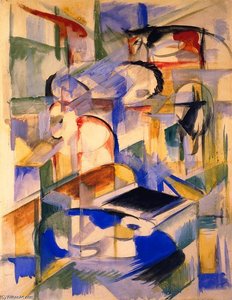
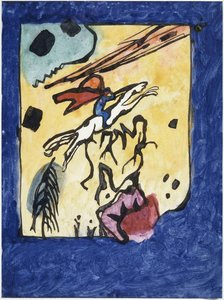
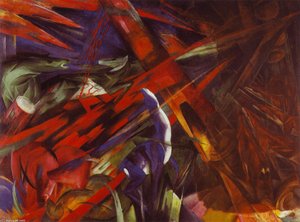
Biografía del artista
Franz Marc: Un Pionero del Expresionismo Alemán
Primeros Años y Educación
- Franz Moritz Wilhelm Marc nació el 8 de febrero de 1880, en Múnich, Alemania.
- Su padre, Wilhelm Marc, era pintor de paisajes que inicialmente influyó en las inclinaciones artísticas de su hijo.
- Marc consideró la teología brevemente antes de dedicarse al arte, estudiando en la Academia de Bellas Artes de Múnich después de asistir a la Universidad de Múnich.
- Los primeros estudios incluían copiar a los maestros antiguos y explorar diversas técnicas artísticas.
Desarrollo Artístico e Influencias
- Inicialmente, el trabajo de Marc estuvo influenciado por el Impresionismo y los estilos de pintura académica.
- Un momento decisivo llegó durante las visitas a París donde conoció la obra de Vincent van Gogh, impactando profundamente su uso del color y la expresión emocional.
- Experimentó con diferentes grupos artísticos como la Neue Künstlervereinigung München antes de cofundar Der Blaue Reiter.
- La obra de Robert Delaunay también influyó en la exploración de formas abstractas y colores vibrantes de Marc.
Der Blaue Reiter y Obras Clave
- En 1911, Marc cofundó Der Blaue Reiter (El Caballo Azul) con Wassily Kandinsky, un periódico y grupo artístico que se convirtió en el centro del movimiento expresionista alemán.
- Este grupo buscaba significado espiritual en el arte y rechazaba las convenciones artísticas tradicionales.
- Obras notables de este período incluyen:
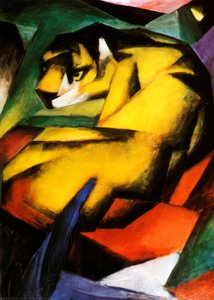
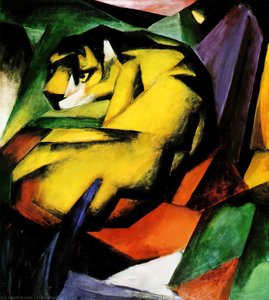
- El Tigre (1912) – mostrando su estilo en evolución y el uso simbólico de los animales.
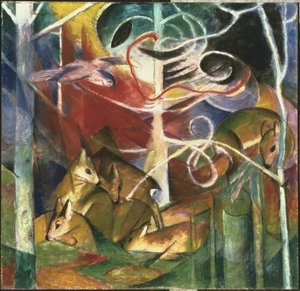
- Ciervo Rojo (1912) - demostrando un enfoque creciente en los temas animales.
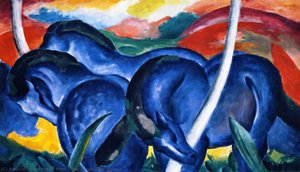
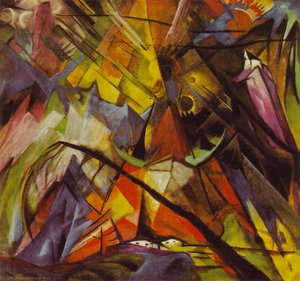
- La Torre de Caballos Azules, Los Zorros y el Destino de los Animales (1913) – representando la culminación de su visión artística.
Temas y Estilo Artístico
- El arte de Marc se caracteriza por sus colores vibrantes, formas simplificadas y representación simbólica de los animales.
- Creía que los animales poseían una pureza y una conexión espiritual con la naturaleza que los humanos habían perdido.
- Su uso del color no era meramente descriptivo sino expresivo, transmitiendo emociones e estados internos.
- Buscaba representar la esencia de sus sujetos en lugar de representaciones realistas.
Primera Guerra Mundial y Trágico Final
- Con el estallido de la Primera Guerra Mundial en 1914, Marc fue inscrito en el ejército alemán.
- A pesar de buscar exención debido a su estatus artístico, sirvió como caballería.
- Murió trágicamente el 4 de marzo de 1916, en la Batalla del Vardo.
- Su muerte truncó una prometedora carrera pero consolidó su lugar en la historia del arte.
Legado e Importancia Histórica
- La obra de Franz Marc sigue siendo altamente influyente por su uso expresivo del color, imágenes simbólicas y profundidad espiritual.
- Se considera una figura clave en el desarrollo del Expresionismo Alemán y un precursor del arte abstracto.
- Sus pinturas se exhiben en importantes museos de todo el mundo, incluido el Lenbachhaus en Múnich, que alberga una extensa colección de su obra.
- La visión artística de Marc continúa inspirando a los artistas e intrigando al público hoy en día.
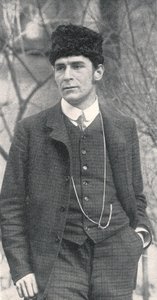
Franz Marc
1880 - 1916 , Alemania
Datos clave
- Artistas Que Influyeron:
- Vincent van Gogh
- Robert Delaunay
- Fecha De Muerte: 4 de marzo de 1916
- Fecha De Nacimiento: 8 de febrero de 1880
- Lugar De Nacimiento: Múnich, Alemania
- Movimiento Artístico: Expresionismo Alemán
- Movimientos Influenciados: ['Arte abstracto']
- Nacionalidad: Alemán
- Nombre Completo: Franz Marc
- Obras Notables:
- El Tigre
- Ciervo Rojo
- La Torre de Caballos Azules
- Los Zorros y el Destino
Artículos relacionados

Acuarelas Legendarias: 10 Obras Maestras que Transformaron el Arte | ArtsDot
Descubre 10 acuarelas legendarias de Turner, Monet y Sargent que revolucionaron el arte. Explora la historia, técnica y belleza de estas obras maestras impresionistas y románticas. Reproducciones de museo en ArtsDot.com.
Marc Chagall: Las 25 Obras Maestras del Sueño y el Color | ArtsDot
Descubre las 25 obras maestras de Marc Chagall, el pintor del sueño y la fantasía. Explora su arte moderno, surrealismo y vibrante paleta de colores en ArtsDot.com. Reproducciones de alta calidad para decorar tu hogar con belleza.

Ephemeral Visions: Exploring the Artistic Legacy & Contemporary Practice of Watercolor Painting
Explore the captivating world of watercolor painting! Discover its rich history, essential techniques, influential artists & collecting tips. A comprehensive guide for art enthusiasts from ArtsDot.
Animalia: Explorando la Presencia Duradera de los Animales en el Arte y el Diseño de Interiores
Descubre la fascinante historia de los animales en el arte y cómo inspirar tu hogar con su simbolismo. Expertos en reproducciones y asesoramiento artístico.
Expresionismo Alemán: 10 Obras Maestras que Transformaron el Arte | ArtsDot
Descubre las 10 obras maestras del Expresionismo Alemán: Kirchner, Munch y más. Explora la historia, técnica y emoción detrás de estos lienzos icónicos. Reproducciones de arte de museo en ArtsDot.com. ¡Inspira tu hogar con arte!