 Ver en contexto
 Enviar
 Compartir
 Detalles

 Descargar
 Similares
 Radiografía
 Presentación de diapositivas
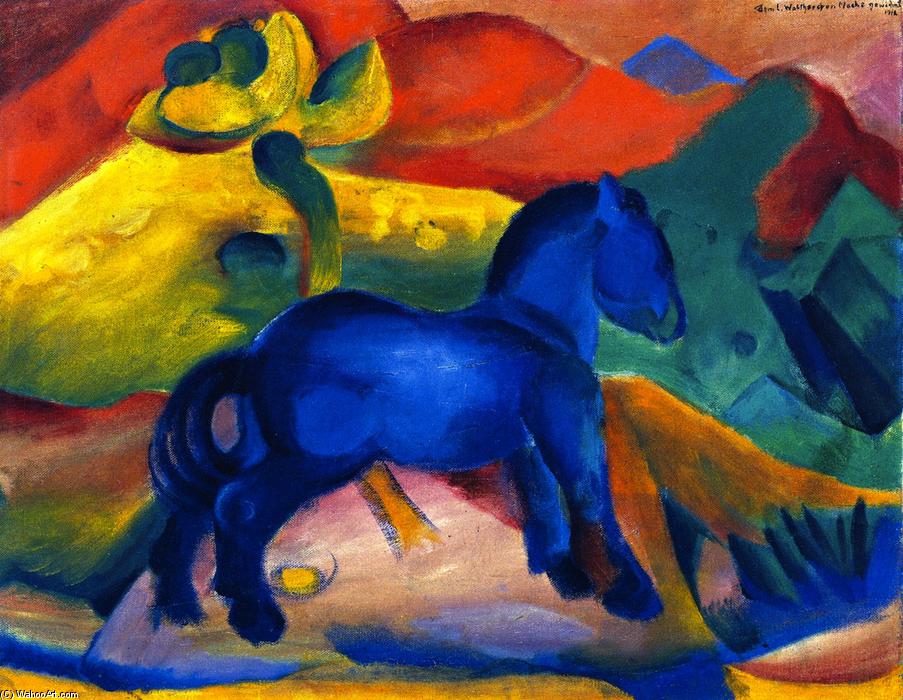
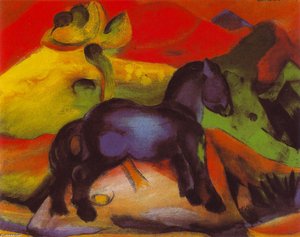
The Little Blue Horse, Picture for a Child


 Ver más
Giclée / Impresión de arte
Impresiones giclée o en lienzo de calidad de museo con producción rápida y opciones de acabado flexibles. ( Comprar pintura hecha a mano Comprar imagen)




P118B $10

P118H $10

P118W $10

P438Z $10

P508JH $12

P508YH $12

P805H $10

P805Z $10

P919BZ $10

P919G $10

P919XJ $10

P959ZH $10

P968JZ $12

W106C $8

W218G $10

W218JH $8

W218Y $10

W307PJ $10

W316G $10

W316PJ $8

W316Y $10

W398PJ $8

W4111J $10

W500HY $15

W500JH $15

W692G $12

W849H $8

W940BG $15

W953PJ $8




Elija entre nuestros tamaños predefinidos que respetan las proporciones originales de la obra.

Puede introducir sus propias dimensiones para adaptarse a un marco o espacio específico. Si el tamaño seleccionado no coincide con las proporciones de la imagen original, recortaremos la obra de arte o extenderemos la imagen con un borde con efecto espejo o de color sólido. Se enviará una maqueta digital para su aprobación antes de que comience la producción.
Tenga en cuenta que la vista previa en pantalla no refleja el recorte o la extensión real. Solo la maqueta mostrará con precisión la composición final.
Aunque existen tamaños personalizados, recomendamos seleccionar una dimensión de la lista predefinida para preservar las proporciones originales.
Envío a todo el mundo () en 2 semanas en lugar de las 4/5 semanas estándar. (28 agosto)

Envío exprés gratuito a todo el mundo

Lienzo de lino de alta calidad

Seguro de envío total

Garantía de reembolso de impuestos aduaneros

Garantía de fidelidad cromática exacta

Política de devolución de 60 días (solo por defectos)

Garantía de devolución del 100% del dinero

Descuento por cantidad
 La opción de vidrio solo está disponible en tamaños inferiores a 110 cm.

The Little Blue Horse, Picture for a Child
Giclée / Impresión de arte
Dimensiones de la reproducción
-


Precio total final
$ 62
A Symphony in Blue and Yellow: The Spiritual Pulse of Franz Marc
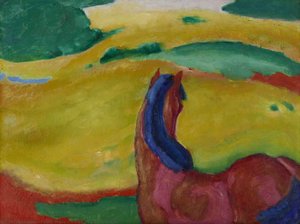
In the early twentieth century, as the industrial world grew increasingly loud and mechanical, a group of visionary artists sought refuge in the primal purity of nature. At the heart of this movement was Franz Marc, a painter whose brush did not merely capture light, but sought to translate the very soul of existence onto canvas. His 1912 masterpiece, The Little Blue Horse, Picture for a Child, serves as a breathtaking gateway into the world of German Expressionism. This is not a mere portrait of an animal; it is a rhythmic, chromatic exploration of spiritual vitality. When one gazes upon this work, the eyes are immediately drawn to the central figure—a young horse rendered in a profound, electric blue that seems to vibrate against its surroundings.
The composition is a masterclass in the use of symbolic color theory, a hallmark of Marc’s mature style. Eschewing the literalism of traditional landscape painting, Marc utilized a deliberate palette to communicate emotion. The brilliant yellow background acts as more than just a backdrop; it is a pulsating field of energy that pushes the blue form forward, creating a tension that feels both grounded and ethereal. This interplay between the cool, tranquil blue of the horse and the warm, radiant yellow creates a visual harmony that resonates with anyone seeking balance in their living space. The presence of smaller, more shadowed horses in the distance adds a sense of depth and narrative movement, suggesting a larger, untamed world existing just beyond our immediate perception.
Technique and the Expressionist Spirit
To appreciate this work is to understand the revolutionary technique behind its creation. Marc moved away from the meticulous, fine-lined traditions of academic art, opting instead for bold simplification and flattened planes of color. His brushstrokes are expressive and purposeful, prioritizing the "feeling" of the subject over anatomical perfection. This technique allows the painting to transcend time; it does not feel like a frozen moment from 1912, but rather an eternal state of being. For the collector or interior designer, this quality makes the piece incredibly versatile. Its strong graphic elements and high-contrast palette allow it to serve as a commanding focal point in modern, minimalist, or even classical settings, bringing a sense of sophisticated movement to any room.
The historical context of the piece adds a layer of poignant beauty for the discerning viewer. Painted on the precipice of World War I, the work embodies the anxieties and the yearnings of an era on the brink of transformation. While much of Europe was gripped by uncertainty, Marc looked toward the animal kingdom to find a sense of innocence and purity that he believed humanity had lost. The blue horse stands as a symbol of resilience and spiritual strength—a quiet, powerful force amidst a changing world. Owning a high-quality reproduction of this work is not simply about decorating a wall; it is about inviting a piece of art history into your home that celebrates the enduring power of the natural spirit and the transformative beauty of color.
Obras relacionadas
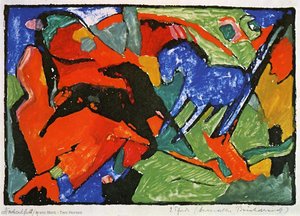
Biografía del artista
Franz Marc: Un Pionero del Expresionismo Alemán
Primeros Años y Educación
- Franz Moritz Wilhelm Marc nació el 8 de febrero de 1880, en Múnich, Alemania.
- Su padre, Wilhelm Marc, era pintor de paisajes que inicialmente influyó en las inclinaciones artísticas de su hijo.
- Marc consideró la teología brevemente antes de dedicarse al arte, estudiando en la Academia de Bellas Artes de Múnich después de asistir a la Universidad de Múnich.
- Los primeros estudios incluían copiar a los maestros antiguos y explorar diversas técnicas artísticas.
Desarrollo Artístico e Influencias
- Inicialmente, el trabajo de Marc estuvo influenciado por el Impresionismo y los estilos de pintura académica.
- Un momento decisivo llegó durante las visitas a París donde conoció la obra de Vincent van Gogh, impactando profundamente su uso del color y la expresión emocional.
- Experimentó con diferentes grupos artísticos como la Neue Künstlervereinigung München antes de cofundar Der Blaue Reiter.
- La obra de Robert Delaunay también influyó en la exploración de formas abstractas y colores vibrantes de Marc.
Der Blaue Reiter y Obras Clave
- En 1911, Marc cofundó Der Blaue Reiter (El Caballo Azul) con Wassily Kandinsky, un periódico y grupo artístico que se convirtió en el centro del movimiento expresionista alemán.
- Este grupo buscaba significado espiritual en el arte y rechazaba las convenciones artísticas tradicionales.
- Obras notables de este período incluyen:
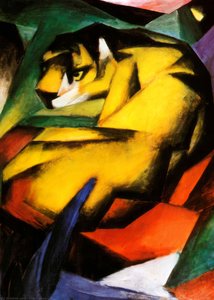
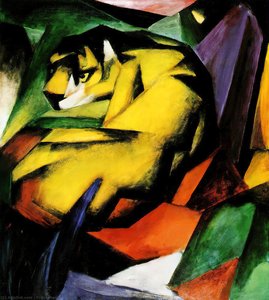
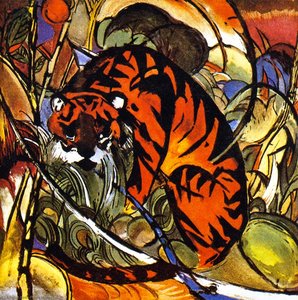
- El Tigre (1912) – mostrando su estilo en evolución y el uso simbólico de los animales.
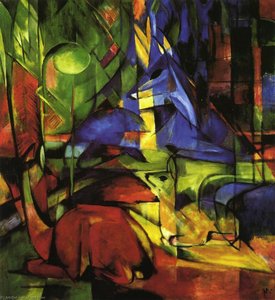
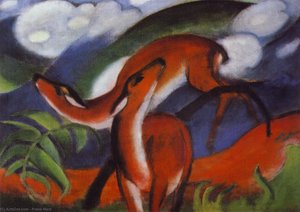
- Ciervo Rojo (1912) - demostrando un enfoque creciente en los temas animales.
- La Torre de Caballos Azules, Los Zorros y el Destino de los Animales (1913) – representando la culminación de su visión artística.
Temas y Estilo Artístico
- El arte de Marc se caracteriza por sus colores vibrantes, formas simplificadas y representación simbólica de los animales.
- Creía que los animales poseían una pureza y una conexión espiritual con la naturaleza que los humanos habían perdido.
- Su uso del color no era meramente descriptivo sino expresivo, transmitiendo emociones e estados internos.
- Buscaba representar la esencia de sus sujetos en lugar de representaciones realistas.
Primera Guerra Mundial y Trágico Final
- Con el estallido de la Primera Guerra Mundial en 1914, Marc fue inscrito en el ejército alemán.
- A pesar de buscar exención debido a su estatus artístico, sirvió como caballería.
- Murió trágicamente el 4 de marzo de 1916, en la Batalla del Vardo.
- Su muerte truncó una prometedora carrera pero consolidó su lugar en la historia del arte.
Legado e Importancia Histórica
- La obra de Franz Marc sigue siendo altamente influyente por su uso expresivo del color, imágenes simbólicas y profundidad espiritual.
- Se considera una figura clave en el desarrollo del Expresionismo Alemán y un precursor del arte abstracto.
- Sus pinturas se exhiben en importantes museos de todo el mundo, incluido el Lenbachhaus en Múnich, que alberga una extensa colección de su obra.
- La visión artística de Marc continúa inspirando a los artistas e intrigando al público hoy en día.
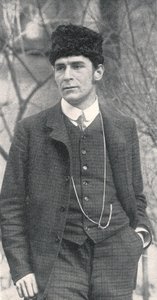
Franz Marc
1880 - 1916 , Alemania
Datos clave
- Artistas Que Influyeron:
- Vincent van Gogh
- Robert Delaunay
- Fecha De Muerte: 4 de marzo de 1916
- Fecha De Nacimiento: 8 de febrero de 1880
- Lugar De Nacimiento: Múnich, Alemania
- Movimiento Artístico: Expresionismo Alemán
- Movimientos Influenciados: ['Arte abstracto']
- Nacionalidad: Alemán
- Nombre Completo: Franz Marc
- Obras Notables:
- El Tigre
- Ciervo Rojo
- La Torre de Caballos Azules
- Los Zorros y el Destino
Artículos relacionados
Expresionismo Alemán: 10 Obras Maestras que Transformaron el Arte | ArtsDot
Descubre las 10 obras maestras del Expresionismo Alemán: Kirchner, Munch y más. Explora la historia, técnica y emoción detrás de estos lienzos icónicos. Reproducciones de arte de museo en ArtsDot.com. ¡Inspira tu hogar con arte!

Las 10 Obras Maestras del Azul Pizarra: Arte, Historia y Decoración
Descubre las 10 pinturas más famosas dominadas por el azul pizarra. Explora la historia, técnica y belleza de Monet, Van Gogh y otros maestros. Encuentra reproducciones de arte exclusivas para decorar tu hogar en .
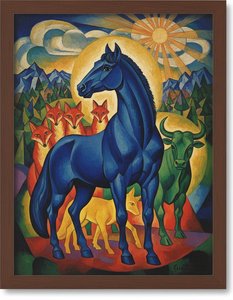
Franz Marc: Expressionism, Spirituality & the Animal Symbolism of a Modern Master
Explore the profound world of Franz Marc's Expressionist paintings. Discover his spiritual connection to animals, innovative use of color, and lasting impact on modern art history. Learn more at ArtsDot.
The Allure of Azure: Exploring the Symbolic & Aesthetic Depths of Blue in Art History
Explore the rich history of blue in art! Discover its symbolism, from ancient pigments to modern masterpieces by Kandinsky & Seurat. Uncover the psychological impact and cultural meanings behind this captivating hue.
Expresionismo Figurado: Intensidad Emocional y Realidad Subjetiva en el Arte del Siglo XX
Explora la intensidad emocional del Expresionismo Figurado alemán. Descubre sus orígenes, artistas clave como Munch y Kirchner, y su legado en el arte moderno. Análisis experto y profundo.