

 Ver en contexto
 Enviar
 Compartir
 Detalles

 Descargar
 Similares
 Radiografía
 Presentación de diapositivas
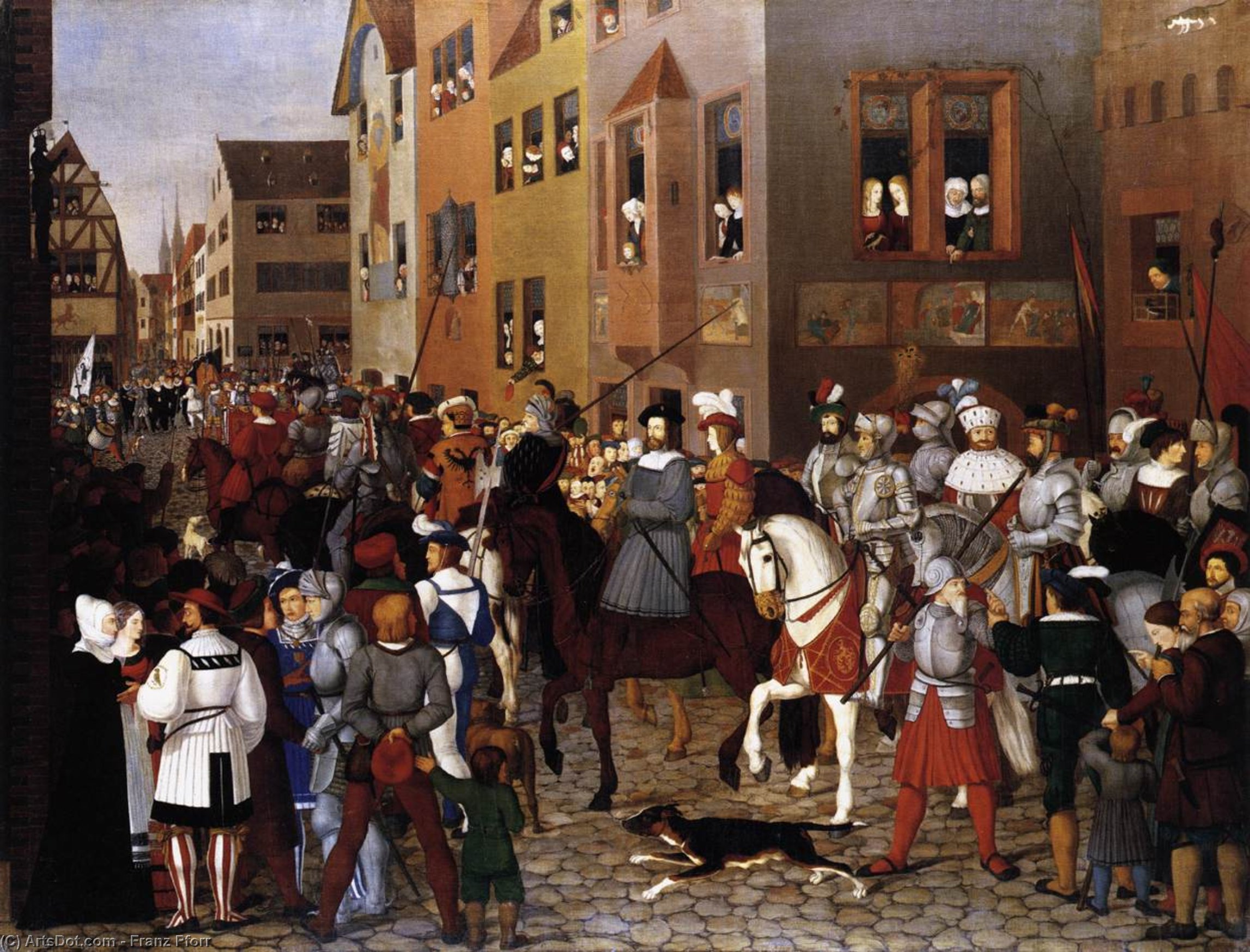
The Entry of Emperor Rudolf of Habsburg into Basel
 Acrylic On Canvas
- WallArt
- Nazarene Movement
 1809
1809 90.0 x 119.0 cm
 Städel Museum
 Ver más
Adquiera una imagen digital de alta resolución y optimizada, muy superior a la vista previa en línea.
Cada archivo es preparado meticulosamente por nuestros especialistas internos mediante el uso de herramientas avanzadas y un experto retoque manual. Nos aseguramos de que cada imagen posea una claridad excepcional, una precisión cromática impecable y un detalle minucioso.
El archivo final se entrega por correo electrónico en un plazo de 72 horas, optimizado para su uso inmediato en entornos profesionales, editoriales y de impresión. Esta es la misma calidad en la que confían los estudios de diseño, las editoriales y las galerías de primer nivel.
Imagen Digital
Descarga un archivo de alta resolución para exhibición personal, impresión y proyectos creativos. ( Comprar impresión Comprar pintura hecha a mano)
Incluido en cada pedido de imágenes digitales
Entrega digital experta, garantizada.
Al elegir ArtsDot.com, no solo está adquiriendo una imagen; está recibiendo una obra de arte digital mejorada profesionalmente, elaborada con precisión y respaldada por una garantía de satisfacción. Esto es todo lo que incluye su pedido, automáticamente:

Entrega rápida por email
Recibirá su archivo de imagen digital en alta resolución por correo electrónico en un plazo de 72 horas tras realizar su pedido, listo para su uso inmediato.

Archivo digital optimizado por IA
Su obra de arte se optimiza profesionalmente mediante herramientas avanzadas de IA y edición manual, garantizando el máximo detalle, claridad y precisión cromática.

Reenvío gratuito de por vida
¿Has borrado o perdido tu archivo por error? No te preocupes: te lo volveremos a enviar en cualquier momento, sin coste adicional.

Sin gastos de importación, siempre
Disfrute de su obra de arte al instante sin aduanas, aranceles ni gastos de envío; las descargas digitales siempre están libres de impuestos.

Garantía de fidelidad de color
Garantizamos que su imagen digital refleje los colores originales con la mayor fidelidad posible, mediante el uso de herramientas profesionales y gestión del color.

Garantía de satisfacción de 60 días
Si no está satisfecho con su imagen digital, la revisaremos o le reembolsaremos el 100% en un plazo de 60 días, sin preguntas.

100% Garantía de devolución de dinero
¿No está satisfecho? Obtenga un reembolso completo dentro de los 60 días posteriores a la recepción de su archivo digital, sin necesidad de explicaciones.

Descuentos por pedidos grandes
Compra 3 imágenes, ahorra 10% - Compra 5, ahorra 15% - Compra 10+, ahorra 20%. Ideal para proyectos creativos, galerías y agencias.
The Grand Entry: Franz Pforr’s Vision of Habsburg Power
Franz Pforr's "The Entry of Emperor Rudolf of Habsburg into Basel," painted in 1809, is more than just a historical depiction; it’s a carefully constructed tableau of imperial authority and nascent Romanticism. This monumental oil on canvas transports the viewer to a pivotal moment – the arrival of Rudolf I, the first elected King of the Romans, in the bustling city of Basel in 1273. Pforr, a key figure within the Nazarene movement, eschewed the prevailing Neoclassical trends of his time, instead embracing a style rooted in the perceived sincerity and spiritual depth of early Christian art. The painting isn’t merely a record of an event; it's a deliberate evocation of a bygone era, imbued with a potent sense of national pride and dynastic ambition.
The scene unfolds with dramatic immediacy. Rudolf, depicted as a youthful and vigorous figure astride a magnificent warhorse, dominates the composition. His posture exudes confidence and power, while his entourage – knights in gleaming armor, richly dressed officials, and a throng of cheering citizens – reinforces the image of imperial grandeur. The artist masterfully employs perspective to draw the eye towards the central action, creating a dynamic sense of movement as the procession surges into the city gates. Note the careful attention to detail: the intricate embroidery on the clothing, the polished armor reflecting the light, and the expressions of excitement and reverence on the faces of the onlookers all contribute to the painting’s immersive quality.
The Nazarene Aesthetic: A Return to Spiritual Roots
Pforr's artistic choices are deeply informed by the principles of the Nazarene movement. Rejecting the polished surfaces and idealized forms favored by many contemporary artists, he opted for a deliberately rough and expressive style. The colors are rich and vibrant, yet tempered with a sense of muted intensity – a characteristic often associated with the use of oil paints in layers to achieve depth and luminosity. The figures themselves are rendered with a degree of simplification, prioritizing emotional impact over meticulous realism. This stylistic approach reflects the Nazarenes’ desire to reconnect with the spiritual essence of art, believing that true beauty resided not in superficial appearances but in conveying profound religious themes.
Furthermore, Pforr's use of light and shadow is particularly noteworthy. The scene is bathed in a warm, golden glow, suggesting both the auspiciousness of the occasion and the inherent dignity of the Habsburg dynasty. The artist skillfully employs chiaroscuro – the dramatic contrast between light and dark – to sculpt the forms of the figures and create a sense of three-dimensionality. This technique not only enhances the painting’s visual impact but also serves to heighten its emotional resonance, drawing the viewer's attention to key elements within the composition.
Symbolism and Historical Context
The "Entry of Emperor Rudolf" is laden with symbolic meaning. Rudolf I was a pivotal figure in German history, marking the beginning of the Habsburg dynasty’s rise to prominence. His election as King of the Romans signaled a return to stability after decades of political fragmentation and paved the way for the empire's eventual expansion under subsequent rulers. The painting, therefore, functions as both a historical record and a carefully crafted propaganda piece, designed to legitimize the Habsburg claim to power and inspire loyalty among the German populace.
Basel itself holds significance within this narrative. As a major trading center and a strategically important city in the heart of the Holy Roman Empire, Basel served as the perfect stage for Rudolf’s triumphant arrival. The painting captures not only the emperor's personal journey but also the broader ambitions of the Habsburg dynasty to consolidate its influence across Central Europe. The inclusion of the dog, likely accompanying one of the riders, adds a touch of humanity and reinforces the image of Rudolf as a benevolent ruler who cares for his people.
A Legacy of Romantic Vision
Franz Pforr’s “The Entry of Emperor Rudolf of Habsburg into Basel” stands as a remarkable example of early 19th-century art, blending historical accuracy with emotional intensity and stylistic innovation. It is a testament to the Nazarene movement's commitment to spiritual expression and its rejection of prevailing artistic conventions. The painting’s dramatic composition, rich colors, and evocative symbolism continue to captivate viewers today, offering a glimpse into a pivotal moment in German history and a profound meditation on power, ambition, and the enduring legacy of the Habsburg dynasty. Reproductions of this powerful artwork offer a stunning window into a bygone era, bringing the grandeur of imperial Europe vividly to life.
Obras relacionadas
Biografía del artista
Franz Pforr: Un Pionero del Movimiento Nazareno
Vida Temprana y Formación
- **Nacimiento:** 1788 en Frankfurt am Main, Hesse, Alemania.
- Franz Pforr recibió su formación artística inicial de su padre, Johann Georg Pforr, quien también era pintor.
- Su tío, Johann Heinrich Tischbein the Younger, profesor de arte e inspector de galerías, también desempeñó un papel crucial en su desarrollo temprano.
- Continuó sus estudios en la Academia de Bellas Artes de Viena, sentando las bases para sus futuros esfuerzos artísticos.
El Movimiento Nazareno y el Período Romano
- En 1810, Pforr se trasladó a Roma junto con otros artistas, incluyendo Johann Friedrich Overbeck, Ludwig Vogel y Johann Konrad Hottinger.
- El Movimiento Nazareno: Este grupo buscaba un retorno a la aparente pureza del arte cristiano temprano, rechazando lo que consideraban la superficialidad de los estilos contemporáneos.
- Vivieron en el monasterio abandonado de Sant’Isidoro a Capo le Case, fomentando un ambiente artístico comunitario y espiritualmente enfocado.
- Overbeck se convirtió en una influencia significativa durante este período, moldeando la dirección estética de Pforr.
Estilo Artístico y Temas
- La obra de Pforr se caracteriza por su Romanticismo y profundo sentimiento religioso.
- Se centró en temas históricos y bíblicos, a menudo representando escenas con un sentido de solemnidad e intensidad espiritual.
- Chiaroscuro, el uso dramático de la luz y la sombra, es prominente en sus pinturas, realzando su impacto emocional.
- Su estilo fusionó elementos del Romanticismo alemán con los ideales de los Nazarenos: un enfoque en la simplicidad, la sinceridad y la profundidad espiritual.
Obras Maestras
- La Entrada del Emperador Rudolf de Habsburgo en Basilea: Un cuadro histórico que muestra la habilidad narrativa de Pforr.
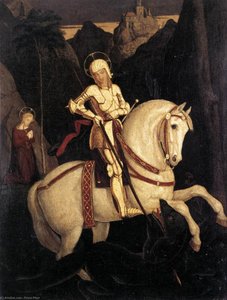
- San Jorge y el Dragón: Demuestra su capacidad para representar escenas dramáticas con simbolismo religioso.
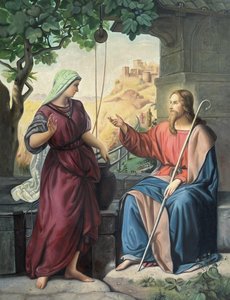
- Shulamit y María: Un ejemplo de su exploración de temas bíblicos e íntimos retratos.
- Rafael, Fra Angelico y Miguel Ángel sobre Roma: Un homenaje a los maestros que admiraba y una reflexión del respeto de los Nazarenos por el arte renacentista.
- Regreso Nocturno: Muestra su habilidad en el realismo flamenco con figuras íntimas.
- Varios autorretratos proporcionan información sobre su apariencia personal y sensibilidad artística.
Legado e Importancia Histórica
- **Muerte Temprana:** Tristemente, Franz Pforr murió de tuberculosis en Albano Laziale, Roma, en 1812 a la temprana edad de 24 años.
- A pesar de su corta vida, dejó una marca significativa en el movimiento Nazareno y el arte del siglo XIX.
- Su obra encarna la búsqueda de expresión espiritual que caracterizó la era Romántica.
- La influencia de Pforr se puede ver en el desarrollo posterior de la pintura romántica alemana, inspirando a los artistas a explorar temas religiosos e históricos con renovado fervor.
- Él sigue siendo una figura notable para aquellos que estudian la intersección del arte, la religión y la identidad nacional en el siglo XIX Alemania.
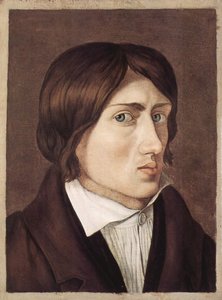
Franz Pforr
1788 - 1812 , Alemania
Breves datos
- Artistic Movement Or Style: Nazareno
- Artists Who Influenced This Artist:
- Johann Georg Pforr
- Johann Heinrich Tischbein the Younger
- Johann Friedrich Overbeck
- Date Of Birth: 1788
- Full Name: Franz Pforr
- Nationality: Alemania
- Notable Artworks:
- La Entrada del Emperador Rudolf de Habsburgo en Basilea
- San Jorge y el Dragón
- Shulamit y María
- Place Of Birth: Frankfurt am Main, Alemania

