

 Ver en contexto
 Enviar
 Compartir
 Detalles

 Descargar
 Similares
 Radiografía
 Presentación de diapositivas
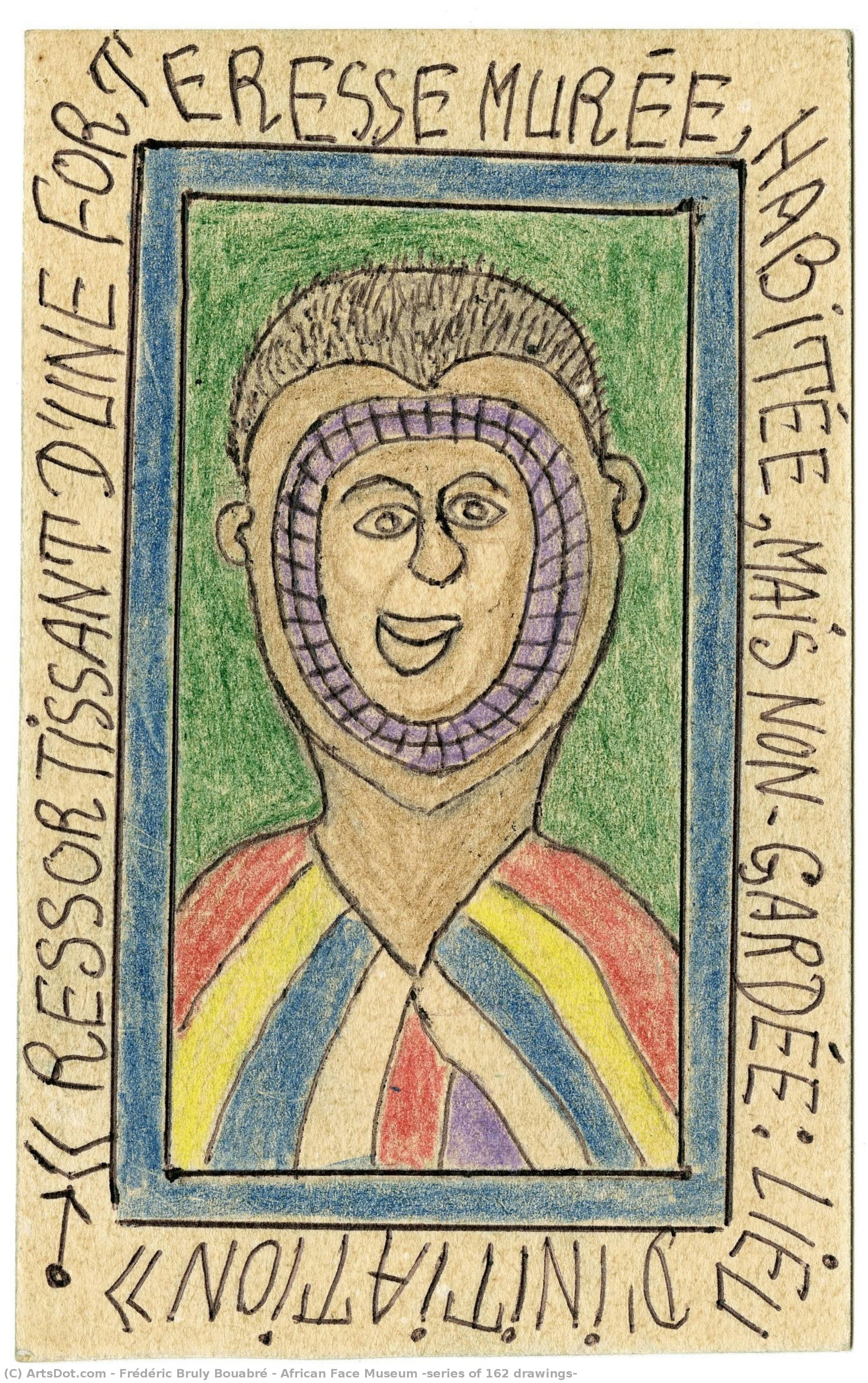
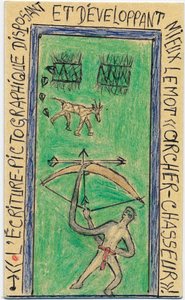
African Face Museum (series of 162 drawings)
 Crayon
- Contemporary Art
 1996
1996- Contemporary
 15.0 x 10.0 cm
 Ver más
Giclée / Impresión de arte
Impresiones giclée o en lienzo de calidad de museo con producción rápida y opciones de acabado flexibles. ( Comprar pintura hecha a mano Comprar imagen)




P118B $10

P118H $10

P118W $10

P438Z $10

P508JH $12

P508YH $12

P805H $10

P805Z $10

P919BZ $10

P919G $10

P919XJ $10

P959ZH $10

P968JZ $12

W106C $8

W218G $10

W218JH $8

W218Y $10

W307PJ $10

W316G $10

W316PJ $8

W316Y $10

W398PJ $8

W4111J $10

W500HY $15

W500JH $15

W692G $12

W849H $8

W940BG $15

W953PJ $8




Elija entre nuestros tamaños predefinidos que respetan las proporciones originales de la obra.

Puede introducir sus propias dimensiones para adaptarse a un marco o espacio específico. Si el tamaño seleccionado no coincide con las proporciones de la imagen original, recortaremos la obra de arte o extenderemos la imagen con un borde con efecto espejo o de color sólido. Se enviará una maqueta digital para su aprobación antes de que comience la producción.
Tenga en cuenta que la vista previa en pantalla no refleja el recorte o la extensión real. Solo la maqueta mostrará con precisión la composición final.
Aunque existen tamaños personalizados, recomendamos seleccionar una dimensión de la lista predefinida para preservar las proporciones originales.
Envío a todo el mundo () en 2 semanas en lugar de las 4/5 semanas estándar. (7 septiembre)

Envío exprés gratuito a todo el mundo

Lienzo de lino de alta calidad

Seguro de envío total

Garantía de reembolso de impuestos aduaneros

Garantía de fidelidad cromática exacta

Política de devolución de 100 días (solo por defectos)

Garantía de devolución del 100% del dinero

Descuento por cantidad
 La opción de vidrio solo está disponible en tamaños inferiores a 110 cm.

African Face Museum (series of 162 drawings)
Giclée / Impresión de arte
Dimensiones de la reproducción
-


Precio total final
$ 62
A Visionary Portal to Universal Knowledge
In the profound and intricate series known as African Face Museum, we encounter the transcendent spirit of Frédéric Bruly Bouabré, an artist whose work serves as both a personal revelation and a monumental archive of human existence. Born in the Ivory Coast in 1923, Bouabré—often referred to by his spiritual name, Cheik Nadro—did not merely paint; he transcribed the very essence of the cosmos. This specific piece, part of a larger collection of 162 evocative drawings, captures a moment of intense, singular focus. The artwork presents a striking portrait of a man's face, rendered with a stark, classic monochrome palette that lends it an air of timelessness. A singular, vibrant purple ring encircles the mouth, acting as a mystical threshold that draws the viewer into the silent dialogue between the subject and the infinite.
The technique employed in this work reflects Bouabré’s unique method of capturing "signs" from the divine. Using the humble medium of ballpoint pen and color crayons on a small, intimate scale, he achieved a depth of expression that rivals much larger canvases. The black and white composition creates a dramatic interplay of light and shadow, emphasizing the structural contours of the face while allowing the sudden burst of purple to vibrate against the grayscale tones. This deliberate use of color amidst a monochromatic landscape serves as a visual metaphor for his life's mission: to find the colorful, divine truths hidden within the everyday patterns of our world.
The Symbology of the Bété Legacy
To look upon this drawing is to engage with the heart of Bété culture and the broader concept of universal connectivity. Bouabré’s life was dedicated to the preservation of knowledge, a task he undertook through his invention of a 448-monosyllabic pictographic alphabet. Every stroke in the African Face Museum series carries the weight of this encyclopedic ambition. The face itself becomes a landscape of memory and tradition, representing not just an individual, but the collective consciousness of a people. The purple ring around the mouth is particularly evocative, suggesting the power of speech, the sanctity of oral tradition, and the manifestation of divine thought into the physical realm.
For the discerning collector or interior designer, this piece offers more than mere decoration; it provides a focal point of profound intellectual and spiritual depth. The artwork functions as a "window" into a visionary reality where science, myth, and religion converge. Its small, postcard-like format (15 x 10 cm) makes it an exquisite addition to curated collections or as a meaningful accent in a space dedicated to contemplation, literature, or global heritage. It is a piece that demands a slow gaze, rewarding the observer with layers of meaning that unfold like a rediscovered manuscript.
An Eternal Legacy for Modern Spaces
Integrating a high-quality reproduction of Bouabré’s work into a contemporary interior allows for a sophisticated dialogue between modern aesthetics and ancient wisdom. The starkness of the black and white imagery complements minimalist or mid-century modern decors, while the subtle splash of color provides a necessary warmth and intrigue. As an art lover, one finds in this piece a sense of "redemptive calling"—the artist's belief that through the organization of signs and symbols, we can create a framework for global exchange and understanding.
Owning a reproduction of such a significant historical series is an opportunity to possess a fragment of a much larger, cosmic puzzle. It serves as a constant reminder of the beauty found in "the one who does not forget." Whether placed in a private study or a grand gallery setting, the African Face Museum drawings continue to act as vibrant, living records of dreams, traditions, and the eternal search for truth that defines the human experience.
Obras relacionadas

Biografía del artista
A Life of Artistic Innovation and Cultural Preservation
Frédéric Bruly Bouabré (1923 – 2014), born in Zéprocaguého, Ivory Coast, stands as a monumental figure in Ivorian art and beyond. His singular contribution lies in the creation of the Bété syllabary—a groundbreaking writing system for the Bété language—consisting of approximately 440 pictographic characters that vividly depict scenes from daily life, each meticulously representing a syllable. This remarkable achievement cemented his place as one of the most influential artists of the 20th century and continues to inspire discussions about visual communication and cultural heritage.Early Life and Inspiration
The genesis of Bouabré’s artistic journey began on March 11, 1948, when he experienced a profound epiphany: envisioning seven colorful suns encircling their maternal sun—a vision that would profoundly shape his creative process. Driven by this inspiration, he adopted the moniker “Cheik Nadro,” translating to “He who does not forget.” This motto encapsulated Bouabré’s unwavering dedication to documenting and preserving traditions, folklore, and artistic knowledge. He pursued diverse academic interests, compiling extensive research in manuscripts concerning arts, customs, poetry, tales, religion, and aesthetics—a testament to his intellectual curiosity and holistic approach to understanding the world around him.Notable Works and Achievements
Bouabré’s artistic output is characterized by a distinctive style rooted in Naive Art, marked by simplicity, directness, and an uncompromising commitment to observation. His most celebrated series, “The African Face Museum,” comprises 162 drawings that explore themes of identity, spirituality, and the human condition—each piece imbued with symbolic resonance and conveying profound emotional depth. However, Bouabré’s legacy transcends mere visual representation; it resides primarily in his creation of the Bété syllabary. Developed in the 1950s, this writing system represents a monumental feat of linguistic innovation, transforming the Bété language into a written form and safeguarding its cultural heritage for future generations. It stands as an unparalleled example of how art can serve as a vehicle for preserving traditions and fostering intellectual discourse.Influence and Recognition
Bouabré’s work garnered international acclaim, finding its way into prominent collections worldwide—including those showcased on ArtsDot.com. His artistic vision resonated deeply with scholars and artists alike, establishing him as a pivotal figure in contemporary art history. Furthermore, his dedication to cultural preservation earned him recognition as a champion of indigenous languages and traditions. The Bété syllabary continues to be studied and utilized by linguists and educators across Côte d’Ivoire and beyond—a lasting testament to Bouabré's enduring impact on the artistic landscape and intellectual discourse.Conclusion
Frédéric Bruly Bouabré’s life embodies the transformative potential of art—demonstrating how creative expression can simultaneously enrich our understanding of culture and inspire future generations with its unwavering spirit of innovation. His legacy persists through ArtsDot.com and other platforms dedicated to honoring his artistic achievements, ensuring that his visionary creations continue to captivate audiences and provoke contemplation for years to come.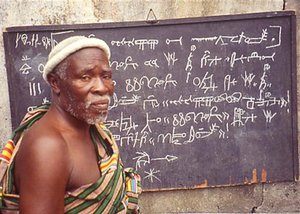
Frédéric Bruly Bouabré
1923 - 2014 , Côte d’Ivoire
Datos clave
- Artistic Movement Or Style: Arte Naïf
- Date Of Birth: 1923
- Date Of Death: 2014
- Full Name: Frédéric Bruly Bouabré
- Nationality: Ivorien
- Notable Artworks:
- El Museo Facial Africano (Serie de 162 dibujos)
- Celebridades (serie de 51 dibujos)
- Place Of Birth: Zéprocaguého, Côte d'Ivoire
Artículos relacionados

Blanco Sublime: Los 10 Cuadros Más Famosos Dominados por la Luz y el Color
Descubre los 10 cuadros blancos más emblemáticos de la historia del arte. Explora Monet, Van Gogh y Klimt, y su magistral uso de la luz y el color. Encuentra reproducciones de alta calidad e inspírate para tu decoración en .

Las 10 Pinturas Más Famosas Dominadas por el Negro | Arte y Decoración
Descubre las 10 pinturas más impactantes dominadas por el negro. Explora obras maestras de Rembrandt, Goya y Rothko, su historia y significado. Encuentra reproducciones de arte exclusivas para transformar tu hogar en .

Monochrome Visions: Exploring the Aesthetic & Historical Significance of Black & White Photography
Explore the rich history & artistic power of black and white photography. From early techniques to iconic masters like Ansel Adams, discover why monochrome continues to captivate art lovers today. Expert insights for collectors.
Las 10 Obras Maestras Dominadas por el Negro Marsella: Arte y Decoración
Descubre las 10 pinturas más famosas dominadas por el negro marsella. Explora la historia, técnica y simbolismo de obras maestras del expresionismo alemán, gótico y arte moderno. Reproducciones de museos en .

The Subtleties of White: Exploring Absence, Light & Symbolism in Art History
Explore the profound symbolism & history of white in art! From ancient purity to modern abstraction, discover how artists have used absence & light. Expert insights from ArtsDot.