

 Ver en contexto
 Enviar
 Compartir
 Detalles

 Descargar
 Similares
 Radiografía
 Presentación de diapositivas
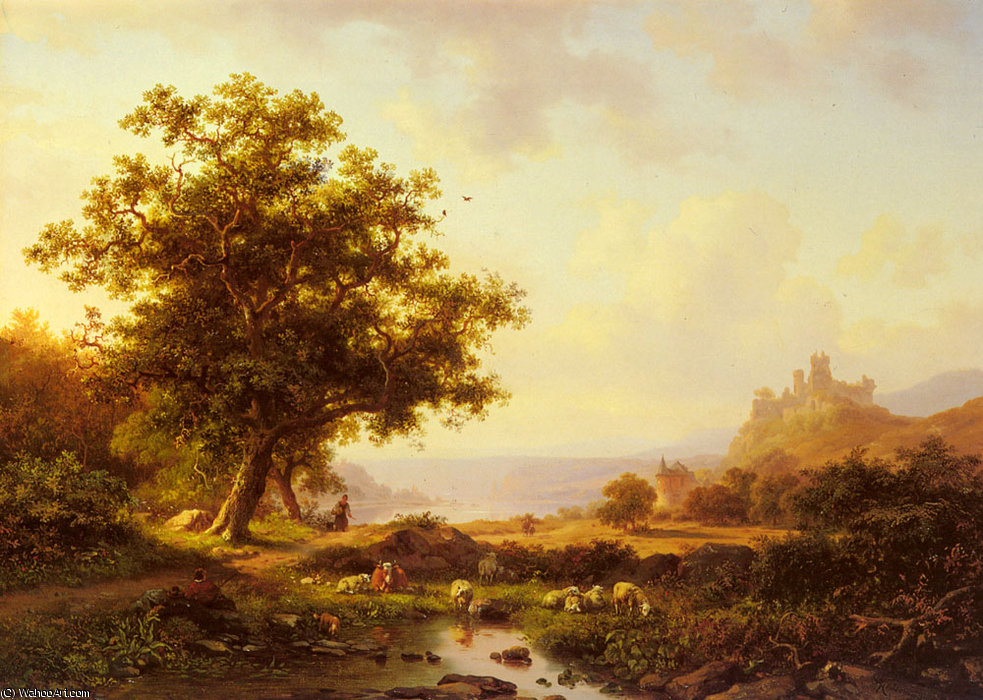
an extensive river landscape with a castle on a hill beyond
 Ver más
Reproducción al óleo hecha a mano
Óleo sobre lienzo pintado a mano en el tamaño y marco de su elección, realizado por encargo por nuestros artistas. ( Comprar impresión Comprar imagen)




































Elija entre nuestros tamaños predefinidos que respetan las proporciones originales de la obra.

Puede ingresar sus propias dimensiones para adaptarse a un marco o espacio específico. Si el tamaño seleccionado no coincide con las proporciones de la imagen original, recortaremos la obra o extenderemos la pintura con elementos adicionales pintados a mano. Se le enviará una maqueta digital para su aprobación antes de comenzar la producción.
Tenga en cuenta que la vista previa en pantalla no refleja el recorte o la extensión reales. Solo la maqueta mostrará con precisión la composición final.
Si bien existen tamaños personalizados, recomendamos seleccionar una dimensión de la lista predefinida para preservar las proporciones originales.
Tras realizar el pedido, el equipo de ArtsDot.com enviará un correo electrónico al cliente para solicitar instrucciones y proporcionarle una vista previa del boceto.
Envío a todo el mundo () en 3-4 semanas en lugar de las 5 semanas estándar. (23 agosto). Sin comprometer la calidad.

Envío exprés gratuito a todo el mundo

Lienzo de lino de alta calidad

Seguro de envío total

Garantía de reembolso de impuestos aduaneros

Garantía de fidelidad cromática exacta

Política de devolución de 60 días (solo por defectos)

Garantía de devolución del 100% del dinero

Descuento por cantidad
 La opción de vidrio solo está disponible en tamaños inferiores a 110 cm.

an extensive river landscape with a castle on a hill beyond
Técnica de reproducción
Dimensiones de la reproducción
-


Precio total final
$ 263
Obras relacionadas
Biografía del artista
The Poet of the Dutch Landscape
Frederik Marianus Kruseman stands as a cornerstone of Dutch Romantic landscape painting, embodying the profound spirit of his era and leaving an indelible mark on the history of European art. Born in 1816 in Haarlem to a family steeped in artistic tradition—his father was a hatter and his lineage connected to the vibrant creative pulse of the Netherlands—Kruseman’s early life fostered a deep appreciation for the nuances of light and observation. His journey began with formal drawing lessons under Jan Reekers, where he mastered the fundamental rules of perspective and the art of sketching directly from nature. This foundational training prepared him for a career that would eventually transcend mere topographical accuracy, moving instead toward a soulful exploration of the natural world.
As his talent blossomed, Kruseman sought out the masters of his time, studying under Nicolaas Johannes Roosenboom and later engaging with the advanced techniques of Jan van Ravenswaay. His artistic formation was further enriched by brief but significant encounters with the works of Barend Cornelis Koekkoek, a titan of the Romantic landscape tradition. These influences coalesced to create a style that was uniquely his own—a blend of meticulous detail and atmospheric grandeur. While his early years were spent navigating the artistic hubs of Haarlem and The Hague, his travels through Kleve and eventually his settlement in Brussels allowed him to absorb the diverse light and textures of Northern Europe, imbuing his canvases with a cosmopolitan yet deeply Dutch sensibility.
Atmospheric Mastery and the Winter Vision
The true essence of Kruseman’s oeuvre lies in his ability to capture the fleeting, ephemeral moments of the natural world. He was a master of the sublime, particularly through his celebrated winter landscapes, which constitute approximately two-thirds of his total body of work. In these compositions, the artist achieved a breathtaking realism; he perfected the rendering of the jet-black, mirror-like surface of frozen rivers and the delicate, intricate marks left by skaters upon the ice. His ability to depict the skeletal beauty of coral-like tree branches against a pale, wintry sky demonstrates a technical precision that serves an even higher emotional purpose: the evocation of solitude and quiet contemplation.
As his career progressed toward its full fruition around 1860, Kruseman’s palette underwent a fascinating evolution. The cool, silvery grey-blue tones that characterized his earlier works gradually gave way to a much warmer, more luminous spectrum. This transition allowed him to capture the magical transition of light during the fading hours of early evening. His most evocative scenes often feature a soft warmth emanating from a distant, small interior or a low sun breaking through mist, creating a sense of profound psychological depth. Through this mastery of light and temperature, Krusebman did not merely paint scenery; he painted the very feeling of a season, inviting the viewer to experience the stillness and the biting chill of a Dutch winter.
Legacy of a Romantic Visionary
Beyond the technical brilliance of his brushwork, Kruseman’s historical significance lies in his role as a bridge between the classical traditions of the Dutch Golden Age revival and the burgeoning emotionalism of 19th-century Romanticism. He moved away from the rigid documentation of landscapes to embrace a more symbolic approach, where a misty vista or a lonely castle on a hill served as metaphors for the human condition. His work resonates with the themes of solitude and the spiritual resonance found in the works of Caspar David Friedrich, yet it remains grounded in the specific, tactile beauty of the Low Countries.
Throughout his life, from his debut at the Exhibition for Living Masters in The Hague to his final years in Sint-Gillis, Kruseman remained a dedicated observer of the earth's quietest transformations. His legacy is preserved in canvases that continue to captivate collectors and historians alike, serving as a testament to a period when art sought to find the infinite within the intimate. Today, we remember him not just as a painter of landscapes, but as a poet of the atmosphere, whose work continues to breathe with the light and shadows of a bygone era.
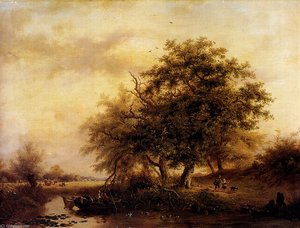
frederick marianus kruseman
1817 - 1882 , Netherlands
Datos clave
- Artistic Movement Or Style: Dutch Romanticism
- Artists Or Movements Influenced By This Artist: ['Romanticism']
- Artists Who Influenced This Artist: ['Johannes Hendrik Willem Hengelmans']
- Date Of Birth: 1817
- Full Name: Frederik Marianus Kruseman
- Nationality: Dutch
- Notable Artworks:
- Monk Meditating near a Ruin by Moonlight
- The Watering Place
- A Blustery Summer Landscape
- Place Of Birth: Netherlands

