

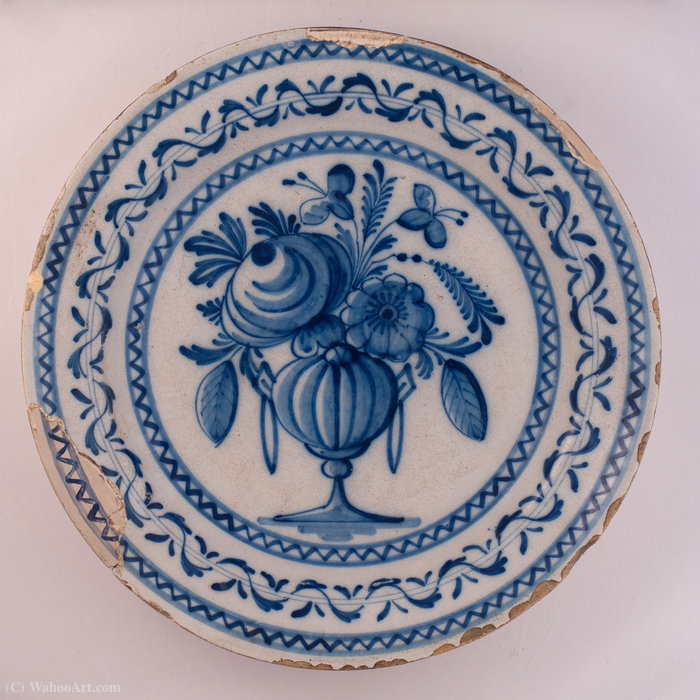
 Ver en contexto
 Enviar
 Compartir
 Detalles

 Descargar
 Similares
 Radiografía
 Presentación de diapositivas
Majolikamuseum bad radkersburg
 Ver más
Adquiera una imagen digital de alta resolución y optimizada, muy superior a la vista previa en línea.
Cada archivo es preparado meticulosamente por nuestros especialistas internos mediante el uso de herramientas avanzadas y un experto retoque manual. Nos aseguramos de que cada imagen posea una claridad excepcional, una precisión cromática impecable y un detalle minucioso.
El archivo final se entrega por correo electrónico en un plazo de 72 horas, optimizado para su uso inmediato en entornos profesionales, editoriales y de impresión. Esta es la misma calidad en la que confían los estudios de diseño, las editoriales y las galerías de primer nivel.
Imagen Digital
Descarga un archivo de alta resolución para exhibición personal, impresión y proyectos creativos. ( Comprar impresión Comprar pintura hecha a mano)
Incluido en cada pedido de imágenes digitales
Entrega digital experta, garantizada.
Al elegir ArtsDot.com, no solo está adquiriendo una imagen; está recibiendo una obra de arte digital mejorada profesionalmente, elaborada con precisión y respaldada por una garantía de satisfacción. Esto es todo lo que incluye su pedido, automáticamente:

Entrega rápida por email
Recibirá su archivo de imagen digital en alta resolución por correo electrónico en un plazo de 72 horas tras realizar su pedido, listo para su uso inmediato.

Archivo digital optimizado por IA
Su obra de arte se optimiza profesionalmente mediante herramientas avanzadas de IA y edición manual, garantizando el máximo detalle, claridad y precisión cromática.

Reenvío gratuito de por vida
¿Has borrado o perdido tu archivo por error? No te preocupes: te lo volveremos a enviar en cualquier momento, sin coste adicional.

Sin gastos de importación, siempre
Disfrute de su obra de arte al instante sin aduanas, aranceles ni gastos de envío; las descargas digitales siempre están libres de impuestos.

Garantía de fidelidad de color
Garantizamos que su imagen digital refleje los colores originales con la mayor fidelidad posible, mediante el uso de herramientas profesionales y gestión del color.

Garantía de satisfacción de 60 días
Si no está satisfecho con su imagen digital, la revisaremos o le reembolsaremos el 100% en un plazo de 60 días, sin preguntas.

100% Garantía de devolución de dinero
¿No está satisfecho? Obtenga un reembolso completo dentro de los 60 días posteriores a la recepción de su archivo digital, sin necesidad de explicaciones.

Descuentos por pedidos grandes
Compra 3 imágenes, ahorra 10% - Compra 5, ahorra 15% - Compra 10+, ahorra 20%. Ideal para proyectos creativos, galerías y agencias.
Obras relacionadas






Biografía del artista
The Alchemist of Delft and Puebla: The Legacy of Frederik van Frytom
In the grand, sweeping tapestry of the Dutch Golden Age, certain names shine with an undeniable brilliance, while others linger like a soft, evocative shadow. Frederik van Frytom (1630–1702) belongs to that mysterious second group—an artist whose biographical footprints are light, yet whose creative impact left an indelible stain upon the history of ceramics. Born in the illustrious city of Delft, Netherlands, around 1630, Frytom emerged from a culture defined by meticulous detail and a burgeoning fascination with the natural world. While the precise details of his early training remain shrouded in the mists of time, his marriage in Delft circa 1652 suggests a man rooted in the stability of Dutch life, even as his artistic spirit prepared for a journey that would eventually bridge two much different worlds.
Frytom’s true historical significance lies not merely in what he painted, but in how he transformed the very medium of his craft. He was a pioneer of Radkersburg majolika, a revolutionary earthenware glaze technique that found its soul in Puebla, Mexico. This was no mere transplanting of European style; it was a profound artistic synthesis. Through a collaboration with the Mexican diplomat José María Martínez Sierra, Frytom moved beyond the traditional boundaries of Dutch pottery to embrace a new, vibrant aesthetic. In Puebla, he helped cultivate a workshop where European sensibilities met the ancient, symbolic echoes of Mesoamerican culture, creating a dialogue between the Old and New Worlds that resonated through the clay itself.
A Symphony of Cobalt and Earth
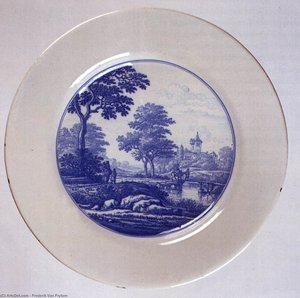
To behold a piece of Frytom’s work is to witness a masterclass in atmospheric perspective and color theory. Moving away from the subdued, monochrome palettes that dominated much of the era's ceramic decoration, Frytom embraced an audacious use of cobalt blue. He applied these rich pigments directly onto a pristine white feldspar base, creating a striking contrast that breathed life into his subjects. His technique was characterized by a delicate precision; he used fine lines to delineate the contours of rolling hills, meandering waterways, and scattered trees, much like the landscape painters of the Baroque period.
The technical brilliance of his work is most evident in the Radkersburg majolika process. By applying a layer of manganese dioxide to the earthenware before firing, Frytom achieved a distinctive, rich, reddish-brown hue often celebrated as “Mexican Red.” This warmth provided a perfect backdrop for his stylized depictions of flora and fauna. His designs were not merely decorative; they were narrative, often drawing inspiration from Aztec symbolism and integrating it with European landscape traditions. The result was a unique ceramic language—one that captured the vibrancy of the Mexican landscape through a lens of Dutch technical mastery.
An Enduring Artistic Synthesis
Though Frytom’s personal life remains largely undocumented, his prolific output—estimated at over 450 pieces—speaks to a lifetime of relentless experimentation and dedication. His ability to harmonize the meticulous, observational style of the Netherlands with the bold, symbolic energy of Mexico marks him as an essential figure in the evolution of global ceramics. He did not simply decorate vessels; he transformed them into windows through which one could view a fusion of continents.
The historical significance of Frederik van Frytom can be summarized through several key contributions:
- Technical Innovation: The development and refinement of the Radkersburg majolika glaze, introducing the iconic "Mexican Red" to the ceramic repertoire.
- Cultural Bridge-Building: Acting as a primary conduit for the exchange of artistic motifs between European landscape traditions and Mesoamerican symbolism.
- Mastery of Perspective: Bringing the sophisticated atmospheric perspective of Dutch Golden Age painting to the medium of earthenware.
- Aesthetic Revolution: Shifting ceramic decoration from muted, monochromatic tones toward a more vibrant, cobalt-driven palette.
Today, the works of Frytom stand as much more than mere artifacts of the 17th century; they are enduring testaments to the power of artistic migration and the beauty that arises when disparate cultures collide in the crucible of creativity.
frederik van frytom
1630 - 1702 , Netherlands
Breves datos
- Artistic Movement Or Style: Radkersburg Majolika
- Artists Or Movements Influenced By This Artist: ['Jan van Goyen']
- Date Of Death: 1702
- Full Name: Frederik van Frytom
- Nationality: Dutch
- Notable Artworks: ['Dish with a landscape']
- Place Of Birth: Delft

