

 Ver en contexto
 Enviar
 Compartir
 Detalles

 Descargar
 Similares
 Radiografía
 Presentación de diapositivas
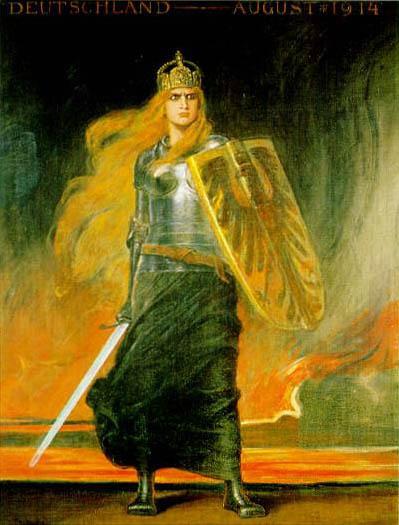
Germania
 1914
1914 192.0 x 149.0 cm
 Ver más
Reproducción al óleo hecha a mano
Óleo sobre lienzo pintado a mano en el tamaño y marco de su elección, realizado por encargo por nuestros artistas. ( Comprar impresión Comprar imagen)




































Elija entre nuestros tamaños predefinidos que respetan las proporciones originales de la obra.

Puede ingresar sus propias dimensiones para adaptarse a un marco o espacio específico. Si el tamaño seleccionado no coincide con las proporciones de la imagen original, recortaremos la obra o extenderemos la pintura con elementos adicionales pintados a mano. Se le enviará una maqueta digital para su aprobación antes de comenzar la producción.
Tenga en cuenta que la vista previa en pantalla no refleja el recorte o la extensión reales. Solo la maqueta mostrará con precisión la composición final.
Si bien existen tamaños personalizados, recomendamos seleccionar una dimensión de la lista predefinida para preservar las proporciones originales.
Tras realizar el pedido, el equipo de ArtsDot.com enviará un correo electrónico al cliente para solicitar instrucciones y proporcionarle una vista previa del boceto.
Envío a todo el mundo () en 3-4 semanas en lugar de las 5 semanas estándar. (28 agosto). Sin comprometer la calidad.

Envío exprés gratuito a todo el mundo

Lienzo de lino de alta calidad

Seguro de envío total

Garantía de reembolso de impuestos aduaneros

Garantía de fidelidad cromática exacta

Política de devolución de 60 días (solo por defectos)

Garantía de devolución del 100% del dinero

Descuento por cantidad
 La opción de vidrio solo está disponible en tamaños inferiores a 110 cm.

Germania
Técnica de reproducción
Dimensiones de la reproducción
-


Precio total final
$ 263
Obras relacionadas

Biografía del artista
Friedrich August von Kaulbach: The Painter Prince of Viennese Elegance
Friedrich August von Kaulbach (1850-1920) stands as one of the most celebrated figures within the “Painter Princes,” a group of German artists who achieved international renown during the Austro-Hungarian Empire’s golden age. His canvases, particularly his portraits of aristocratic families and society luminaries, continue to captivate audiences with their meticulous detail and profound psychological insight—a testament to his unwavering dedication to mastering the techniques of Old Masters like Hans Holbein the Younger. Born in Hannover, Germany, Kaulbach's artistic journey began under the tutelage of his father, Theodor Friedrich Wilhelm Christian Kaulbach, a court painter who instilled in him a deep appreciation for classical aesthetics and compositional rigor. This formative influence would shape Kaulbach’s entire oeuvre.Early Training and Artistic Influences
Kaulbach's formal artistic education commenced at the Kunstgewerbeschule Nürnberg (Nuremberg School of Arts and Crafts), a precursor institution to the Academy of Fine Arts, Nuremberg—a breeding ground for talent and innovation during its time. Recognizing Holbein’s masterful command of chiaroscuro and anatomical accuracy, Kaulbach deliberately sought to emulate his style, striving to achieve similar levels of realism and expressive power. This ambition fueled his relentless pursuit of artistic excellence and cemented his commitment to upholding the highest standards of craftsmanship. He meticulously studied Holbein's compositions and techniques, absorbing the lessons of a master who prioritized both visual fidelity and emotional resonance.A Portraitist’s Vision: Capturing Character and Dignity
Kaulbach’s artistic reputation rests primarily on his prolific output of portraits—a genre he approached with unwavering seriousness and sensitivity. Unlike many contemporaries who prioritized decorative embellishment, Kaulbach focused intently on conveying the inner life of his subjects, capturing their personalities and embodying their dignity. His canvases are characterized by a remarkable ability to portray not merely physical likeness but also psychological nuance—revealing subtle expressions of emotion and conveying an awareness of social context. This meticulous attention to detail distinguishes him from lesser artists and elevates his portraits to enduring monuments of human experience. He believed that true artistry lay in capturing the essence of a person’s character, striving to convey their inner thoughts and feelings with unwavering honesty.Notable Works and Recognition
Among Kaulbach’s most iconic paintings are “Italian Garden” and “Untitled,” both masterpieces that exemplify his stylistic prowess and technical mastery. These works showcase his exceptional skill in rendering light, texture, and color—elements he skillfully manipulated to create atmospheric landscapes and portraits alike. His artistic achievements garnered considerable acclaim during his lifetime, securing him a place among the leading artists of his era and establishing him as an enduring figure within German art history. He was particularly celebrated for his depiction of familial bonds and social rituals, reflecting the values of the Austro-Hungarian aristocracy.Legacy and Historical Significance
Friedrich August von Kaulbach’s influence extends far beyond his own time. He served as Director of the Kunstakademie Düsseldorf from 1908 until his death in 1920, shaping the artistic sensibilities of a generation of aspiring painters. His unwavering dedication to classical principles and his profound understanding of human psychology continue to inspire artists today—a testament to the enduring power of his vision and the timeless beauty of his art. He remains an exemplar of German portraiture and a symbol of Viennese aristocratic culture during the Belle Époque, securing his place as one of the most important figures in late nineteenth-century German painting.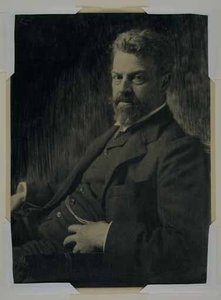
Friedrich August von Kaulbach
1850 - 1920 , Alemania
Datos clave
- Artistic Movement Or Style: Painter Princes
- Artists Or Movements Influenced By This Artist: ['Old Masters']
- Artists Who Influenced This Artist: ['Hans Holbein']
- Date Of Birth: 2 junio 1850
- Date Of Death: 26 julio 1920
- Full Name: Friedrich August Ritter von Kaulbach
- Nationality: Alemania
- Notable Artworks:
- Italian Garden
- Untitled (AQR7M2)
- Place Of Birth: Hannover, Alemania

