

 Ver en contexto
 Enviar
 Compartir
 Detalles

 Descargar
 Similares
 Radiografía
 Presentación de diapositivas
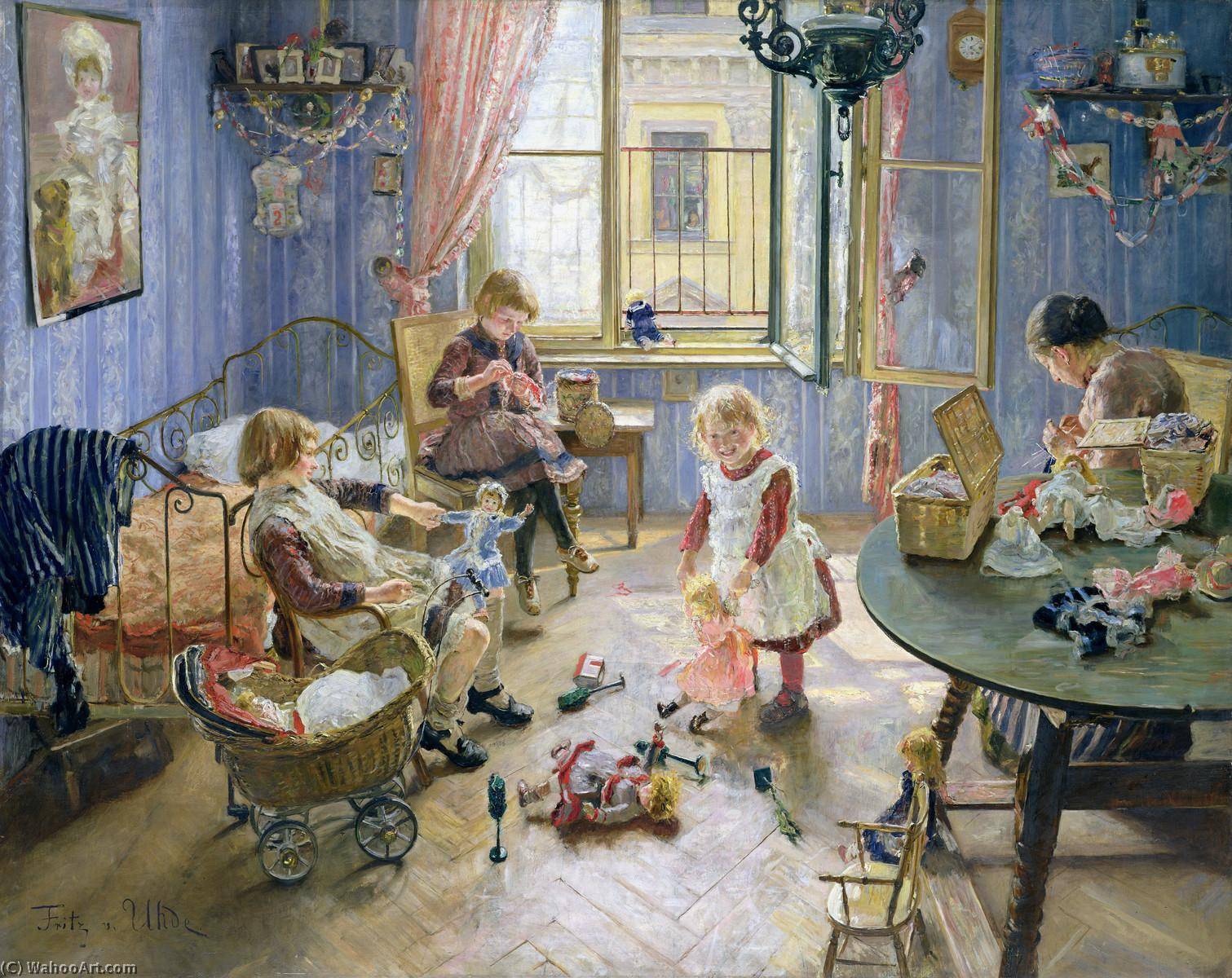
The children's room The Nursery
 Oil On Canvas
- WallArt
- Realism
 1889
1889- 19th Century
 111.0 x 139.0 cm
 Hamburger Kunsthalle
 Ver más
Adquiera una imagen digital de alta resolución y optimizada, muy superior a la vista previa en línea.
Cada archivo es preparado meticulosamente por nuestros especialistas internos mediante el uso de herramientas avanzadas y un experto retoque manual. Nos aseguramos de que cada imagen posea una claridad excepcional, una precisión cromática impecable y un detalle minucioso.
El archivo final se entrega por correo electrónico en un plazo de 72 horas, optimizado para su uso inmediato en entornos profesionales, editoriales y de impresión. Esta es la misma calidad en la que confían los estudios de diseño, las editoriales y las galerías de primer nivel.
Imagen Digital
Descarga un archivo de alta resolución para exhibición personal, impresión y proyectos creativos. ( Comprar impresión Comprar pintura hecha a mano)
Incluido en cada pedido de imágenes digitales
Entrega digital experta, garantizada.
Al elegir ArtsDot.com, no solo está adquiriendo una imagen; está recibiendo una obra de arte digital mejorada profesionalmente, elaborada con precisión y respaldada por una garantía de satisfacción. Esto es todo lo que incluye su pedido, automáticamente:

Entrega rápida por email
Recibirá su archivo de imagen digital en alta resolución por correo electrónico en un plazo de 72 horas tras realizar su pedido, listo para su uso inmediato.

Archivo digital optimizado por IA
Su obra de arte se optimiza profesionalmente mediante herramientas avanzadas de IA y edición manual, garantizando el máximo detalle, claridad y precisión cromática.

Reenvío gratuito de por vida
¿Has borrado o perdido tu archivo por error? No te preocupes: te lo volveremos a enviar en cualquier momento, sin coste adicional.

Sin gastos de importación, siempre
Disfrute de su obra de arte al instante sin aduanas, aranceles ni gastos de envío; las descargas digitales siempre están libres de impuestos.

Garantía de fidelidad de color
Garantizamos que su imagen digital refleje los colores originales con la mayor fidelidad posible, mediante el uso de herramientas profesionales y gestión del color.

Garantía de satisfacción de 60 días
Si no está satisfecho con su imagen digital, la revisaremos o le reembolsaremos el 100% en un plazo de 60 días, sin preguntas.

100% Garantía de devolución de dinero
¿No está satisfecho? Obtenga un reembolso completo dentro de los 60 días posteriores a la recepción de su archivo digital, sin necesidad de explicaciones.

Descuentos por pedidos grandes
Compra 3 imágenes, ahorra 10% - Compra 5, ahorra 15% - Compra 10+, ahorra 20%. Ideal para proyectos creativos, galerías y agencias.
Descripción del coleccionable
A Tapestry of Innocence: Exploring Fritz von Uhde's "The Children's Room"
To gaze upon Fritz von Uhde’s The Children's Room is to step through a portal into a sun-drenched afternoon, suspended in the golden amber glow of childhood. This painting is far more than a mere depiction of play; it is a carefully orchestrated symphony of domestic life, capturing that fleeting, perfect moment when innocence reigns supreme. The scene unfolds within a richly appointed nursery, where natural light streams through an unseen window, illuminating dust motes dancing above the polished floorboards. One can almost hear the gentle murmur of voices and the soft clatter of toys.
Mastery in Genre Painting: Style and Technique
Uhde’s style, which gracefully straddles the boundary between Realism and Impressionism, is perfectly suited to this intimate subject matter. He possessed a remarkable ability to imbue everyday scenes with profound emotional resonance. Notice the meticulous detail in the composition—from the curve of the crib railing to the placement of the vase upon a nearby surface. His technique allows the viewer to appreciate both the solid structure of the room and the ephemeral nature of the activity within it. The handling of light is particularly masterful; it doesn't just illuminate, it breathes life into the canvas, giving depth and warmth to every corner.
The Symbolism of Childhood Play
The figures themselves are central to the painting’s narrative weight. Scattered across the room—some seated at a small dining table, others standing in animated play—the children embody pure, unadulterated joy. The presence of dolls and the playful interaction between the youngsters suggest an imaginative world unfolding just beyond the frame. Furthermore, the inclusion of the two gentle dogs anchors the scene in domestic reality, suggesting companionship that is both loyal and integral to the family unit. These elements combine to create a powerful visual poem about growth, connection, and the passage of time.
Historical Echoes and Enduring Appeal
Painted in 1889, this work emerges from a period when genre painting flourished, allowing artists like Uhde to elevate the everyday into high art. While rooted in late 19th-century German domestic life, its themes—the enduring bond of family, the magic of play—are timeless. For the collector or designer, reproducing this piece offers an immediate infusion of warmth and nostalgic elegance into any space. It speaks to a yearning for simplicity amidst modern complexity, making it a treasured focal point for drawing rooms, nurseries, or studies.
Obras relacionadas





Biografía del artista
Early Life and Artistic Influences
Fritz von Uhde (born Friedrich Hermann Carl Uhde; 22 May 1848 – 25 February 1911) was a German painter of genre and religious subjects. His style lay between Realism and Impressionism, marking him as one of the first artists to champion plein-air painting in Germany—a bold departure from the studio tradition dominant at the time. Born in Wolkenburg, Saxony, Uhde’s familial background instilled within him a deep appreciation for artistic pursuits. His father, a part-time painter himself, and his maternal grandfather, director of the Royal Museums in Dresden, nurtured an environment rich in visual culture. From a young age, Uhde demonstrated a fervent fascination with art at Gymnasium, where he excelled academically and found solace in creative expression. Notably, his family’s Lutheran faith profoundly shaped his worldview and artistic sensibilities.Academic Training and Military Service
Driven by this passion, Uhde enrolled at the Dresden Academy of Fine Arts in 1866, encountering a prevailing artistic spirit markedly different from his own inclinations. Dissatisfied with the academy’s conservative approach, he swiftly abandoned formal studies to join the army, serving as horsemanship instructor to the regiment of the assembled guard and achieving the rank of Lieutenant in 1868. This military experience broadened his perspective and honed his observational skills—skills that would prove invaluable later in his artistic endeavors. The encounter with painter Makart in Vienna in 1876 proved pivotal, sparking a desire for independent artistic exploration and ultimately leading to his departure from the army in 1877.The Pursuit of Artistic Independence and Parisian Influences
Determined to forge his own path, Uhde relocated to Munich in 1877, immersing himself in the vibrant artistic milieu of the Bavarian capital and enrolling at the Academy there. Seeking inspiration from Dutch Old Masters—particularly Rembrandt—he diligently studied their techniques and compositional strategies. He also found mentorship under Lilla Cabot Perry, whose influence extended beyond mere stylistic imitation; Perry encouraged Uhde to embrace a more expressive use of color, reflecting the burgeoning Impressionist movement. Despite facing rejection from prestigious studios like Piloty’s or Lindenschmit’s, Uhde persevered in his quest for artistic recognition, traveling to Paris in 1879 where he continued his studies under Mihály Munkácsy's guidance.The Impressionist Breakthrough and Munich Secession
A transformative journey to the Netherlands in 1882 decisively altered Uhde’s artistic trajectory, prompting him to abandon the dark chiaroscuro favored by Munich artists in favor of a colorism deeply rooted in Impressionist principles. Encouraged by fellow artist Adolf Hölzel, Uhde experimented with plein-air painting—capturing landscapes and scenes directly from nature—a technique championed by luminaries like Claude Monet and Pierre Auguste Renoir. His iconic painting “The Singer” (1880), exhibited at the Paris Salon, garnered honorable mention and signaled a breakthrough moment in his artistic career. Recognizing the need for artistic renewal beyond academic confines, Uhde co-founded the Munich Secession in 1890 alongside Ludwig Dill and Lovis Corinth—a collective dedicated to challenging established conventions and advocating for a more liberated aesthetic vision.Later Years and Legacy
Throughout his later years, Uhde continued to produce masterful paintings characterized by profound psychological depth and symbolic resonance. His work achieved considerable acclaim during his lifetime, earning him honorary membership in the academies of Munich, Dresden, and Berlin. He became the first President of the Secession, solidifying his role as a leader within the German avant-garde. Considered one of the most important artists of the 20th century, Fritz von Uhde’s enduring influence can be seen in the works of subsequent generations of painters—artists who embraced his pioneering spirit and championed the expressive power of color and observation.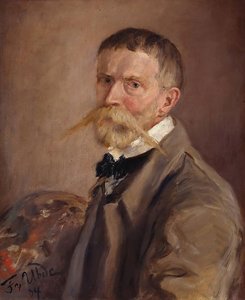
Fritz von Uhde
1848 - 1911 , Alemania
Breves datos
- Artistic Movement Or Style: Impresionismo
- Artists Or Movements Influenced By This Artist: ['Vincent van Gogh']
- Artists Who Influenced This Artist:
- Rembrandt
- Makart
- Date Of Birth: 22 mayo 1848
- Date Of Death: 25 febrero 1911
- Full Name: Fritz Hermann Carl Uhde
- Nationality: Alemania
- Notable Artworks:
- El cantante
- Niños pescadores
- Place Of Birth: Wolkenburg, Saxony

