

 Ver en contexto
 Enviar
 Compartir
 Detalles

 Descargar
 Similares
 Radiografía
 Presentación de diapositivas
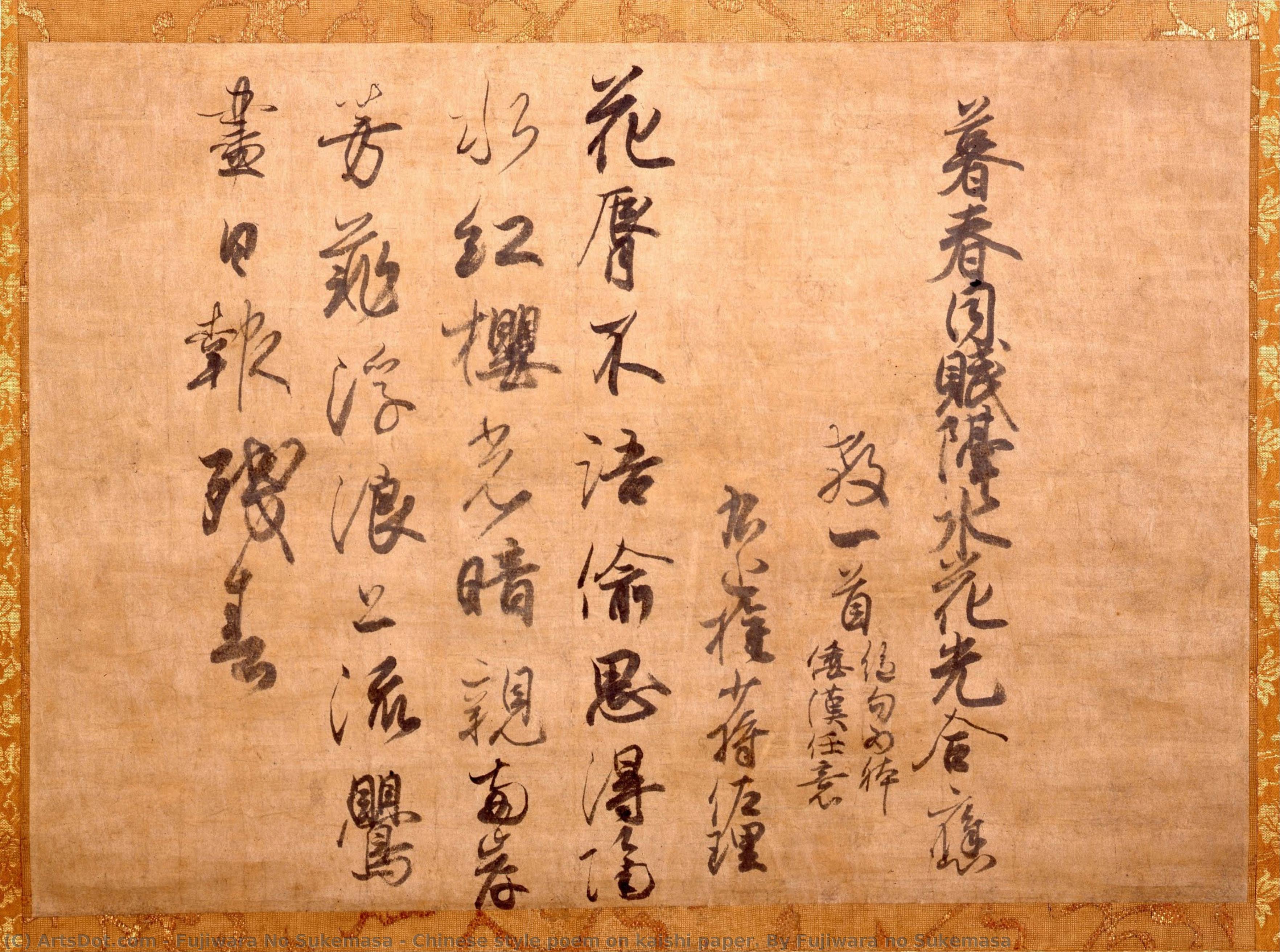
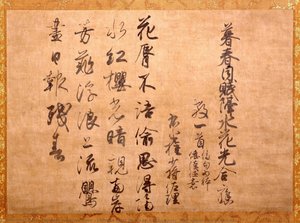
Chinese style poem on kaishi paper. By Fujiwara no Sukemasa

 Ver más
Giclée / Impresión de arte
Impresiones giclée o en lienzo de calidad de museo con producción rápida y opciones de acabado flexibles. ( Comprar pintura hecha a mano Comprar imagen)




































Elija entre nuestros tamaños predefinidos que respetan las proporciones originales de la obra.

Puede introducir sus propias dimensiones para adaptarse a un marco o espacio específico. Si el tamaño seleccionado no coincide con las proporciones de la imagen original, recortaremos la obra de arte o extenderemos la imagen con un borde con efecto espejo o de color sólido. Se enviará una maqueta digital para su aprobación antes de que comience la producción.
Tenga en cuenta que la vista previa en pantalla no refleja el recorte o la extensión real. Solo la maqueta mostrará con precisión la composición final.
Aunque existen tamaños personalizados, recomendamos seleccionar una dimensión de la lista predefinida para preservar las proporciones originales.
Envío a todo el mundo () en 2 semanas en lugar de las 4/5 semanas estándar. (5 septiembre)

Envío exprés gratuito a todo el mundo

Lienzo de lino de alta calidad

Seguro de envío total

Garantía de reembolso de impuestos aduaneros

Garantía de fidelidad cromática exacta

Política de devolución de 60 días (solo por defectos)

Garantía de devolución del 100% del dinero

Descuento por cantidad
 La opción de vidrio solo está disponible en tamaños inferiores a 110 cm.

Chinese style poem on kaishi paper. By Fujiwara no Sukemasa
Giclée / Impresión de arte
Dimensiones de la reproducción
-


Precio total final
$ 62
Obras relacionadas



Biografía del artista
The Poet of Elegance: The Life and Legacy of Fujiwara no Sukemasa
In the golden twilight of the Heian period, an era defined by unparalleled aesthetic refinement and the delicate whispers of the imperial court, one name emerged as a beacon of calligraphic mastery: Fujiwara no Sukemasa. Known also by the evocative name Sari, he was far more than a mere statesman; he was a virtuoso of the brush, a man whose ink flowed with the grace of the natural world and the structured elegance of Japanese tradition. As one of the legendary Sanseki, or "Three Brush Traces," alongside Ono no Michikaze and Fujiwara Yukinari, Sukemasa helped forge a distinct national identity in art, moving away from heavy Chinese influences toward a uniquely Japanese fluidity known as wayōshodō.
Born in 944 into the illustrious Fujiwara clan, Sukemasa’s very existence was steeped in the politics and prestige of the imperial court. His lineage provided him with an education that blended military discipline—inherited from his father, the major general Fujiwara no Atsutoshi—with the profound scholarly pursuits required of a high-ranking noble. This duality of character, a blend of strength and sensitivity, would later manifest in his calligraphy. Following the death of his biological father, he was adopted by the powerful Fujiwara no Saneyori, a move that catapulted him into the inner sanctums of power. By his early twenties, Sukemasa had already ascended to the rank of chamberlain, placing him at the heart of imperial life where every brushstroke and poetic verse carried immense social weight.
A Master of Flow and Form
The true genius of Sukemasa lay in his ability to command the kana script, a phonetic Japanese writing system that demanded a delicate touch and an intuitive sense of rhythm. Unlike the more rigid, structural styles of earlier eras, Sukemasa’s work embraced a lyrical movement. His calligraphy was characterized by a seamless transition between characters, where the energy of one stroke seemed to bleed poetically into the next, creating a visual melody on the paper. This technique allowed him to capture not just words, but the very essence of the emotions expressed within them—a quality that earned him his reputation as a "poet of elegance."
His artistic development was deeply intertwined with the shifting political tides of the reigns of Emperors Kazan and Ichijō. While his career in the bureaucracy saw periods of both rapid ascent and frustrating stagnation, his artistic output remained a constant source of brilliance. He navigated a court where influence was often dictated by familial ties, and though he occasionally found himself overshadowed by ambitious relatives of the throne, his mastery of the brush remained unassailable. To witness a piece of Sukemasa’s calligraphy is to experience the jōdai-yō style—an ancient, refined way of writing that prioritized harmony, balance, and a profound connection to the ephemeral beauty of the moment.
Historical Significance and Enduring Spirit
The historical importance of Fujiwara no Sukemasa cannot be overstated. He was a pivotal figure in the transition of Japanese calligraphy from an imitation of continental styles to a self-assured, indigenous art form. Through his work, the brush became a tool for expressing the uniquely Japanese sensibilities of mono no aware—the pathos of things and the bittersweet realization of impermanence. His legacy is preserved not only in the physical remnants of his ink on paper but in the very DNA of Japanese aesthetic tradition.
Even as the political structures of the Heian period eventually gave way to new eras, the "Three Brush Traces" remained the standard against which all subsequent calligraphers were measured. Sukemasa’s life, marked by both the heights of imperial prestige and the quiet struggles of a dedicated artist, serves as a testament to the power of creative devotion. He remains an eternal figure in the annals of art history, reminding us that true elegance is found in the perfect balance between disciplined technique and the free, uninhibited spirit of the soul.
fujiwara no sukemasa
Japan
Datos clave
- Artistic Movement Or Style: Kana Script
- Artists Or Movements Influenced By This Artist: ['Shodoka Artist']
- Artists Who Influenced This Artist:
- Ono no Michikaze
- Fujiwara Yukinari
- Date Of Death: August 19, 998
- Full Name: Fujiwara no Sukemasa
- Nationality: Japanese
- Notable Artworks: ['Rirakujō']
- Place Of Birth: Japan

