

 Ver en contexto
 Enviar
 Compartir
 Detalles

 Descargar
 Similares
 Radiografía
 Presentación de diapositivas
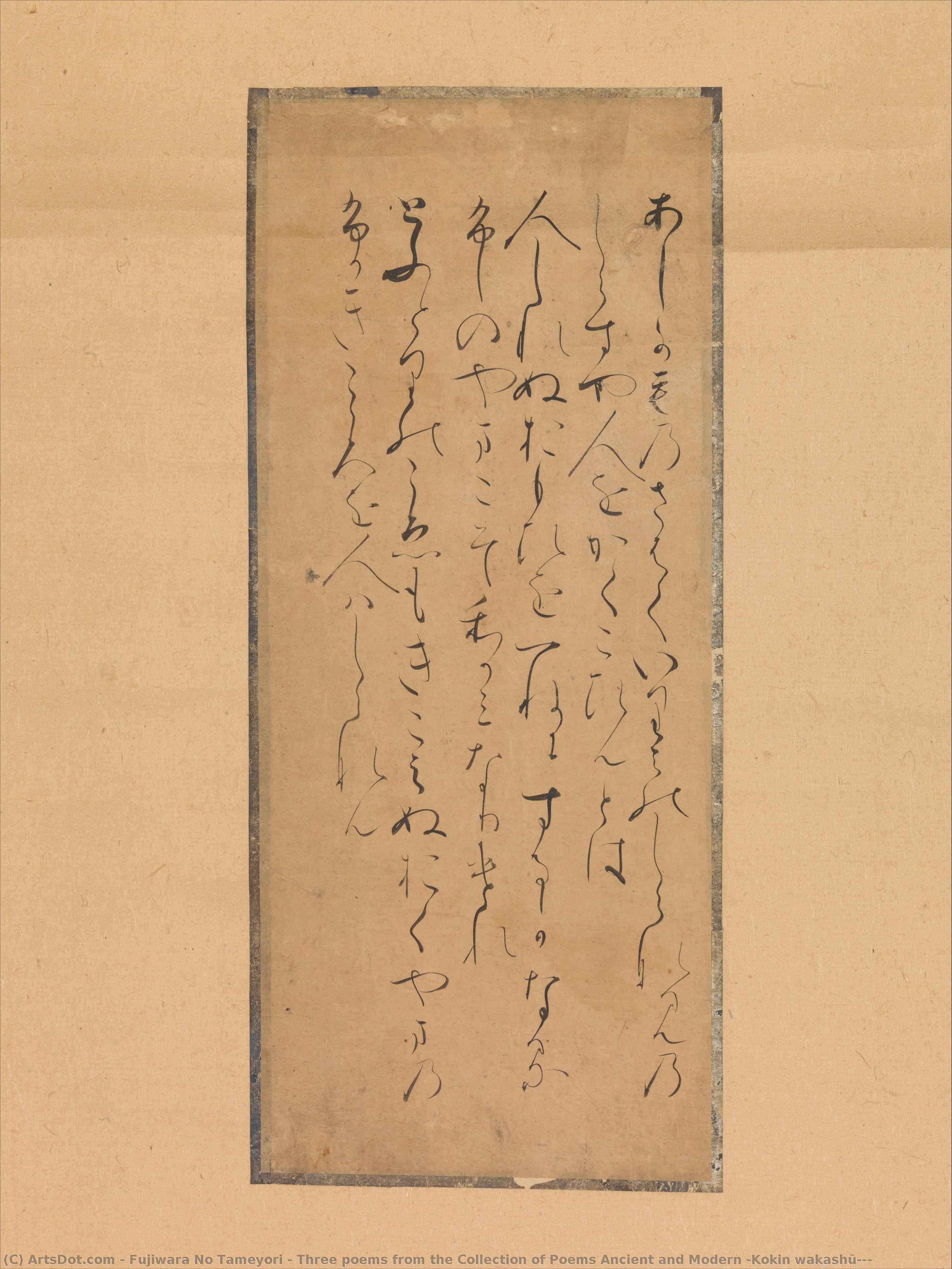
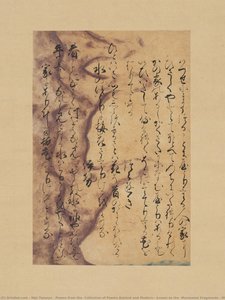
Three poems from the Collection of Poems Ancient and Modern (Kokin wakashū)
 1201
1201 23.0 x 14.0 cm
 Ver más
Giclée / Impresión de arte
Impresiones giclée o en lienzo de calidad de museo con producción rápida y opciones de acabado flexibles. ( Comprar pintura hecha a mano Comprar imagen)




































Elija entre nuestros tamaños predefinidos que respetan las proporciones originales de la obra.

Puede introducir sus propias dimensiones para adaptarse a un marco o espacio específico. Si el tamaño seleccionado no coincide con las proporciones de la imagen original, recortaremos la obra de arte o extenderemos la imagen con un borde con efecto espejo o de color sólido. Se enviará una maqueta digital para su aprobación antes de que comience la producción.
Tenga en cuenta que la vista previa en pantalla no refleja el recorte o la extensión real. Solo la maqueta mostrará con precisión la composición final.
Aunque existen tamaños personalizados, recomendamos seleccionar una dimensión de la lista predefinida para preservar las proporciones originales.
Envío a todo el mundo () en 2 semanas en lugar de las 4/5 semanas estándar. (3 septiembre)

Envío exprés gratuito a todo el mundo

Lienzo de lino de alta calidad

Seguro de envío total

Garantía de reembolso de impuestos aduaneros

Garantía de fidelidad cromática exacta

Política de devolución de 60 días (solo por defectos)

Garantía de devolución del 100% del dinero

Descuento por cantidad
 La opción de vidrio solo está disponible en tamaños inferiores a 110 cm.

Three poems from the Collection of Poems Ancient and Modern (Kokin wakashū)
Giclée / Impresión de arte
Dimensiones de la reproducción
-


Precio total final
$ 62
Obras relacionadas
Biografía del artista
Fujiwara No Tameyori
Fujiwara No Tameyori (藤原 為家; 1182 – 1258) was a Japanese poet and nobleman who flourished during the Heian period and early Kamakura period. He is recognized as one of the Thirty-Six Immortals of Poetry (新三十六歌仙, *Shinsanjūrokkasen*)—a group of poets celebrated for their mastery of *waka* poetry, a form of Japanese verse characterized by its strict syllable count and melodic structure. His legacy continues to resonate in Japanese literature and aesthetics, cementing his place as a pivotal figure in the cultural landscape of medieval Japan.Early Life and Background
Born in Kyoto around 1182, Fujiwara No Tameyori descended from the Nagaie lineage of the Northern Branch of the Fujiwara clan—a powerful aristocratic family that dominated Japanese politics for centuries. He was the second son of Poet Teika (藤原 定家), a celebrated scholar and diplomat who profoundly shaped the intellectual currents of his time, and married Abutsu-ni. This union established him within a prominent social stratum, providing access to education and fostering connections with influential figures—a crucial factor in shaping his artistic development.Contribution to Japanese Poetry
Tameyori’s poetic output stands as a testament to the refined sensibilities of the Heian era. He was at the epicenter of a vibrant poetical circle following the Jōkyū War (浄土戦争) of 1221, which dramatically reshaped the political landscape and propelled him into positions of considerable influence. His sons—Nijō Tameuji (二条為矩), Kyōgoku Tamenori (京極 為憲), and Reizei Tamesuke (頼時 テメスケ)—established rival poetical families—the Nijō, Kyōgoku, and Reizei—further amplifying his impact on Japanese literary tradition. These families continued to produce influential poets for generations afterward, demonstrating the enduring legacy of Tameyori’s artistic vision.Notable Works
Tameyori's most celebrated achievement was undoubtedly his participation in compiling *Kokin Wakashū* (古今和歌集), a monumental anthology of imperial poems—considered one of Japan’s finest literary monuments. This ambitious project aimed to encapsulate the spirit of the Heian court and solidify its poetic prestige. Beyond this grand undertaking, Tameyori produced numerous individual poems that exemplify the elegance and subtlety characteristic of his era. One particular poem attributed to him showcases a masterful command of *waka* form and conveys profound emotional depth—a piece that continues to inspire admiration for its artistic merit. You can find more information about his works on ArtsDot.Legacy and Influence
Fujiwara No Tameyori’s influence extended far beyond his own poetic endeavors. His sons played a pivotal role in shaping the trajectory of Japanese poetry, establishing families that would dominate literary circles for centuries. Moreover, his artistic sensibilities—characterized by meticulous observation and refined emotional expression—influenced subsequent generations of poets and artists, contributing to the enduring aesthetic values of Japan. His contribution to the cultural heritage of Japan remains undeniable, securing his place as a cornerstone of Heian-era art and literature.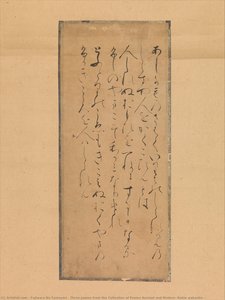
Fujiwara No Tameyori
1128 - 1201 , Япония
Datos clave
- Artistic Movement Or Style: Waka poesía
- Artists Who Influenced This Artist: ['Fujiwara no Teika']
- Date Of Birth: 1182
- Date Of Death: 1258
- Full Name: Fujiwara no Tomoie
- Nationality: Japonés
- Notable Artworks: ['Antología de Poesía']
- Place Of Birth: Kyoto, Japón

