

 Ver en contexto
 Enviar
 Compartir
 Detalles

 Descargar
 Similares
 Radiografía
 Presentación de diapositivas
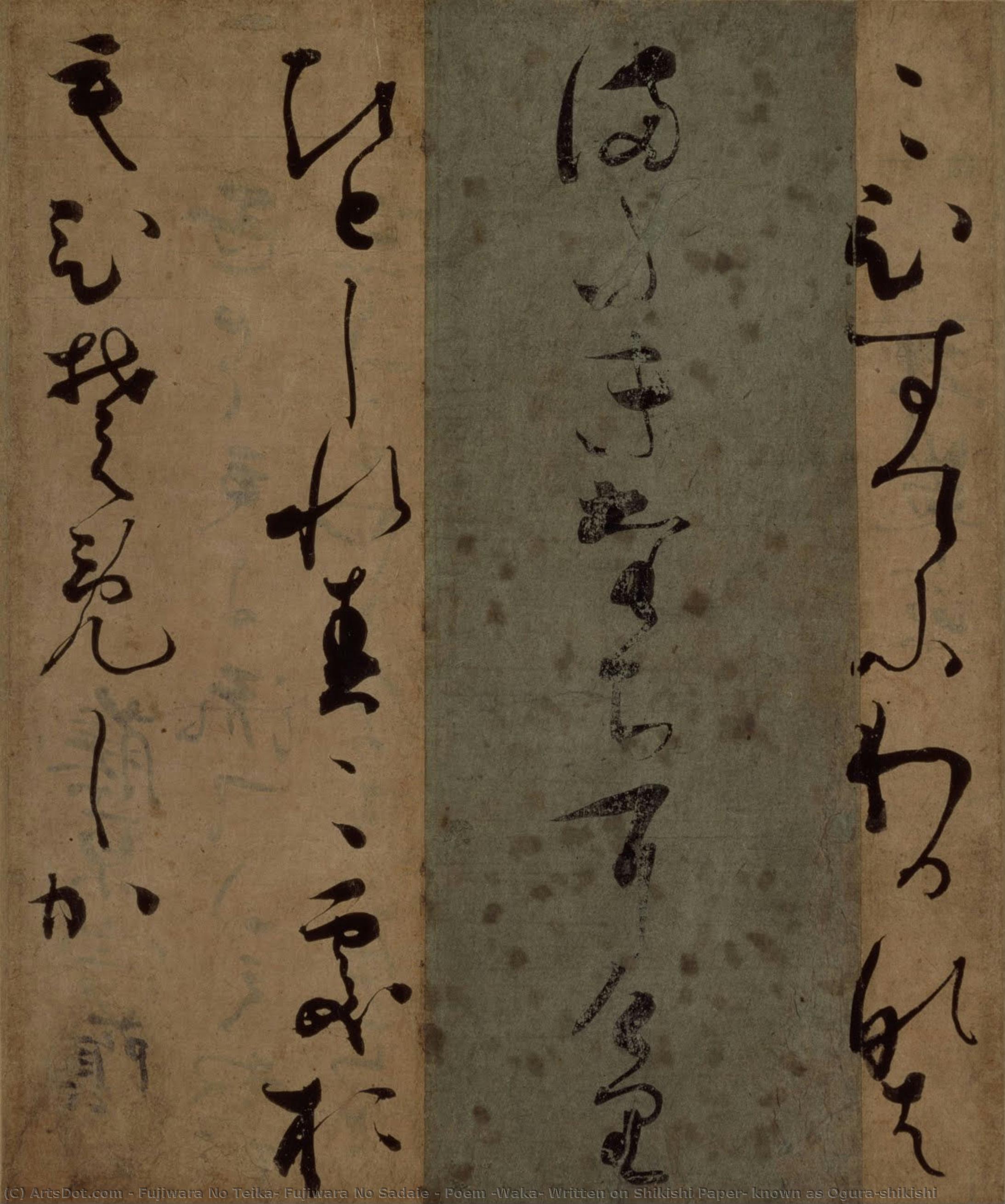
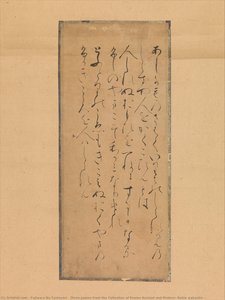
Poem (Waka) Written on Shikishi Paper, known as Ogura-shikishi


 Ver más
Reproducción al óleo hecha a mano
Óleo sobre lienzo pintado a mano en el tamaño y marco de su elección, realizado por encargo por nuestros artistas. ( Comprar impresión Comprar imagen)




































Elija entre nuestros tamaños predefinidos que respetan las proporciones originales de la obra.

Puede ingresar sus propias dimensiones para adaptarse a un marco o espacio específico. Si el tamaño seleccionado no coincide con las proporciones de la imagen original, recortaremos la obra o extenderemos la pintura con elementos adicionales pintados a mano. Se le enviará una maqueta digital para su aprobación antes de comenzar la producción.
Tenga en cuenta que la vista previa en pantalla no refleja el recorte o la extensión reales. Solo la maqueta mostrará con precisión la composición final.
Si bien existen tamaños personalizados, recomendamos seleccionar una dimensión de la lista predefinida para preservar las proporciones originales.
Tras realizar el pedido, el equipo de ArtsDot.com enviará un correo electrónico al cliente para solicitar instrucciones y proporcionarle una vista previa del boceto.
Envío a todo el mundo () en 3-4 semanas en lugar de las 5 semanas estándar. (5 septiembre). Sin comprometer la calidad.

Envío exprés gratuito a todo el mundo

Lienzo de lino de alta calidad

Seguro de envío total

Garantía de reembolso de impuestos aduaneros

Garantía de fidelidad cromática exacta

Política de devolución de 60 días (solo por defectos)

Garantía de devolución del 100% del dinero

Descuento por cantidad
 La opción de vidrio solo está disponible en tamaños inferiores a 110 cm.

Poem (Waka) Written on Shikishi Paper, known as Ogura-shikishi
Técnica de reproducción
Dimensiones de la reproducción
-


Precio total final
$ 263
Obras relacionadas

Biografía del artista
Fujiwara Sadaie (Teika)
Fujiwara Sadaie, more commonly known as Teika (藤原 定家), stands as one of Japan’s most revered poets and literary theorists—a figure whose influence reverberates through centuries of Japanese art and culture. Born in Kyoto in 1162 into a noble clan deeply invested in artistic pursuits, Teika’s life was marked by both extraordinary brilliance and profound personal tragedy, shaping his poetic vision and cementing his place as an icon of Heian elegance. His father, Fujiwara Shunzei (藤原俊成), himself a celebrated poet and judge of verse competitions, instilled in Teika a passion for calligraphy and a dedication to upholding the highest standards of artistic excellence—a legacy that would extend far beyond his own lifetime.- Early Life & Family: Teika’s lineage traced back to Fujiwara no Michinaga (藤原 実長), who had served as regent during Emperor Go-Shirakawa's reign, establishing a tradition of poetic scholarship and patronage within the clan. Shunzei’s influence was paramount in shaping Teika’s formative years, fostering an environment where artistic contemplation was considered not merely desirable but essential to noble status.
- The Patronage of Go-Toba: Teika's career gained significant momentum when he attracted the attention of Emperor Go-Toba (1180–1239), who recognized Teika’s talent and commissioned him to oversee the compilation of the eighth Imperial anthology, *Shin Kokinshū* (*c.* 1205). This collaboration marked a pivotal moment in Teika's life—a testament to Go-Toba’s commitment to fostering artistic innovation and elevating Japanese poetry to new heights.
Poetic Style & Theoretical Contributions
Teika’s poetic style is characterized by its distinctive blend of *yōen* (“ethereal beauty”) and *ushin* (“conviction of feeling”—心), representing a radical departure from prevailing aesthetic conventions. He championed the idea that poetry should strive for an unattainable ideal—a sublime harmony between form and content—while simultaneously conveying genuine emotion. This dual emphasis profoundly impacted subsequent generations of poets, establishing Teika as the foremost proponent of *yōen* and shaping the trajectory of Japanese poetic thought. His meticulous analysis of verse composition—documented in his influential treatise *Ogura Shikishi* (奥無盡詩事)—became a cornerstone of Japanese literary criticism for centuries to come.- The Ogura Shikishi: Teika’s groundbreaking work on poetic theory, *Ogura Shikishi*, dissected the intricacies of waka poetry with unparalleled precision and insight. He argued that poets should strive for “old diction, new treatment,” preserving the stylistic conventions of classical verse while simultaneously injecting fresh perspectives and emotional depth into their compositions.
- Influence on Later Poets: Teika’s ideas resonated deeply within Japanese poetic circles, inspiring countless writers to emulate his style and explore similar thematic concerns. His influence extended beyond mere imitation—he fundamentally reshaped how poets understood the role of art in conveying emotion and achieving spiritual transcendence.
Notable Works & Legacy
Teika’s poetic output encompassed a vast array of compositions, reflecting his multifaceted intellectual curiosity and artistic versatility. Among his most celebrated achievements are:- The Hyakushi (百詩): Teika's compilation of one hundred poems—a monumental undertaking that solidified his reputation as a master anthologist and demonstrated his unwavering devotion to preserving the heritage of Japanese poetry.
- The Shin Kokinshū (新古今和歌集): As Go-Toba’s chief compiler, Teika oversaw the creation of this groundbreaking anthology, which remains one of Japan's most influential literary works—a testament to his leadership and artistic vision.
- Tales of Matsura: Teika penned a novella *Tales of Matsura*, demonstrating his mastery of prose as well as poetry.
Conclusion
Fujiwara Sadaie—Teika—was undeniably a titan among Japanese poets. He transcended mere stylistic innovation; he fundamentally redefined what it meant to engage with art and emotion. His meticulous scholarship, coupled with his unwavering commitment to upholding the highest standards of poetic excellence, established him as an unparalleled figure in Japanese cultural history—a testament to the transformative power of artistic contemplation and intellectual rigor.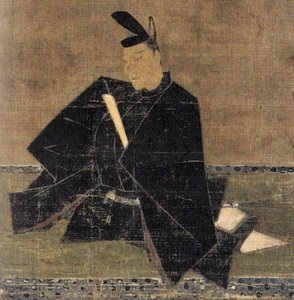
Fujiwara Teika
1162 - 1241 , Japón
Datos clave
- Artistic Movement Or Style: Waka poesía
- Artists Who Influenced This Artist: ['Fujiwara Shunzei']
- Date Of Birth: 1162
- Full Name: Fujiwara Sadaie / Teika
- Nationality: Japonés
- Notable Artworks:
- Hyakushi
- Ogura-shikishi
- Place Of Birth: Kyoto, Japón
Artículos relacionados

Katsushika Hokusai: Las 25 Obras Maestras del Ukiyo-e que Transformaron el Arte Japonés | ArtsDot
Descubre las 25 obras maestras de Katsushika Hokusai, el genio del ukiyo-e. Explora 'La Gran Ola', paisajes japoneses y su impacto en el arte moderno. Reproducciones de alta calidad para tu hogar en ArtsDot.com.

Serenity on Canvas: A Guide to the Timeless Beauty of Japanese Landscape Painting
Discover the serene beauty of Japanese landscape painting. From Hokusai's iconic woodblock prints to meditative sumi-e ink washes, explore a visual journey through the 'floating world' and learn how to bring this timeless Zen aesthetic into your modern home decor.
Ephemeral Expressions: Exploring the Nuances of Ink on Paper Through History & Contemporary Art
Explore the captivating world of ink wash painting – from its ancient origins to contemporary masters. Discover techniques, symbolism & conservation insights with ArtsDot.com.

Floating World: The Captivating Art and Legacy of Japanese Ukiyo-e
Explore the profound beauty of Japanese Ukiyo-e. Discover the history, masters like Hokusai, and the enduring legacy of the 'Floating World' through an expert art-historical lens.
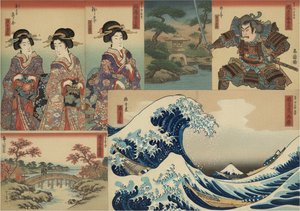
Ukiyo-e: Un Viaje al Corazón del Mundo Flotante Japonés y su Legado Artístico
Descubre el fascinante mundo del Ukiyo-e, el arte japonés del Período Edo. Explora las técnicas de grabado, los maestros Hokusai y Hiroshige, y su legado perdurable. ¡Un viaje cultural inolvidable!

