

 Ver en contexto
 Enviar
 Compartir
 Detalles

 Descargar
 Similares
 Radiografía
 Presentación de diapositivas
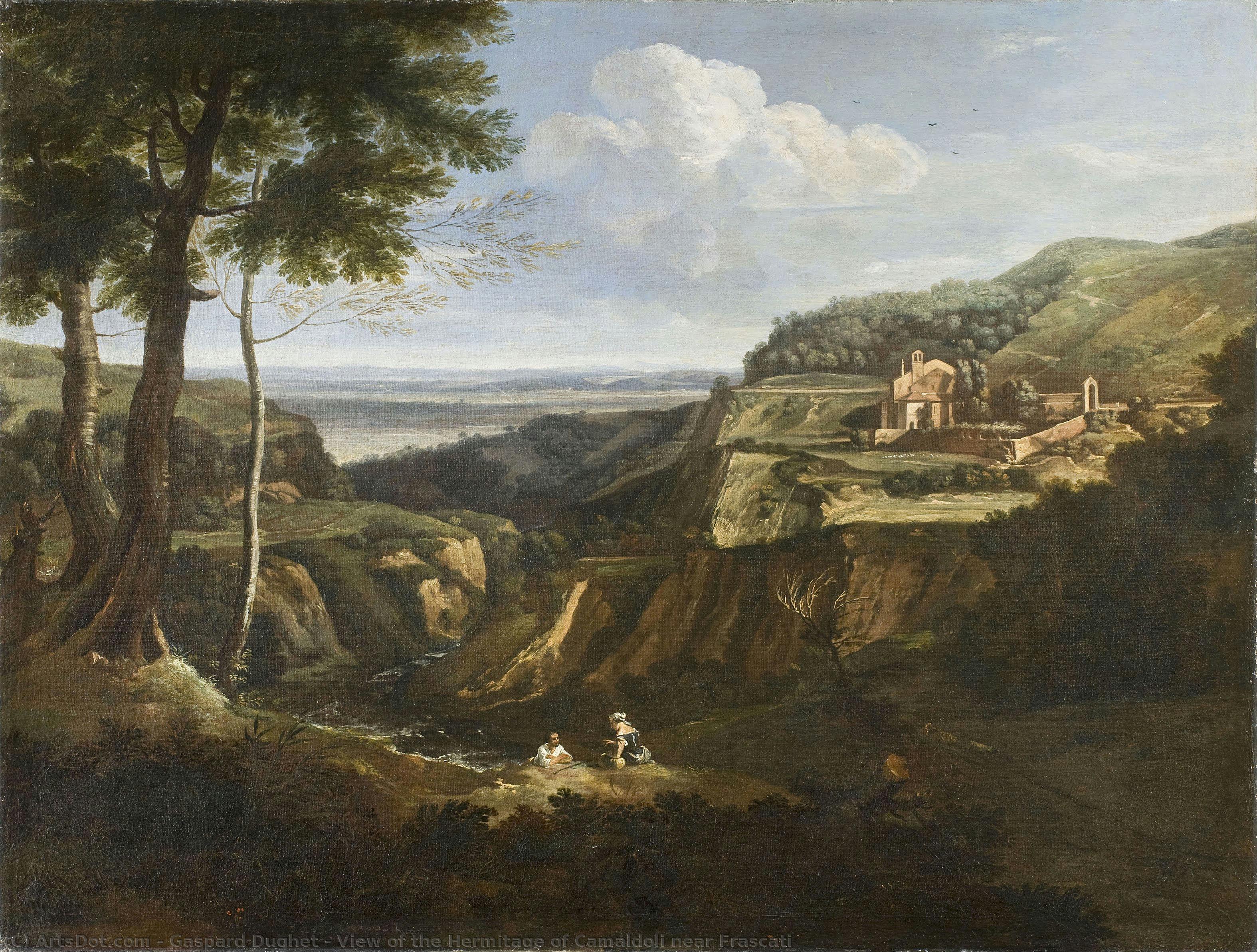
View of the Hermitage of Camaldoli near Frascati
 Baroque
 5.0 x 73.0 cm
 Fondazione Cariplo
 Ver más
Adquiera una imagen digital de alta resolución y optimizada, muy superior a la vista previa en línea.
Cada archivo es preparado meticulosamente por nuestros especialistas internos mediante el uso de herramientas avanzadas y un experto retoque manual. Nos aseguramos de que cada imagen posea una claridad excepcional, una precisión cromática impecable y un detalle minucioso.
El archivo final se entrega por correo electrónico en un plazo de 72 horas, optimizado para su uso inmediato en entornos profesionales, editoriales y de impresión. Esta es la misma calidad en la que confían los estudios de diseño, las editoriales y las galerías de primer nivel.
Imagen Digital
Descarga un archivo de alta resolución para exhibición personal, impresión y proyectos creativos. ( Comprar impresión Comprar pintura hecha a mano)
Incluido en cada pedido de imágenes digitales
Entrega digital experta, garantizada.
Al elegir ArtsDot.com, no solo está adquiriendo una imagen; está recibiendo una obra de arte digital mejorada profesionalmente, elaborada con precisión y respaldada por una garantía de satisfacción. Esto es todo lo que incluye su pedido, automáticamente:

Entrega rápida por email
Recibirá su archivo de imagen digital en alta resolución por correo electrónico en un plazo de 72 horas tras realizar su pedido, listo para su uso inmediato.

Archivo digital optimizado por IA
Su obra de arte se optimiza profesionalmente mediante herramientas avanzadas de IA y edición manual, garantizando el máximo detalle, claridad y precisión cromática.

Reenvío gratuito de por vida
¿Has borrado o perdido tu archivo por error? No te preocupes: te lo volveremos a enviar en cualquier momento, sin coste adicional.

Sin gastos de importación, siempre
Disfrute de su obra de arte al instante sin aduanas, aranceles ni gastos de envío; las descargas digitales siempre están libres de impuestos.

Garantía de fidelidad de color
Garantizamos que su imagen digital refleje los colores originales con la mayor fidelidad posible, mediante el uso de herramientas profesionales y gestión del color.

Garantía de satisfacción de 60 días
Si no está satisfecho con su imagen digital, la revisaremos o le reembolsaremos el 100% en un plazo de 60 días, sin preguntas.

100% Garantía de devolución de dinero
¿No está satisfecho? Obtenga un reembolso completo dentro de los 60 días posteriores a la recepción de su archivo digital, sin necesidad de explicaciones.

Descuentos por pedidos grandes
Compra 3 imágenes, ahorra 10% - Compra 5, ahorra 15% - Compra 10+, ahorra 20%. Ideal para proyectos creativos, galerías y agencias.
Obras relacionadas
Biografía del artista
Early Life and Training
Gaspard Dughet (1615 – 1675), also known as Gaspard Poussin, was born in Rome on June 15, 1615, the son of a French pastry-cook and his Italian wife. Despite his French heritage, he never traveled to France, establishing himself firmly within the artistic milieu of the Eternal City.
- His family’s modest circumstances fostered an early appreciation for art and craftsmanship.
- He received instruction from Nicolas Poussin, who had married his sister Anne five years earlier—a connection that profoundly shaped Dughet's artistic vision and ensured he was widely recognized as “Gaspard Poussin.”
This mentorship proved pivotal in shaping Dughet’s style, aligning him with the dominant aesthetic trends of the Baroque period.
Landscape Painting and Style
Dughet distinguished himself as a landscape painter specializing in depictions of the Roman Campagna—the fertile plains surrounding Rome. Alongside Salvator Rosa, he emerged as one of the foremost landscape artists of his time, embodying the ideals of topographical realism and classical grandeur.
- His canvases captured the serene beauty of the campagna with meticulous detail, employing techniques honed under Poussin’s tutelage.
- Rosa's influence is palpable in Dughet’s compositions, characterized by atmospheric perspective, balanced symmetry, and a restrained palette dominated by blues and browns—elements that conveyed profound emotional depth.
- Dughet’s style was marked by an unwavering commitment to classical principles, prioritizing clarity of form and harmonious proportions.
Notable Commissions and Collaborations
Dughet secured lucrative commissions from prominent Roman families—including the Colonna, Borghese, Pamphilj and Quirinale palaces—resulting in monumental fresco cycles that showcased his artistic prowess. He collaborated closely with artists such as Pier Francesco Mola, Cozza and Mattia Preti, enriching the visual landscape of Rome’s Baroque era.
- His partnership with Guillaume Courtois was particularly fruitful; Courtois frequently executed staffage—background figures—in Dughet's landscapes, enhancing their narrative impact.
- This collaborative spirit exemplifies the dynamism of artistic circles during Dughet’s lifetime and underscores his role as a leading figure in Roman art.
Influence on British Art
Dughet’s paintings gained considerable renown in England during the eighteenth century, captivating collectors and inspiring landscape painters and garden designers alike. His style became synonymous with classical landscapes—a testament to his enduring legacy.
- Richard Wilson, Thomas Gainsborough and John Constable—amongst others—were profoundly influenced by Dughet's compositions, adopting similar techniques and aesthetic sensibilities.
- His works served as models for the creation of meticulously designed gardens that mirrored the grandeur and serenity of Roman landscapes—a lasting contribution to British cultural heritage.
Legacy
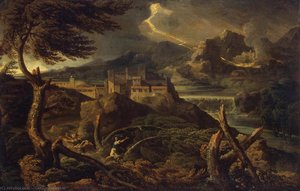
Gaspard Dughet’s oeuvre remains a cornerstone of Baroque landscape painting, celebrated for its intellectual rigor and emotional resonance. His paintings reside in prestigious institutions such as the National Gallery in London, where “Landscape with the Sacrifice of Abraham” stands as an emblem of artistic excellence.
- Dughet's meticulous observation of nature combined with his mastery of classical ideals cemented his place among the most influential artists of his era—a figure whose work continues to inspire admiration and scholarly inquiry today.
Gaspard Dughet
1613 - 1675 , Italia
Breves datos
- Artistic Movement Or Style: Paisajismo Barroco
- Artists Or Movements Influenced By This Artist: Poussin, Claude Lorrain
- Artists Who Influenced This Artist: Nicolás Poussin
- Date Of Birth: Junio 1615
- Date Of Death: Mayo 1675
- Full Name: Gaspard Dughet
- Nationality: Francés
- Notable Artworks:
- Sacrificio di Abramo
- Vista del monasterio de Camaldoli
- Place Of Birth: Roma, Italia

