 Ver en contexto
 Enviar
 Compartir
 Detalles

 Descargar
 Similares
 Radiografía
 Presentación de diapositivas
The Holy Kinship
 Oil On Panel
- Early Netherlandish Painting
 1485
1485 137.0 x 105.0 cm
 Rijksmuseum
 Ver más
Giclée / Impresión de arte
Impresiones giclée o en lienzo de calidad de museo con producción rápida y opciones de acabado flexibles. ( Comprar pintura hecha a mano Comprar imagen)




P118B $10

P118H $10

P118W $10

P438Z $10

P508JH $12

P508YH $12

P805H $10

P805Z $10

P919BZ $10

P919G $10

P919XJ $10

P959ZH $10

P968JZ $12

W106C $8

W218G $10

W218JH $8

W218Y $10

W307PJ $10

W316G $10

W316PJ $8

W316Y $10

W398PJ $8

W4111J $10

W500HY $15

W500JH $15

W692G $12

W849H $8

W940BG $15

W953PJ $8




Elija entre nuestros tamaños predefinidos que respetan las proporciones originales de la obra.

Puede introducir sus propias dimensiones para adaptarse a un marco o espacio específico. Si el tamaño seleccionado no coincide con las proporciones de la imagen original, recortaremos la obra de arte o extenderemos la imagen con un borde con efecto espejo o de color sólido. Se enviará una maqueta digital para su aprobación antes de que comience la producción.
Tenga en cuenta que la vista previa en pantalla no refleja el recorte o la extensión real. Solo la maqueta mostrará con precisión la composición final.
Aunque existen tamaños personalizados, recomendamos seleccionar una dimensión de la lista predefinida para preservar las proporciones originales.
Envío a todo el mundo () en 2 semanas en lugar de las 4/5 semanas estándar. (23 agosto)

Envío exprés gratuito a todo el mundo

Lienzo de lino de alta calidad

Seguro de envío total

Garantía de reembolso de impuestos aduaneros

Garantía de fidelidad cromática exacta

Política de devolución de 60 días (solo por defectos)

Garantía de devolución del 100% del dinero

Descuento por cantidad
 La opción de vidrio solo está disponible en tamaños inferiores a 110 cm.

The Holy Kinship
Giclée / Impresión de arte
Dimensiones de la reproducción
-


Precio total final
$ 62
Descripción de la pieza
A Moment of Shared Humanity – The Genesis of Geertgen’s Masterpiece
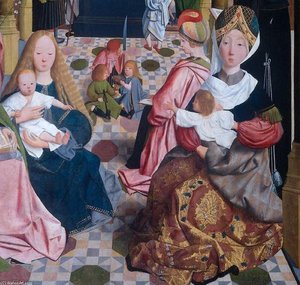
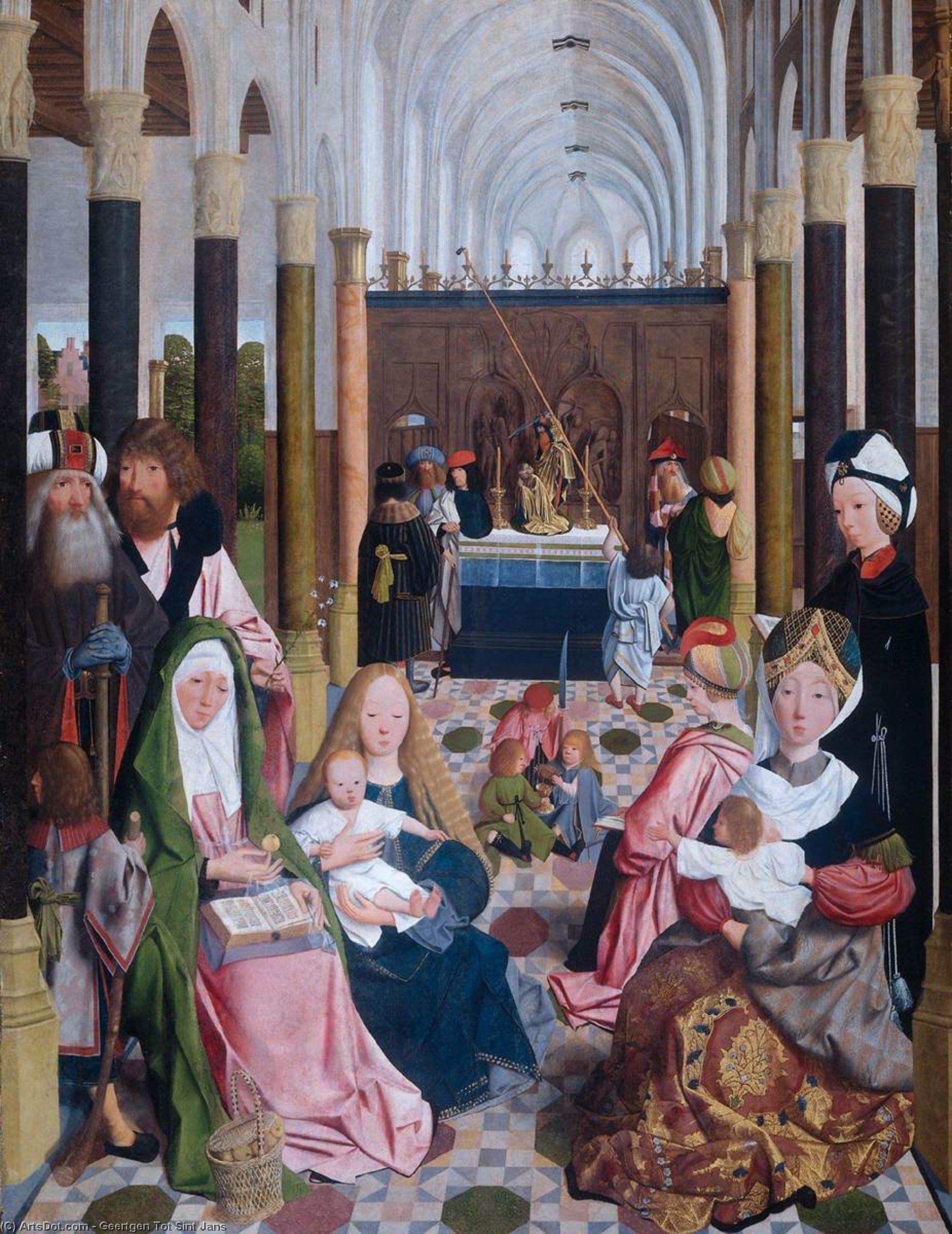
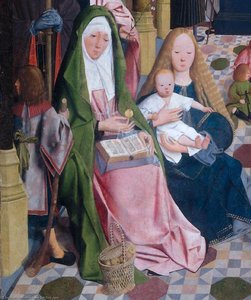
Geertgen tot Sint Jans' “The Holy Kinship,” painted in 1485, isn’t merely a religious scene; it’s a meticulously crafted tableau vivant—a snapshot of everyday life imbued with profound spiritual significance. This panel, now housed within the Rijksmuseum in Amsterdam, transports us to an imagined medieval church interior, a space brimming with activity and a palpable sense of community. The painting immediately draws the eye to the central grouping: the Virgin Mary cradling the infant Jesus, her mother Anne seated beside her, and Joachim, their husband, standing respectfully behind. Yet, it’s not just this core family that dominates the composition; surrounding them is a vibrant tapestry of figures – Elizabeth, John the Baptist, and his mother Salome, all connected through familial ties, forming what we now recognize as the Holy Kinship.
The scene unfolds within a richly detailed architectural setting. High ceilings suggest a sense of grandeur, while scattered books, cups, bowls, and vases hint at a social gathering alongside the religious observance. Notice the deliberate inclusion of objects – a book held by Anne, a chalice being poured into by young children – elements that elevate this depiction beyond a simple devotional image, suggesting a moment of shared fellowship and domesticity. The artist’s masterful use of light and shadow creates depth and atmosphere, guiding our gaze across the crowded room and emphasizing the emotional resonance of each figure.
The Mystery of the Artist and His Patronage
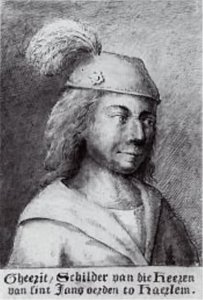
The identity of Geertgen tot Sint Jans remains shrouded in intriguing mystery. Our knowledge of his life is largely pieced together from the writings of Karel van Mander, a Dutch art historian writing over a century after the artist’s death. Van Mander suggests a connection to the Knights Hospitaller of Saint John in Haarlem, lending the artist his distinctive surname – “little Gerard of Saint John.” While the precise nature of this association remains debated, it undoubtedly shaped his artistic output, influencing both subject matter and stylistic choices.
The panel’s creation coincided with a period of significant religious and social change in the Netherlands. The Knights Hospitaller were a powerful order, deeply involved in civic life and possessing considerable wealth. It's plausible that this commission was intended as an altarpiece for their chapel within Haarlem, reflecting both their piety and their commitment to fostering community. The inclusion of children playing – a detail often overlooked – adds a layer of complexity, suggesting a deliberate engagement with the future generation and perhaps even a subtle critique of worldly pursuits.
Symbolism Woven into Everyday Life
“The Holy Kinship” is rich in symbolic details that invite interpretation. The central act of pouring wine into a chalice represents the Eucharist, a cornerstone of Christian faith. The presence of Abraham’s sacrifice of Isaac on an altar subtly alludes to Christ's own sacrificial death, reinforcing the overarching theme of redemption and divine grace. Even the seemingly mundane – the books, the cups – carry symbolic weight, representing knowledge, hospitality, and the values of the medieval household.
The depiction of the children engaged in playful activity is particularly noteworthy. These aren’t simply children; they are depicted as future martyrs, their game a poignant reminder of the promise of eternal life for those who remain faithful. This deliberate inclusion elevates the scene beyond a simple family portrait, transforming it into a meditation on faith, hope, and the enduring power of community. The panel's composition invites viewers to contemplate not just the divine narrative but also the human experience within that narrative.
A Timeless Masterpiece – Reproduction Possibilities
ArtsDot offers meticulously crafted hand-painted reproductions of “The Holy Kinship,” allowing you to bring this extraordinary artwork into your home or office. Our skilled artists replicate Geertgen’s masterful technique, capturing the subtle nuances of light, shadow, and color with breathtaking accuracy. Whether you choose a large-scale statement piece for a grand room or a smaller, more intimate reproduction for a study, our reproductions provide an authentic representation of this iconic work.
More than just a beautiful image, “The Holy Kinship” is a window into the medieval world—a testament to faith, family, and the enduring power of human connection. Explore our collection today and discover how you can own a piece of art history.
Obras relacionadas
Biografía del artista
Una vida envuelta en misterio: Revelando a Geertgen tot Sint Jans
El nombre de Geertgen tot Sint Jans resuena suavemente en los anales de la pintura flamiga primitiva, como un susurro de brillantez de un artista cuya vida permanece frustrantemente oscura. Floreciendo en Haarlem durante la segunda mitad del siglo XV —aproximadamente entre 1460 y 1490—, la existencia de Geertgen se reconstruye principalmente a través de los escritos de Karel van Mander, un historiador del arte holandés que escribió más de un siglo después de su muerte. Van Mander sugiere una conexión con los Caballeros Hospitalarios de San Juan en Haarlem, otorgando al artista su distintivo apellido, que significa “pequeño Gerardo de San Juan”. No se sabe con certeza si fue un hermano lego dentro de la orden o simplemente estuvo afiliado a ella, pero esta asociación moldeó profundamente su producción artística. La escasa evidencia documental que rodea la vida de Geertgen contribuye a una aura de misterio, permitiéndonos concentrarnos intensamente en la extraordinaria calidad y profundidad espiritual de sus obras supervivientes. Se cree que pudo haber sido alumno de Albert van Ouwater, una figura fundamental en el desarrollo de la pintura en Haarlem, aunque las pruebas concretas siguen siendo esquivas.El legado fragmentario: Obras maestras supervivientes
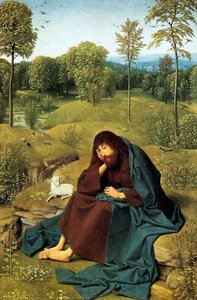
Trágicamente, gran parte de la obra de Geertgen se ha perdido con el tiempo y las circunstancias. La tumultuosa historia de Haarlem, particularmente el asedio de 1573 durante la Guerra de los Ochenta Años, resultó en la destrucción de numerosas obras de arte, incluyendo una parte significativa de su producción. Lo que queda ofrece vislumbres tentadores de un talento excepcional. Las piezas supervivientes más célebres son fragmentos de un gran tríptico creado originalmente para el altar de los Caballeros de San Juan. Estos paneles —La Leyenda de San Juan Bautista y <La Lamentación de Cristo)— residen ahora en el Kunsthistorisches Museum de Viena; su separación de la estructura original es un recordatorio conmovedor de la vulnerabilidad del arte ante las fuerzas históricas. La Lamentación, particularmente, es reconocida por su serena emotividad y su paisaje innovador, presagiando los avances que caracterizarían la pintura holandesa en los siglos venideros. Otras obras atribuidas incluyen San Juan Bautista en el desierto, una representación contemplativa del aislamiento espiritual, y Hombre de Dolores, un retrato poderosamente conmovedor del sufrimiento de Cristo. Cada panel superviviente es un testimonio de la maestría de Geertgen en las técnicas de la pintura al óleo, su delicado manejo de la luz y su capacidad para imbuir las escenas religiosas con una profunda resonancia psicológica.Innovación en el paisaje y la espiritualidad
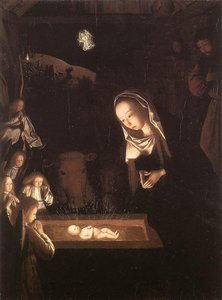
Geertgen tot Sint Jans se distinguió por varias innovaciones artísticas clave. Poseía una sensibilidad excepcional hacia el paisaje, integrándolo a la perfección en la estructura narrativa de sus pinturas. A diferencia de muchos de sus contemporáneos, que utilizaban los paisajes meramente como telones de fondo, los escenarios de Geertgen están imbuidos de un significado simbólico y contribuyen significativamente al impacto emocional general de la obra. Sus paisajes no son simples representaciones realistas; evocan una sensación de tranquilidad espiritual y reflejan el estado interno de las figuras que los habitan. Además, Geertenario demostró una capacidad notable para transmitir emociones a través de gestos sutiles y expresiones faciales. Sus figuras no son grandiosas ni teatrales, sino que poseen una humanidad íntima que atrae al espectador hacia su mundo de fe y dolor. El uso del claroscuro —el dramático juego de luces y sombras— también es notable, realzando la intensidad emocional de sus escenas y creando una sensación de profundidad y realismo. Esta técnica es particularmente evidente en La Natividad de noche, donde la oscuridad envuelve la escena, puntuada por el resplandor radiante que emana del niño Cristo.Una influencia duradera: El lugar de Geertgen en la historia del arte
A pesar del número limitado de obras con atribución segura, Geertgen tot Sint Jans ocupa una posición significativa dentro de la historia del arte flamenco primitivo. Su influencia puede detectarse en la obra de maestros holandeses posteriores, particularmente aquellos asociados con la escuela de Haarlem. Su enfoque innovador del paisaje y su sensible retrato de la emoción humana allanaron el camino para los desarrollos que definirían la pintura holandesa en el siglo XVII. El impacto de La Lamentación, como lo demuestra el grabado de Jacob Matham y la poesía que lo acompaña, demuestra el profundo efecto que la obra de Geertgen tuvo en sus contemporáneos. Aunque fue eclipsado por artistas más prolíficos como Jan van Eyck o Rogier van der Weyden durante su vida, la erudición moderna ha reconocido cada vez más las contribuciones únicas de Geertgen al Renacimiento del Norte. Él representa un vínculo crucial entre el estilo Gótico Internacional y el floreciente realismo del siglo XVI, encarnando un delicado equilibrio entre la devoción espiritual y la innovación artística. Su legado perdura no solo a través de sus obras maestras supervivientes, sino también a través del misterio persistente que rodea su vida: un testimonio del poder del arte para trascender las limitaciones del conocimiento histórico.Redescubriendo a un maestro
- Pintura flamiga primitiva: La obra de Geertgen está firmemente arraigada en las tradiciones de la pintura flamiga primitiva, caracterizada por el detalle meticuloso, representaciones realistas y un enfoque en temas religiosos.
- Escuela de Haarlem: Desempeñó un papel clave en el establecimiento de la escuela de pintura de Haarlem, influyendo en las generaciones posteriores de artistas que trabajaron en la región.
- Profundidad espiritual: Sus pinturas son notables por su profunda profundidad espiritual y resonancia emocional, invitando a los espectadores a contemplar temas de fe, sufrimiento y redención.
- Innovación en el paisaje: El uso innovador del paisaje por parte de Geertgen como parte integrante de la estructura narrativa lo distinguió de muchos de sus contemporáneos.
Geertgen tot Sint Jans
1460 - 1490 , Países Bajos
Datos clave
- Artistic Movement Or Style: Early Netherlandish painting
- Artists Who Influenced This Artist: ['Albert van Ouwater']
- Date Of Birth: c. 1465
- Full Name: Geertgen tot Sint Jans
- Nationality: Dutch
- Notable Artworks:
- The Legend of Saint John the Baptist
- The Lamentation of Christ
- John the Baptist in Wilderness
- Man of Sorrows
- Place Of Birth: Leiden, Netherlands
Artículos relacionados

Los 10 Maestros del Primitivo Flamenco: Obras que Definen un Arte Inigualable | ArtsDot
Descubre los 10 imprescindibles del Primitivo Flamenco: Jan van Eyck, Robert Campin y más. Explora la historia, simbolismo y técnica de estas obras maestras renacentistas tempranas. Encuentra reproducciones de arte de museo en ArtsDot.com.
Jan Gossart: Bridging Netherlandish Realism & Renaissance Humanism – A Comprehensive Exploration
Explore the captivating world of Jan Gossart, a pivotal figure bridging Netherlandish realism & Renaissance humanism. Discover his masterpieces, patronage, and lasting influence – an essential guide for discerning art collectors.
Jan Gossaert (Mabuse): Pioneering Renaissance Style & the Birth of Netherlandish Antiquity
Explore the groundbreaking art of Jan Gossaert (Mabuse), a pioneer of Renaissance painting in the Low Countries. Discover his Romanist style, stunning portraits, and influence on Northern European art history.
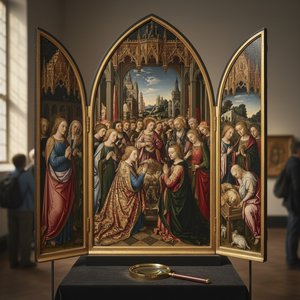
El Amanecer de una Nueva Visión: Contexto Histórico e Influencia Borgoña en el Renacimiento Temprano Flamenco
Descubre la riqueza del Renacimiento Temprano Flamenco y la influencia del Estado Borgoñón. Analizamos a Jan van Eyck, Robert Campin y el simbolismo oculto en sus obras maestras. ¡Explora la historia del arte con ArtsDot!
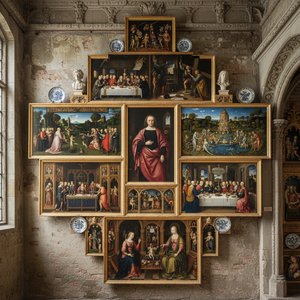
Renacimiento Flamenco Temprano: 10 Obras Maestras que Cambiaron la Historia del Arte | ArtsDot
Descubre las 10 obras maestras del Renacimiento Flamenco Temprano. Explora la historia de Jan van Eyck, Robert Campin y más. Reproducciones de arte en ArtsDot.com para decorar tu hogar con belleza y elegancia. ¡Explora la colección online!