 Ver en contexto
 Enviar
 Compartir
 Detalles

 Descargar
 Similares
 Radiografía
 Presentación de diapositivas
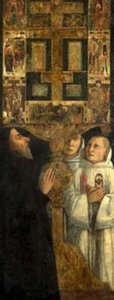
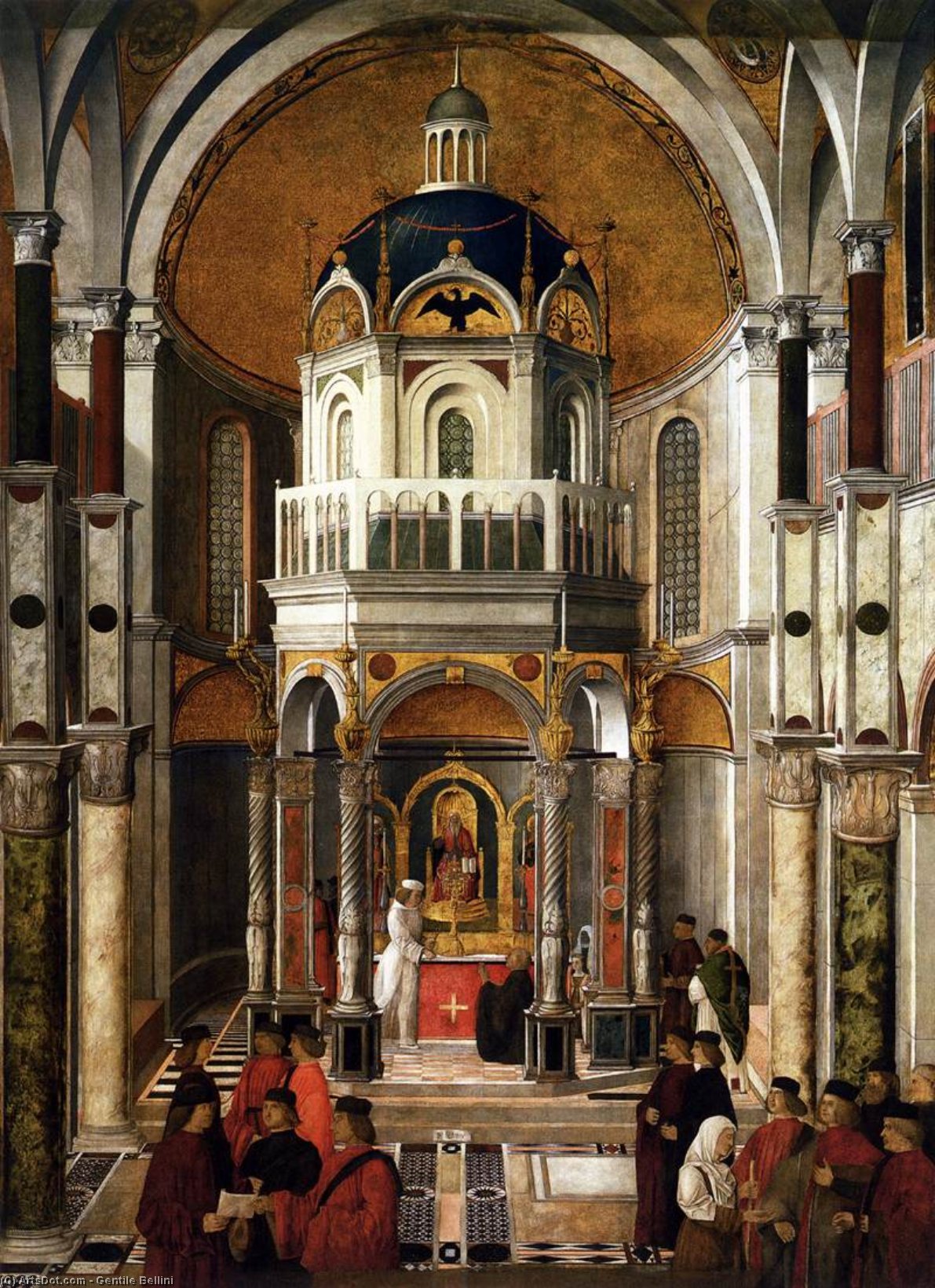
The Healing of Pietro dei Ludovici
 Óleo sobre lienzo
- Arte de pared
- Renaissance
 1501
1501 369.0 x 259.0 cm
 Galería de la Academia
 Ver más
Giclée / Impresión de arte
Impresiones giclée o en lienzo de calidad de museo con producción rápida y opciones de acabado flexibles. ( Comprar pintura hecha a mano Comprar imagen)




P118B $10

P118H $10

P118W $10

P438Z $10

P508JH $12

P508YH $12

P805H $10

P805Z $10

P919BZ $10

P919G $10

P919XJ $10

P959ZH $10

P968JZ $12

W106C $8

W218G $10

W218JH $8

W218Y $10

W307PJ $10

W316G $10

W316PJ $8

W316Y $10

W398PJ $8

W4111J $10

W500HY $15

W500JH $15

W692G $12

W849H $8

W940BG $15

W953PJ $8




Elija entre nuestros tamaños predefinidos que respetan las proporciones originales de la obra.

Puede introducir sus propias dimensiones para adaptarse a un marco o espacio específico. Si el tamaño seleccionado no coincide con las proporciones de la imagen original, recortaremos la obra de arte o extenderemos la imagen con un borde con efecto espejo o de color sólido. Se enviará una maqueta digital para su aprobación antes de que comience la producción.
Tenga en cuenta que la vista previa en pantalla no refleja el recorte o la extensión real. Solo la maqueta mostrará con precisión la composición final.
Aunque existen tamaños personalizados, recomendamos seleccionar una dimensión de la lista predefinida para preservar las proporciones originales.
Envío a todo el mundo () en 2 semanas en lugar de las 4/5 semanas estándar. (31 agosto)

Envío exprés gratuito a todo el mundo

Lienzo de lino de alta calidad

Seguro de envío total

Garantía de reembolso de impuestos aduaneros

Garantía de fidelidad cromática exacta

Política de devolución de 60 días (solo por defectos)

Garantía de devolución del 100% del dinero

Descuento por cantidad
 La opción de vidrio solo está disponible en tamaños inferiores a 110 cm.

The Healing of Pietro dei Ludovici
Giclée / Impresión de arte
Dimensiones de la reproducción
-


Precio total final
$ 62
A Miracle in Red and Gold: Unveiling Gentile Bellini’s “The Healing of Pietro dei Ludovici”
Gentile Bellini's "The Healing of Pietro dei Ludovici," painted around 1501, is more than just a religious scene; it’s a vibrant window into the heart of Venetian Renaissance society and a testament to the artist’s mastery of color, composition, and narrative. This captivating work, now housed in a high-quality reproduction, transports us to a moment of profound faith and miraculous healing within the serene confines of a Venetian chapel. The painting immediately draws the eye with its rich palette – deep reds dominate, echoing the robes of Pietro and his companion, contrasted beautifully against the luminous gold of the altar and architectural details. Bellini’s signature style is evident here: a masterful blend of realism and idealized beauty, creating figures that are both deeply human and imbued with an ethereal quality.
- Subject Matter: The scene depicts Pietro dei Ludovici, a man afflicted by illness, receiving miraculous healing through contact with a relic of the Holy Cross. This event, rooted in Christian legend, speaks to themes of divine intervention, faith’s power, and the alleviation of suffering – potent subjects for devotional art in Renaissance Venice.
- Composition: Bellini employs a carefully balanced composition, guiding the viewer's eye through the scene with converging lines and strategic placement of figures. The central focus is on Pietro and his companion, rendered with exquisite detail, while surrounding figures—including attendants and onlookers—add depth and context to the miracle.
- Technique: Executed in tempera on canvas, Bellini demonstrates a remarkable command of color and texture. His use of layering and glazing creates a luminous effect, capturing the play of light and shadow with breathtaking realism. The artist’s skillful rendering of architectural elements—the chapel's interior, complete with altar and ciborium—adds to the painting’s immersive quality.
The Venetian Context: Patronage, Faith, and Artistic Innovation
To fully appreciate “The Healing of Pietro dei Ludovici,” it’s crucial to understand its historical context within Venice. The city was a thriving center of trade, art, and religious fervor during the 15th and 16th centuries. Wealthy Venetian families, known as *scuole grandi*, commissioned elaborate devotional paintings to adorn their chapels and demonstrate their piety. These paintings were not merely decorative; they served as powerful symbols of faith and social status. Bellini’s work exemplifies this trend, reflecting the patronage of a prominent religious confraternity. Furthermore, Bellini was one of the first Venetian painters to fully embrace oil paint, allowing for richer colors and greater detail than previously possible with tempera.
Gentile Bellini's role as official painter of the Doges solidified his position at the heart of Venetian power and society. This prestigious commission shaped his artistic trajectory, placing him at the center of Venetian life and influencing his style and subject matter.Symbolism and Spiritual Resonance
Beyond its narrative content, “The Healing of Pietro dei Ludovici” is rich in symbolic meaning. The red robes worn by Pietro and his companion represent their devotion and sacrifice. The relic of the Holy Cross itself symbolizes divine grace and redemption. The architectural details—particularly the altar and ciborium—evoke a sense of sacred space and spiritual transcendence. Bellini’s use of light and shadow further enhances the painting's emotional impact, creating an atmosphere of reverence and awe. The inclusion of Pietro’s self-portrait within the scene adds a layer of intimacy and invites the viewer to connect with the miracle on a personal level.
A Timeless Masterpiece: Reproduction and Artistic Legacy
Today, “The Healing of Pietro dei Ludovici” continues to captivate audiences with its beauty and spiritual depth. High-quality reproductions offer an accessible way to experience this remarkable work of art, bringing its vibrant colors and compelling narrative into any space. Bellini’s influence can be seen in the works of subsequent Venetian painters, and his painting remains a cornerstone of Renaissance art history. Its enduring appeal lies not only in its technical brilliance but also in its ability to evoke profound emotions and inspire contemplation on themes of faith, healing, and the power of divine grace.
Obras relacionadas
Biografía del artista
Gentile Bellini: Un Maestro Veneciano del Renacimiento
- Nacido: Venecia, Italia (1429)
- Fallecido: 1507
Vida Temprana y Desarrollo Artístico
Gentile Bellini provenía de una destacada familia de pintores en Venecia. Su padre, Jacopo Bellini, era un artista establecido conocido por ser pionero en el uso de la pintura al óleo, mientras que su hermano menor, Giovanni Bellini, se convertiría más tarde en uno de los maestros venecianos más celebrados. Gentile recibió su formación artística inicial dentro del taller de su padre, dominando las técnicas de la pintura al óleo—un medio relativamente nuevo en aquel momento. Su primera obra firmada, El Bienaventurado Lorenzo Giustinian (1445), se erige como una de las pinturas al óleo más antiguas que aún existen en Venecia y ahora se encuentra alojada en el Museo de la Academia. Desde temprana edad, Gentile demostró un talento notable para el retrato, ganándose rápidamente reconocimiento y asegurando su posición como artista oficial de retratos de los Doges de Venecia.
Estilo Artístico e Influencias
El estilo artístico de Gentile Bellini fue moldeado por varias influencias clave. Las ricas tradiciones del Imperio Bizantino jugaron un papel importante, junto con la exposición a la cultura otomana tras su visita a Constantinopla en 1479. Este viaje, realizado por solicitud del sultán Mehmed II, demostró ser fundamental para dar forma a sus obras posteriores. Su retrato de Mehmed II, que ahora reside en la Galería Nacional de Londres, ejemplifica esta influencia. Las composiciones de Bellini se caracterizan a menudo por su grandeza, presentando escenas a gran escala pobladas con numerosas figuras—una característica común en sus encargos para las Scuole Grandi (cofradías importantes) de Venecia.
- Influencia Bizantina: Evidente en las figuras estilizadas y las paletas de colores ricos.
- Influencia Otomana: Se observa en las representaciones de la vida cortesana otomana y la arquitectura, como lo demuestra su retrato de Mehmed II.
- Tradición Veneciana: Una continuación de las prácticas artísticas venecianas, particularmente en el retrato y las pinturas narrativas a gran escala.
Obras Notables y Legado
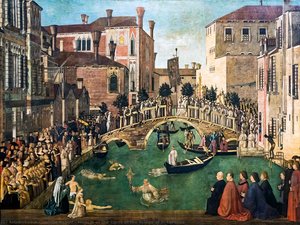
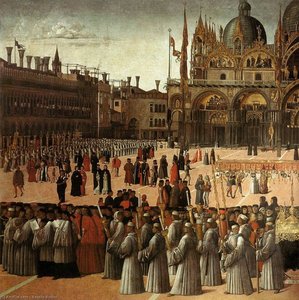
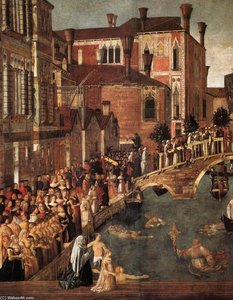
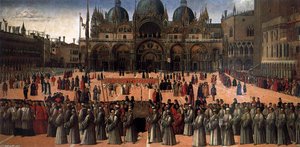
Entre las obras más celebradas de Gentile Bellini se encuentran La Procesión de la Santa Cruz en Piazza San Marco (1496) y El Milagro de la Santa Cruz en el Puente de S. Lorenzo (c. 1500). La última pintura es particularmente notable por incluir un autorretrato junto con el de su hermano, Giovanni Bellini. Las contribuciones artísticas de Gentile se extendieron más allá de las pinturas individuales; es reconocido como uno de los fundadores de la tradición orientalista en el arte occidental—un movimiento caracterizado por representaciones de culturas y entornos orientales.
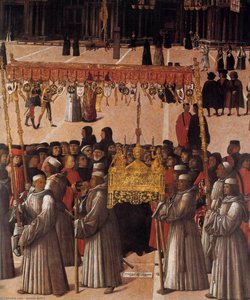
- La Procesión de la Santa Cruz en Piazza San Marco (1496): Una obra monumental que representa una procesión religiosa, mostrando su capacidad para retratar grandes multitudes y detalles intrincados.
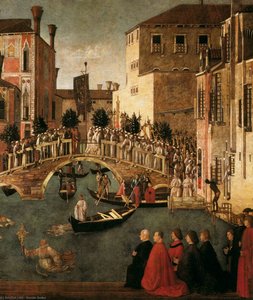
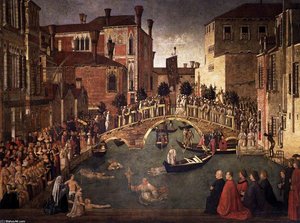
- El Milagro de la Santa Cruz en el Puente de S. Lorenzo (c. 1500): Presenta un autorretrato junto con su hermano Giovanni, ofreciendo información sobre su relación y colaboración artística.
Significado Histórico
El legado de Gentile Bellini se basa en su uso pionero de la pintura al óleo en la pintura veneciana y su importante contribución al desarrollo del arte orientalista. Su capacidad para combinar las tradiciones artísticas venecianas con influencias del Imperio Bizantino y la cultura otomana resultó en un estilo único y convincente que resonó en toda Europa. Si bien a menudo eclipsado por su hermano Giovanni, el trabajo de Gentile Bellini ahora se reconoce como un capítulo esencial en la historia de la pintura occidental—un testimonio de su habilidad, talento e intercambio cultural.
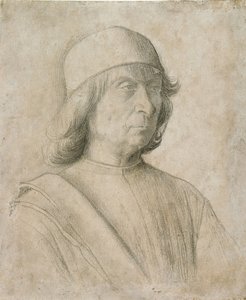
Gentile Bellini
1429 - 1507 , Italia
Datos clave
- Artistas Influyentes:
- Gentile da Fabriano
- Imperio Bizantino
- Fecha De Muerte: 1507
- Fecha De Nacimiento: 1429
- Influenciado Por:
- Giorgione
- Tiziano
- Lugar De Nacimiento: Venecia, Italia
- Movimiento Artístico: Pintura veneciana, Orientalismo
- Nacionalidad: Italiana
- Nombre Completo: Gentile Bellini
- Obras Notables:
- Bienaventurado Lorenzo Giustinian
- Procesión de la Cruz
- Milagro de la Cruz
Artículos relacionados
Pietro Longhi's Venetian Scenes: A Study of Rococo Society & Domestic Life
Explore the captivating world of Pietro Longhi's Venetian scenes! Discover insightful analysis of his Rococo masterpieces & social commentary on 18th-century life. Learn about this 'Venetian Hogarth' and his lasting artistic legacy.

Jacopo Tintoretto: Las 25 Obras Maestras del Genio Veneciano | Arte y Decoración en ArtsDot
Descubre las 25 obras maestras de Jacopo Tintoretto, el genio veneciano del Renacimiento. Explora su arte dramático, composiciones innovadoras y paleta vibrante. Reproducciones de alta calidad en ArtsDot.com para transformar tu hogar.
Vittore Carpaccio: Venetian Renaissance Narrative & the Poetics of Detail
Explore the captivating world of Vittore Carpaccio, a master storyteller of the Venetian Renaissance. Discover his intricate details, narrative cycles like 'The Legend of St. Ursula,' and unique artistic style.
La Luz Dorada de la Innovación: Explorando el Renacimiento Veneciano (1430–1580)
Descubra la riqueza y el esplendor del Renacimiento veneciano con ArtsDot. Explore las obras maestras de Tiziano, Giorgione y Tintoretto. Análisis experto, historia detallada e información para coleccionistas.
Paolo Veronese: A Renaissance Master of Color, Composition, and Venetian Splendor
Explore the vibrant world of Paolo Veronese, a Renaissance master renowned for his opulent compositions, masterful use of color, and dramatic Venetian scenes. Discover key artworks & legacy.