


 Ver en contexto
 Enviar
 Compartir
 Detalles

 Descargar
 Similares
 Radiografía
 Presentación de diapositivas
H. Fussell, LTC


 Ver más
Reproducción al óleo hecha a mano
Óleo sobre lienzo pintado a mano en el tamaño y marco de su elección, realizado por encargo por nuestros artistas. ( Comprar impresión Comprar imagen)




P118B $10

P118H $10

P118W $10

P438Z $10

P508JH $12

P508YH $12

P805H $10

P805Z $10

P919BZ $10

P919G $10

P919XJ $10

P959ZH $10

P968JZ $12

W106C $8

W218G $10

W218JH $8

W218Y $10

W307PJ $10

W316G $10

W316PJ $8

W316Y $10

W398PJ $8

W4111J $10

W500HY $15

W500JH $15

W692G $12

W849H $8

W940BG $15

W953PJ $8




Elija entre nuestros tamaños predefinidos que respetan las proporciones originales de la obra.

Puede ingresar sus propias dimensiones para adaptarse a un marco o espacio específico. Si el tamaño seleccionado no coincide con las proporciones de la imagen original, recortaremos la obra o extenderemos la pintura con elementos adicionales pintados a mano. Se le enviará una maqueta digital para su aprobación antes de comenzar la producción.
Tenga en cuenta que la vista previa en pantalla no refleja el recorte o la extensión reales. Solo la maqueta mostrará con precisión la composición final.
Si bien existen tamaños personalizados, recomendamos seleccionar una dimensión de la lista predefinida para preservar las proporciones originales.
Tras realizar el pedido, el equipo de ArtsDot.com enviará un correo electrónico al cliente para solicitar instrucciones y proporcionarle una vista previa del boceto.
Envío a todo el mundo () en 3-4 semanas en lugar de las 5 semanas estándar. (23 agosto). Sin comprometer la calidad.

Envío exprés gratuito a todo el mundo

Lienzo de lino de alta calidad

Seguro de envío total

Garantía de reembolso de impuestos aduaneros

Garantía de fidelidad cromática exacta

Política de devolución de 60 días (solo por defectos)

Garantía de devolución del 100% del dinero

Descuento por cantidad
 La opción de vidrio solo está disponible en tamaños inferiores a 110 cm.

H. Fussell, LTC
Técnica de reproducción
Dimensiones de la reproducción
-


Precio total final
$ 263
Descripción de la obra
A Portrait of Quiet Resolve: H. Fussell, LTC by George Edmund Butler
George Edmund Butler’s 1920 oil on panel painting, “H. Fussell, LTC,” is more than simply a likeness; it's a carefully constructed tableau of understated authority and the weight of experience. The subject, Lieutenant Colonel Henry Fussell, isn’t presented with flamboyant gesture or dramatic lighting – instead, Butler masterfully employs a muted palette of browns, greys, and ochres to evoke a sense of dignified reserve. This deliberate restraint is key to understanding the painting's enduring power; it speaks not of boastful military prowess, but of the quiet fortitude demanded by command and the burdens carried by those who lead.
Butler’s style leans heavily into the tenets of early 20th-century portraiture, drawing inspiration from the academic traditions of his training while imbuing it with a subtle, almost melancholic realism. The meticulous rendering of Fussell's uniform – the intricate details of the buttons, braid, and epaulettes – are rendered with painstaking precision, reflecting Butler’s commitment to capturing not just appearance but also the texture and materiality of military life. The slightly softened focus on the face, particularly around the eyes, suggests a man who has witnessed much and carries those observations within him.
A Window into Wartime Britain
Painted in the aftermath of World War I, “H. Fussell, LTC” offers a poignant glimpse into the social and cultural landscape of Britain at that pivotal moment. Butler’s appointment as an official war artist underscored the nation's desire to document its experiences – both triumphant and deeply sorrowful – with artistic integrity. The painting serves as a testament to the role of artists in shaping national memory, capturing not just the events themselves but also the emotional atmosphere surrounding them.
Furthermore, Fussell himself was a significant figure within the New Zealand Expeditionary Force (NZEF), and Butler’s work became an important record of this contingent. The painting's creation coincided with a period of intense national identity formation in New Zealand, as it sought to establish itself as a distinct nation separate from its colonial ties to Britain. Butler’s portrait thus becomes intertwined with the broader narrative of New Zealand’s emergence as an independent state.
Symbolism and Emotional Resonance
Beyond its historical context, “H. Fussell, LTC” is rich in symbolic detail. The Colonel's gaze, direct and unwavering, conveys a sense of responsibility and perhaps even weariness. The slightly downturned corners of his mouth hint at the hardships he has endured, while the subtle lines etched around his eyes speak to years spent observing and making difficult decisions. The muted color scheme contributes to this atmosphere of quiet contemplation, suggesting that true strength lies not in outward displays but in inner resilience.
The composition itself is carefully balanced, with Fussell occupying a central position within the frame. This reinforces his authority while simultaneously inviting the viewer to engage with his character and contemplate his story. The wooden texture of the panel adds an element of grounding, anchoring the portrait firmly in the realities of the time.
A Faithful Reproduction – Bringing Butler’s Vision to Life
Reproductions of “H. Fussell, LTC” are meticulously crafted by ArtsDot.com, utilizing high-quality materials and techniques to faithfully capture the nuances of Butler's original work. The attention to detail—from the subtle variations in tone to the delicate rendering of fabric—is a testament to their commitment to preserving the integrity of this significant artwork. Whether displayed in a private collection or incorporated into a larger interior design scheme, this reproduction offers a compelling connection to a bygone era and a profound appreciation for Butler’s artistic skill.
For those seeking an authentic representation of this remarkable portrait, ArtsDot.com provides a superior alternative to the original, offering a timeless piece of art that will endure for generations to come.
Obras relacionadas
Biografía del artista
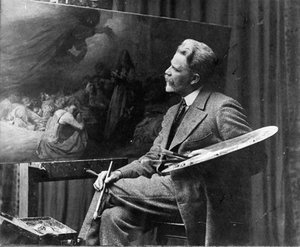
George Edmund Butler: Una Vida en el Arte y la Guerra
- Nacido: Southampton, Reino Unido (15 de enero de 1872)
- Fallecido: Twickenham, Inglaterra (9 de agosto de 1936)
George Edmund Butler fue un pintor británico de paisajes y retratos que ganó reconocimiento por su habilidad artística y su papel único como artista oficial de guerra durante la Primera Guerra Mundial. Su viaje vital abarcó la emigración a Nueva Zelanda, una extensa formación artística europea, una carrera exitosa en Inglaterra y, finalmente, el servicio documentando las experiencias de los soldados neozelandeses en el Frente Occidental.
Primeros Años y Formación Artística
- Años en Nueva Zelanda: La familia de Butler emigró a Nueva Zelanda cuando tenía once años. Trabajó para su padre mientras estudiaba arte a tiempo parcial bajo la tutela de James Nairn en la Escuela de Diseño de Wellington.
- Comienzos Artísticos: En 1892, se unió al vanguardista Wellington Art Club y rápidamente estableció una reputación por pintar paisajes marinos. Un viaje a Sydney en 1897 le proporcionó mayor exposición a diversos estilos artísticos.
- Formación Europea: Entre 1898 y 1900, Butler realizó estudios de arte significativos en el extranjero. Se casó con Sarah Jane Popplestone en Inglaterra y estudió en la Escuela de Arte Lambeth, la Academia Julian en París (donde obtuvo honores) y la Academia de Amberes, obteniendo una medalla de oro y un laurel.
Desarrollo Profesional y Reconocimiento Real
- Regreso a Nueva Zelanda y Dunedin: Al regresar a Wellington, Butler exhibió su obra antes de establecerse en Dunedin entre 1901 y 1905. A pesar del elogio crítico, las dificultades financieras lo llevaron a complementar sus ingresos con la enseñanza y los encargos de retratos.
- Bristol y la Royal West of England Academy: En 1905, se mudó a Bristol, Inglaterra, donde enseñó arte en Clifton College. Su talento fue finalmente reconocido con su elección como miembro de la Royal West of England Academy en 1912. También expuso en instituciones prestigiosas como la Royal Academy of Arts y la Royal Scottish Academy.
Artista Oficial de Guerra y Documentación del Conflicto
- Nombramiento como Artista de Guerra de la NZEF: Debido a su reputación y sus conexiones con Nueva Zelanda, Butler fue nombrado artista oficial de guerra para la Fuerza Expedicionaria Neozelandesa (NZEF) en septiembre de 1918. Sirvió con el rango honorífico de capitán.
- Bocetos Bajo Fuego: Durante su tiempo con la NZEF, Butler documentó meticulosamente las operaciones militares a través de bocetos y pinturas, a menudo trabajando en condiciones desafiantes. Estos bocetos sirvieron como base para obras posteriores.
- Retratos y Paisajes Encargados: Tras el armisticio, fue comisionado en privado por Robert Heaton Rhodes y el General Sir Andrew Hamilton Russell para crear una serie de retratos de oficiales superiores y paisajes que representaban los sitios de batalla neozelandeses a lo largo del Frente Occidental. El gobierno de Nueva Zelanda compró posteriormente estas obras para su preservación en archivos nacionales.
Vida Posterior y Legado
- Vida Posguerra: Butler nunca regresó a Nueva Zelanda después de la guerra. Se casó nuevamente tras la muerte de su primera esposa y continuó pintando en Inglaterra.
- Significado Histórico: La obra de George Edmund Butler como artista oficial de guerra proporciona un valioso registro visual de las experiencias de los soldados neozelandeses durante la Primera Guerra Mundial. Sus pinturas y bocetos ofrecen información sobre los paisajes, las personalidades y los eventos de esa época, contribuyendo a nuestra comprensión de la participación de Nueva Zelanda en el conflicto.
George Edmund Butler
1872 - 1936 , Reino Unido
Datos clave
- Fecha De Fallecimiento: 9 de agosto de 1936
- Fecha De Nacimiento: 15 de enero de 1872
- Lugar De Nacimiento: Southampton, Reino Unido
- Movimiento Artístico: Paisaje y retrato
- Nacionalidad: Británico
- Nombre Completo: George Edmund Butler
- Obras Notables: ['G. Sandford, 28th']
Artículos relacionados

Georges Braque: Las 25 Obras Maestras del Cubismo y su Legado en el Arte Moderno
Descubre las 25 obras maestras de Georges Braque, pionero del cubismo. Explora su innovadora técnica, colores y el legado del arte moderno francés. Reproducciones de alta calidad en ArtsDot.com. ¡Encuentra tu inspiración!

Georges Seurat: Las 25 Obras Maestras del Pionero Puntillista | ArtsDot
Descubre las 25 obras maestras de Georges Seurat, el innovador del puntillismo. Explora su técnica única, colores vibrantes y legado artístico en ArtsDot.com. Reproducciones de arte de museo para tu hogar.

The Enduring Legacy of Oil on Canvas: Technique, History & Aesthetic Impact
Explore the rich history & techniques of oil painting – from Renaissance masters to Impressionism. Discover pigments, layering methods, and why this timeless medium endures. Expert insights for artists & art enthusiasts.

El Óleo sobre Lienzo: Historia, Técnica y la Persistencia de un Medio Artístico Atemporal
Descubre la historia y técnica del óleo sobre lienzo. Explora reproducciones fieles hechas a mano, personalización artística y consejos de expertos con ArtsDot. ¡Colecciona arte con confianza!

The Enduring Power of Painting: A Historical & Contemporary Exploration of Form and Emotion
Explore the rich history & enduring techniques of oil painting with ArtsDot. Discover masterpieces, learn about art collecting, and find authentic handmade reproductions crafted by skilled artists.

