 Ver en contexto
 Enviar
 Compartir
 Detalles

 Descargar
 Similares
 Radiografía
 Presentación de diapositivas
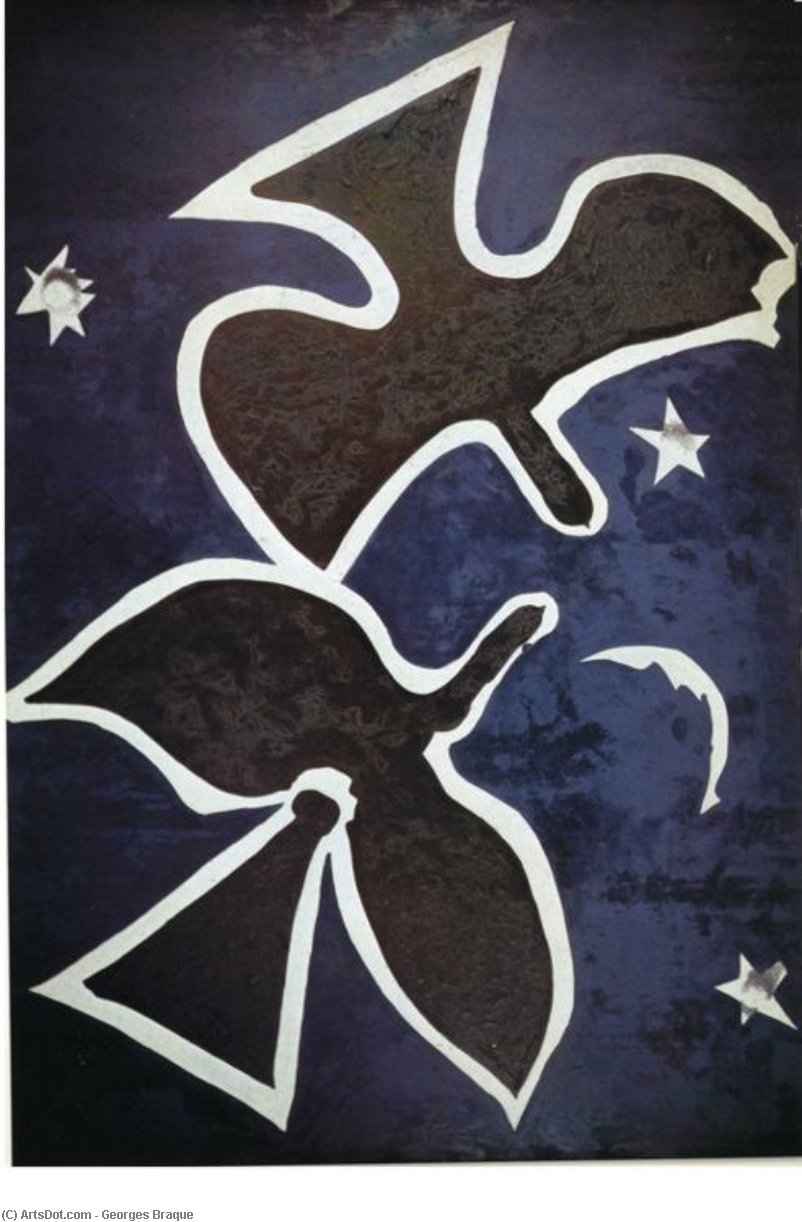
El techo del salón Henri II en el Louvre


 Ver más
Giclée / Impresión de arte
Impresiones giclée o en lienzo de calidad de museo con producción rápida y opciones de acabado flexibles. ( Comprar pintura hecha a mano Comprar imagen)




P118B $10

P118H $10

P118W $10

P438Z $10

P508JH $12

P508YH $12

P805H $10

P805Z $10

P919BZ $10

P919G $10

P919XJ $10

P959ZH $10

P968JZ $12

W106C $8

W218G $10

W218JH $8

W218Y $10

W307PJ $10

W316G $10

W316PJ $8

W316Y $10

W398PJ $8

W4111J $10

W500HY $15

W500JH $15

W692G $12

W849H $8

W940BG $15

W953PJ $8




Elija entre nuestros tamaños predefinidos que respetan las proporciones originales de la obra.

Puede introducir sus propias dimensiones para adaptarse a un marco o espacio específico. Si el tamaño seleccionado no coincide con las proporciones de la imagen original, recortaremos la obra de arte o extenderemos la imagen con un borde con efecto espejo o de color sólido. Se enviará una maqueta digital para su aprobación antes de que comience la producción.
Tenga en cuenta que la vista previa en pantalla no refleja el recorte o la extensión real. Solo la maqueta mostrará con precisión la composición final.
Aunque existen tamaños personalizados, recomendamos seleccionar una dimensión de la lista predefinida para preservar las proporciones originales.
Envío a todo el mundo () en 2 semanas en lugar de las 4/5 semanas estándar. (26 agosto)

Envío exprés gratuito a todo el mundo

Lienzo de lino de alta calidad

Seguro de envío total

Garantía de reembolso de impuestos aduaneros

Garantía de fidelidad cromática exacta

Política de devolución de 60 días (solo por defectos)

Garantía de devolución del 100% del dinero

Descuento por cantidad
 La opción de vidrio solo está disponible en tamaños inferiores a 110 cm.

El techo del salón Henri II en el Louvre
Giclée / Impresión de arte
Dimensiones de la reproducción
-


Precio total final
$ 62
Descripción de la pieza
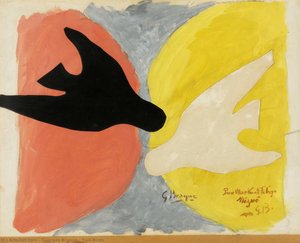
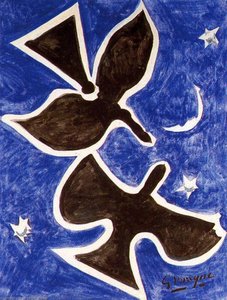
Ceiling In The Louvre: A Symphony of Flight and Color
The monumental ceiling painting by Georges Braque, “Birds,” residing in the Salle Henri II of the Louvre Museum, stands as a testament to both artistic innovation and profound contemplation. Commissioned during a pivotal moment in Braque’s career—a period marked by his collaboration with Pablo Picasso—this artwork transcends mere depiction; it embodies a distillation of Cubist principles into an emotionally resonant visual experience. Completed in 1952-1953, “Birds” represents more than just a decorative element within the palace's grandeur; it’s a carefully considered exploration of form, color, and movement—themes central to Braque’s artistic vision.The Artist's Vision: Cubism Revisited
Georges Braque’s approach to painting during this era was fundamentally shaped by his involvement with Cubism alongside Picasso. Unlike the fragmented perspectives characteristic of early Cubist works, “Birds” eschews dissection in favor of a more unified aesthetic. However, Braque retains the core tenets of Cubism—the simultaneous representation of multiple viewpoints—by employing geometric shapes and overlapping planes to create an illusionistic depth that defies conventional spatial conventions. This technique isn’t merely stylistic; it reflects Braque's intellectual preoccupation with challenging established artistic norms and redefining how artists perceive and portray reality. The artist himself articulated this intention, stating: “I saw large birds passing by. From this vision, I drew aerial shapes.”Color Palette and Composition: Harmony Amidst Chaos
The painting’s dominant color palette—characterized by deep blues, ochres, and blacks—creates a striking contrast against the luminous white ceiling surface. These hues aren't chosen arbitrarily; they serve to evoke the atmosphere of nocturnal flight, mirroring Braque’s observations during his visit to Camargue. The artist meticulously crafted the composition, positioning the birds in close proximity to one another, generating an interplay of visual tension and balance. This deliberate arrangement underscores Braque’s desire to convey not just what he saw but also how he felt—a sense of wonder and fascination at the beauty of nature's movements.Symbolism and Emotional Resonance
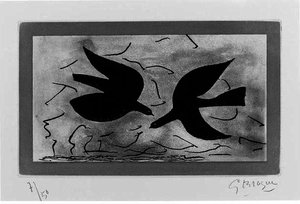
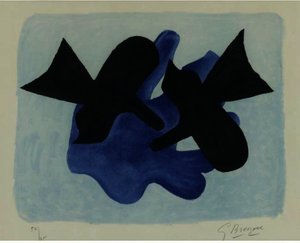
Beyond its formal considerations, “Birds” carries symbolic weight rooted in Braque’s lifelong interest in ornithology. Birds have long been associated with freedom, aspiration, and transcendence – concepts that align seamlessly with Cubist ideals of breaking free from traditional constraints. The repetition of bird motifs throughout Braque's oeuvre speaks to a recurring preoccupation with capturing fleeting moments of beauty and conveying profound emotional depth. As Braque himself noted, “The very concept, after the shock of inspiration, made them rise in my mind; this concept must fade to bring me closer to what concerns me: the construction of the pictorial fact.” The painting invites viewers to contemplate these themes—to consider the human condition against the backdrop of the natural world.A Legacy of Innovation
“Birds” stands as a cornerstone of Braque’s artistic legacy, demonstrating his unwavering commitment to experimentation and pushing the boundaries of visual representation. Its enduring appeal lies in its ability to capture both intellectual rigor and emotional sensitivity—qualities that define Braque's contribution to modern art history. The painting continues to inspire artists and collectors alike, serving as a reminder that true artistry resides not merely in technical skill but also in conveying profound ideas and emotions through carefully crafted visual language.Obras relacionadas
Biografía del artista
**vida temprana y formación**
georges braque, un destacado pintor francés, collageador, dibujante, grabador y escultor, nació el 13 de mayo de 1882 en Argelo, Val-d'Oise. Creció en Le Havre y inicialmente se formó para ser pintor de casas y decorador, como su padre y abuelo. Sin embargo, las inclinaciones artísticas de Braque lo llevaron a estudiar pintura en la École des Beaux-Arts en Le Havre de 1897 a 1899.**evolución artística y fauvismo**
En 1902, después de completar su aprendizaje con un decorador en París, Braque asistió a la Academia Humbert hasta 1904. Este período marcó su introducción al fauvismo, un estilo caracterizado por colores vibrantes y respuestas emocionales. Influenciado por las obras de henri matisse y andré derain, Braque adoptó un enfoque fauvista, como se ve en su pintura the patience (fauvismo, óleo sobre lienzo).**contribución al cubismo**
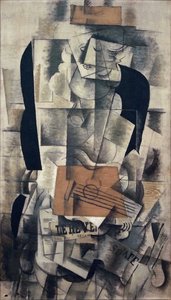
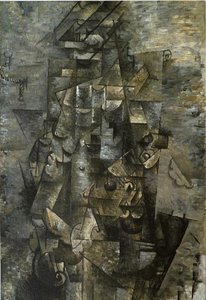
La colaboración de Braque con pablo picasso desde 1908 hasta 1912 llevó al desarrollo del cubismo. Sus obras cubistas analíticas, como georges braque: the patience y pablo picasso: clarinet(cubismo analítico, óleo sobre lienzo), se consideran hitos en la historia del arte.**legado y obras notables**
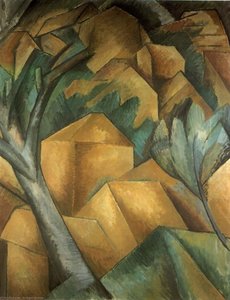
* Houses at l'Estaque: un testimonio del uso innovador de la geometría y la perspectiva simultánea de Braque. * The Patience(fauvismo, óleo sobre lienzo): demuestra el estilo fauvista de Braque. * Clarinet(cubismo analítico, óleo sobre lienzo): una obra cubista colaborativa con Picasso.**museos y colecciones**
* Musée d'Orsay: presenta una extensa colección de arte impresionista y postimpresionista, incluyendo obras de Braque. * Musée de l'Orangerie: exhibe una amplia gama de obras de arte, incluyendo las de Braque y otros artistas notables.- Descubra más sobre la vida y obra de Georges Braque en ArtsDot.com
- Explore la colección del Musée d'Orsay, que presenta obras de Braque y otros artistas, en Musée d'Orsay - Wikipedia
- Aprenda más sobre el fauvismo y su influencia en el desarrollo del cubismo con el movimiento artístico fauvista en ArtsDot.com
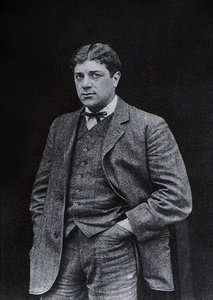
Georges Braque
1882 - 1963 , Francia
Datos clave
- Artistas Influenciados Por Este Artista: ['Pablo Picasso']
- Artistas Que Influyeron:
- Henri Matisse
- André Derain
- Paul Cézanne
- Fecha De Muerte: 31 de agosto de 1963
- Fecha De Nacimiento: 13 de mayo de 1882
- Lugar De Nacimiento: Argenteuil, Francia
- Movimiento Artístico: Cubismo, Fauvismo
- Nacionalidad: Francés
- Nombre Completo: Georges Braque
- Obras Notables:
- Casas en L'Estaque
- La paciencia (Fauvismo)
- Violin y Paleta
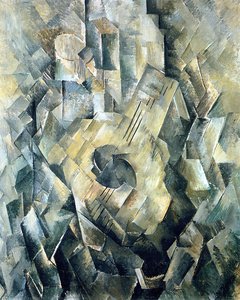
- Mandola
Artículos relacionados

Abstracción Geométrica: 10 Obras Maestras que Transformaron el Arte Moderno | ArtsDot
Descubre las 10 obras maestras de la abstracción geométrica que revolucionaron el arte moderno. Explora a Mondrian, Malevich y Kandinsky en ArtsDot.com. Reproducciones de alta calidad para tu hogar.

Kandinsky: Las 25 Obras Maestras del Pionero de la Abstracción | ArtsDot
Descubre las 25 obras maestras de Wassily Kandinsky, pionero del arte abstracto. Explora su expresionismo, composiciones únicas y la historia detrás de cada cuadro. Reproducciones de alta calidad para decorar tu hogar con arte moderno en ArtsDot.com.
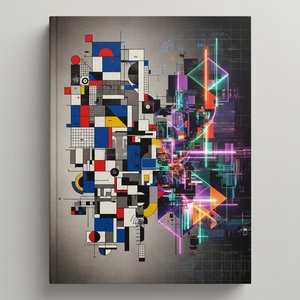
Beyond Form & Color: Geometric Abstraction's Evolution in 20th/21st Century Art
Explore the evolution of geometric abstraction from Cubism to contemporary art. Discover key artists like Malevich & Mondrian, investment insights, and expert collecting advice at ArtsDot.
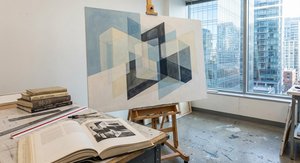
Beyond Form & Color: Geometric Abstraction's Enduring Legacy in Art History
Explore the captivating world of geometric abstraction! Discover its origins, key artists like Malevich & Mondrian, and why this movement remains highly valued by art collectors today. Expert insights at ArtsDot.
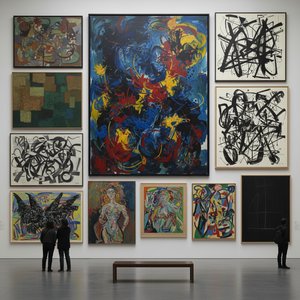
Expresionismo Abstracto: 10 Obras Maestras que Transformaron el Arte |
Descubre las 10 obras maestras del Expresionismo Abstracto: Pollock, Rothko y más. Explora la historia, técnica y significado de estos lienzos icónicos. Reproducciones de arte exclusivas en .