 Ver en contexto
 Enviar
 Compartir
 Detalles

 Descargar
 Similares
 Radiografía
 Presentación de diapositivas
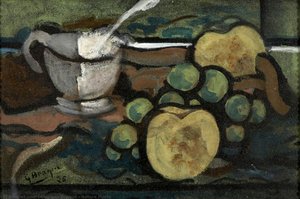
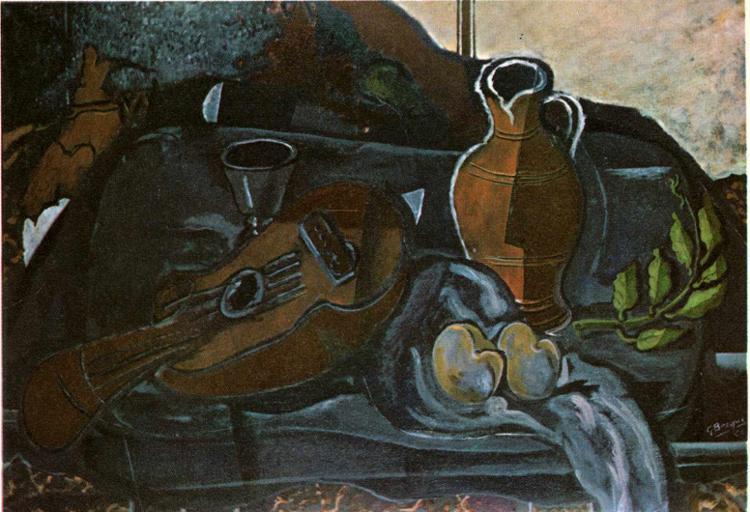
Mandolin, Glass, Pot and Fruit
 Oil On Canvas
- WallArt
- Cubism
 1927
1927 81.0 x 116.0 cm
 Ver más
Reproducción al óleo hecha a mano
Óleo sobre lienzo pintado a mano en el tamaño y marco de su elección, realizado por encargo por nuestros artistas. ( Comprar impresión Comprar imagen)




P118B $10

P118H $10

P118W $10

P438Z $10

P508JH $12

P508YH $12

P805H $10

P805Z $10

P919BZ $10

P919G $10

P919XJ $10

P959ZH $10

P968JZ $12

W106C $8

W218G $10

W218JH $8

W218Y $10

W307PJ $10

W316G $10

W316PJ $8

W316Y $10

W398PJ $8

W4111J $10

W500HY $15

W500JH $15

W692G $12

W849H $8

W940BG $15

W953PJ $8




Elija entre nuestros tamaños predefinidos que respetan las proporciones originales de la obra.

Puede ingresar sus propias dimensiones para adaptarse a un marco o espacio específico. Si el tamaño seleccionado no coincide con las proporciones de la imagen original, recortaremos la obra o extenderemos la pintura con elementos adicionales pintados a mano. Se le enviará una maqueta digital para su aprobación antes de comenzar la producción.
Tenga en cuenta que la vista previa en pantalla no refleja el recorte o la extensión reales. Solo la maqueta mostrará con precisión la composición final.
Si bien existen tamaños personalizados, recomendamos seleccionar una dimensión de la lista predefinida para preservar las proporciones originales.
Tras realizar el pedido, el equipo de ArtsDot.com enviará un correo electrónico al cliente para solicitar instrucciones y proporcionarle una vista previa del boceto.
Envío a todo el mundo () en 3-4 semanas en lugar de las 5 semanas estándar. (3 septiembre). Sin comprometer la calidad.

Envío exprés gratuito a todo el mundo

Lienzo de lino de alta calidad

Seguro de envío total

Garantía de reembolso de impuestos aduaneros

Garantía de fidelidad cromática exacta

Política de devolución de 60 días (solo por defectos)

Garantía de devolución del 100% del dinero

Descuento por cantidad
 La opción de vidrio solo está disponible en tamaños inferiores a 110 cm.

Mandolin, Glass, Pot and Fruit
Técnica de reproducción
Dimensiones de la reproducción
-


Precio total final
$ 263
The Quiet Revolution: An Introduction to Braque's Still Life
Georges Braque’s “Mandolin, Glass, Pot and Fruit” – a deceptively simple composition of a mandolin, a glass, a pot, and scattered apples – is far more than the sum of its parts. Painted in 1927 during his pivotal period within Cubism, this work represents a radical departure from traditional representation, offering instead a fragmented, multi-faceted exploration of form, space, and perception. It’s a window into Braque's intellectual and artistic journey, a moment where the established rules of painting were deliberately dismantled to reveal a new way of seeing – and depicting – the world. The piece isn’t merely a depiction of objects; it’s an invitation to engage in a visual puzzle, demanding that we actively reconstruct the scene within our own minds.

Cubism’s Deconstruction: Breaking Down the Familiar
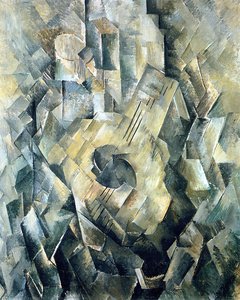
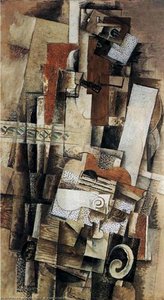
Braque's work in this period is inextricably linked to the development of Cubism alongside Pablo Picasso. Rather than striving for a single, fixed viewpoint, they sought to capture an object from multiple perspectives simultaneously. “Mandolin, Glass, Pot and Fruit” exemplifies this approach brilliantly. The mandolin, rendered with sharp angles and geometric planes, seems to emerge from several positions at once; the glass reflects distorted fragments of the surrounding space, while the fruit appears both solid and ephemeral. This fragmentation isn’t arbitrary; it's a deliberate strategy to challenge our conventional understanding of depth and perspective – core tenets of Renaissance painting. The muted palette—earthy browns, ochres, and subtle greens—further emphasizes this sense of detachment from traditional realism, contributing to the work’s contemplative mood.
The influence of Paul Cézanne is particularly evident here. Braque deeply admired Cézanne's exploration of form and structure, particularly his use of geometric shapes to represent natural forms. Cézanne’s emphasis on underlying structures and multiple viewpoints paved the way for Cubism’s radical approach. The careful arrangement of objects within the composition echoes Cézanne’s own still lifes, but with a distinctly fractured and abstracted quality.
Symbolic Resonance: Beyond the Objects
While seemingly straightforward, “Mandolin, Glass, Pot and Fruit” is rich in symbolic potential. The mandolin itself, an instrument of music and leisure, suggests a moment of quiet contemplation – a pause within the bustle of daily life. The glass, often associated with clarity and reflection, could represent introspection or perhaps the multifaceted nature of perception. The fruit, symbols of abundance and fertility, might allude to themes of nourishment and earthly pleasures. However, Braque deliberately avoids overt symbolism, allowing the viewer to project their own interpretations onto the scene. This ambiguity is a hallmark of Cubist art – encouraging engagement and fostering multiple readings.
A Legacy of Innovation: Braque’s Enduring Influence
“Mandolin, Glass, Pot and Fruit” stands as a pivotal work in the history of modern art. It demonstrates Braque's mastery of Cubism’s principles while simultaneously revealing his unique artistic vision. The painting’s influence can be seen in countless subsequent works by artists who sought to challenge traditional representation and explore new ways of seeing. Reproductions, like those offered at ArtsDot.com, provide a remarkable opportunity to experience this groundbreaking artwork firsthand, appreciating the subtle nuances of Braque's technique and the profound impact of his artistic innovations. It’s a piece that continues to resonate with viewers today, inviting us to reconsider our own perceptions of reality and the power of art to transform our understanding of the world.
Obras relacionadas
Biografía del artista
**vida temprana y formación**
georges braque, un destacado pintor francés, collageador, dibujante, grabador y escultor, nació el 13 de mayo de 1882 en Argelo, Val-d'Oise. Creció en Le Havre y inicialmente se formó para ser pintor de casas y decorador, como su padre y abuelo. Sin embargo, las inclinaciones artísticas de Braque lo llevaron a estudiar pintura en la École des Beaux-Arts en Le Havre de 1897 a 1899.**evolución artística y fauvismo**
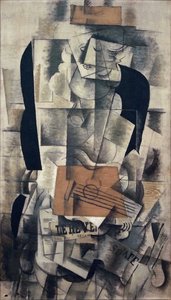
En 1902, después de completar su aprendizaje con un decorador en París, Braque asistió a la Academia Humbert hasta 1904. Este período marcó su introducción al fauvismo, un estilo caracterizado por colores vibrantes y respuestas emocionales. Influenciado por las obras de henri matisse y andré derain, Braque adoptó un enfoque fauvista, como se ve en su pintura the patience (fauvismo, óleo sobre lienzo).**contribución al cubismo**
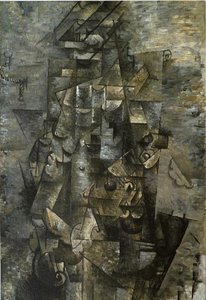
La colaboración de Braque con pablo picasso desde 1908 hasta 1912 llevó al desarrollo del cubismo. Sus obras cubistas analíticas, como georges braque: the patience y pablo picasso: clarinet(cubismo analítico, óleo sobre lienzo), se consideran hitos en la historia del arte.**legado y obras notables**
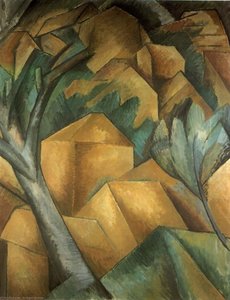
* Houses at l'Estaque: un testimonio del uso innovador de la geometría y la perspectiva simultánea de Braque. * The Patience(fauvismo, óleo sobre lienzo): demuestra el estilo fauvista de Braque. * Clarinet(cubismo analítico, óleo sobre lienzo): una obra cubista colaborativa con Picasso.**museos y colecciones**
* Musée d'Orsay: presenta una extensa colección de arte impresionista y postimpresionista, incluyendo obras de Braque. * Musée de l'Orangerie: exhibe una amplia gama de obras de arte, incluyendo las de Braque y otros artistas notables.- Descubra más sobre la vida y obra de Georges Braque en ArtsDot.com
- Explore la colección del Musée d'Orsay, que presenta obras de Braque y otros artistas, en Musée d'Orsay - Wikipedia
- Aprenda más sobre el fauvismo y su influencia en el desarrollo del cubismo con el movimiento artístico fauvista en ArtsDot.com
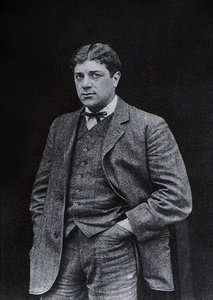
Georges Braque
1882 - 1963 , Francia
Datos clave
- Artistas Influenciados Por Este Artista: ['Pablo Picasso']
- Artistas Que Influyeron:
- Henri Matisse
- André Derain
- Paul Cézanne
- Fecha De Muerte: 31 de agosto de 1963
- Fecha De Nacimiento: 13 de mayo de 1882
- Lugar De Nacimiento: Argenteuil, Francia
- Movimiento Artístico: Cubismo, Fauvismo
- Nacionalidad: Francés
- Nombre Completo: Georges Braque
- Obras Notables:
- Casas en L'Estaque
- La paciencia (Fauvismo)
- Violin y Paleta
- Mandola
Artículos relacionados

Georges Braque: Las 25 Obras Maestras del Cubismo y su Legado en el Arte Moderno
Descubre las 25 obras maestras de Georges Braque, pionero del cubismo. Explora su innovadora técnica, colores y el legado del arte moderno francés. Reproducciones de alta calidad en ArtsDot.com. ¡Encuentra tu inspiración!
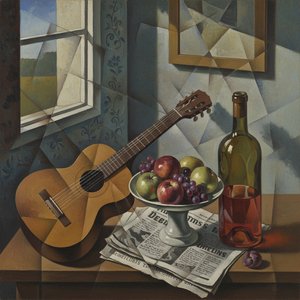
Deconstructing Reality: A Comprehensive Exploration of Cubist Still Life
Explore the revolutionary world of Cubist Still Life with ArtsDot. Discover Picasso & Braque's groundbreaking techniques, its philosophical roots, and lasting impact on modern art. Expert insights for collectors.
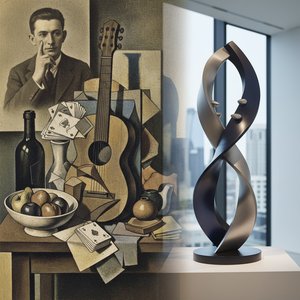
Georges Braque: Pioneering Cubism & the Evolution of Modern Form
Explore the revolutionary art of Georges Braque, a pioneer of Cubism alongside Picasso. Discover his artistic evolution, key works, and lasting impact on modern art. A guide for discerning collectors.
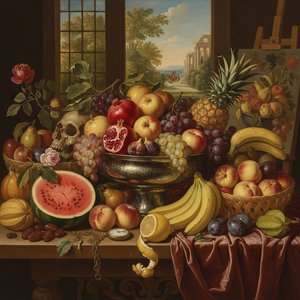
The Bountiful Still Life: Symbolism & Artistic Representation of Fruit Across Art History
Explore the rich history of still life painting & the symbolism of fruit across art movements. Discover masterpieces from Caravaggio to Cézanne with ArtsDot – expert guidance & museum-quality reproductions.
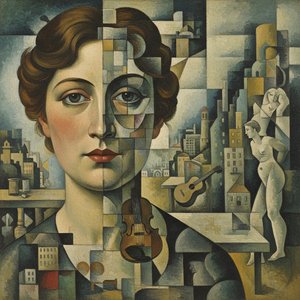
Deconstruyendo la Realidad: El Impacto Revolucionario del Cubismo en el Arte del Siglo XX
Descubra el revolucionario impacto del Cubismo en el arte del siglo XX. Análisis profundo de Picasso, Braque y su legado. Guía para coleccionistas apasionados e inversores.