

 Ver en contexto
 Enviar
 Compartir
 Detalles

 Descargar
 Similares
 Radiografía
 Presentación de diapositivas
 Estadísticas
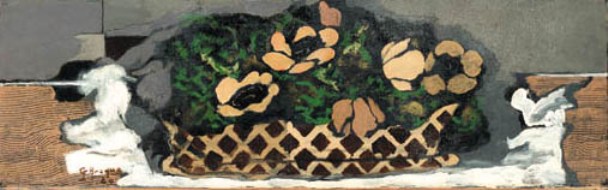
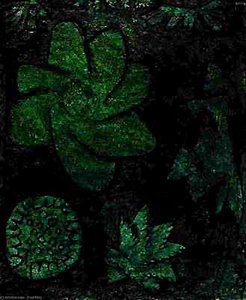
Trash anemones

 Ver más
Adquiera una imagen digital de alta resolución y optimizada, muy superior a la vista previa en línea.
Cada archivo es preparado meticulosamente por nuestros especialistas internos mediante el uso de herramientas avanzadas y un experto retoque manual. Nos aseguramos de que cada imagen posea una claridad excepcional, una precisión cromática impecable y un detalle minucioso.
El archivo final se entrega por correo electrónico en un plazo de 72 horas, optimizado para su uso inmediato en entornos profesionales, editoriales y de impresión. Esta es la misma calidad en la que confían los estudios de diseño, las editoriales y las galerías de primer nivel.
Imagen Digital
Descarga un archivo de alta resolución para exhibición personal, impresión y proyectos creativos. ( Cambiar a Impresión Comprar pintura hecha a mano)
Incluido en cada pedido de imágenes digitales
Entrega digital experta, garantizada.
Al elegir ArtsDot.com, no solo está adquiriendo una imagen; está recibiendo una obra de arte digital mejorada profesionalmente, elaborada con precisión y respaldada por una garantía de satisfacción. Esto es todo lo que incluye su pedido, automáticamente:

Entrega rápida por email
Recibirá su archivo de imagen digital en alta resolución por correo electrónico en un plazo de 72 horas tras realizar su pedido, listo para su uso inmediato.

Archivo digital optimizado por IA
Su obra de arte se optimiza profesionalmente mediante herramientas avanzadas de IA y edición manual, garantizando el máximo detalle, claridad y precisión cromática.

Reenvío gratuito de por vida
¿Has borrado o perdido tu archivo por error? No te preocupes: te lo volveremos a enviar en cualquier momento, sin coste adicional.

Sin gastos de importación, siempre
Disfrute de su obra de arte al instante sin aduanas, aranceles ni gastos de envío; las descargas digitales siempre están libres de impuestos.

Garantía de fidelidad de color
Garantizamos que su imagen digital refleje los colores originales con la mayor fidelidad posible, mediante el uso de herramientas profesionales y gestión del color.

Garantía de satisfacción de 100 días
Si no está satisfecho con su imagen digital, la revisaremos o le reembolsaremos el 100% en un plazo de 100 días, sin preguntas.

100% Garantía de devolución de dinero
¿No está satisfecho? Obtenga un reembolso completo dentro de los 100 días posteriores a la recepción de su archivo digital, sin preguntas.

Descuentos por pedidos grandes
Compra 3 imágenes, ahorra 10% - Compra 5, ahorra 15% - Compra 10+, ahorra 20%. Ideal para proyectos creativos, galerías y agencias.
Georges Braque’s “Trash Anemones”: A Cubist Exploration of Decay and Beauty
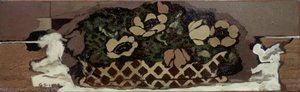
“Trash Anemones,” painted by Georges Braque in 1925, isn't merely a depiction of marine life; it’s a meticulously constructed meditation on the transient nature of beauty, decay, and the very act of observation. This vibrant canvas, now housed within the collections of museums worldwide, offers a compelling glimpse into the heart of Cubism – a movement that fundamentally challenged traditional artistic representation and invited viewers to actively participate in constructing meaning.
The painting immediately arrests the eye with its bold palette: a swirling vortex of browns, ochres, greens, and yellows dominates the composition. Braque masterfully employs a technique reminiscent of both collage and oil paint, layering textures that mimic the rough surfaces of seaweed and decaying organic matter. The central figure – a stylized basket overflowing with what appears to be discarded anemones – is rendered in fragmented geometric shapes, characteristic of Cubism’s deconstructionist approach. Rather than striving for photographic realism, Braque breaks down forms into their essential components, presenting them simultaneously from multiple viewpoints. This creates an unsettling yet captivating sense of spatial ambiguity, forcing the viewer to actively piece together the image.
The Roots of Fragmentation: Cubism and its Revolutionary Spirit
To fully appreciate “Trash Anemones,” it’s crucial to understand the historical context in which it was created. Braque, alongside Pablo Picasso, spearheaded the development of Cubism during the early 20th century – a radical departure from the prevailing artistic norms of the time. Influenced by Paul Cézanne's emphasis on geometric forms and his exploration of multiple perspectives, Braque and Picasso sought to represent objects not as they appear to the eye in a single moment, but as they exist within the mind’s perception. This involved dissecting subjects into their constituent parts, reassembling them in an abstract manner, and presenting them from various viewpoints simultaneously on a single canvas.
The influence of Paul Cézanne is particularly evident in Braque's use of flattened planes and simplified forms. However, unlike Cézanne’s focus on capturing the essence of nature, Cubism aimed to capture the *process* of seeing – the way our minds actively construct reality through perception. “Trash Anemones” embodies this principle perfectly, reflecting a world viewed not as a static entity but as a dynamic interplay of shapes and colors.
Symbolic Layers: Decay, Beauty, and the Observer
Beyond its formal innovations, "Trash Anemones" is rich in symbolic potential. The title itself immediately suggests a juxtaposition of beauty and decay – a deliberate provocation that invites contemplation on the ephemeral nature of existence. The discarded anemones, rendered with a delicate yet unsettling detail, could be interpreted as symbols of lost beauty, fleeting moments, or even the inevitable process of decomposition. The basket, acting as a container, might represent memory, preservation, or perhaps simply the act of collecting and categorizing the fragments of experience.
Furthermore, the inclusion of seemingly random elements – the fragmented shapes, the muted color palette – hints at the subjective nature of perception. Braque isn’t merely depicting an anemone; he's presenting a *representation* of it, filtered through his own artistic vision and influenced by his personal experiences. The presence of letters and numbers within the composition, echoing earlier Cubist experiments with typography, further underscores this idea – suggesting that art itself is a form of communication, a system of signs and symbols.
A Timeless Reflection: Emotional Resonance and Artistic Legacy
“Trash Anemones” continues to resonate with viewers today not only for its groundbreaking artistic innovations but also for its profound emotional depth. The painting’s unsettling beauty evokes a sense of melancholy, prompting us to consider the transient nature of all things and the inherent fragility of beauty itself. It's a testament to Braque's ability to transform ordinary subjects into extraordinary works of art – capturing not just what he saw but also what he felt.
Reproductions of this iconic painting offer an accessible way to experience its power and complexity, bringing its evocative imagery into any interior space. Whether displayed in a modern gallery or a private home, “Trash Anemones” remains a potent reminder of the transformative potential of art and its ability to challenge our perceptions of reality.
Obras relacionadas

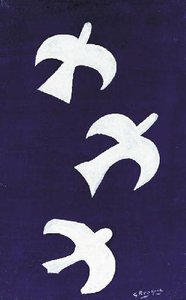
Biografía del artista
**vida temprana y formación**
georges braque, un destacado pintor francés, collageador, dibujante, grabador y escultor, nació el 13 de mayo de 1882 en Argelo, Val-d'Oise. Creció en Le Havre y inicialmente se formó para ser pintor de casas y decorador, como su padre y abuelo. Sin embargo, las inclinaciones artísticas de Braque lo llevaron a estudiar pintura en la École des Beaux-Arts en Le Havre de 1897 a 1899.**evolución artística y fauvismo**
En 1902, después de completar su aprendizaje con un decorador en París, Braque asistió a la Academia Humbert hasta 1904. Este período marcó su introducción al fauvismo, un estilo caracterizado por colores vibrantes y respuestas emocionales. Influenciado por las obras de henri matisse y andré derain, Braque adoptó un enfoque fauvista, como se ve en su pintura the patience (fauvismo, óleo sobre lienzo).**contribución al cubismo**
La colaboración de Braque con pablo picasso desde 1908 hasta 1912 llevó al desarrollo del cubismo. Sus obras cubistas analíticas, como georges braque: the patience y pablo picasso: clarinet(cubismo analítico, óleo sobre lienzo), se consideran hitos en la historia del arte.**legado y obras notables**
* Houses at l'Estaque: un testimonio del uso innovador de la geometría y la perspectiva simultánea de Braque. * The Patience(fauvismo, óleo sobre lienzo): demuestra el estilo fauvista de Braque. * Clarinet(cubismo analítico, óleo sobre lienzo): una obra cubista colaborativa con Picasso.**museos y colecciones**
* Musée d'Orsay: presenta una extensa colección de arte impresionista y postimpresionista, incluyendo obras de Braque. * Musée de l'Orangerie: exhibe una amplia gama de obras de arte, incluyendo las de Braque y otros artistas notables.- Descubra más sobre la vida y obra de Georges Braque en ArtsDot.com
- Explore la colección del Musée d'Orsay, que presenta obras de Braque y otros artistas, en Musée d'Orsay - Wikipedia
- Aprenda más sobre el fauvismo y su influencia en el desarrollo del cubismo con el movimiento artístico fauvista en ArtsDot.com
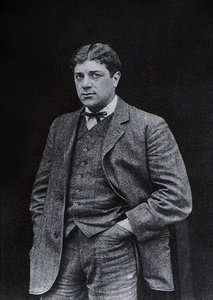
Georges Braque
1882 - 1963 , Francia
Breves datos
- Artistas Influenciados Por Este Artista: ['Pablo Picasso']
- Artistas Que Influyeron:
- Henri Matisse
- André Derain
- Paul Cézanne
- Fecha De Muerte: 31 de agosto de 1963
- Fecha De Nacimiento: 13 de mayo de 1882
- Lugar De Nacimiento: Argenteuil, Francia
- Movimiento Artístico: Cubismo, Fauvismo
- Nacionalidad: Francés
- Nombre Completo: Georges Braque
- Obras Notables:
- Casas en L'Estaque
- La paciencia (Fauvismo)
- Violin y Paleta
- Mandola