 Ver en contexto
 Enviar
 Compartir
 Detalles

 Descargar
 Similares
 Radiografía
 Presentación de diapositivas
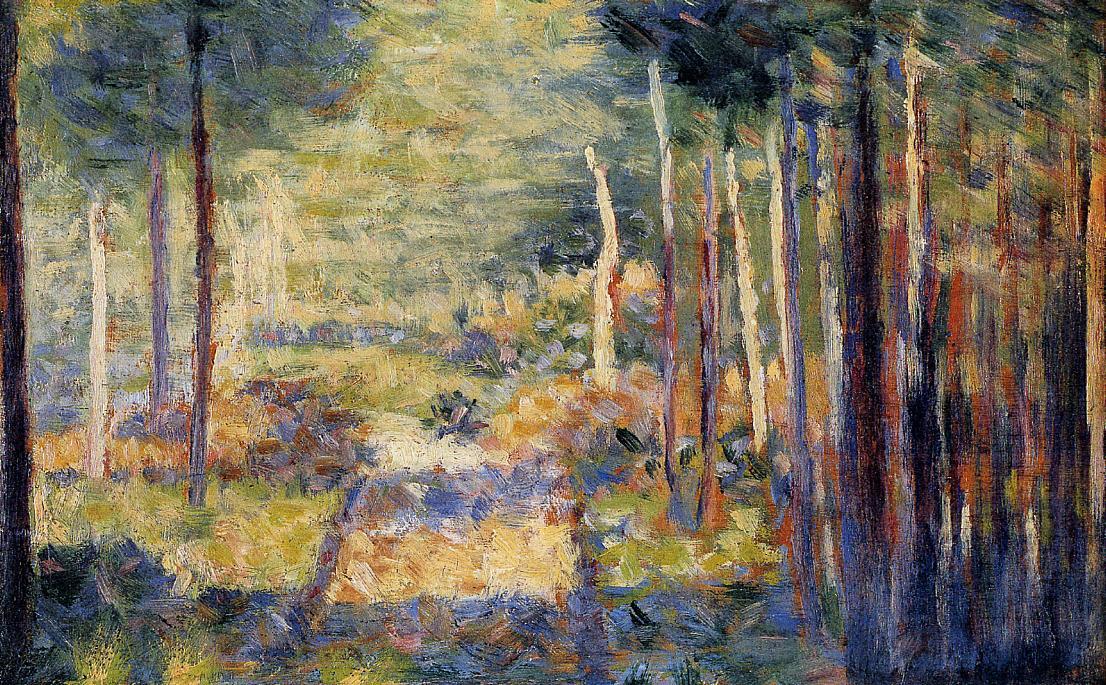
Forest Path, Barbizon


 Ver más
Reproducción al óleo hecha a mano
Óleo sobre lienzo pintado a mano en el tamaño y marco de su elección, realizado por encargo por nuestros artistas. ( Comprar impresión Comprar imagen)




P118B $10

P118H $10

P118W $10

P438Z $10

P508JH $12

P508YH $12

P805H $10

P805Z $10

P919BZ $10

P919G $10

P919XJ $10

P959ZH $10

P968JZ $12

W106C $8

W218G $10

W218JH $8

W218Y $10

W307PJ $10

W316G $10

W316PJ $8

W316Y $10

W398PJ $8

W4111J $10

W500HY $15

W500JH $15

W692G $12

W849H $8

W940BG $15

W953PJ $8




Elija entre nuestros tamaños predefinidos que respetan las proporciones originales de la obra.

Puede ingresar sus propias dimensiones para adaptarse a un marco o espacio específico. Si el tamaño seleccionado no coincide con las proporciones de la imagen original, recortaremos la obra o extenderemos la pintura con elementos adicionales pintados a mano. Se le enviará una maqueta digital para su aprobación antes de comenzar la producción.
Tenga en cuenta que la vista previa en pantalla no refleja el recorte o la extensión reales. Solo la maqueta mostrará con precisión la composición final.
Si bien existen tamaños personalizados, recomendamos seleccionar una dimensión de la lista predefinida para preservar las proporciones originales.
Tras realizar el pedido, el equipo de ArtsDot.com enviará un correo electrónico al cliente para solicitar instrucciones y proporcionarle una vista previa del boceto.
Envío a todo el mundo () en 3-4 semanas en lugar de las 5 semanas estándar. (22 agosto). Sin comprometer la calidad.

Envío exprés gratuito a todo el mundo

Lienzo de lino de alta calidad

Seguro de envío total

Garantía de reembolso de impuestos aduaneros

Garantía de fidelidad cromática exacta

Política de devolución de 60 días (solo por defectos)

Garantía de devolución del 100% del dinero

Descuento por cantidad
 La opción de vidrio solo está disponible en tamaños inferiores a 110 cm.

Forest Path, Barbizon
Técnica de reproducción
Dimensiones de la reproducción
-


Precio total final
$ 263
Descripción de la obra
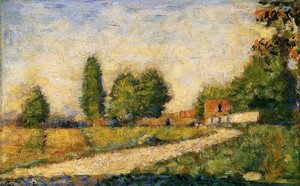
A Glimpse of Tranquility: Seurat’s “Forest Path, Barbizon”
Georges Pierre Seurat's "Forest Path, Barbizon," painted in 1883, is more than just a depiction of a woodland scene; it’s a meticulously constructed meditation on light, color, and the very essence of perception. Created during his pivotal period exploring Pointillism – a technique he pioneered alongside Paul Signac – this work embodies Seurat's rigorous scientific approach to art while simultaneously radiating an undeniable sense of serenity. The painting transports us to the heart of the Barbizon Forest, a region renowned for its light and atmospheric qualities that drew artists seeking to capture the fleeting effects of nature. Unlike the Impressionists who focused on capturing immediate visual impressions, Seurat sought to analyze and deconstruct these impressions into their fundamental components: color and light.The Science of Color – Pointillism in Action
At first glance, “Forest Path, Barbizon” might appear deceptively simple. However, a closer examination reveals the extraordinary complexity woven into its surface. Seurat employed the Pointillist technique—a revolutionary approach where tiny dots of pure color are applied to the canvas, allowing the viewer’s eye to blend them optically. This wasn't haphazard application; it was based on his study of optics and color theory, specifically Charles Blanc’s theories on how the human eye perceives color. Seurat believed that by using a vast array of colors – often juxtaposing complementary hues – he could create an illusion of depth, luminosity, and atmospheric perspective without resorting to traditional blending methods. The result is a shimmering surface, alive with subtle variations in tone and hue, mimicking the way sunlight filters through leaves and branches. The meticulous arrangement of these dots creates a vibrant, almost vibrating effect, particularly noticeable when viewed from a distance.Barbizon’s Influence – Light, Atmosphere, and the Pursuit of Truth
The Barbizon school of painters, to which Seurat belonged, represented a significant shift in artistic practice. Rejecting the studio-bound traditions of academic art, these artists sought to paint *en plein air*—outdoors—directly from nature. They were particularly interested in capturing the subtle shifts in light and atmosphere that characterized the Fontainebleau Forest, a location favored for its diffused sunlight and rich colors. Seurat’s “Forest Path” is deeply rooted in this Barbizon aesthetic, prioritizing observation and scientific analysis over purely representational accuracy. The path itself, winding through the trees, becomes a symbolic invitation—a journey into the heart of nature's beauty and the artist’s intellectual pursuit.Symbolism and Emotional Resonance – A Path to Contemplation
Beyond its technical brilliance, “Forest Path, Barbizon” possesses a quiet emotional resonance. The empty path suggests solitude and contemplation, inviting the viewer to step into the scene and experience it for themselves. The dappled sunlight filtering through the trees creates a sense of warmth and tranquility, while the muted greens and browns evoke a feeling of grounding and connection with nature. The single bird perched on a branch adds a touch of life and movement, hinting at the hidden wonders within this serene landscape. Seurat’s work isn't simply about depicting a forest; it’s about capturing a state of mind—a moment of peaceful reflection amidst the beauty of the natural world. It speaks to our innate desire for escape and connection with something larger than ourselves.- Dimensions: Unknown
- Date: 1883
- Artist: Georges Seurat
Obras relacionadas
Biografía del artista
Georges Seurat: Un Pionero del Neoimpresionismo
Vida Temprana y Educación
- Nacido: 2 de diciembre de 1859, en París, Francia.
- La familia de Seurat se mudó al Boulevard de Magenta poco después de su nacimiento.
- Su padre, Antoine Chrysostome Seurat, fue un exfuncionario legal que se hizo rico a través de la especulación inmobiliaria.
- Comenzó su formación artística en la École Municipale de Sculpture et Dessin, cerca de su hogar, bajo el escultor Justin Lequien.
- En 1878, se matriculó en la prestigiosa École des Beaux-Arts, estudiando bajo Henri Lehmann.
Desarrollo Artístico e Influencias
- La personalidad artística de Seurat fue una mezcla única de sensibilidad y abstracción lógica. Combinó una delicada sensibilidad con la precisión matemática.
- Influencias: Si bien las influencias específicas son debatidas, estudió las teorías del color de científicos como Michel Eugène Chevreul y Ogden Rood.
- Inicialmente experimentó con técnicas de dibujo tradicionales antes de desarrollar su estilo distintivo.
- Sus primeras obras muestran interés en la pintura académica pero gradualmente se movieron hacia un enfoque más innovador.
Chromoluminarismo y Puntillismo
- Seurat ideó las técnicas de chromoluminarismo (la ciencia del color) y puntillismo, aplicando pequeños puntos distintos de color puro a un lienzo.
- Usó lápiz Conté para dibujos detallados en papel con superficie rugosa como parte de su proceso.
- Objetivo del Puntillismo: La idea era que la vista del espectador fusionaría ópticamente estos colores, creando un efecto vibrante y luminoso.
Logros Importantes y Obras Notables
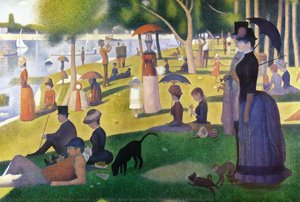
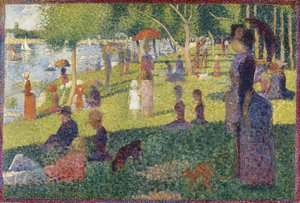
- Un Domingo Tarde en la Isla de la Grande Jatte (1884-1886): Su obra más famosa, que marca el comienzo del Neoimpresionismo. Ejemplifica su técnica puntillista y su enfoque meticuloso.
- Alfalfa, Saint-Denis (1886-1887): Demuestra su aplicación de la teoría del color a un paisaje rural.
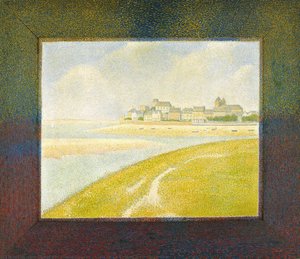
- Paisaje en Saint-Ouen (1882-1883): Un ejemplo temprano que muestra su estilo en evolución e interés por la luz y la atmósfera.
- La Torre Eiffel (1889): Una representación del icónico monumento parisino, representada utilizando técnicas puntillistas.
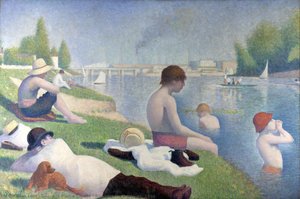
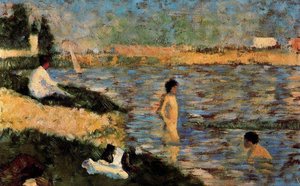
- Bañistas en Asnières (1884): Otra obra significativa que explora el ocio y la vida moderna con su estilo distintivo.
Significado Histórico y Legado
- El trabajo de Seurat influyó profundamente en el desarrollo del arte moderno, particularmente a través de su énfasis en la expresión subjetiva y la exploración de nuevas técnicas.
- Allanó el Camino: Allanó el camino para movimientos como el Fauvismo, el Cubismo y el Expresionismo Abstracto.
- Su enfoque científico del arte desafió las convenciones artísticas tradicionales.
- A pesar de su corta vida (murió a los 31 años), Seurat dejó una marca indeleble en la historia del arte, inspirando a generaciones de artistas con su visión innovadora.
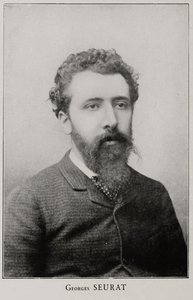
Georges Pierre Seurat
1859 - 1891 , Francia
Datos clave
- Artistas Influenciados:
- Fauvismo
- Cubismo
- Expresionismo Abstracto
- Artistas Que Influyeron:
- Michel Eugène Chevreul
- Ogden Rood
- Fecha De Nacimiento: 2 de diciembre de 1859
- Lugar De Nacimiento: París, Francia
- Movimiento Artístico: Neoimpresionismo
- Nacionalidad: Francés
- Nombre Completo: Georges Pierre Seurat
- Obras Notables:
- Un domingo en la Grande Jatte
- Bañistas en Asnières
- La Torre Eiffel
Artículos relacionados
Georges Seurat: Las 25 Obras Maestras del Pionero Puntillista | ArtsDot
Descubre las 25 obras maestras de Georges Seurat, el innovador del puntillismo. Explora su técnica única, colores vibrantes y legado artístico en ArtsDot.com. Reproducciones de arte de museo para tu hogar.

Paisajes Románticos: 10 Obras Maestras que Definieron un Movimiento Artístico
Descubre los 10 paisajes románticos más influyentes de artistas como Caspar David Friedrich y Turner. Explora la belleza, el simbolismo y las técnicas del movimiento romántico. Reproducciones de arte exclusivas en ArtsDot.com.

Evocations of Place: A Historical Journey Through Landscape Art
Explore the rich history of landscape art with ArtsDot. Discover renowned artists, movements like Impressionism & Romanticism, and expert guidance for collecting timeless pieces. Find your perfect serene escape today!
Evoking Nature's Sublime: A Comprehensive Exploration of 19th-Century Landscape Painting
Explore the captivating world of 19th-century landscape painting! Discover renowned artists like Friedrich & Monet, key movements, and find the perfect artwork to bring nature's serenity into your home. Expert insights at ArtsDot.

John Constable: Las 25 Obras Maestras del Paisaje Inglés | ArtsDot
Descubre las 25 obras maestras de John Constable, el pintor romántico inglés que capturó la belleza del paisaje. Explora su técnica, historia y significado en ArtsDot.com. Reproducciones de arte de alta calidad para tu hogar.