

 Ver en contexto
 Enviar
 Compartir
 Detalles

 Descargar
 Similares
 Radiografía
 Presentación de diapositivas
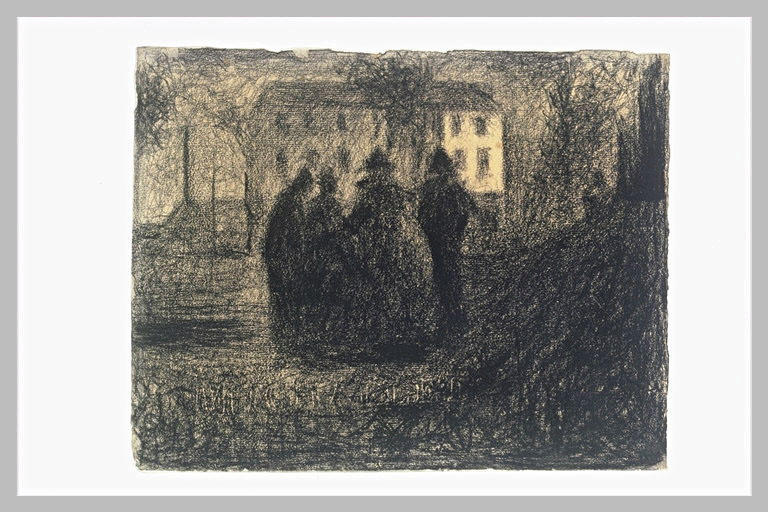
Group of figures in front of a house and some trees
 Acrylic On Canvas
- WallArt
- Pointillism
 24.0 x 31.0 cm
 Ver más
Adquiera una imagen digital de alta resolución y optimizada, muy superior a la vista previa en línea.
Cada archivo es preparado meticulosamente por nuestros especialistas internos mediante el uso de herramientas avanzadas y un experto retoque manual. Nos aseguramos de que cada imagen posea una claridad excepcional, una precisión cromática impecable y un detalle minucioso.
El archivo final se entrega por correo electrónico en un plazo de 72 horas, optimizado para su uso inmediato en entornos profesionales, editoriales y de impresión. Esta es la misma calidad en la que confían los estudios de diseño, las editoriales y las galerías de primer nivel.
Imagen Digital
Descarga un archivo de alta resolución para exhibición personal, impresión y proyectos creativos. ( Comprar impresión Comprar pintura hecha a mano)
Incluido en cada pedido de imágenes digitales
Entrega digital experta, garantizada.
Al elegir ArtsDot.com, no solo está adquiriendo una imagen; está recibiendo una obra de arte digital mejorada profesionalmente, elaborada con precisión y respaldada por una garantía de satisfacción. Esto es todo lo que incluye su pedido, automáticamente:

Entrega rápida por email
Recibirá su archivo de imagen digital en alta resolución por correo electrónico en un plazo de 72 horas tras realizar su pedido, listo para su uso inmediato.

Archivo digital optimizado por IA
Su obra de arte se optimiza profesionalmente mediante herramientas avanzadas de IA y edición manual, garantizando el máximo detalle, claridad y precisión cromática.

Reenvío gratuito de por vida
¿Has borrado o perdido tu archivo por error? No te preocupes: te lo volveremos a enviar en cualquier momento, sin coste adicional.

Sin gastos de importación, siempre
Disfrute de su obra de arte al instante sin aduanas, aranceles ni gastos de envío; las descargas digitales siempre están libres de impuestos.

Garantía de fidelidad de color
Garantizamos que su imagen digital refleje los colores originales con la mayor fidelidad posible, mediante el uso de herramientas profesionales y gestión del color.

Garantía de satisfacción de 60 días
Si no está satisfecho con su imagen digital, la revisaremos o le reembolsaremos el 100% en un plazo de 60 días, sin preguntas.

100% Garantía de devolución de dinero
¿No está satisfecho? Obtenga un reembolso completo dentro de los 60 días posteriores a la recepción de su archivo digital, sin necesidad de explicaciones.

Descuentos por pedidos grandes
Compra 3 imágenes, ahorra 10% - Compra 5, ahorra 15% - Compra 10+, ahorra 20%. Ideal para proyectos creativos, galerías y agencias.
Georges Seurat’s “Group of Figures in Front of a House and Some Trees”: A Study in Light, Observation, and Melancholic Beauty
Georges Seurat's "Group of Figures in Front of a House and Some Trees," painted circa 1883, is more than just a depiction of a rural scene; it’s a meticulously constructed meditation on perception, color theory, and the quiet contemplation of modern life. Emerging from the vibrant yet often chaotic world of late 19th-century Paris, Seurat sought to move beyond the fleeting impressions of Impressionism and establish a system for painting that prioritized scientific observation and the objective rendering of light. This work exemplifies his groundbreaking Pointillist technique – a revolutionary approach where tiny dots of pure color are applied in close proximity, allowing the viewer’s eye to blend them optically into harmonious hues.
The composition itself is deceptively simple. A small group of figures—likely friends or acquaintances—are gathered around a modest dwelling nestled within a grove of trees. The scene unfolds with a subdued elegance, bathed in the diffused light of an overcast afternoon. Notice how Seurat avoids sharp outlines and instead employs short, broken brushstrokes – not strokes themselves, but rather individual dots of color – to define form. This technique creates a remarkable sense of texture and luminosity, mimicking the way our eyes perceive reflected light and color. The figures are rendered with a certain detachment, almost as if observed from afar, contributing to an atmosphere of quiet introspection.
The Science of Color: Pointillism in Practice
Seurat’s fascination with optics led him to meticulously study the work of Eugène Delacroix and other artists, analyzing how they used color to create depth and emotion. He believed that by isolating individual colors and applying them directly to the canvas, he could achieve a greater degree of realism than was possible through traditional blending techniques. This is vividly demonstrated in “Group of Figures.” The dominant blues and greens of the foliage are built up from countless tiny dots of cerulean, viridian, and indigo, while the warm tones of the house and figures are achieved through carefully calibrated combinations of ochre, crimson, and yellow.
Crucially, Seurat didn’t simply apply colors randomly; he employed a systematic approach based on color theory. He understood that complementary colors – those positioned opposite each other on the color wheel (such as blue and orange, or red and green) – create visual tension and vibrancy when placed adjacent to one another. This principle is subtly evident in the painting’s palette, where these contrasting hues are strategically juxtaposed to heighten the sense of depth and atmosphere.
Symbolism and Emotional Resonance
While seemingly a straightforward depiction of a rural scene, “Group of Figures” carries a subtle undercurrent of melancholy. The muted colors, the diffused light, and the detached portrayal of the figures all contribute to an atmosphere of quiet contemplation. Some art historians interpret the scene as reflecting the anxieties and uncertainties of modern life – a sense of isolation amidst a rapidly changing world. The house itself could be seen as representing domesticity and stability, while the figures suggest a yearning for connection and belonging.
Furthermore, the painting’s composition—the central grouping of figures framed by the trees and the distant house—creates a powerful sense of perspective, drawing the viewer into the scene. The use of atmospheric perspective – where objects in the distance appear paler and less detailed – further enhances this effect, suggesting an infinite depth beyond the immediate visual field. It’s a piece that invites prolonged observation, revealing new nuances and subtleties with each viewing.
A Legacy of Precision: Seurat's Influence
“Group of Figures in Front of a House and Some Trees” stands as a pivotal work in the transition from Impressionism to modern art. Seurat’s rigorous scientific approach, combined with his artistic sensitivity, paved the way for movements like Neo-Impressionism and ultimately, Fauvism and Cubism. His meticulous attention to detail, his innovative use of color, and his exploration of perceptual effects continue to inspire artists today. Reproductions of this captivating work offer a remarkable opportunity to experience the brilliance of Georges Seurat’s vision – a testament to the power of observation, science, and artistic expression.
Obras relacionadas
Biografía del artista
Georges Seurat: Un Pionero del Neoimpresionismo
Vida Temprana y Educación
- Nacido: 2 de diciembre de 1859, en París, Francia.
- La familia de Seurat se mudó al Boulevard de Magenta poco después de su nacimiento.
- Su padre, Antoine Chrysostome Seurat, fue un exfuncionario legal que se hizo rico a través de la especulación inmobiliaria.
- Comenzó su formación artística en la École Municipale de Sculpture et Dessin, cerca de su hogar, bajo el escultor Justin Lequien.
- En 1878, se matriculó en la prestigiosa École des Beaux-Arts, estudiando bajo Henri Lehmann.
Desarrollo Artístico e Influencias
- La personalidad artística de Seurat fue una mezcla única de sensibilidad y abstracción lógica. Combinó una delicada sensibilidad con la precisión matemática.
- Influencias: Si bien las influencias específicas son debatidas, estudió las teorías del color de científicos como Michel Eugène Chevreul y Ogden Rood.
- Inicialmente experimentó con técnicas de dibujo tradicionales antes de desarrollar su estilo distintivo.
- Sus primeras obras muestran interés en la pintura académica pero gradualmente se movieron hacia un enfoque más innovador.
Chromoluminarismo y Puntillismo
- Seurat ideó las técnicas de chromoluminarismo (la ciencia del color) y puntillismo, aplicando pequeños puntos distintos de color puro a un lienzo.
- Usó lápiz Conté para dibujos detallados en papel con superficie rugosa como parte de su proceso.
- Objetivo del Puntillismo: La idea era que la vista del espectador fusionaría ópticamente estos colores, creando un efecto vibrante y luminoso.
Logros Importantes y Obras Notables
- Un Domingo Tarde en la Isla de la Grande Jatte (1884-1886): Su obra más famosa, que marca el comienzo del Neoimpresionismo. Ejemplifica su técnica puntillista y su enfoque meticuloso.
- Alfalfa, Saint-Denis (1886-1887): Demuestra su aplicación de la teoría del color a un paisaje rural.
- Paisaje en Saint-Ouen (1882-1883): Un ejemplo temprano que muestra su estilo en evolución e interés por la luz y la atmósfera.
- La Torre Eiffel (1889): Una representación del icónico monumento parisino, representada utilizando técnicas puntillistas.
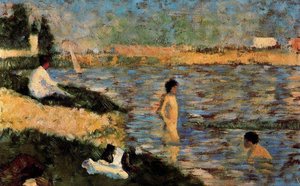
- Bañistas en Asnières (1884): Otra obra significativa que explora el ocio y la vida moderna con su estilo distintivo.
Significado Histórico y Legado
- El trabajo de Seurat influyó profundamente en el desarrollo del arte moderno, particularmente a través de su énfasis en la expresión subjetiva y la exploración de nuevas técnicas.
- Allanó el Camino: Allanó el camino para movimientos como el Fauvismo, el Cubismo y el Expresionismo Abstracto.
- Su enfoque científico del arte desafió las convenciones artísticas tradicionales.
- A pesar de su corta vida (murió a los 31 años), Seurat dejó una marca indeleble en la historia del arte, inspirando a generaciones de artistas con su visión innovadora.
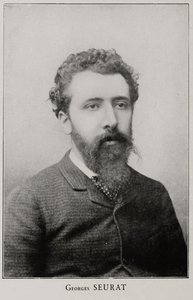
Georges Pierre Seurat
1859 - 1891 , Francia
Breves datos
- Artistas Influenciados:
- Fauvismo
- Cubismo
- Expresionismo Abstracto
- Artistas Que Influyeron:
- Michel Eugène Chevreul
- Ogden Rood
- Fecha De Nacimiento: 2 de diciembre de 1859
- Lugar De Nacimiento: París, Francia
- Movimiento Artístico: Neoimpresionismo
- Nacionalidad: Francés
- Nombre Completo: Georges Pierre Seurat
- Obras Notables:
- Un domingo en la Grande Jatte
- Bañistas en Asnières
- La Torre Eiffel

