 Ver en contexto
 Enviar
 Compartir
 Detalles

 Descargar
 Similares
 Radiografía
 Presentación de diapositivas
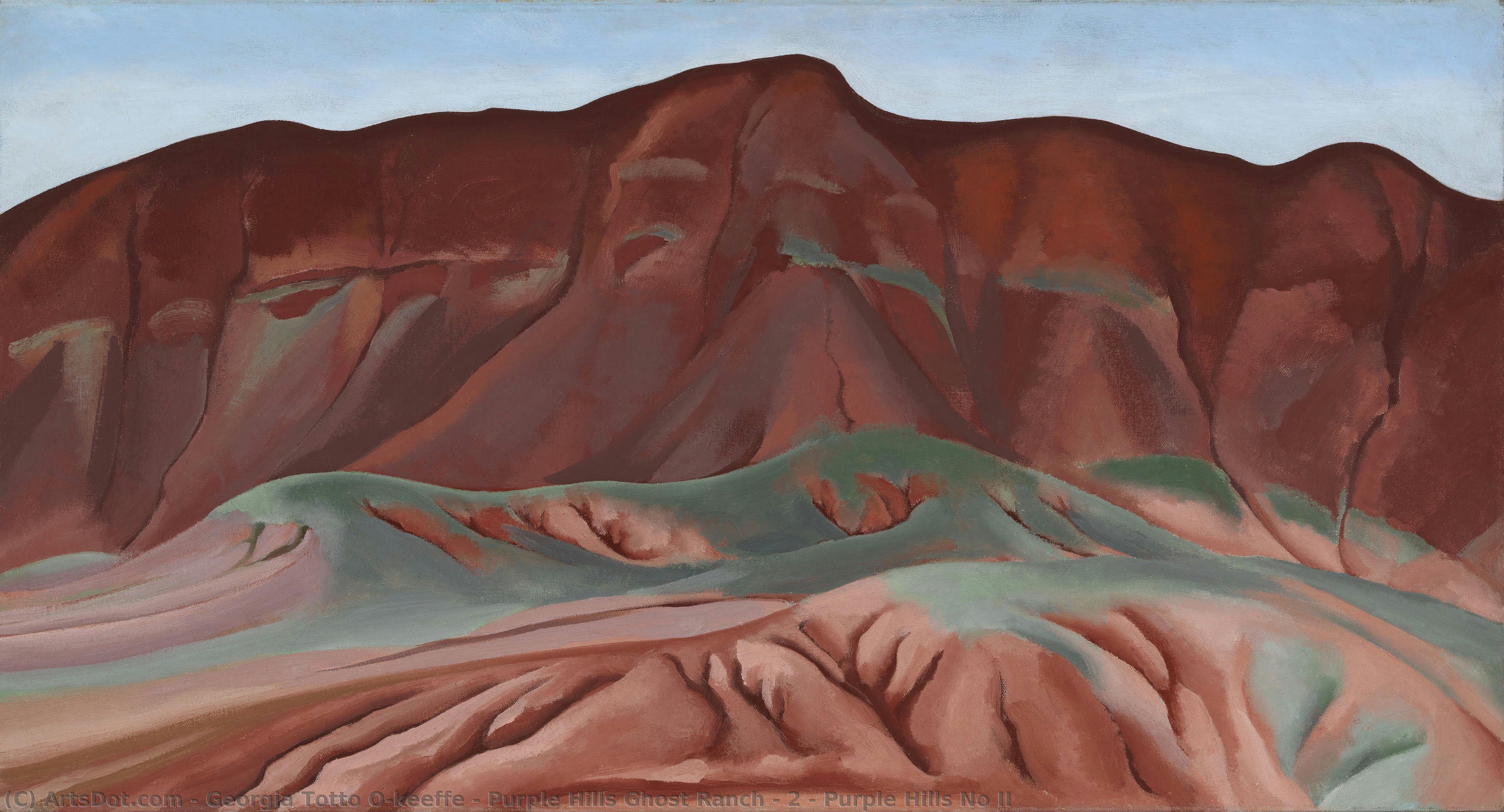
Purple Hills Ghost Ranch - 2 / Purple Hills No II


 Ver más
Reproducción al óleo hecha a mano
Óleo sobre lienzo pintado a mano en el tamaño y marco de su elección, realizado por encargo por nuestros artistas. ( Comprar impresión Comprar imagen)




P118B $10

P118H $10

P118W $10

P438Z $10

P508JH $12

P508YH $12

P805H $10

P805Z $10

P919BZ $10

P919G $10

P919XJ $10

P959ZH $10

P968JZ $12

W106C $8

W218G $10

W218JH $8

W218Y $10

W307PJ $10

W316G $10

W316PJ $8

W316Y $10

W398PJ $8

W4111J $10

W500HY $15

W500JH $15

W692G $12

W849H $8

W940BG $15

W953PJ $8




Elija entre nuestros tamaños predefinidos que respetan las proporciones originales de la obra.

Puede ingresar sus propias dimensiones para adaptarse a un marco o espacio específico. Si el tamaño seleccionado no coincide con las proporciones de la imagen original, recortaremos la obra o extenderemos la pintura con elementos adicionales pintados a mano. Se le enviará una maqueta digital para su aprobación antes de comenzar la producción.
Tenga en cuenta que la vista previa en pantalla no refleja el recorte o la extensión reales. Solo la maqueta mostrará con precisión la composición final.
Si bien existen tamaños personalizados, recomendamos seleccionar una dimensión de la lista predefinida para preservar las proporciones originales.
Tras realizar el pedido, el equipo de ArtsDot.com enviará un correo electrónico al cliente para solicitar instrucciones y proporcionarle una vista previa del boceto.
Envío a todo el mundo () en 3-4 semanas en lugar de las 5 semanas estándar. (26 agosto). Sin comprometer la calidad.

Envío exprés gratuito a todo el mundo

Lienzo de lino de alta calidad

Seguro de envío total

Garantía de reembolso de impuestos aduaneros

Garantía de fidelidad cromática exacta

Política de devolución de 60 días (solo por defectos)

Garantía de devolución del 100% del dinero

Descuento por cantidad
 La opción de vidrio solo está disponible en tamaños inferiores a 110 cm.

Purple Hills Ghost Ranch - 2 / Purple Hills No II
Técnica de reproducción
Dimensiones de la reproducción
-


Precio total final
$ 263
Descripción de la obra
A Desert’s Soul: Georgia O'Keeffe’s “Purple Hills Ghost Ranch – 2 / Purple Hills No II”
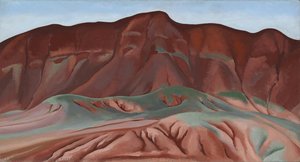
Georgia O’Keeffe’s “Purple Hills Ghost Ranch – 2 / Purple Hills No II,” painted in 1934, isn’t merely a landscape; it’s an immersion into the raw, elemental heart of the American Southwest. Created during a pivotal period of her artistic evolution, this oil on canvas captures not just a visual scene but a profound emotional response to the stark beauty and haunting solitude of New Mexico’s high desert. The painting transports us to Ghost Ranch, O'Keeffe’s beloved retreat, where she found both inspiration and a sense of detached contemplation – a feeling that permeates every brushstroke.
The composition is deceptively simple: undulating hills rendered in layers of deep crimson, dusky pink, and muted grey dominate the canvas. These aren’t gentle slopes; they possess an almost sculptural quality, rising and falling with a quiet intensity. The sky, a wash of pale blues and soft clouds, provides a subtle counterpoint to the earth tones below, suggesting vastness and timelessness. O'Keeffe masterfully employs a technique she’d honed over years – reductive painting. She simplifies forms, stripping away extraneous detail to focus on essential shapes and colors, creating an effect that is both monumental and intimate.
The Seeds of Abstraction
Prior to this period, O'Keeffe’s work leaned heavily towards representational realism, often depicting flowers with meticulous detail. However, her time at Ghost Ranch marked a significant shift toward abstraction. Influenced by Arthur Wesley Dow’s teachings on color and line – emphasizing personal expression over strict imitation – she began to prioritize the emotional impact of her paintings. “Purple Hills Ghost Ranch” exemplifies this transition; while recognizable as hills and sky, they are presented with an almost otherworldly quality, reduced to their fundamental elements.
The painting’s genesis is intertwined with O'Keeffe’s personal journey. Following a difficult marriage to Alfred Stieglitz, she sought refuge in the solitude of Ghost Ranch, a place that offered both physical and emotional distance. The landscape itself became a mirror reflecting her internal state – a space for introspection and renewal. The title, “Purple Hills,” hints at the vibrant hues of the region’s soil, while "Ghost Ranch" evokes a sense of mystery and the lingering presence of the past.
Symbolism in the Desert
Beyond its visual appeal, “Purple Hills Ghost Ranch” is rich with symbolic meaning. The vastness of the landscape speaks to themes of isolation and resilience – qualities that resonated deeply with O'Keeffe’s experience. The muted colors suggest a sense of melancholy, yet there’s also an underlying strength in the earth itself. Some art historians have interpreted the hills as representations of female genitalia, aligning with O'Keeffe’s often provocative depictions of flowers and natural forms. However, O'Keefe herself consistently denied this interpretation, emphasizing her focus on capturing the essence of the landscape rather than imposing a specific narrative.
The painting’s placement within the context of O’Keeffe’s broader body of work is also significant. It represents a crucial stage in her development as an artist, demonstrating her increasing confidence and willingness to experiment with abstraction while retaining a deep connection to the natural world. It's a testament to her ability to transform a simple landscape into a profound meditation on beauty, solitude, and the enduring spirit of the American West.
A Timeless Resonance
“Purple Hills Ghost Ranch – 2 / Purple Hills No II” continues to captivate viewers with its evocative power. Its muted palette, simplified forms, and underlying sense of mystery create a deeply resonant experience. Whether viewed as a celebration of the Southwest’s dramatic landscapes or a poignant reflection on O'Keeffe’s personal journey, this painting remains a cornerstone of American modernism – a testament to the artist’s unique vision and her ability to capture the soul of a place.
Obras relacionadas
Biografía del artista
Primeros años y formación (1887–1916)
Georgia Totto O’Keeffe, una figura fundamental del modernismo americano, nació el 15 de noviembre de 1887 en Sun Prairie, Wisconsin. Sus padres, Francis Calyxtus O'Keeffe e Ida (Totto) O'Keeffe, eran agricultores dedicados a la producción lechera de ascendencia irlandesa y húngara, respectivamente. A los diez años, Georgia ya había decidido convertirse en artista. Recibió instrucción artística de la acuarelista local Sara Mann y posteriormente asistió al Instituto de Arte de Chicago desde 1905 hasta 1906, donde estudió bajo John Vanderpoel. Su estilo único comenzó a desarrollarse durante sus estudios en la Universidad de Virginia.Carrera Artística (1917–1986)
En 1917, Alfred Stieglitz, un marchante de arte y fotógrafo, expuso las obras de O’Keeffe. Esto marcó el inicio de su carrera profesional. Se mudó a Nueva York en 1918 a petición de Stieglitz y comenzó a trabajar seriamente como artista. Su relación profesional floreció en una personal, lo que llevó a su matrimonio el 11 de diciembre de 1924. El arte abstracto de O’Keeffe, incluyendo los primeros planos de flores como Red Canna, fue frecuentemente interpretado como representaciones de vulvas, aunque ella negó consistentemente esta intención. Su trabajo también estuvo influenciado por su tiempo en el suroeste americano, lo que inspiró pinturas como Cow's Skull: Red, White, and Blue (1931) y Summer Days (1936).Influencias y Estilo
- Arthur Wesley Dow: O’Keeffe estudió con Arthur Wesley Dow, quien enfatizaba la importancia del diseño y la interpretación personal sobre la mera copia de la naturaleza. Este enfoque influyó profundamente en su estilo abstracto.
- Alfred Stieglitz: El apoyo y la promoción de Alfred Stieglitz fueron cruciales para el desarrollo y reconocimiento de O’Keeffe como artista.
- Impresionismo y Precisionismo: Aunque O'Keeffe se distanció de los movimientos artísticos tradicionales, su trabajo muestra influencias tanto del impresionismo en su uso del color como del precisionismo en su enfoque detallado y geométrico de las formas naturales.
Legado e Importancia Histórica
Tras la muerte de Stieglitz en 1946, O’Keeffe vivió en Nuevo México durante los siguientes 40 años. Su obra ha sido fundamental para definir el modernismo americano y su enfoque innovador de la abstracción y la representación de la naturaleza ha inspirado a generaciones de artistas. En 2014, su pintura Jimson Weed/White Flower No. 1 se vendió por $44,405,000, estableciendo un récord para el precio más alto pagado por una obra de arte de una artista femenina. Su legado continúa siendo celebrado en todo el mundo a través del Museo Georgia O’Keeffe y numerosas exposiciones.Obras Destacadas
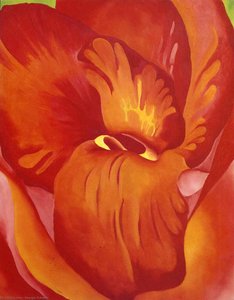
- Red Canna (1924): Una vibrante representación abstracta de una flor, que generó controversia por su posible interpretación erótica.
- Cow's Skull: Red, White, and Blue (1931): Un ejemplo icónico de su trabajo inspirado en el paisaje del suroeste americano.
- Summer Days (1936): Una pintura que captura la atmósfera y los colores del verano en Nuevo México.
- Jimson Weed/White Flower No. 1 (1932): Una obra maestra que muestra una flor con un fondo abstracto, destacando su habilidad para combinar formas naturales y abstracción.
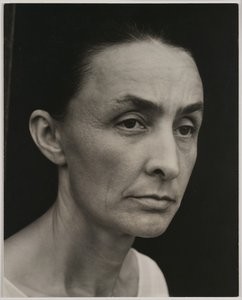
Georgia O'Keeffe
1887 - 1986 , Estados Unidos de América
Datos clave
- Artistas Que Influyeron: ['Alfred Stieglitz']
- Fecha De Fallecimiento: 6 de marzo de 1986
- Fecha De Nacimiento: 15 de noviembre de 1887
- Lugar De Nacimiento: Sun Prairie, Estados Unidos
- Movimiento Artístico: Modernismo americano
- Nacionalidad: Estadounidense
- Nombre Completo: Georgia O’Keeffe
- Obras Notables:
- Luz de Iris
- Orquídeas Orientales
- Azul y Verde Música
- Sol Pálido
- Cráneo de Vaca Roja
- Música, Rosa y Azul No. 2
- Abstracción azul
- La Cabeza de Toro
- Onda azul maine
Artículos relacionados
Georgia O'Keeffe: Redefining Modernism Through Symbolism & the American Landscape
Explore the captivating world of Georgia O'Keeffe! Discover her groundbreaking flower paintings, New Mexico landscapes & lasting impact on American Modernism. Expert analysis and insights.
Thomas Hill: Luminosity, Landscape & the American Pastoral Ideal
Explore the luminous landscapes of Thomas Hill, a pivotal figure in the Hudson River School & Luminism movements. Discover his artistic journey, philosophical depth, and enduring legacy with ArtsDot.
10 Obras Maestras al Óleo sobre Tabla que Revolucionaron la Historia del Arte | ArtsDot
Descubre 10 obras maestras al óleo sobre tabla que revolucionaron el arte. Explora la historia de Van Gogh, Monet y otros artistas clave. Encuentra reproducciones de alta calidad e inspírate para decorar tu hogar con ArtsDot.com.
Frank O. Salisbury: Capturing an Era Through Victorian Portraiture & Atmospheric Realism
Explore the life & work of Frank O. Salisbury, Britain's celebrated 'Painter Laureate'. Discover his masterful Victorian portraits, atmospheric realism, and captivating historical murals. A deep dive into a remarkable artistic legacy.
Blossoms of Time: A Historical & Aesthetic Exploration of Floral Painting Across Cultures
Explore the rich history of floral painting! Discover symbolism, techniques & masterpieces from Van Huysum to O'Keeffe. Expert insights for art lovers & collectors at ArtsDot.