 Ver en contexto
 Enviar
 Compartir
 Detalles

 Descargar
 Similares
 Radiografía
 Presentación de diapositivas
 Estadísticas
Ludorff


 Ver más
Reproducción al óleo hecha a mano
Óleo sobre lienzo pintado a mano en el tamaño y marco de su elección, realizado por encargo por nuestros artistas. ( Cambiar a Impresión Cambiar a imagen digital)




P118B $10

P118H $10

P118W $10

P438Z $10

P508JH $12

P508YH $12

P805H $10

P805Z $10

P919BZ $10

P919G $10

P919XJ $10

P959ZH $10

P968JZ $12

W106C $8

W218G $10

W218JH $8

W218Y $10

W307PJ $10

W316G $10

W316PJ $8

W316Y $10

W398PJ $8

W4111J $10

W500HY $15

W500JH $15

W692G $12

W849H $8

W940BG $15

W953PJ $8




Elija entre nuestros tamaños predefinidos que respetan las proporciones originales de la obra.

Puede ingresar sus propias dimensiones para adaptarse a un marco o espacio específico. Si el tamaño seleccionado no coincide con las proporciones de la imagen original, recortaremos la obra o extenderemos la pintura con elementos adicionales pintados a mano. Se le enviará una maqueta digital para su aprobación antes de comenzar la producción.
Tenga en cuenta que la vista previa en pantalla no refleja el recorte o la extensión reales. Solo la maqueta mostrará con precisión la composición final.
Si bien existen tamaños personalizados, recomendamos seleccionar una dimensión de la lista predefinida para preservar las proporciones originales.
Tras realizar el pedido, el equipo de ArtsDot.com enviará un correo electrónico al cliente para solicitar instrucciones y proporcionarle una vista previa del boceto.
Envío a todo el mundo () en 3-4 semanas en lugar de las 5 semanas estándar. (10 septiembre). Sin comprometer la calidad.

Envío exprés gratuito a todo el mundo

Lienzo de lino de alta calidad

Seguro de envío total

Garantía de reembolso de impuestos aduaneros

Garantía de fidelidad cromática exacta

Política de devolución de 100 días (solo por defectos)

Garantía de devolución del 100% del dinero

Descuento por cantidad
 La opción de vidrio solo está disponible en tamaños inferiores a 110 cm.

Ludorff
Técnica de reproducción
Dimensiones de la reproducción
-


Precio total final
$ 263
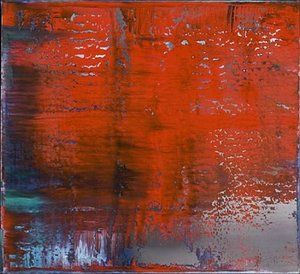
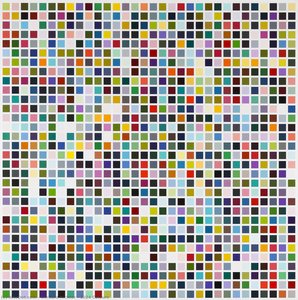
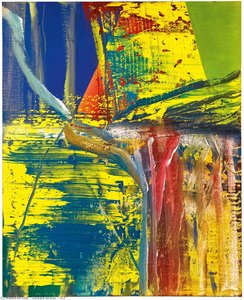
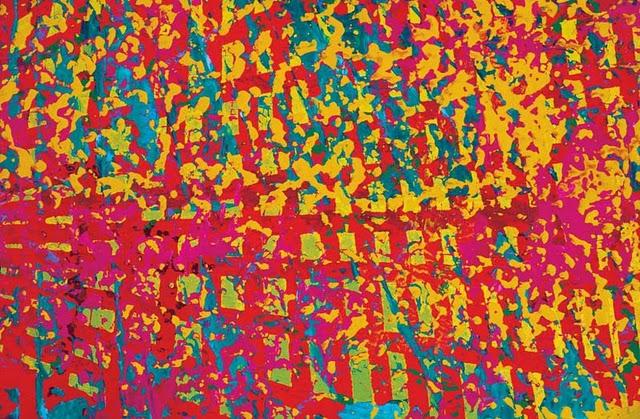
A Fragmented Landscape of Color
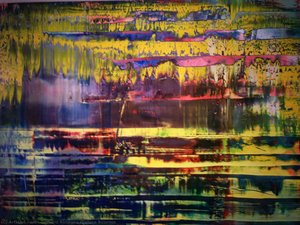
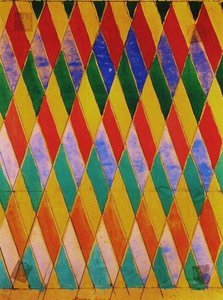
In the vast and often turbulent landscape of contemporary art, few works capture the ephemeral nature of human thought as poignantly as Gerhard Richter’s “Ludorff.” Created in 1968, this striking masterpiece serves as a vibrant window into the soul of Abstract Expressionism. At first glance, the viewer is met with an arresting arrangement of squares that seem to burst from the canvas with an almost rhythmic energy. Yet, beneath this seemingly simple geometric structure lies a profound exploration of memory and perception. The painting does not merely present colors; it presents a sensation—a kaleidoscopic reconstruction of a world that is simultaneously present and fading.
Richter’s approach in “Ludorff” transcends mere decoration, offering a complex interplay of light and shadow through color. The palette is dominated by warm, glowing shades of orange, which act as a luminous foundation for sudden, electric splashes of yellow, blue, green, pink, purple, and red. This meticulous charting of color relationships—where complementary hues are juxtaposed against analogous tones—creates a composition that is both harmoniously balanced and dynamically restless. For the collector or interior designer, such a piece offers a transformative presence, capable of anchoring a room with its sophisticated chromatic depth.
Technique and the Illusion of Memory
The technical brilliance of “Ludorff” lies in Richter’s unique ability to manipulate the surface of the canvas to mimic the way we experience reality. Utilizing a method often associated with his “Photographic Painting,” Richter layers pigments in a semi-transparent manner, creating an illusionistic effect that feels both layered and translucent. This technique allows for subtle variations in tone that capture the fleeting quality of visual experience. The surface is not flat; it possesses a textured, breathing quality that invites the eye to wander through its many strata.
This method serves a deeper symbolic purpose. Richter himself has described this work as a “landscape of memory.” The fragmented squares and blurred edges are not accidental; they symbolize the fractured nature of recollection—the inherent impossibility of perfectly recreating a moment in time. Just as our memories are often composed of disconnected, vivid impressions rather than continuous narratives, “Ludorff” presents a world that is reconstructed from fragments. It is an invitation to contemplate the beauty found within the incomplete and the ephemeral.
Historical Resonance and Emotional Depth
To understand the emotional weight of “Ludorff,” one must consider the historical backdrop of post-war Germany. Born in Dresden in 1932, Richter’s early life was shaped by the profound uncertainties of a divided nation. The tension between idyllic childhood recollections and the harsh realities of political division is woven into the very fabric of his abstraction. In “Ludorff,” we see the artist attempting to reconcile these disparate truths through the language of color and form.
For those seeking to bring a piece of art history into their personal spaces, this work offers more than just aesthetic pleasure; it provides an emotional anchor. It is a piece that speaks to the resilience of the human spirit and our enduring desire to find order within chaos. Whether displayed in a modern gallery setting or as a centerpiece in a curated home, a high-quality reproduction of “Ludorff” brings with it a sense of intellectual rigor and profound, colorful beauty that continues to captivate the global art community.
Obras relacionadas
Biografía del artista
**vida temprana y educación**
Gerhard Richter, un reconocido artista visual alemán, nació el 9 de febrero de 1932, en el hospital de Dresdede-Neustadt, Dresdede, Sajonia. Creció en Reichenau, Baja Silesia (ahora Bogatynia, Polonia), y Waltersdorf (Zittauer Gebirge), en la campiña superior de Lusacia. El padre de Richter, Horst Richter, era estudiante de matemáticas y física en la Technische Hochschule de Dresdede.**Carrera artística**
Richter comenzó su viaje artístico como aprendiz de pintor de carteles y más tarde estudió en la Academia de Bellas Artes de Dresdede. Su obra temprana fue influenciada por los estilos de Picasso y Jean Arp, lo que se evidencia en sus pinturas abstractas y fotorealistas. En 1957, Richter trabajó como aprendiz maestro en la academia, realizando encargos para el entonces estado de Alemania Oriental.**Obras notables y logros**
* Abstraktes Bild (2012) fijó un récord de precio en subasta para una pintura de un artista vivo por $34 millones (£21 millones). * Domplatz, Mailand (Plaza del Catedral, Milán) (1968) se vendió por $37.1 millones (£24.4 millones) en Nueva York. * Abstraktes Bild (2015) se vendió por $44.52 millones (£30.4 millones) en la subasta de arte contemporáneo de Sotheby's.**Estilo artístico y movimiento**
La obra de Richter se caracteriza por su eclecticismo, combinando estilos abstractos y fotorealistas. Junto con Sigmar Polke, introdujo el término Kapitalistischer Realismus (Realismo Capitalista), un antiestilo de arte que se apropia del lenguaje pictórico publicitario.**Vida personal**
Richter se casó con Marianne Eufinger en 1957 y tuvo una hija. Más tarde se casó con Isa Genzken en 1982 y Sabine Moritz en 1995, con quien tuvo dos hijos y una hija. **Nota:** Este artículo se basa en la información proporcionada y puede no ser una biografía completa. Para obtener información más detallada, visite las fuentes vinculadas.
Gerhard Richter
1932 - , Alemania
Datos clave
- Artistas Que Influyeron:
- Pablo Picasso
- Jean Arp
- Fecha De Nacimiento: 9 de febrero de 1932
- Lugar De Nacimiento: Dresde, Alemania
- Movimiento Artístico:
- Expresionismo abstracto
- Fotorealismo
- Nacionalidad: Alemán
- Nombre Completo: Gerhard Richter
- Obras Notables:
- Abstraktes Bild (2012)
- Domplatz, Milán (1968)
- Nubes
- Firenze
- Imagen Abstracta
- S. con Niño
Artículos relacionados

Kandinsky: Las 25 Obras Maestras del Pionero de la Abstracción | ArtsDot
Descubre las 25 obras maestras de Wassily Kandinsky, pionero del arte abstracto. Explora su expresionismo, composiciones únicas y la historia detrás de cada cuadro. Reproducciones de alta calidad para decorar tu hogar con arte moderno en ArtsDot.com.

Abstracción Geométrica: 10 Obras Maestras que Transformaron el Arte Moderno | ArtsDot
Descubre las 10 obras maestras de la abstracción geométrica que revolucionaron el arte moderno. Explora a Mondrian, Malevich y Kandinsky en ArtsDot.com. Reproducciones de alta calidad para tu hogar.
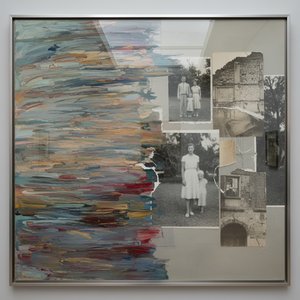
Gerhard Richter: A Retrospective on Abstraction, Memory & the Photographic Source
Explore the profound world of Gerhard Richter's abstract paintings. Discover his techniques, influences, and lasting impact on contemporary art – a guide for discerning collectors.
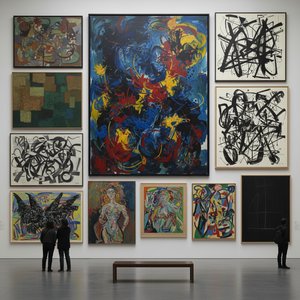
Expresionismo Abstracto: 10 Obras Maestras que Transformaron el Arte |
Descubre las 10 obras maestras del Expresionismo Abstracto: Pollock, Rothko y más. Explora la historia, técnica y significado de estos lienzos icónicos. Reproducciones de arte exclusivas en .
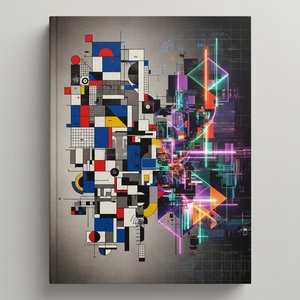
Beyond Form & Color: Geometric Abstraction's Evolution in 20th/21st Century Art
Explore the evolution of geometric abstraction from Cubism to contemporary art. Discover key artists like Malevich & Mondrian, investment insights, and expert collecting advice at ArtsDot.