

 Ver en contexto
 Enviar
 Compartir
 Detalles

 Descargar
 Similares
 Radiografía
 Presentación de diapositivas
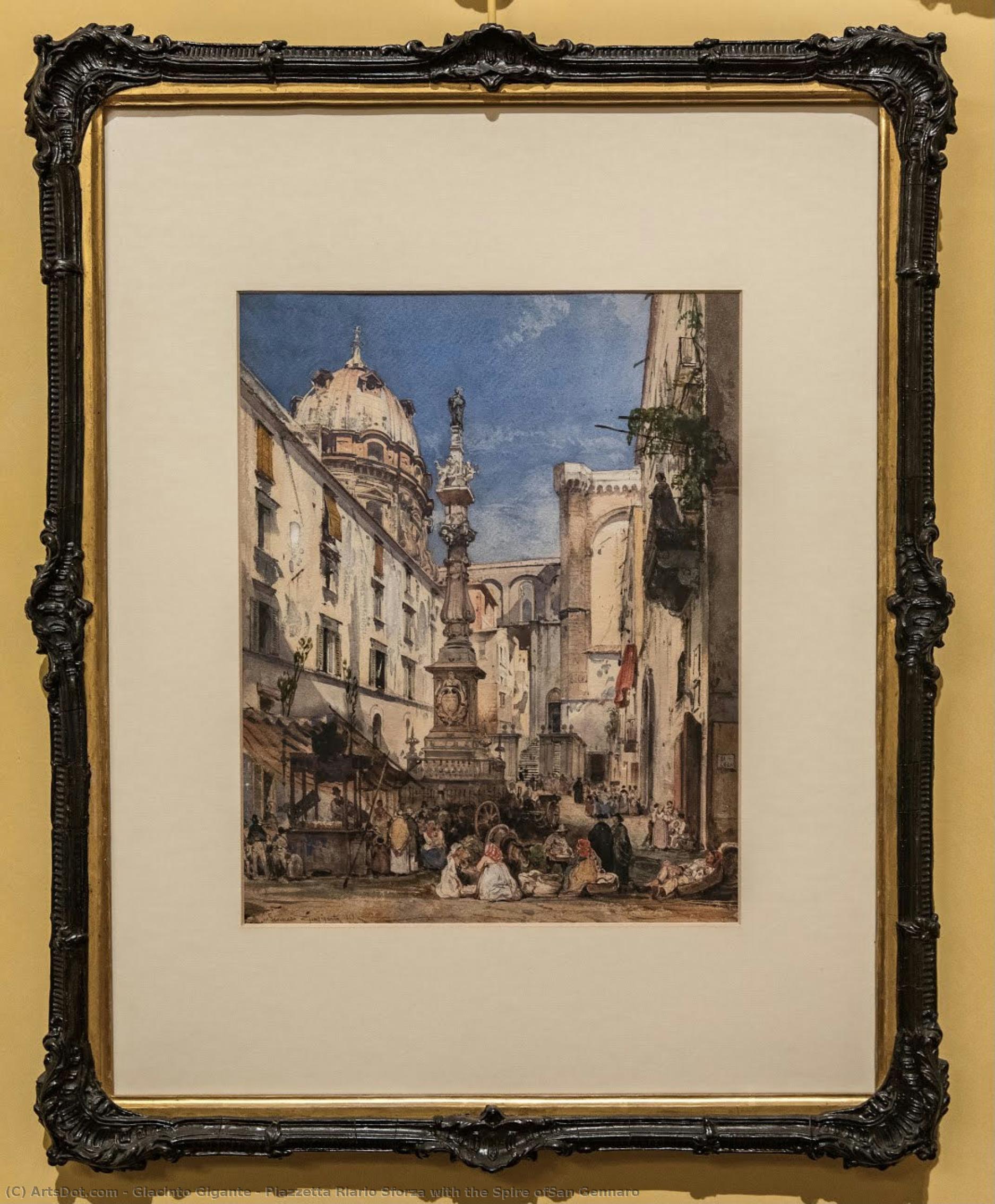
Piazzetta Riario Sforza with the Spire ofSan Gennaro


 Ver más
Adquiera una imagen digital de alta resolución y optimizada, muy superior a la vista previa en línea.
Cada archivo es preparado meticulosamente por nuestros especialistas internos mediante el uso de herramientas avanzadas y un experto retoque manual. Nos aseguramos de que cada imagen posea una claridad excepcional, una precisión cromática impecable y un detalle minucioso.
El archivo final se entrega por correo electrónico en un plazo de 72 horas, optimizado para su uso inmediato en entornos profesionales, editoriales y de impresión. Esta es la misma calidad en la que confían los estudios de diseño, las editoriales y las galerías de primer nivel.
Imagen Digital
Descarga un archivo de alta resolución para exhibición personal, impresión y proyectos creativos. ( Comprar impresión Comprar pintura hecha a mano)
Incluido en cada pedido de imágenes digitales
Entrega digital experta, garantizada.
Al elegir ArtsDot.com, no solo está adquiriendo una imagen; está recibiendo una obra de arte digital mejorada profesionalmente, elaborada con precisión y respaldada por una garantía de satisfacción. Esto es todo lo que incluye su pedido, automáticamente:

Entrega rápida por email
Recibirá su archivo de imagen digital en alta resolución por correo electrónico en un plazo de 72 horas tras realizar su pedido, listo para su uso inmediato.

Archivo digital optimizado por IA
Su obra de arte se optimiza profesionalmente mediante herramientas avanzadas de IA y edición manual, garantizando el máximo detalle, claridad y precisión cromática.

Reenvío gratuito de por vida
¿Has borrado o perdido tu archivo por error? No te preocupes: te lo volveremos a enviar en cualquier momento, sin coste adicional.

Sin gastos de importación, siempre
Disfrute de su obra de arte al instante sin aduanas, aranceles ni gastos de envío; las descargas digitales siempre están libres de impuestos.

Garantía de fidelidad de color
Garantizamos que su imagen digital refleje los colores originales con la mayor fidelidad posible, mediante el uso de herramientas profesionales y gestión del color.

Garantía de satisfacción de 60 días
Si no está satisfecho con su imagen digital, la revisaremos o le reembolsaremos el 100% en un plazo de 60 días, sin preguntas.

100% Garantía de devolución de dinero
¿No está satisfecho? Obtenga un reembolso completo dentro de los 60 días posteriores a la recepción de su archivo digital, sin necesidad de explicaciones.

Descuentos por pedidos grandes
Compra 3 imágenes, ahorra 10% - Compra 5, ahorra 15% - Compra 10+, ahorra 20%. Ideal para proyectos creativos, galerías y agencias.
A Window Into Naples: Giacinto Gigante’s “Piazzetta Riario Sforza with the Spire of San Gennaro”
Giacinto Gigante's "Piazzetta Riario Sforza with the Spire of San Gennaro," painted in 1849, isn’t merely a depiction of a Neapolitan marketplace; it’s a vibrant distillation of atmosphere and social life, a testament to the artist’s mastery of capturing fleeting moments and imbued with the spirit of Posillipo. The scene unfolds within the bustling Piazzetta Riario Sforza, a central square in Naples, alive with the energy of commerce, conversation, and everyday interactions. Gigante doesn't offer a static portrait; instead, he presents a dynamic tableau—a snapshot of a city pulsating with life.
The painting’s style firmly places it within the Posillipo School, an artistic movement that flourished in Naples during the mid-19th century. This school championed a distinctive approach to landscape and genre painting, prioritizing atmospheric effects and capturing the subtle nuances of light and color. Gigante, deeply influenced by his predecessors like Jacob Wilhelm Hüber and Antonie Sminck Pitloo, skillfully employed techniques learned from these masters – notably the “camera lucida,” a device used to create realistic perspective and depth in paintings. This method allowed him to render the complex geometry of the square with remarkable accuracy while simultaneously imbuing it with an ethereal quality.
The Heart of Naples: Symbolism and Context
At the heart of the composition rises the imposing spire of San Gennaro, the city’s patron saint. This iconic landmark isn't simply a background element; it serves as a powerful symbol of Neapolitan identity and faith. The spire dominates the scene, drawing the eye upwards and anchoring the painting within its historical and religious context. San Gennaro is revered in Naples for his miraculous preservation of blood, believed to be evidence of his martyrdom. Gigante’s depiction subtly reinforces this reverence, suggesting a deep connection between the city's inhabitants and their patron saint.
Beyond the spire, the painting overflows with details that speak volumes about Neapolitan life. Merchants hawk their wares, children chase pigeons through the square, and figures engage in animated conversations. The artist’s keen eye captures not just the physical appearance of these individuals but also their gestures, expressions, and interactions—revealing a rich tapestry of social dynamics. The inclusion of a horse further emphasizes the lively nature of the scene, adding to the sense of movement and vitality.
A Masterclass in Watercolor Technique
Gigante’s choice of watercolor as his medium is crucial to understanding the painting's overall effect. Watercolor lends itself beautifully to capturing atmospheric effects—the hazy light filtering through the buildings, the subtle shifts in color across the cobblestones, and the delicate rendering of fabrics. He masterfully utilizes washes of color to create a sense of depth and luminosity, while precise details are rendered with carefully applied brushstrokes. The painting’s overall impression is one of luminous softness, as if viewed through a warm, inviting haze.
The artist's skillful use of light is particularly noteworthy. Gigante doesn’t simply depict the scene in daylight; he captures the *feeling* of sunlight—its warmth, its intensity, and its ability to transform the ordinary into something extraordinary. The interplay of light and shadow creates a dynamic visual experience, drawing the viewer into the heart of the Piazzetta.
Bringing “Piazzetta Riario Sforza” Home
Reproductions of "Piazzetta Riario Sforza with the Spire of San Gennaro" offer a remarkable opportunity to bring a piece of Neapolitan life into your own home. Whether you choose a large-scale canvas print or a meticulously crafted metal poster, you’ll be able to appreciate Gigante's artistic vision and technical skill. The painting’s vibrant colors and dynamic composition will undoubtedly serve as a captivating focal point in any room, evoking the spirit of Naples and its enduring charm.
Consider commissioning a custom reproduction – perhaps framed in a classic style to complement your existing décor, or printed on metal for a contemporary touch. Each detail is carefully reproduced to faithfully capture the essence of Gigante’s original masterpiece, ensuring that you own a truly authentic work of art.
Obras relacionadas
Biografía del artista
A Neapolitan Master of Light and Atmosphere: The Life and Art of Giacinto Gigante
Giacinto Gigante, born in Naples in 1806, stands as a pivotal figure in Italian landscape painting, particularly renowned for his contributions to the Posillipo School. Coming from a family steeped in artistic tradition—his father, Gaetano Gigante, was also a painter—young Giacinto’s path toward becoming a master of vista and atmospheric perspective began early. His initial training around 1818 under his father's guidance laid a foundational understanding of form and composition. However, it was through subsequent apprenticeships with Jacob Wilhelm Hüber in 1820 and Antonie Sminck Pitloo from 1821 that Gigante’s artistic vision truly began to blossom. Hüber introduced him to the technical precision of drawing and the innovative use of the “camera lucida” for capturing panoramic views, while Pitloo instilled a deep appreciation for watercolor techniques and the importance of direct observation from nature—a cornerstone of the Posillipo School's ethos. These early influences shaped Gigante’s approach, blending meticulous technique with an emerging romantic sensibility.Early Influences and Artistic Training
Gigante’s artistic journey commenced under the tutelage of his father, Gaetano Gigante, who instilled in him a love for painting and fostered a keen eye for detail. Recognizing his son's talent, Gaetano encouraged Giacinto to pursue formal training, which began around 1818. This formative period saw Gigante’s exposure to Jacob Wilhelm Hüber, a German landscape painter whose academic style emphasized accuracy and perspective—a crucial element in capturing the grandeur of Italian vistas. Hüber’s instruction honed Gigante's drawing skills and introduced him to the revolutionary “camera lucida,” an optical device that allowed artists to project images onto paper, facilitating the creation of panoramic views with unprecedented precision. Simultaneously, Gigante benefited from Antonie Sminck Pitloo’s guidance, who championed watercolor techniques and emphasized the significance of immersing oneself in nature—principles that would become central to the Posillipo School's artistic philosophy.The Posillipo School: A Revolution in Landscape Painting
Giginto Gigante quickly became a cornerstone of the Neapolitan Posillipo School, an influential movement that redefined Italian landscape painting during the mid-19th century. This school’s defining characteristic was *plein air* painting—working outdoors directly from observation—a radical departure from the studio traditions prevalent at the time. Embracing Pitloo's teachings and fueled by Hüber’s technical expertise, Gigante skillfully blended meticulous technique with a fervent romantic spirit. He absorbed inspiration from earlier masters like Jacob Philipp Hackert, whose dramatic depictions of Italian landscapes captivated audiences and established precedents for expressive artistic representation. The Posillipo School sought to capture not merely the visual appearance of a scene but also its emotional essence—the mood, atmosphere, and sublime grandeur of nature—resulting in paintings that resonated deeply with viewers.Notable Works and Artistic Achievements
Gigante’s prolific output produced numerous masterpieces that exemplify the aesthetic ideals of his era. Among his most celebrated canvases are “Goatherd with goats in a rocky inlet,” showcasing Impressionistic brushstrokes and capturing the rugged beauty of the Neapolitan coastline; "Temporale nel golfo di Amalfi," depicting a dramatic storm over the Gulf of Amalfi, demonstrating Gigante’s masterful command of light and color to convey the raw power of nature. His watercolor “View of the Bell Tower of the Duomo of Sant’Erasmo at Gaeta” exemplifies his delicate approach to landscape representation, capturing serene beauty with remarkable subtlety. Furthermore, he achieved considerable renown for his monumental tempera painting commissioned by Victor Emmanuel II for the Chapel of San Gennaro in Naples Cathedral—a testament to his artistic prowess and recognition as a leading figure within the art world. His enduring legacy resides not only in his individual artworks but also in his contribution to establishing the Posillipo School’s distinctive style and furthering the advancement of landscape painting techniques. ## Legacy and Influence Giacinto Gigante's impact on subsequent generations of artists is undeniable. He served as a mentor to Giulio Cesare Amidano and Andrea Landini, who carried forward the Posillipo School’s principles—emphasizing *plein air* painting and romantic interpretation—solidifying Gigante’s position as a pivotal figure in Italian art history. His innovative use of watercolor techniques and his mastery of perspective influenced artists across Europe, shaping the visual language of Romantic landscapes for decades to come. More than simply replicating what he saw, Gigante transformed natural scenes into expressions of emotion and imagination—a feat that continues to inspire admiration and scholarly study today. He remains a symbol of artistic excellence and a testament to the transformative power of observation and creative vision.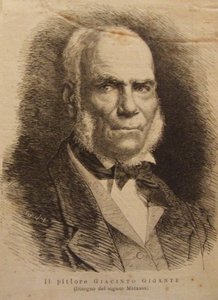
Giacinto Gigante
1806 - 1876 , Italia
Breves datos
- Artistic Movement Or Style: Escuela de Posillipo
- Artists Who Influenced This Artist:
- Jacob Wilhelm Hüber
- Anton Sminck Pitloo
- Jacob Philipp Hackert
- Date Of Birth: 1806
- Date Of Death: 1876
- Full Name: Giacinto Gigante
- Nationality: Italiano
- Notable Artworks:
- Goatherd con cabras en un afloramiento rocoso
- Tormenta en el golfo de Amalfi
- Vista del campanario de la catedral Sant'Erasmo
- Place Of Birth: Naples, Italia

