


 Ver en contexto
 Enviar
 Compartir
 Detalles

 Descargar
 Similares
 Radiografía
 Presentación de diapositivas
 Stats
StatsSIGNATURE DU TRAITE DE VERVINS.2 MAI 1598
 Ver más
Adquiera una imagen digital de alta resolución y optimizada, muy superior a la vista previa en línea.
Cada archivo es preparado meticulosamente por nuestros especialistas internos mediante el uso de herramientas avanzadas y un experto retoque manual. Nos aseguramos de que cada imagen posea una claridad excepcional, una precisión cromática impecable y un detalle minucioso.
El archivo final se entrega por correo electrónico en un plazo de 72 horas, optimizado para su uso inmediato en entornos profesionales, editoriales y de impresión. Esta es la misma calidad en la que confían los estudios de diseño, las editoriales y las galerías de primer nivel.
Imagen Digital
Descarga un archivo de alta resolución para exhibición personal, impresión y proyectos creativos. ( Switch to Print Comprar pintura hecha a mano)
Incluido en cada pedido de imágenes digitales
Entrega digital experta, garantizada.
Al elegir ArtsDot.com, no solo está adquiriendo una imagen; está recibiendo una obra de arte digital mejorada profesionalmente, elaborada con precisión y respaldada por una garantía de satisfacción. Esto es todo lo que incluye su pedido, automáticamente:

Entrega rápida por email
Recibirá su archivo de imagen digital en alta resolución por correo electrónico en un plazo de 72 horas tras realizar su pedido, listo para su uso inmediato.

Archivo digital optimizado por IA
Su obra de arte se optimiza profesionalmente mediante herramientas avanzadas de IA y edición manual, garantizando el máximo detalle, claridad y precisión cromática.

Reenvío gratuito de por vida
¿Has borrado o perdido tu archivo por error? No te preocupes: te lo volveremos a enviar en cualquier momento, sin coste adicional.

Sin gastos de importación, siempre
Disfrute de su obra de arte al instante sin aduanas, aranceles ni gastos de envío; las descargas digitales siempre están libres de impuestos.

Garantía de fidelidad de color
Garantizamos que su imagen digital refleje los colores originales con la mayor fidelidad posible, mediante el uso de herramientas profesionales y gestión del color.

Garantía de satisfacción de 100 días
Si no está satisfecho con su imagen digital, la revisaremos o le reembolsaremos el 100% en un plazo de 100 días, sin preguntas.

100% Garantía de devolución de dinero
¿No está satisfecho? Obtenga un reembolso completo dentro de los 100 días posteriores a la recepción de su archivo digital, sin preguntas.

Descuentos por pedidos grandes
Compra 3 imágenes, ahorra 10% - Compra 5, ahorra 15% - Compra 10+, ahorra 20%. Ideal para proyectos creativos, galerías y agencias.
Obras relacionadas




Biografía del artista
Gillot Saint-Evre: A Forgotten Painter of Romantic France
The art world often remembers figures in sharp relief, their names echoing through the halls of museums and galleries. Yet, nestled amongst these celebrated masters lies a wealth of talent largely obscured by time – Gillot Saint-Evre (1791-1858), a French painter and engraver whose evocative scenes of historical and literary subjects offer a poignant glimpse into the Romantic sensibilities of 19th-century France. His work, initially lauded for its promise, faded from public view only to be rediscovered in recent decades, revealing an artist of considerable skill and sensitivity.
Saint-Evre’s early life offered little indication of his future artistic pursuits. Born in Boult-sur-Suippe, he embarked on a military career before turning to painting in the 1820s. This shift was dramatically influenced by a positive review of his Salon debut – two scenes depicting Shakespeare's *The Tempest* – penned by none other than Adolphe Thiers, who would later become President of France. This early recognition ignited a passion for literary subjects, leading Saint-Evre to create a series of meticulously researched and beautifully rendered illustrations based on classic works like Sir Walter Scott’s *Quentin Durward* and Alexandre Dumas' *Henry III and His Court*. These weren’t mere reproductions; Saint-Evre infused each image with a palpable sense of atmosphere and character, capturing the spirit of the original narratives.
The Rise and Fall – A Shift in Focus
Despite initial success, Saint-Evre's career took an unexpected turn. A series of ambitious historical paintings, including one depicting Don Quixote, proved commercially unsuccessful, prompting a critical reassessment of his artistic direction. Recognizing the limitations of literary subjects, he decisively abandoned them and turned to history painting – a genre that had become increasingly competitive at the time. This decision marked a significant departure from his earlier work, shifting away from the imaginative interpretations of literature towards more direct representations of historical events.
His new focus centered on medieval France, a period rich with dramatic narratives and heroic figures. The pinnacle of this shift arrived in 1833 at the Salon, where he unveiled *Joan of Arc being presented to King Charles VII*, now housed within the Musée National in Versailles. This monumental work, imbued with Romantic fervor and meticulous detail, solidified his reputation as a master of historical painting. However, despite its acclaim, critics generally viewed these later works as inferior to his earlier portraits, suggesting a decline in artistic quality.
Portraits of Distinction
Saint-Evre’s skill as a portraitist, however, remained consistently high. He produced several notable joint portraits, notably those depicting the architect Joseph-Jacques Ramée and his wife, Caroline. These works demonstrate a remarkable ability to capture not only physical likeness but also the personalities and relationships of his subjects. The paintings are characterized by their elegant compositions, subtle use of light and shadow, and an intimate portrayal of human connection.
Rediscovery and Legacy
Despite continued recognition within artistic circles, Saint-Evre’s work largely faded from public consciousness after his death in 1858. It wasn't until 2016 that “Miranda Playing Chess with Ferdinand,” a captivating scene from Shakespeare’s *The Tempest*, was rediscovered and auctioned off, ultimately finding its way into the Musée de la Vie Romantique in Paris. This rediscovery sparked renewed interest in Saint-Evre’s oeuvre, revealing an artist whose talent deserves to be celebrated.
Today, Gillot Saint-Evre stands as a testament to the often-overlooked figures of 19th-century French art. His paintings offer a valuable window into the Romantic era, showcasing a distinctive blend of historical accuracy, literary inspiration, and emotional depth. Through his evocative depictions of key moments in French history and literature, Saint-Evre continues to captivate viewers with his artistry and sensitivity.
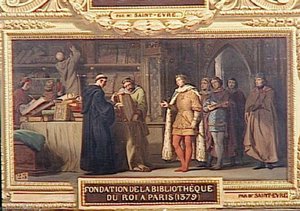
gillot saint evre
1791 - 1858
Breves datos
- Artistic Movement Or Style: Romantic, Sentimentalist
- Artists Or Movements Influenced By This Artist: ['None listed']
- Artists Who Influenced This Artist:
- Shakespeare
- Sir Walter Scott
- Alexandre Dumas
- Date Of Birth: 1791
- Date Of Death: 1858
- Full Name: Gillot Saint-Evre
- Nationality: French
- Notable Artworks:
- The Tempest
- Louis XI & Isabelle de Croye
- Joan of Arc
- Miranda Playing Chess
- Place Of Birth: Boult-sur-Suippe, France